
Cleaning second story windows is defined as the process of removing dirt, grime, and mineral deposits from exterior and interior glass surfaces located one full floor above ground level, typically 14–20 feet high. The right tools make this task safe and streak-free without ever leaving the ground. Extension poles with squeegees, water-fed pole systems, and tilt-in window access are the three methods professionals and experienced homeowners rely on most. Skip any one of these, and you trade a clean result for either a safety risk or a streaky finish.
What are the safest and most effective tools for cleaning second story windows?
The best tools for window cleaning at height keep your feet on the ground. Extension poles with squeegees reach 14–16 feet, which covers most standard second story windows from the ground without a ladder. That reach comes from poles that extend 6–12 feet, giving you full control over angle and pressure.
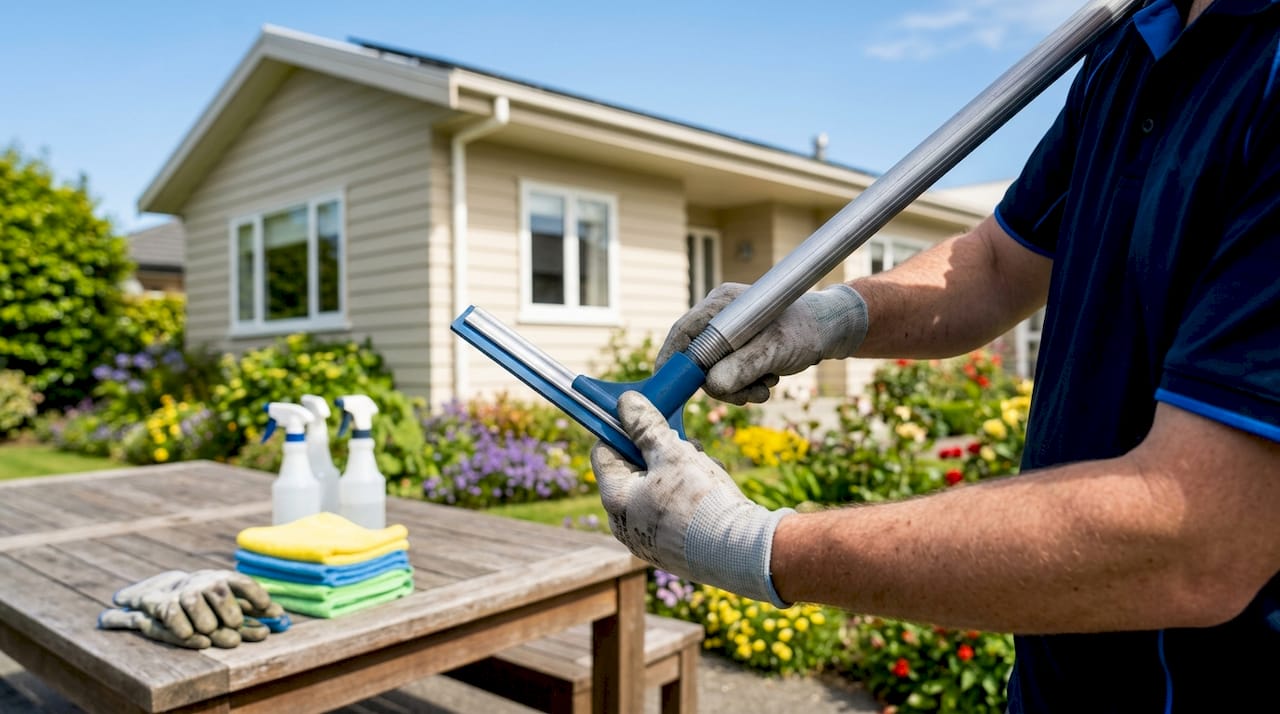
Water-fed pole systems are the professional standard for cleaning upper floor windows. These systems pump deionized water through a brush head at the end of a long pole, scrubbing and rinsing the glass in one pass. Deionized water dries spot-free because it contains no minerals. Tap water leaves calcium and magnesium traces that dry into white spots, which is why professionals never use it on high windows.
Tilt-in windows are a feature worth knowing about if you have them. Many modern double-hung windows tilt inward from the top or bottom sash, letting you clean the exterior glass surface from inside your home. This eliminates ladder risk entirely for interior-facing cleaning.
Essential accessories for any method:
- A microfiber scrubber sleeve or window mop to apply solution and loosen grime
- A quality rubber squeegee blade (replace it every season or when it skips)
- A bucket with a handle wide enough for your scrubber
- Microfiber cloths for wiping edges and corners
- A cleaning solution of 2–3 gallons of water with a minimal squeeze of dish soap, or a 1:1 vinegar-water mix to cut grease without leaving residue
Pro Tip: Avoid dish soaps with added moisturizers or degreasers. They leave a film that attracts dust faster and causes streaks within days.
How to clean second story windows step by step
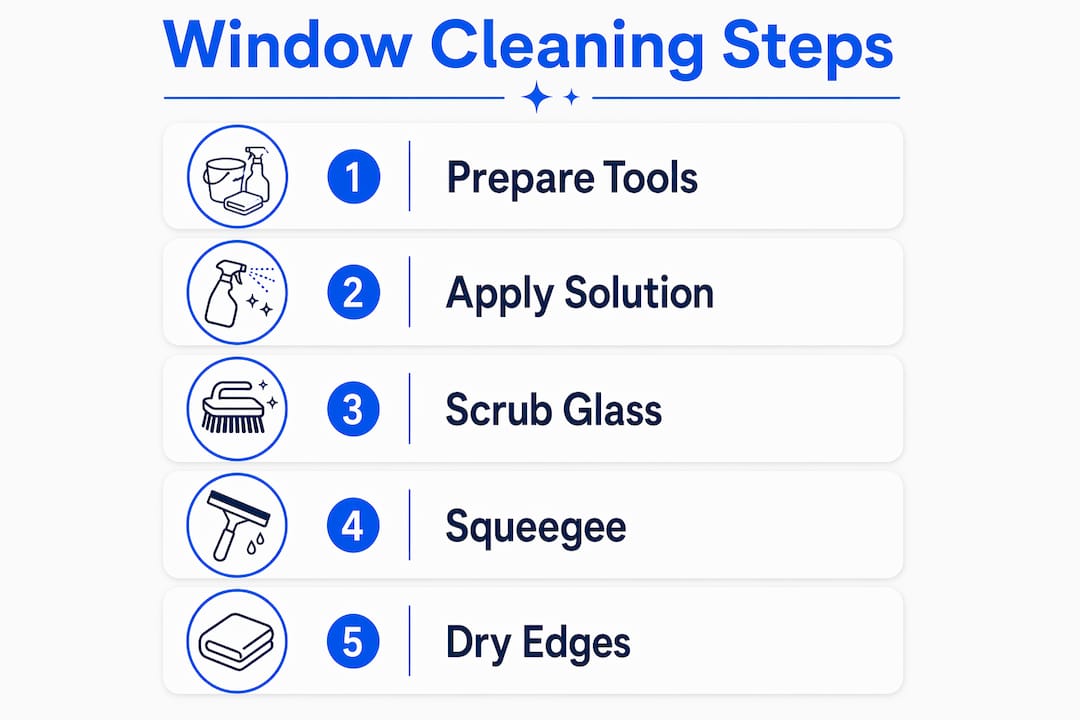
A clear process prevents wasted effort and keeps you safe. Follow these steps for both ground-based exterior cleaning and interior tilt-in access.
For exterior cleaning with an extension pole:
- Prepare your area. Move patio furniture, potted plants, or anything below the window. Lay a drop cloth to catch drips.
- Mix your solution. Use 2–3 gallons of water with a small amount of dish soap or a 1:1 vinegar-water ratio. Over-soaping is the primary cause of streaks, so less is more.
- Attach your scrubber to the pole. Lock it securely and dip it in the bucket. Wring out excess water so the scrubber is damp, not dripping.
- Wet and scrub from the top down. Start at the top corner and work in overlapping horizontal passes. This pushes dirty water downward rather than back over clean glass.
- Attach the squeegee and pull from top to bottom. Use steady, controlled strokes. Overlap each stroke by about an inch to avoid missed strips.
- Wipe the blade after every stroke. A dirty blade drags debris across the glass. Failing to wipe the blade reduces your chance of a streak-free finish by up to 40%.
- Dry the edges. Use a microfiber cloth wrapped around the pole tip to wipe the frame and sill. This stops water from running back onto the glass.
For interior cleaning using tilt-in windows:
- Unlock the window sash and tilt it inward until it rests flat or at a comfortable angle.
- Apply your cleaning solution with a handheld scrubber or spray bottle.
- Squeegee from top to bottom using the same overlapping stroke method.
- Wipe edges with a dry microfiber cloth before tilting the sash back into place.
Pro Tip: Clean one window completely before moving to the next. Letting solution sit on glass while you work on another pane causes it to dry and streak, especially in warm weather.
What safety guidelines should homeowners follow for high windows?
Falls from second story height cause life-altering injuries, according to the Canada Safety Council. That fact alone makes ground-based methods the first choice for any homeowner. When a ladder is truly necessary, follow these rules without exception.
Core ladder safety rules:
- Apply the 1:4 angle rule. For every 4 feet of ladder height, the base must sit 1 foot away from the wall. At 16 feet, that means the base sits 4 feet from the wall. This 75-degree angle prevents both tipping and base slippage.
- Maintain three points of contact at all times. Two hands and one foot, or two feet and one hand, must touch the ladder while you move.
- Use a ladder stabilizer. A standoff stabilizer keeps the ladder away from the wall and prevents it from resting on gutters, which can bend or break under weight.
- Never work alone. A spotter holds the base and watches for hazards you cannot see from above.
- Check your surroundings before you climb. Environmental hazards like overhead power lines, uneven ground, and landscaping below can turn a minor slip into a serious accident.
“Overreaching is the single most common cause of ladder falls during window cleaning. If you cannot reach a spot comfortably from your current position, climb down and reposition the ladder. No window is worth a fall.”
Certain setups call for a professional. Steeply pitched rooflines, windows above landscaping or hardscape, and windows near power lines all raise the risk beyond what DIY methods can safely manage. Broswindowcleaningoc handles these situations with trained technicians and proper safety equipment, so you do not have to.
How do you avoid streaks when cleaning second story windows?
Streaks on upper floor windows have three main causes: too much soap, a dirty squeegee blade, and sunlight drying the solution before you finish. Fix all three and you get streak-free results every time.
Direct sunlight is the most overlooked problem. When the sun hits wet glass, the cleaning solution evaporates in seconds. That leaves behind a thin film of soap and minerals that shows up as streaks. Clean on an overcast day or work in the shade of the building. Sunlight causes solution to dry too fast, making streaks nearly impossible to avoid on a bright afternoon.
Mineral deposits need a different approach. Hard water spots from sprinklers or rain runoff do not dissolve with soap. Use a 1:1 vinegar-water solution and let it sit on the glass for 60 seconds before scrubbing. For heavy buildup, a dedicated mineral deposit remover works faster. Broswindowcleaningoc uses deionized water systems that prevent new mineral spots from forming after each clean.
Common streak-prevention habits:
- Use the minimum amount of soap. A single drop per gallon is enough.
- Wipe the squeegee blade with a clean cloth after every single stroke.
- Start at the top of the window and work down without backtracking.
- Use distilled or filtered water when tap water in your area is hard.
- Check your squeegee blade for nicks or curling. A damaged blade leaves lines no matter how good your technique is.
Pro Tip: After squeegeeing, run a dry microfiber cloth along the very bottom edge of the glass. Water pools there and drips back down the pane, creating a streak line that looks like you missed a spot.
Key Takeaways
Safe, streak-free second story window cleaning requires the right tools, a disciplined technique, and a clear understanding of when to call a professional.
| Point | Details |
|---|---|
| Use ground-based tools first | Extension poles reach 14–16 feet and water-fed poles eliminate ladder risk entirely. |
| Tilt-in windows are underused | Many modern windows tilt inward, letting you clean exterior glass safely from inside. |
| Follow the 1:4 ladder rule | Place the ladder base 1 foot out for every 4 feet of height to prevent tipping or slipping. |
| Minimize soap to prevent streaks | Over-soaping is the top cause of residue; one drop per gallon is enough for most jobs. |
| Clean in shade for best results | Direct sunlight dries solution too fast and causes streaks that are hard to remove afterward. |
What I have learned from years of watching homeowners clean high windows
Most homeowners underestimate how much technique matters compared to equipment. I have seen people buy a quality extension pole and still end up with streaky glass because they used too much soap, worked in direct sun, or skipped wiping the squeegee blade. The tool does not do the work. The method does.
The shift toward water-fed pole systems is the most meaningful change in residential window cleaning in the past decade. These systems remove the ladder from the equation entirely, and the deionized water produces a result that a bucket-and-squeegee setup rarely matches on the first try. If you clean your second story windows more than twice a year, a water-fed pole pays for itself in time and frustration saved.
My honest advice on ladders: use them only when there is no other option. Ground-based methods cover the vast majority of second story windows on standard homes. When a window genuinely requires a ladder, the 1:4 angle rule and a spotter are non-negotiable, not suggestions. I have watched experienced people skip the spotter and regret it.
Know when to hire out. Windows above a garage, over a sloped roof, or near power lines are not DIY territory. The cost of a professional visit from a team like Broswindowcleaningoc is far less than an emergency room bill. Prioritize your safety over the satisfaction of doing it yourself.
— nolan
When Broswindowcleaningoc makes more sense than DIY
Some second story windows are simply too risky or too difficult to clean well without professional equipment.

Broswindowcleaningoc brings water-fed pole systems and trained technicians to every job in Orange County, CA. The deionized water used in every exterior clean dries spot-free with no mineral residue. There are no upcharges for upper floors, and scheduling is straightforward. For windows near power lines, above landscaping, or on homes with complex rooflines, professional service is the practical choice. Check out the 2026 window cleaning guide to see what tools and standards matter most this year, or review common window cleaning myths before your next DIY attempt.
FAQ
What is the best tool for cleaning second story windows?
A water-fed pole with deionized water is the most effective tool for exterior second story windows. It cleans and rinses from the ground without a ladder and dries spot-free.
How do extension poles work for high windows?
Extension poles attach to a squeegee or scrubber head and extend 6–12 feet, giving a total reach of 14–16 feet. That covers most standard second story windows from ground level.
How do I avoid streaks on upper floor windows?
Use minimal soap, clean on an overcast day, and wipe the squeegee blade after every stroke. Dirty blades and fast-drying solution in direct sun are the two leading causes of streaks.
Is it safe to use a ladder to clean second story windows?
Ladders are safe when used correctly. Apply the 1:4 angle rule, maintain three points of contact, use a stabilizer, and always work with a spotter. Ground-based methods are safer when they can reach the window.
When should I hire a professional window cleaner?
Hire a professional when windows are near power lines, above hard-to-reach landscaping, or on rooflines where ladder placement is unstable. Broswindowcleaningoc handles these setups safely with proper equipment and trained technicians.
Pingback: Keep Coastal Windows Clear of Salt Spray With a DI Rinse
Pingback: Window Cleaning Tools for Homeowners: OC Hiring Guide