
Quality window cleaners are defined by their use of purified water systems, precision tools, safety compliance, and consistent technique that together deliver streak-free, lasting results. The key features of quality window cleaners go far beyond showing up with a squeegee and a bucket. Knowing what separates a professional service from an amateur one protects your windows, your property, and your investment. Whether you are a homeowner in Orange County or a facility manager overseeing a commercial building, this guide gives you the exact criteria to evaluate any window cleaning service before you hire.
1. Purified water systems that eliminate streaks
Purified water technology is the single most reliable indicator of a high-quality window cleaning service. Tap water contains minerals like calcium and magnesium that leave white spots and sticky residue after drying. That residue attracts dust, which means your windows look dirty again within days. RO/DI water systems remove those minerals entirely, leaving glass spotless and significantly extending how long it stays clean.
The practical result is measurable. Professional results using purified water last 6 to 8 weeks, compared to 2 to 3 weeks with standard soap-and-water methods. That is not just a cosmetic difference. It means fewer service calls, less disruption to your schedule, and better long-term value per dollar spent.
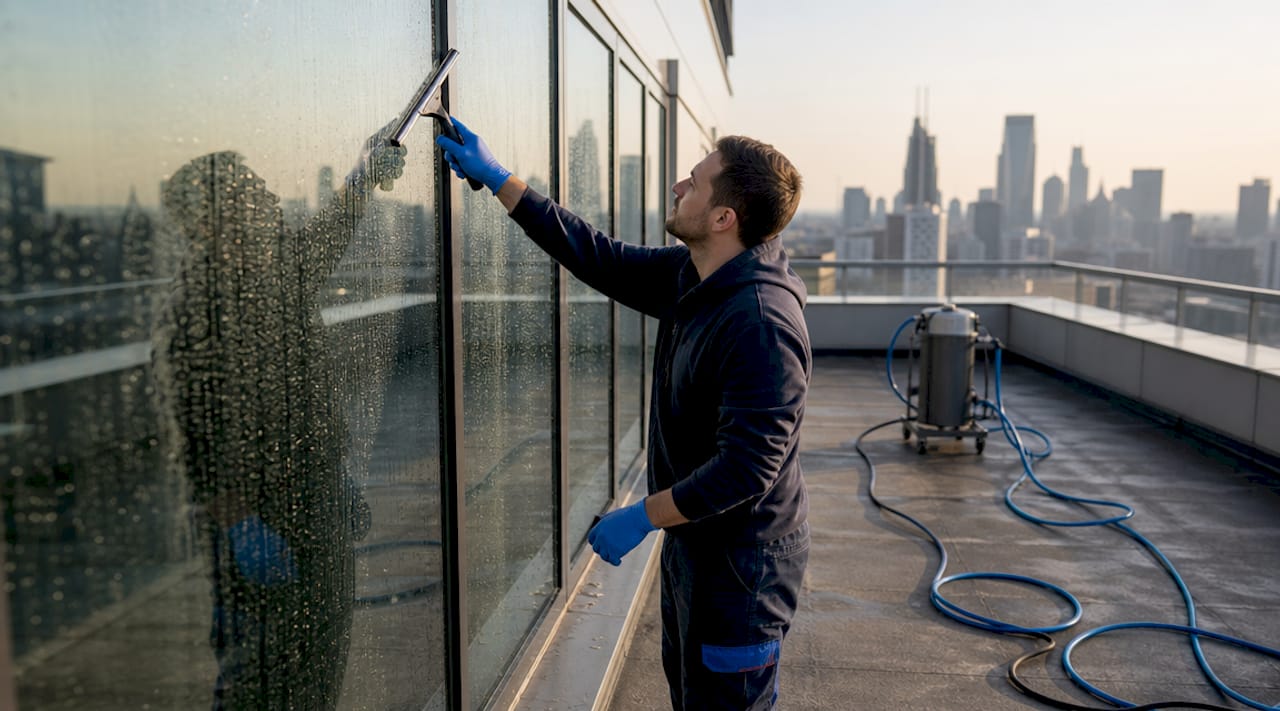
Purified water also eliminates the need for soap, which itself leaves a film that attracts grime. When a company uses water-fed poles connected to an RO/DI tank, they can clean upper-story windows from the ground without ladders, reducing both safety risk and cleaning time.
Pro Tip: Ask any window cleaning company directly: “Do you use purified water or deionized water?” If they hesitate or say they use dish soap, that tells you everything you need to know about their quality standard.
2. High-quality squeegee blades and proper maintenance
The squeegee is the core tool of professional window cleaning, and the rubber blade is its most critical component. A worn or nicked blade drags across glass unevenly, leaving streaks that no amount of re-wiping will fix. Professional-grade blades from brands like Ettore or Unger are replaced every 24 to 48 hours of use and flipped to use both edges before replacement. That level of maintenance is what separates a professional from someone doing it as a side job.
Here is what to look for in a company’s tool standards:
- Squeegee blades replaced or flipped every 24 to 48 hours of active use
- Multiple blade sizes to match different pane dimensions precisely
- Channels cut to fit divided lites and specialty glass shapes
- Brass or stainless-steel handles that resist corrosion over time
- Separate applicator sleeves for applying cleaning solution before squeegeeing
Pro Tip: When a technician arrives, glance at their squeegee blade. A clean, straight rubber edge with no nicks or curling is a fast visual indicator of how seriously the company takes its equipment.
3. Carbon-fiber telescopic poles for safety and reach
Carbon-fiber telescopic poles are the tool that allows professionals to clean multi-story windows without scaffolding or ladders in most situations. These poles are lightweight, rigid, and extend to 30 feet or more while maintaining control at the tip. Fiberglass poles are heavier and flex more, which reduces accuracy on upper panes. The material choice matters because a fatigued technician using a heavy pole makes more mistakes and takes more risks.
Water-fed pole systems attach directly to a purified water source, so the technician cleans and rinses in one pass from the ground. This method is faster, safer, and produces a cleaner result than ladder-based cleaning because the technician can see the entire pane from below and adjust angle in real time. For commercial buildings with multiple floors, this technology is not optional. It is the standard that any serious service provider should meet.
4. Safety protocols and OSHA-compliant equipment
Safety compliance is a non-negotiable feature of any quality window cleaning service, and it protects you as much as it protects the technician. A company that cuts corners on safety gear is also cutting corners on technique, insurance, and accountability. Quality window cleaning companies carry $2M or more in liability insurance as a baseline standard, along with workers’ compensation coverage for every employee on the job.
A window cleaning company without current liability insurance and workers’ compensation is a financial liability for the property owner. If a technician is injured on your property without coverage, you could be held responsible.
OSHA-compliant safety equipment includes:
- Properly rated extension ladders with stabilizers on hard surfaces
- Rope access systems and harnesses for high-rise work
- Aerial work platforms for commercial facades
- Non-slip footwear and eye protection on every job
Verifying insurance is straightforward. Ask the company for a certificate of insurance before any work begins. A reputable company sends it without hesitation. One that stalls or deflects is a company you should not hire, regardless of price.
5. Consistency and attention to detail across every job
The best window cleaning services deliver the same result on job 50 as they did on job one. Consistency is not accidental. It comes from standardized checklists, trained technicians, and a process that covers more than just the glass. Top-rated services clean frames, sills, and tracks as part of every visit, not as an upsell. Screens are removed, cleaned separately, and reinstalled correctly. Tracks are wiped free of debris that would otherwise blow back onto freshly cleaned glass within hours.
Attention to detail also means inspecting glass during the cleaning process. A skilled technician notices early signs of seal failure in double-pane windows, hard water etching, or frame corrosion. Catching these issues early can prevent costly window replacements that run from $5,000 to $20,000 or more for a full property. That kind of proactive observation is a feature of professional service that no DIY effort can replicate.
Consistent quality also shows up in communication. A professional company confirms appointments, arrives on time, and follows up after the job. These behaviors signal that the company has systems in place, not just individual technicians doing their best.
6. Technique precision: timing, drop cloths, and channel cutting
Professional window cleaning technique includes details that most people never think about. Cleaning during early morning or on overcast days prevents streaks caused by rapid drying in direct sunlight. When solution evaporates before the squeegee completes its pass, it leaves a visible residue line. Experienced technicians schedule accordingly and adjust their pace to match conditions.
Indoors, canvas drop cloths protect floors and furniture from drips during interior window cleaning. This is a mark of professionalism that also signals the technician has been trained to protect your property, not just clean the glass. Squeegee channels are cut to match specific pane widths, which matters on windows with divided lites or unusual dimensions. A channel that is too wide leaves uncleaned edges. A channel that fits precisely delivers a clean edge-to-edge result every time.
7. Professional vs. DIY window cleaning: a direct comparison
Understanding the cost and result difference between professional and DIY cleaning helps you make a clear-eyed hiring decision.
| Factor | Professional service | DIY |
|---|---|---|
| Cost per visit | $200 to $450 | $20 to $40 in supplies |
| Time required | 1 to 2 hours | 3 to 6 hours |
| Result longevity | 6 to 8 weeks | 2 to 3 weeks |
| Insurance coverage | $2M+ liability included | None |
| Equipment quality | RO/DI water, carbon-fiber poles, Ettore or Unger blades | Consumer-grade tools |
| Risk of damage | Minimal with trained technicians | Higher without proper technique |
The cost gap narrows significantly when you factor in time, result quality, and the energy-saving benefits of clean glass, which allows maximum natural light and reduces reliance on artificial lighting. For businesses especially, the ROI on professional cleaning is not just aesthetic. It affects occupant comfort, energy costs, and the impression your building makes on clients and visitors.
8. Clear communication and customer service standards
Customer service is a feature of quality window cleaning that gets overlooked in most hiring guides. A company that communicates clearly before, during, and after a job is a company with internal standards. That means written quotes with itemized pricing, not vague estimates given over the phone. It means technicians who explain what they are doing and why, and who flag any issues they notice on your property.
Reviews and references are your fastest shortcut to evaluating this. Look for patterns in Google reviews or Yelp listings. A company with consistent five-star feedback mentioning punctuality, thoroughness, and follow-through is demonstrating exactly the kind of service consistency that matters. One or two bad reviews are not disqualifying. A pattern of complaints about no-shows, missed spots, or poor communication is. You can also learn a lot from how to prepare your windows for professional cleaning by reviewing what a quality company asks of you before they arrive.
Key takeaways
Quality window cleaning services are defined by purified water technology, precision tools, verified insurance, and consistent technique applied across every job without exception.
| Point | Details |
|---|---|
| Purified water is the top indicator | RO/DI systems prevent mineral spots and keep windows cleaner for 6 to 8 weeks. |
| Blade maintenance drives streak-free results | Ettore or Unger blades replaced every 24 to 48 hours are non-negotiable for quality. |
| Insurance protects you, not just the crew | Verify $2M+ liability coverage before any technician steps onto your property. |
| Technique details separate pros from amateurs | Timing, drop cloths, and channel cutting determine the final result quality. |
| Communication signals operational standards | Consistent follow-through before and after a job reflects a company with real systems. |
What I’ve learned after years of watching window cleaning done right and wrong
The single most common mistake I see property owners make is hiring on price alone. A $99 window cleaning deal almost always means consumer-grade tools, no purified water, and a technician who has never replaced a squeegee blade in their career. The windows look fine for a week, then the mineral haze comes back and you are back to square one.
The purified water question is my personal litmus test. When I ask a company whether they use RO/DI or deionized water and they look confused, I stop the conversation. That technology has been the industry standard for years. A company that does not use it is not operating at a professional level, regardless of how polished their website looks.
I also think most people underestimate the insurance question. It feels like a formality, but it is not. A technician who falls on your property without workers’ compensation coverage can result in a claim against your homeowner’s insurance. That is a real financial risk that a certificate of insurance eliminates in 30 seconds. Ask for it every time.
Finally, pay attention to how a company communicates before you hire them. Do they respond quickly? Do they give you a written quote? Do they explain their process? These behaviors predict how they will treat your property on the day of the job. The companies that communicate well before the sale are the ones that show up on time, do the work thoroughly, and call you if they find a problem. That is the standard you should hold every service provider to.
— nolan
Why Broswindowcleaningoc delivers on every one of these features
Broswindowcleaningoc uses purified water systems, professional-grade tools including Ettore squeegee blades and carbon-fiber poles, and carries full liability insurance on every job across Orange County. Their technicians clean frames, sills, screens, and tracks as standard practice, not as extras. Every visit includes a thorough inspection of your glass for early signs of damage. If you want to understand the full value of professional cleaning before booking, Broswindowcleaningoc makes that easy. You can also review window cleaning industry terms to walk into any service conversation fully informed. Book your service at broswindowcleaningoc.com.
FAQ
What makes a window cleaner truly professional?
A professional window cleaner uses purified water systems like RO/DI, maintains squeegee blades every 24 to 48 hours, and carries $2M or more in liability insurance. These three features together separate a trained service provider from an amateur.
How long do professional window cleaning results last?
Professional results using purified water last 6 to 8 weeks, compared to 2 to 3 weeks with DIY soap-and-water methods. The absence of mineral residue and soap film is what extends the clean.
How often should I schedule professional window cleaning?
Experts recommend scheduling professional window cleaning twice per year to prevent seasonal damage from pollen, hard water deposits, and debris buildup. High-traffic commercial properties or coastal homes may benefit from quarterly service.
What should I ask before hiring a window cleaning company?
Ask whether they use purified water, request a certificate of insurance, and ask for a written itemized quote. These three questions filter out most low-quality providers before anyone sets foot on your property.
Is professional window cleaning worth the cost compared to DIY?
Professional cleaning costs $200 to $450 per visit but saves 3 to 6 hours of labor, lasts twice as long as DIY results, and includes full liability coverage. For most homeowners and businesses, the time savings and result quality alone justify the price difference.
Pingback: What Is Communal Window Cleaning? A Resident's Guide
Pingback: Window Cleaning Tools for Homeowners: OC Hiring Guide