
The best method is simple: vacuum the track dry first, brush loose grime-free with a narrow detail brush, then treat stubborn spots with mild soap or a baking soda and vinegar paste before drying completely. Skip oily lubricants and don’t force anything into the weep holes. If a track is corroded, leaking, or two stories up, that’s a job for a professional window cleaning service rather than a Saturday project.
TL;DR:
- Regular vacuuming with a crevice tool and brushing with a detail brush are essential first steps to prevent grime from becoming caked-on and harder to remove.
- Use only mild dish soap, vinegar, or baking soda paste for cleaning; avoid abrasive tools, steel wool, or metal scrapers that can damage the track surface.
- Dry thoroughly with a microfiber cloth after cleaning, and leave the window open briefly to allow residual moisture to evaporate, preventing future buildup.
- Weep holes should be gently cleared with a soft brush or compressed air, never a metal pick or screwdriver, to avoid damaging the drainage system.
- For heavily corroded, leaking, or two-story tracks, hiring a professional window cleaner is recommended due to safety and repair considerations.
Table of Contents
- Tools and Cleaners You Need for Window Track Cleaning
- How Do You Clean Window Tracks Step by Step?
- How Do You Get Rid of Mold and Hard-Water Stains in Window Tracks?
- Do Vinyl, Aluminum, and Wood Frames Need Different Cleaning?
- What Do Weep Holes Do and How Do You Clean Them?
- How Often Should You Clean Window Tracks?
- What Homeowners Get Wrong About Window Track Cleaning
- When Should You Call a Professional Window Cleaner?
- Sources
- FAQ
Tools and Cleaners You Need for Window Track Cleaning
You don’t need a garage full of specialty products for window track cleaning. A handful of basic items handle almost every job, and knowing what to skip matters as much as knowing what to grab.
A vacuum with a crevice tool pulls out the loose sand, dead bugs, and dust that make up most track buildup, and it should always be your first move. A narrow detail brush, the kind sold for grout or an old toothbrush, gets into the ridges a vacuum nozzle can’t reach. From there, reliable basic supplies include warm water with a few drops of dish soap, cotton swabs, wrapped wooden skewers, and microfiber cloths.
- Mild dish soap and water: your everyday cleaner for grease film and general grime.
- White vinegar: cuts mineral deposits and mild mold on most frame materials.
- Baking soda paste: loosens caked-on dirt without scratching finishes.
- Microfiber cloths and cotton swabs: dry surfaces and clean tight corners without scratching.
Skip steel wool and metal scrapers entirely; for advice on cleaning finished doors and frames safely, see the best thing to clean interior doors with. They gouge aluminum and scratch vinyl, and once a track is scratched, it collects dirt faster than before. Never mix bleach with vinegar or hydrogen peroxide. Combining those common cleaners can create corrosive or toxic compounds, and there’s no situation in a window track that justifies the risk.
How Do You Clean Window Tracks Step by Step?
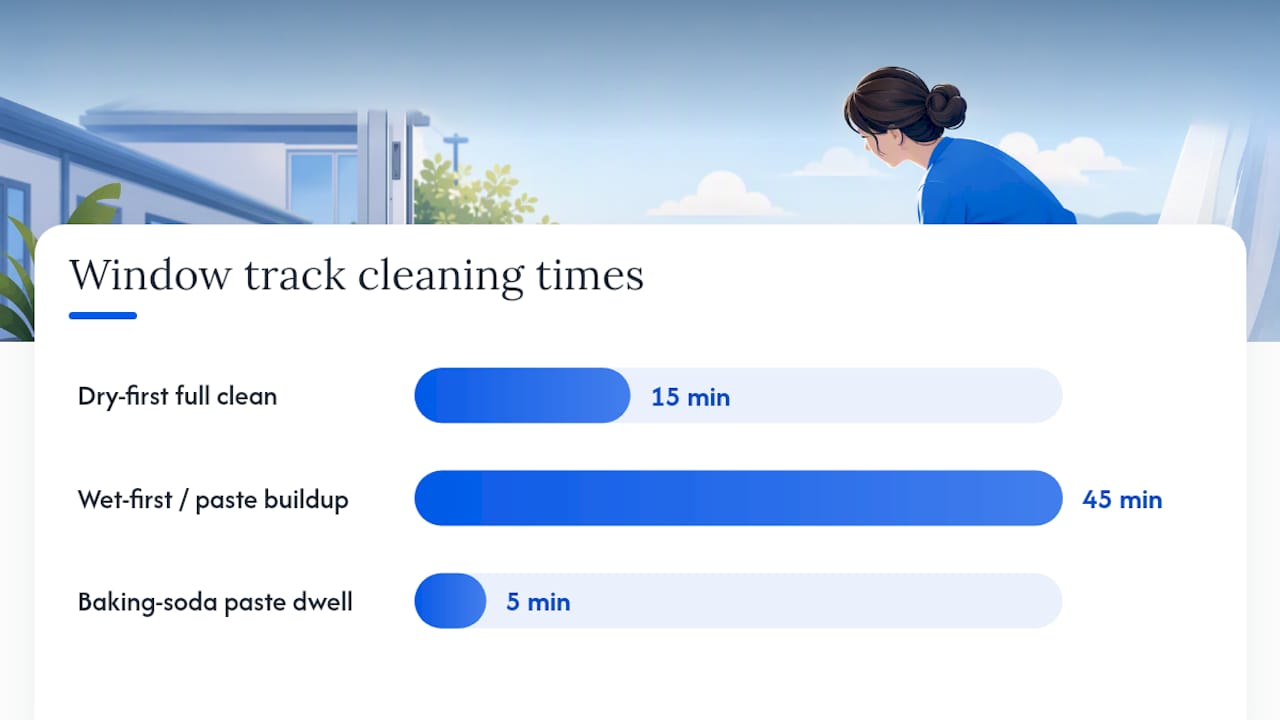
Cleaning window tracks well comes down to sequence. Water on top of dry dust turns into paste, and paste is far harder to remove than dust ever was. Manufacturer guides consistently recommend dry-first cleaning, and it’s the single habit that separates an easy 15-minute job from a 45-minute scrubbing session.
- Vacuum the entire track with a crevice attachment, running it slowly in both directions to catch debris pressed into corners.
- Brush the ridges with your detail brush, working loose anything the vacuum missed, then vacuum again.
- Mix a mild soap solution (a few drops of dish soap in warm water) and dampen a cloth or an old toothbrush. For caked-on grime, make a baking soda paste instead and let it sit for five minutes.
- Scrub gently along the length of the track, following the direction of the groove rather than scrubbing across it.
- Get into the corners with a cotton swab or a wooden skewer wrapped in a damp cloth. This is where grime hides longest and where a heavy tool does the most damage.
- Rinse lightly with a barely damp cloth, wringing it out first so you’re wiping, not flooding.
- Dry thoroughly with a clean microfiber cloth, then leave the window open for a few minutes so residual moisture evaporates instead of sitting in the channel.
- Test the slide. Open and close the window or door a few times to confirm it moves freely.
Pro Tip: Keep a small spray bottle filled with equal parts water and white vinegar under the sink. A quick spritz and wipe once a month prevents the kind of buildup that turns a 15 minute cleaning into a weekend project.
That last step, the lubrication question, trips up a lot of homeowners. Most people assume a dry, sticky track needs oil, and that’s usually the wrong instinct. Manufacturers including YKK AP advise using dry-film lubricants rather than petroleum-based sprays, because oily products act like a magnet for dust and grit. If your track slides fine after cleaning, don’t add anything. If it still drags, check your window’s own care instructions before spraying anything into the channel; a dry-film product designed for tracks beats WD-40 every time.
One more note on tools: a steamer can work on some metal or vinyl tracks, but avoid steam on finished wood entirely. The heat and moisture can lift or warp a painted or stained finish in ways that are much harder to fix than a dirty groove.
How Do You Get Rid of Mold and Hard-Water Stains in Window Tracks?
Mild mold in a window track usually responds to plain white vinegar. Spray it directly on the affected area, let it sit for ten minutes, then scrub with your detail brush and wipe dry. For mineral deposits from hard water, the same vinegar works, or a commercial descaler if the buildup is thick and chalky. Always test on a small hidden section first, since some anodized aluminum finishes and painted frames react differently than raw metal or vinyl.
- Spray white vinegar directly on mold spots and let it sit before scrubbing.
- Use vinegar or a descaler on mineral deposits, testing a small area first.
- Ventilate the room and consider gloves when using stronger commercial cleaners.
- Never combine bleach with vinegar-based products in the same session.
Persistent staining is where DIY cleaning stops being just a cosmetic fix. If mineral deposits or mold come back within weeks of a thorough cleaning, the underlying issue is often drainage or weatherstripping, not the cleaning method. A track that stays damp longer than it should is a maintenance flag, and repeated staining despite good ventilation is one of the clearer signs that something beyond surface grime needs attention.
Do Vinyl, Aluminum, and Wood Frames Need Different Cleaning?
Material changes the rules. Vinyl tracks tolerate water and soap well and are the most forgiving surface to clean, but abrasive scrubbing still leaves fine scratches that trap dirt over time. Aluminum tracks need a soft brush and microfiber cloth only; steel wool and metal scrapers strip the anodized coating and invite corrosion.
- Vinyl: Handles soap and water easily; avoid anything abrasive.
- Aluminum: Soft brush and microfiber only; never steel wool or metal scrapers.
- Painted or finished wood: Minimal moisture, immediate drying, and stop cleaning if the finish is already peeling or bubbling.
- Older windows: If your home predates 1978, painted wood frames may carry lead paint. Dry methods only, and call a professional if you’re unsure.
What Do Weep Holes Do and How Do You Clean Them?
Weep holes are small drainage openings, not extra cleaning grooves, and confusing the two is one of the most common mistakes homeowners make. They’re part of the window’s drainage system, designed to let rainwater that collects in the track escape to the outside instead of pooling indoors.
- Clear them gently with a soft brush or a burst of compressed air, never a screwdriver or metal pick.
- Use a wrapped wooden skewer at the surface only if debris is stuck right at the opening; forcing sharp tools deeper risks damaging the seal behind it.
- Test drainage by pouring a small amount of water into the track near the weep hole and watching how quickly it flows out. Slow or standing water after this test suggests a clog further inside or a failing seal that needs professional attention.
Standing water after a rainstorm isn’t automatically a problem. It can be normal when a weep system is working as designed; the real concern is whether that water eventually drains out or lingers long enough to cause damage.
How Often Should You Clean Window Tracks?
Industry guidance points to deep-cleaning window tracks two to four times a year, which lines up neatly with the change of seasons. Spring and fall are natural checkpoints, and it’s smart to add an extra pass after a major storm or a weekend of yard work that kicks dust into the air.
- Deep clean two to four times per year, timed to spring and fall.
- Add a quick vacuum monthly in dusty or high-pollen areas.
- Wipe down after storms, construction nearby, or heavy landscaping work.
- A fast weekly habit, vacuum, damp wipe, cotton swab in the corners, dry cloth, keeps buildup from ever reaching the deep-clean stage.
A simple routine of vacuuming during regular dusting paired with an occasional damp wipe does most of the heavy lifting between seasonal cleanings.
What Homeowners Get Wrong About Window Track Cleaning
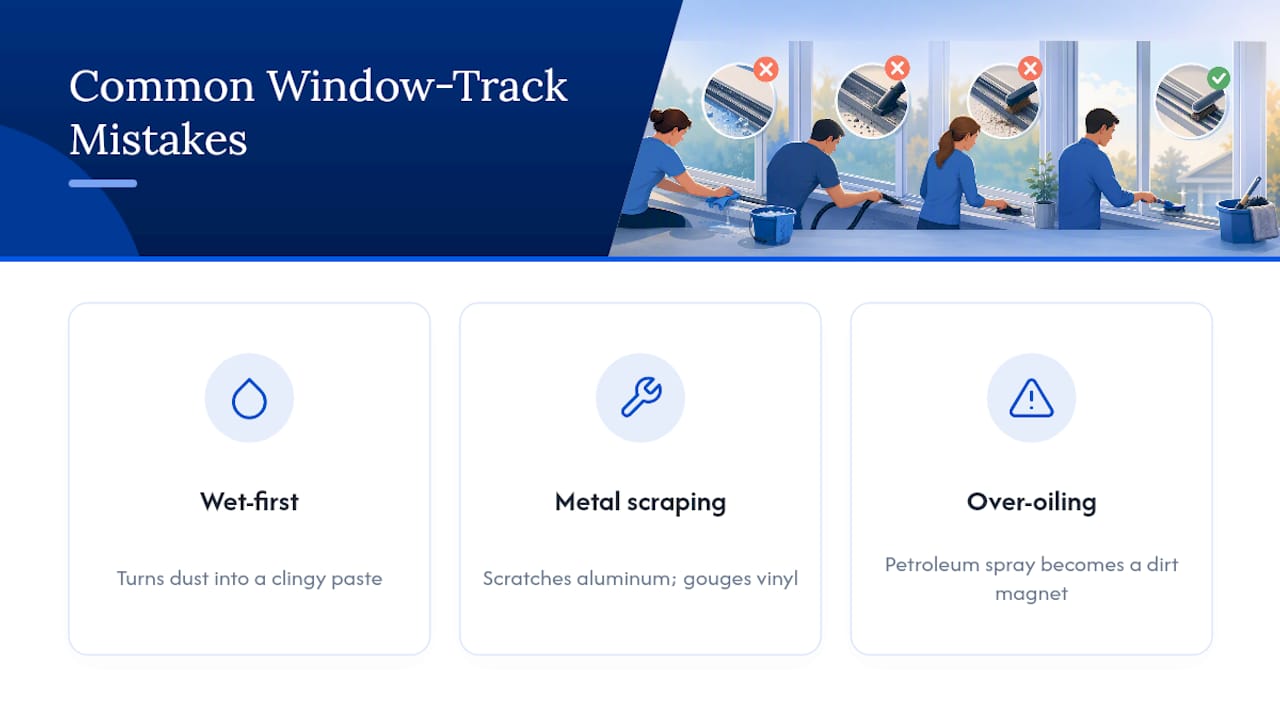
The mistake I see repeated most often is going straight to water, sometimes even a hose, before touching a vacuum. Wet-first cleaning turns ordinary dust into a paste that clings to every ridge, and it’s entirely avoidable. A close second is metal scraping, using a butter knife or screwdriver to pry out debris, which scratches aluminum and gouges vinyl in ways that never fully buff out.
Over-oiling is the third habit worth breaking. A dry, sticky track feels like it needs lubricant, but dumping in a petroleum spray just creates a dirt magnet. Keep a detail brush and a small vinegar spray bottle within reach, and most tracks stay manageable with five minutes of upkeep instead of an hour of scrubbing.
— nolan
When Should You Call a Professional Window Cleaner?
DIY covers most window track situations, but some jobs cross the line from tedious into risky. A professional window cleaning company is the direct alternative when a track shows water infiltration, damaged seals, heavy corrosion, or sits two stories up where a ladder turns a cleaning task into a fall hazard. If the frame material is uncertain, the finish is already failing, or the drainage test in a weep hole shows standing water that won’t clear, that’s a sign the fix goes beyond soap and a brush.

Bros Window Cleaning handles window cleaning, pressure washing, gutter cleaning, solar panel cleaning, roof cleaning, and junk removal for homes and businesses across Orange County, CA. The team is fully insured and licensed, and the focus stays on punctual, thorough work that doesn’t cut corners on tracks, frames, or glass. For high or second-story windows specifically, a professional with proper equipment and fall protection is the safer call every time. If your tracks, screens, or glass need more than a weekend of scrubbing, get a quote through the Bros Window Cleaning site and get it handled right.
Sources
- BASC: Clean window weep holes
- YKK AP maintenance manual (Windows)
- Martha Stewart: How to clean window and door tracks (and how often)
- Fuller Brush Company: How to clean window tracks
- The Spruce: Two cleaning ingredients you should never combine
FAQ
How much does it cost to clean window tracks?
DIY window track cleaning costs almost nothing since it relies on a vacuum, dish soap, and vinegar you likely already own. Professional pricing depends on the number of windows, their location, and condition, and current rates from Broswindowcleaningoc are available by requesting a quote on the Bros Window Cleaning site.
What is the best way to clean window tracks?
Vacuum the track dry first, brush loose debris free, then use mild dish soap or a baking soda paste for stuck-on grime before rinsing lightly and drying completely. Starting dry prevents dust from turning into a hard-to-remove paste, which is the single biggest factor in how easy the job feels.
What is the best homemade window track cleaner?
A simple mix of warm water and a few drops of dish soap handles everyday grime, while straight white vinegar works well on mild mold and mineral deposits. Skip mixing vinegar with bleach or hydrogen peroxide, since combining those cleaners can produce corrosive or toxic compounds.
How often should window tracks be cleaned?
Deep-cleaning window tracks two to four times a year keeps buildup manageable, with seasonal changes like spring and fall serving as natural times to clean. A quick monthly vacuum in dusty areas and a weekly wipe-down prevent grime from accumulating between those deeper cleanings.
How do I clear a clogged weep hole without damaging my window?
Use a soft brush or compressed air to dislodge debris, and only use a cloth-wrapped skewer at the surface if needed. Never force a screwdriver or metal pick into the opening, since that risks puncturing the seal behind it and causing a bigger leak than the one you’re trying to prevent.