
If you want the lowest upfront cost and plan to sell within a few years, choose vinyl. If you’re staying long-term or live somewhere with real heat, hail, or freeze-thaw cycles, choose seamless aluminum. Vinyl costs less to install but lasts 10 to 20 years; aluminum runs $6 to $20 per foot and typically lasts 20 to 30 years. Professional services handle both types across Orange County if you’d rather skip the DIY.
TL;DR:
- Vinyl gutters are the cheapest option and suitable for mild climates with no extreme freeze-thaw cycles but typically last only 10 to 20 years.
- Seamless aluminum gutters last longer, up to 20 to 30 years, with fewer leak points, especially when installed as a single, continuous piece.
- Aluminum withstands UV exposure and temperature swings better, making it ideal for harsh or coastal environments, while vinyl can warp or crack under stress.
- The upfront cost for seamless aluminum is 30 to 50 percent higher than sectional vinyl, but it tends to be more cost-effective over a 20-year lifespan.
- Proper maintenance, including biannual cleaning and inspections, is essential for both materials to prevent water damage and preserve longevity.
Table of Contents
- Aluminum vs Vinyl Gutters: The Quick Comparison
- What Do Aluminum and Vinyl Gutters Cost Installed?
- How Do Aluminum and Vinyl Handle Different Climates?
- Should You Install Gutters Yourself or Hire a Pro?
- How Do You Maintain Aluminum and Vinyl Gutters?
- Which Gutters Are Better for Your Specific Home?
- Why Hiring a Vetted Local Pro Matters
- Are Aluminum or Vinyl Gutters Better for the Environment?
- What Colors and Styles Are Available for Each Material?
- Does Gutter Weight Affect Your Roof or Fascia?
- The Real Trade-Off Nobody Puts on the Quote
- Keep Your Gutters Working, Whichever Material You Choose
- Sources
- FAQ
Aluminum vs Vinyl Gutters: The Quick Comparison
Here’s the short version before the deep dive.
Vinyl gutters:
- Cheapest material, easiest for DIY installation
- Won’t rust or corrode, ever
- Best for: mild climates, tight budgets, homeowners planning to sell within 5 to 10 years
Aluminum gutters:
- Longer lifespan, better heat and cold tolerance
- Available seamless, which means far fewer joints and leaks
- Best for: long-term owners, harsh climates, anyone who wants to install once and forget it
The seam count is the detail most homeowners miss. Sectional vinyl comes in 10-foot lengths joined with connectors, so a typical home might have a dozen or more joints where water can eventually seep through. Seamless aluminum is formed on-site from a single coil, with seams only at the corners. Fewer seams means fewer leak points over the life of the system, which is the single biggest durability advantage aluminum has over vinyl.
What Do Aluminum and Vinyl Gutters Cost Installed?
Vinyl sectional systems run $4 to $9 per linear foot installed. Sectional aluminum runs $6 to $15 per foot, and seamless aluminum runs $8 to $20 per foot, according to ProjectCostPro’s 2026 pricing data. For a typical one-story home with 120 feet of gutter run, that puts vinyl around $480 to $1,080 total, and seamless aluminum between $960 and $2,400. A two-story home with 200 feet of gutter scales those numbers up proportionally.
| Material | Installed cost per foot | Typical lifespan | Seams |
|---|---|---|---|
| Vinyl (sectional) | $4–$9 | 10–20 years | Multiple joints every 10 ft |
| Aluminum (sectional) | $6–$15 | 20–30 years | Multiple joints every 10 ft |
| Aluminum (seamless) | $8–$20 | 20–30 years | Corners only |
Aluminum typically lasts 20 to 30 years, roughly double the 10 to 20 years you get from vinyl, according to Angi’s cost data. Run the math over a 20-year window and vinyl often needs a full replacement partway through, while a well-installed seamless aluminum system might need only minor repairs. Seamless installs cost more upfront, 30 to 50% more than sectional, but that premium buys fewer joint failures and fewer service calls over two decades. For a homeowner planning to stay put, the seamless aluminum premium usually pays for itself by year 12 to 15 in avoided repairs and re-caulking.
How Do Aluminum and Vinyl Handle Different Climates?
Aluminum shrugs off UV exposure and temperature swings that would warp vinyl. It won’t crack in a hard freeze and won’t sag under a heat wave, though a hard impact (a fallen branch, an errant ladder) can leave a visible dent. Coastal homes benefit from a heavier .032-inch gauge or a marine-grade coating to resist salt spray pitting.
Vinyl struggles at the extremes. High summer heat can soften the plastic enough to warp the profile, and a hard freeze makes it brittle enough to crack under stress, particularly at the joints. Angi’s comparison notes vinyl also fades faster under direct sun than aluminum’s baked-on finish does.
- Choose vinyl if: you’re in a mild, moderate climate with shaded runs and no extreme freeze-thaw cycles
- Choose aluminum if: you deal with intense sun, hard freezes, heavy snow load, or coastal salt air
Pro Tip: Match the material to your harshest season, not your average one. A single brutal week of heat or ice does more damage to vinyl than a mild year does good.
Climate matching matters more than most buying guides admit. A material that performs fine in a mild coastal microclimate can fail years early once you move it fifty miles inland into harsher winters or hotter summers.
Should You Install Gutters Yourself or Hire a Pro?
- Sectional vinyl comes in snap-together kits designed for DIY installation. A patient homeowner can usually finish a single-story home in a weekend, but every joint you seal by hand is a future leak risk if you rush it. Ladder work on a two-story home changes the calculation fast; the fall risk isn’t worth the savings.
- Seamless aluminum requires a truck-mounted forming machine that extrudes continuous gutter lengths on-site. This isn’t a rental-store tool, which is why seamless installs are almost always professional jobs. Most single-story homes get a full seamless install done in a single day.
- Before requesting quotes, measure your approximate linear footage, count downspouts and corners, note your number of stories, and photograph your fascia and roofline. Confirm the quote itemizes removal, disposal, fascia repair, downspout extensions, and cleanup, since these are common hidden adders.
How Do You Maintain Aluminum and Vinyl Gutters?
Both materials need cleaning at least twice a year, more often if pine needles or heavy tree cover clog the system faster. After any major storm, walk the perimeter and look for sagging sections, weeping at the seams, or dark staining on the fascia, all signs water is escaping where it shouldn’t.
- Tighten loose hangers before they let a section pull away from the fascia
- Reseal sectional joints showing early drip marks
- Flush downspouts to clear compacted debris
- Guards reduce debris entry but don’t eliminate the need for inspection
Fascia rot behind a leaking joint is the costliest failure to ignore. Catching it early, during a routine inspection, turns a $200 repair into something manageable instead of a full board replacement.
Which Gutters Are Better for Your Specific Home?
Rank your priorities in this order before you call anyone for a quote:
- Ownership horizon. Selling in under five years favors vinyl’s lower upfront cost. Staying a decade or more favors aluminum’s longer service life.
- Local climate. Harsh sun, hard freezes, or coastal salt push the decision toward aluminum, ideally seamless.
- Budget today vs. budget over time. Vinyl wins on day-one cost; aluminum usually wins on total cost across 20 years.
- Roof complexity. More corners and valleys mean more seams in a sectional system, which raises leak risk regardless of material.
- DIY appetite. If you’re comfortable on a ladder and want a weekend project, vinyl is the only realistic option.
On the quote itself, ask for the aluminum gauge (.027" is standard, .032" is worth the upgrade near trees or ice), whether the install is seamless or sectional, downspout count and size, and a line-item breakdown of miters, hangers, and any fascia repair. A homeowner staying put in a moderate-to-harsh climate should default to seamless aluminum; a short-term owner in a mild climate can save real money with vinyl and not regret it.
Why Hiring a Vetted Local Pro Matters
A qualified installer inspects fascia and soffit condition, roof runoff patterns, and downspout routing before touching a single gutter, catching hidden rot a homeowner on a ladder usually misses. Bros Window Cleaning brings over five years of insured experience across Orange County, handling gutter cleaning, pressure washing, and roof and solar cleaning as part of the same property visit.
Hiring a pro is strongly advised for two-story homes, any seamless aluminum job, fascia repairs, or lots with heavy tree cover; for more on interior project choices, see What Kind Of Doors Are Best For Interiors? | One Day Doors & Closets. Straightforward single-story vinyl replacements remain reasonable DIY territory if you’re comfortable with the ladder work.
Are Aluminum or Vinyl Gutters Better for the Environment?
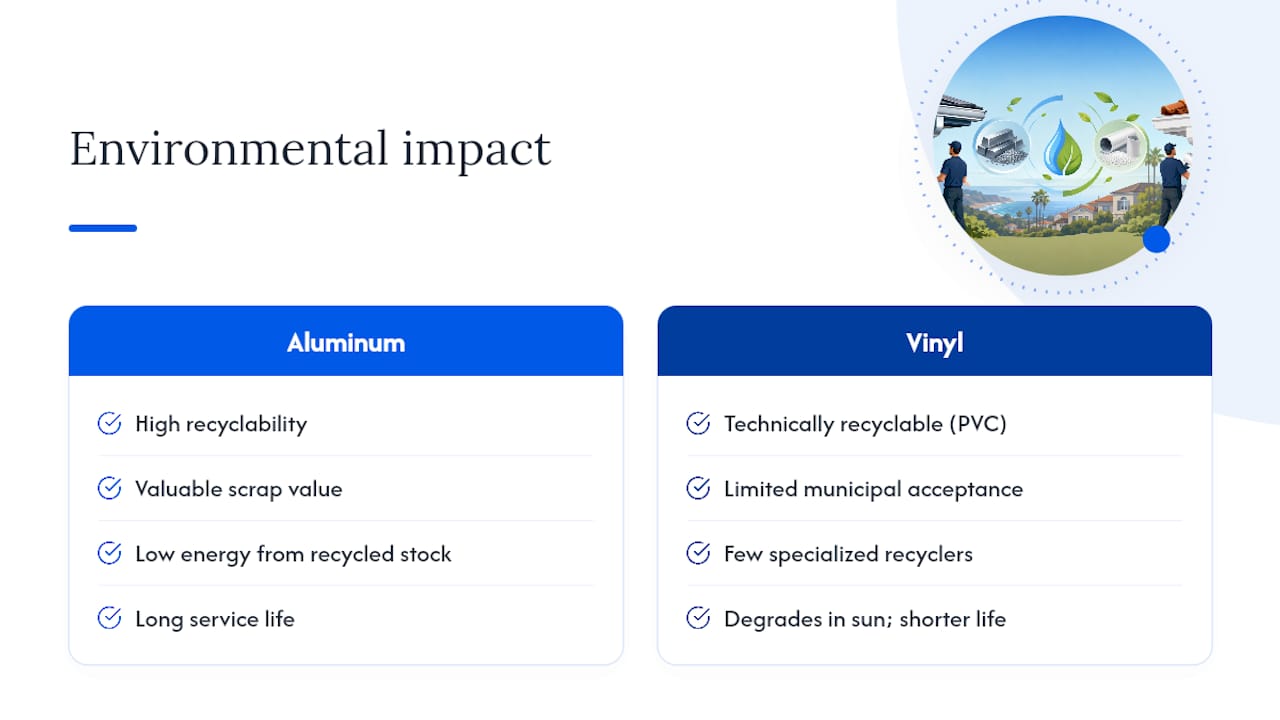
Aluminum wins decisively on recyclability. It’s one of the most recycled materials in construction, and scrap aluminum gutters have real value at metal recyclers, which means old sections rarely end up in a landfill. Producing new aluminum from recycled stock also uses a fraction of the energy that raw ore smelting requires, so the material’s environmental cost drops sharply once it’s already in circulation.
Vinyl is harder to recycle in practice. It’s technically recyclable PVC, but most municipal recycling programs don’t accept gutter-grade vinyl, and specialized PVC recycling facilities aren’t common in most areas. That means a lot of old vinyl gutters end up in general waste when they’re replaced. Vinyl also degrades through sun exposure over its service life, shedding small amounts of material and losing structural integrity faster in intense heat, which shortens the window before it needs replacing again.
For a homeowner weighing environmental impact alongside cost, the calculus tilts toward aluminum on two fronts: it lasts longer before needing replacement at all, and what eventually comes down has a real second life instead of heading to a landfill. If sustainability is a genuine priority in your decision, ask your installer whether they recycle removed material rather than hauling it to general disposal.
What Colors and Styles Are Available for Each Material?
Aluminum offers the wider color range by a meaningful margin. Because it’s factory-coated or powder-coated before installation, you can match it precisely to trim, siding, or roof color, and the factory finish holds its tone far longer than paint applied after the fact. Seamless aluminum also comes in a broader range of profile shapes, including K-style and half-round, which matters if you’re trying to match a historic or architecturally specific home.
Vinyl comes in a narrower palette, typically limited to white, brown, and a handful of common trim colors molded directly into the material. That’s fine for most standard-color homes, but if you’re trying to match a less common siding shade, you may not find an exact vinyl match. Vinyl also fades faster under direct sun, so a color that looks right at installation can visibly lighten within several years, especially on south-facing walls.
If color-matching to a specific palette is important, or you’re painting the house and want gutters to disappear into the trim line rather than stand out, aluminum’s factory finish is the more reliable long-term choice. Vinyl works fine when you’re going with a standard white or brown and don’t mind some fading over time.
Does Gutter Weight Affect Your Roof or Fascia?
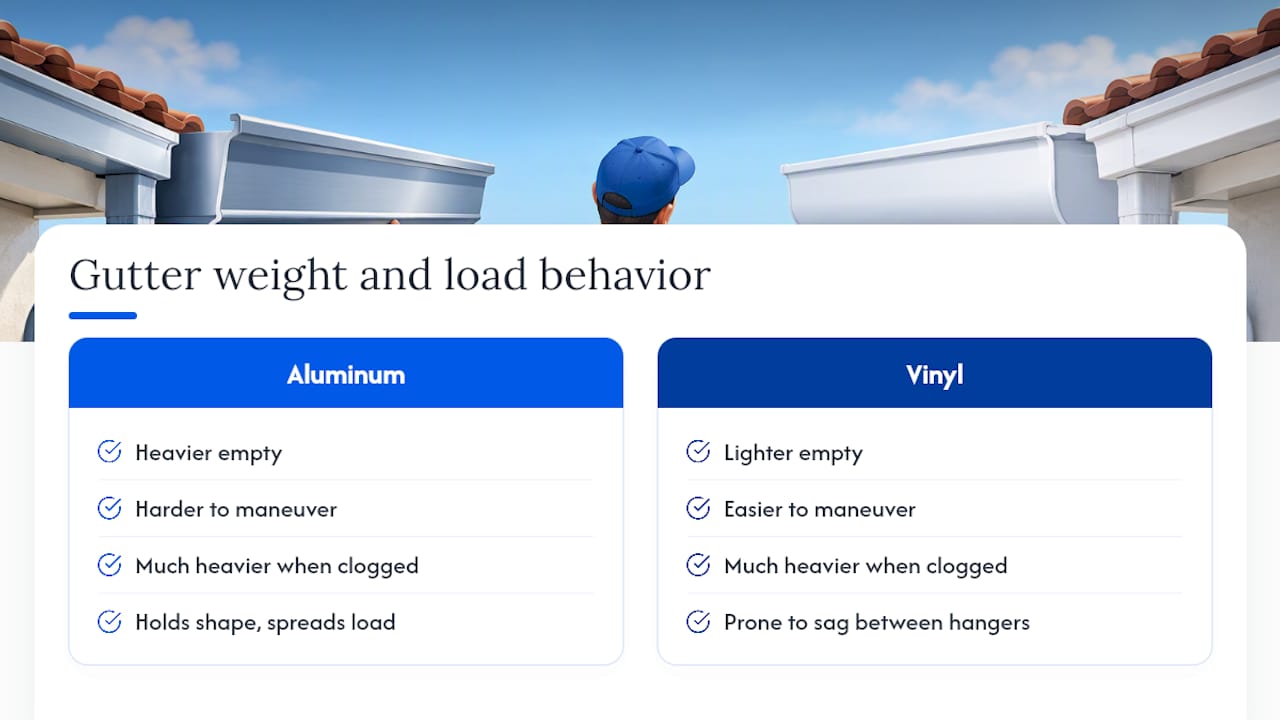
Vinyl is significantly lighter than aluminum, which matters most during installation, not after. A lighter material is easier to maneuver on a ladder and puts marginally less immediate load on fascia boards during the mounting process, which is part of why it’s the more approachable DIY option.
Once installed and running, the weight difference between empty aluminum and vinyl gutters is not the real structural concern. The bigger factor is what happens when either system fills with water, wet leaves, or ice. A clogged gutter holding standing water weighs many times more than an empty one, and that load transfers directly to the hangers and fascia board it’s attached to, regardless of which material you chose. Aluminum’s rigidity actually helps here: it holds its shape and distributes that load more evenly across hangers, while overloaded vinyl is more prone to visible sagging between supports.
Fascia condition matters more than gutter material when it comes to supporting weight long-term. Rotted or weakened fascia will fail under load whether you’ve hung vinyl or aluminum, which is why a pre-installation inspection of the fascia board itself should happen before either material goes up.
The Real Trade-Off Nobody Puts on the Quote
Most buying guides treat this as a simple cost comparison, and that’s where they fail homeowners. The real variable isn’t vinyl versus aluminum. It’s how many joints your specific roofline requires and how much rain your region actually gets, because a seam that never sees standing water can last decades while an identical seam on a low-pitch valley fails in five years.
I’d push back on the common advice to “just go with whatever’s cheapest if you’re on a budget.” Cheap vinyl on a complex roof with six corners and heavy seasonal rain is a bad trade even at half the price, because you’re multiplying your weakest point (the joint) by the number of corners you have. If your roofline is simple, vinyl’s joint count stays low and the risk shrinks accordingly.
What I’d prioritize first: count your actual seams before you count dollars. A simple one-story rectangle with two downspouts can reasonably go vinyl. Anything with multiple rooflines, valleys, or a two-story elevation should skew toward seamless aluminum regardless of budget, because that’s where joint failures compound fastest.
— nolan
Keep Your Gutters Working, Whichever Material You Choose
Whichever material you land on, gutters only protect your home if they’re clear and flowing. Bros Window Cleaning handles gutter cleaning for both vinyl and aluminum systems across Orange County, backed by over five years of insured experience and the same crew that handles window cleaning, pressure washing, and roof cleaning on the same visit.
That matters because a fresh installation is only as good as the upkeep behind it: a clogged seamless aluminum run can back up and stress hangers just as easily as a neglected vinyl system. Instead of scheduling separate vendors for gutters, roof debris, and exterior grime, one inspection covers all of it. If you’re planning a replacement or just want an honest read on what your current gutters need, request a quote from Bros Window Cleaning and get a straight answer before you commit to a material.
Sources
- Vinyl vs. Aluminum Gutters (Angi)
- Gutter Installation Cost Calculator (2026) | ProjectCostPro
- Seamless vs sectional gutters (The Roofing Brief)
- Aluminum vs. vinyl gutters (LeafFilter)
FAQ
What Are the Disadvantages of Aluminum Gutters?
Aluminum costs more upfront than vinyl, running $6 to $20 per linear foot installed versus vinyl’s $4 to $9. It also dents from impacts like fallen branches or ladder contact, and while it resists rust, a scratched or chipped finish can eventually show pitting in coastal salt air.
What Are the Disadvantages of Vinyl Gutters?
Vinyl warps in intense heat and turns brittle in hard freezes, making it a poor fit for extreme climates. It has a shorter lifespan than aluminum, typically 10 to 20 years versus 20 to 30, and its multiple sectional joints create more potential leak points over time.
Which Gutters Are Better, Aluminum or Vinyl?
Aluminum is generally the stronger long-term choice for durability, climate resistance, and leak prevention, especially in seamless form. Vinyl remains the better pick for tight budgets, DIY installation, and short-term ownership in mild climates.
How Much Does It Cost to Replace Gutters?
Installed costs range from $4 to $9 per foot for vinyl and $6 to $20 per foot for aluminum depending on gauge and whether it’s seamless or sectional. A typical one-story home with 120 feet of gutter runs roughly $480 to $2,400 total depending on material choice.
Does Bros Window Cleaning Service Both Gutter Types?
Yes, Bros Window Cleaning provides gutter cleaning services for both vinyl and aluminum systems throughout Orange County. Current pricing is available directly on the website when you request a quote.