
Window cleaning frequency is the single most controllable factor in preventing tenant and customer complaints about property cleanliness. Dirty windows accumulate grime, mineral deposits, and salt haze that trigger visible dissatisfaction within weeks, not months. Research shows 73% of customers judge businesses based on exterior cleanliness alone. That number explains why property managers who defer cleaning schedules consistently face more complaints, not fewer. Understanding why window cleaning frequency affects complaints gives homeowners and property managers a direct path to fewer disputes, lower repair costs, and stronger property reputations.
How does window cleaning frequency affect tenant and customer complaints?
Visible dirt buildup is the fastest trigger for complaints. When windows go uncleaned for extended periods, grime becomes obvious to anyone approaching the property. Tenants and customers do not separate “dirty windows” from “poorly managed property.” They treat one as proof of the other.

This reaction has a name in behavioral psychology: the halo effect. Clean windows trigger a positive halo effect that improves customer trust and reduces perceived risk. The reverse is equally true. Grimy windows signal neglect, and that perception spreads to every other aspect of the property in the viewer’s mind.
Loss aversion amplifies the problem. Tenants who notice declining window cleanliness feel they are losing something they once had. That emotional response pushes them toward formal complaints faster than a property that was never clean to begin with. Failure to maintain consistent cleaning standards significantly increases tenant complaints within four months in commercial settings.
The complaint pattern follows a predictable arc:
- Weeks 1–4 after last cleaning: no visible complaints, minor dust accumulation
- Weeks 5–8: tenants notice streaks and film, informal verbal complaints begin
- Weeks 9–16: grime becomes obvious, formal written complaints increase
- Beyond 16 weeks: complaints escalate, and some tenants reference lease terms
Pro Tip: Track complaint dates against your last cleaning date. If complaints cluster 8–12 weeks after service, your interval is too long for your property’s environment.
What environmental and usage factors influence required cleaning frequency?
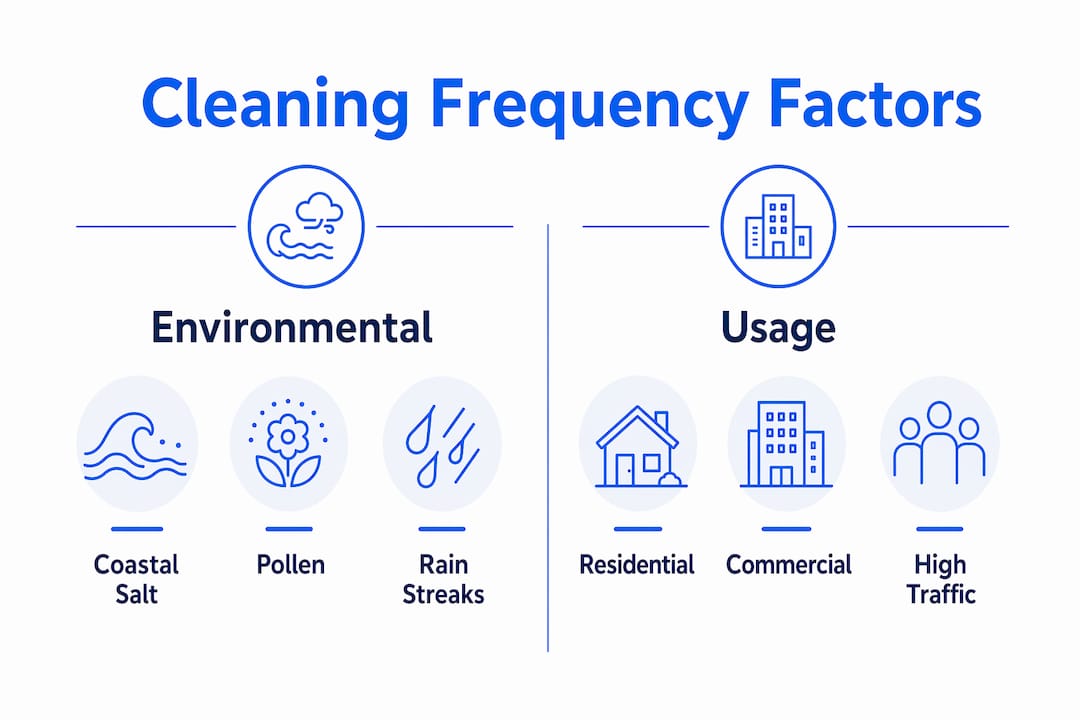
Location determines cleaning frequency more than any other single variable. A property near the Orange County coast accumulates salt spray that bonds to glass within days. A building near a highway collects exhaust particulates and rubber dust that create a gray film. Construction zones add silica dust that scratches glass during cleaning if left too long. Each of these environments demands a shorter cleaning interval than a quiet suburban neighborhood.
Recommended residential cleaning frequency is 2–4 times annually under standard conditions. Environmental factors can push that to every 4–8 weeks. Commercial properties often require monthly or bi-weekly cleaning to prevent customer perception issues. The gap between residential and commercial needs reflects foot traffic, visibility, and the direct link between window appearance and revenue.
| Property type | Standard environment | High-exposure environment |
|---|---|---|
| Residential home | 2–4 times per year | Every 4–8 weeks |
| Commercial storefront | Monthly | Bi-weekly |
| Coastal or highway property | Every 6–8 weeks | Every 3–4 weeks |
| Office building | Monthly | Every 2–3 weeks |
Seasonal changes also shift the math. Spring brings pollen that coats glass in yellow film. Winter brings rain streaks and mineral deposits from hard water runoff. Summer in Orange County brings marine layer residue that leaves a hazy coating. Property managers who ignore seasonal variation end up reacting to complaints rather than preventing them.
Pro Tip: Check your local window dirt causes before setting your annual schedule. Orange County’s coastal and inland microclimates create very different cleaning needs within the same ZIP code.
What are the consequences of inadequate window cleaning frequency?
The financial consequences of skipping cleaning cycles are far larger than most property managers expect. Neglecting cleaning beyond 12–18 months causes glass damage costing $800–$2,000 or more per panel to replace. That figure makes a quarterly professional cleaning look inexpensive by comparison.
The damage sequence follows a clear path:
- Mineral deposits and salt begin bonding to glass within weeks of exposure
- After 6–12 months, surface etching starts and cannot be reversed by standard cleaning
- After 12–18 months, mineral etching and salt haze create irreversible damage requiring full panel replacement
- Abrasive removal techniques used at this stage scratch the glass further and void most manufacturer warranties
- Replacement costs and complaint escalation arrive simultaneously
Occupant comfort takes a measurable hit before any glass damage becomes visible. Dirty windows reduce natural light by up to 30%, which diminishes occupant comfort and increases headaches and fatigue. In office settings, diffuse glare from dirty glass worsens digital eye strain. Tenants and employees do not always connect their discomfort to window condition, but they do file complaints about the environment.
Tenant complaints about window cleanliness rarely stay limited to windows. Once a tenant decides the property is poorly managed, every minor issue becomes a formal complaint. Dirty windows are often the first signal that breaks trust, and rebuilding that trust costs far more than a cleaning schedule would have.
The lease risk is real. Tenant complaints often escalate from dissatisfaction with window cleanliness to formal lease breach claims and rent reduction demands. Property managers who treat window cleaning as optional discover that the legal and financial exposure from escalated complaints exceeds years of cleaning costs.
How to determine and implement an effective cleaning schedule
Start with a property assessment, not a budget conversation. Walk the property and note proximity to pollution sources, prevailing wind direction, and the last time windows were cleaned. That assessment tells you the baseline interval. Then adjust for seasonal peaks and any planned construction nearby.
A practical schedule for most Orange County properties looks like this:
- Residential homes away from the coast: twice yearly, with spot cleaning after major storms
- Coastal residential properties: every 6–8 weeks to prevent salt bonding
- Commercial storefronts: monthly at minimum, bi-weekly during peak business seasons
- Office buildings with large glass facades: monthly, with quarterly deep cleans
Communication prevents as many complaints as cleaning does. Pre-cleaning tenant notifications reduce surprise and complaints caused by visible cleaning activity. A simple email sent 48 hours before service eliminates confusion and sets expectations. Tenants who know cleaning is scheduled feel managed, not neglected.
Pro Tip: Build your cleaning schedule into your lease agreement or property management calendar. Scheduled service feels like a standard and builds tenant confidence. Reactive cleaning after complaints feels like damage control.
Consistency matters more than perfection. A property cleaned every eight weeks on a reliable schedule generates fewer complaints than one cleaned every four weeks but skipped whenever budgets tighten. Tenants and customers notice patterns. Reliability signals professionalism. You can learn more about maintaining exterior glass on commercial properties to build a schedule that holds up year-round.
What cleaning methods reduce complaints and protect glass longevity?
The right technique prevents the complaints that cleaning is supposed to solve. Cleaning on hot, sunny days causes cleaning solution to dry before it can be wiped away, leaving streaks that generate their own complaints. Cleaning on cool, overcast days avoids smears and produces a clear finish that holds longer.
Key method principles that reduce post-cleaning complaints:
- Use a squeegee with a fresh rubber blade on every job. A worn blade leaves lines that look worse than light dirt.
- Avoid abrasive scrubbers on standard glass. Scratches scatter light and create permanent glare complaints.
- Rinse frames and sills before cleaning glass. Dirty frames contaminate clean glass immediately.
- Inspect seals and gaskets during every cleaning visit. Regular cleaning doubles as a moisture audit, catching seal failures before they cause water intrusion and tenant damage claims.
Professional cleaning outperforms DIY for properties with more than eight windows or any upper-story glass. The equipment difference is significant. Water-fed pole systems using purified water leave no mineral residue and dry spot-free. That result is nearly impossible to replicate with household tools, and the difference shows up in complaint rates.
Key Takeaways
Consistent window cleaning frequency is the most direct way to prevent tenant and customer complaints, protect glass from irreversible damage, and maintain property value over time.
| Point | Details |
|---|---|
| Frequency drives complaints | Complaint volume rises predictably when cleaning intervals exceed 8–12 weeks in most environments. |
| Environment sets the interval | Coastal, highway, and high-traffic properties need cleaning every 4–8 weeks, not twice yearly. |
| Deferred cleaning costs more | Glass damage from neglect costs $800–$2,000 or more per panel, far exceeding regular service fees. |
| Communication reduces complaints | A 48-hour pre-cleaning notice to tenants eliminates most complaints about cleaning activity itself. |
| Method matters as much as frequency | Cleaning on cool, overcast days with proper tools prevents streaks that generate new complaints. |
What I’ve learned after years of watching complaint patterns
Property managers consistently underestimate how fast window condition affects tenant mood. I’ve seen buildings where complaint volume dropped noticeably within two months of switching from a twice-yearly schedule to a quarterly one. The windows were not dramatically dirtier under the old schedule. But tenants noticed the difference, and that perception shift changed how they reported every other issue.
The budget argument against frequent cleaning almost always loses when you run the actual numbers. One glass panel replacement costs more than two years of professional quarterly service on most residential properties. The managers who cut cleaning budgets to save money end up spending more on repairs, tenant relations, and lease renegotiations.
The subtler point is this: clean windows tell tenants and customers that someone is paying attention. That signal matters more than the cleanliness itself. Properties that feel managed attract fewer complaints across the board, not just about windows. Regularity is a form of communication. It says the property is cared for, and that message lands before anyone reads a lease or talks to a manager.
Embrace a fixed schedule and treat it as non-negotiable. Budget cuts should come from somewhere else. The cost of a complaint, a damaged relationship, or a glass replacement always exceeds the cost of the cleaning that would have prevented it.
— nolan
How Broswindowcleaningoc helps property owners prevent complaints
Broswindowcleaningoc has served Orange County homeowners and property managers for over five years, building cleaning schedules that match each property’s environment and usage. The team handles residential and commercial window cleaning, pressure washing, gutter cleaning, and solar panel cleaning, all under one fully insured service.

Property managers who want to reduce complaints without guessing at intervals can start with Broswindowcleaningoc’s consultation process. The team assesses proximity to pollution sources, building use, and seasonal factors before recommending a schedule. For owners who want to understand what separates reliable service from average work, the quality window cleaner guide covers exactly what to look for. Those ready to address common misconceptions about cleaning frequency can also review the window cleaning myths resource before booking. Contact Broswindowcleaningoc directly at broswindowcleaningoc.com to schedule a property assessment.
FAQ
How often should windows be cleaned to avoid complaints?
Residential properties need cleaning 2–4 times per year under standard conditions, while coastal or high-traffic properties may need service every 4–8 weeks. Commercial properties typically require monthly or bi-weekly cleaning to prevent customer perception issues.
What happens if windows go uncleaned for over a year?
Salt and mineral deposits chemically bond to glass and cause irreversible etching after 12–18 months without cleaning. Replacement costs run $800–$2,000 or more per panel, and tenant complaints often escalate to formal lease disputes before that point.
Do dirty windows actually reduce indoor light?
Dirty windows reduce natural light by up to 30%, which increases occupant fatigue and discomfort. In office settings, diffuse glare from dirty glass also worsens digital eye strain, contributing to productivity complaints.
Does tenant communication reduce cleaning-related complaints?
A simple 48-hour email notification before scheduled cleaning eliminates most complaints about cleaning activity. Tenants who expect the service treat it as a standard, not a disruption.
Is professional window cleaning worth the cost over DIY?
Professional cleaning using water-fed pole systems and purified water leaves no mineral residue and produces a spot-free result that standard household tools cannot match. The difference shows up directly in post-cleaning complaint rates and glass longevity.