
Most homeowners assume a good scrub will clear up those cloudy, chalky spots on their windows. It won’t. What is window water staining, exactly? It’s the buildup of mineral deposits left behind when water evaporates on glass, and unlike dirt, those deposits bond directly to the surface. Standard cleaning products and regular washing won’t touch them. Left untreated, they dull your view, degrade your glass, and can cause permanent etching. This article breaks down where water stains come from, what actually removes them, and how to stop them from forming in the first place.
Table of Contents
- Key takeaways
- What is window water staining and why it forms
- Why standard cleaning doesn’t remove water stains
- How to actually remove water stains from windows
- Preventing water stains on windows
- My take: water stains reveal more than you think
- Professional water stain removal in Orange County
- FAQ
Key takeaways
| Point | Details |
|---|---|
| Water stains aren’t dirt | Mineral deposits bond to glass and require specialized treatment, not standard washing. |
| Hard water is the main cause | Calcium and magnesium from sprinklers, rain, and tap water leave residue as water evaporates. |
| Sunlight makes it worse | Heat bakes minerals into glass, making stains harder to remove the longer you wait. |
| DIY works for light stains | Vinegar and distilled water can dissolve early deposits, but severe staining needs professional treatment. |
| Prevention saves money | Adjusting sprinklers, drying glass after rain, and using water-repellent coatings stop stains before they form. |
What is window water staining and why it forms
Window water staining is what happens when water sits on glass and then evaporates. The water disappears, but the minerals dissolved in it stay behind. Those minerals, primarily calcium and magnesium deposits, accumulate into a cloudy, chalky residue that clings to the glass surface. Over time, they don’t just sit on top. They begin to etch into the glass itself.
The causes of window water stains are more varied than most people expect. Here’s a breakdown of the most common sources, what they leave behind, and how the staining typically looks:
| Source | Mineral content | Typical appearance |
|---|---|---|
| Lawn sprinklers | High calcium and magnesium | White, crusty rings near bottom of glass |
| Rainwater | Low minerals, but atmospheric pollutants | Gray or hazy film across the pane |
| Tap water (hose or cleaning) | Moderate mineral content | Scattered white spots |
| Condensation on frames | Minerals from frame material | Streaky deposits near edges |
| Environmental exposure | Dust, salt air, oxidation | Yellow or brown tinting over time |
Sprinkler overspray is one of the most consistent culprits for homeowners. Irrigation systems that hit the side of a house deposit hard water minerals gradually, and because the amounts are small each time, the staining sneaks up on you. By the time you notice it, the deposits may have been building for months.
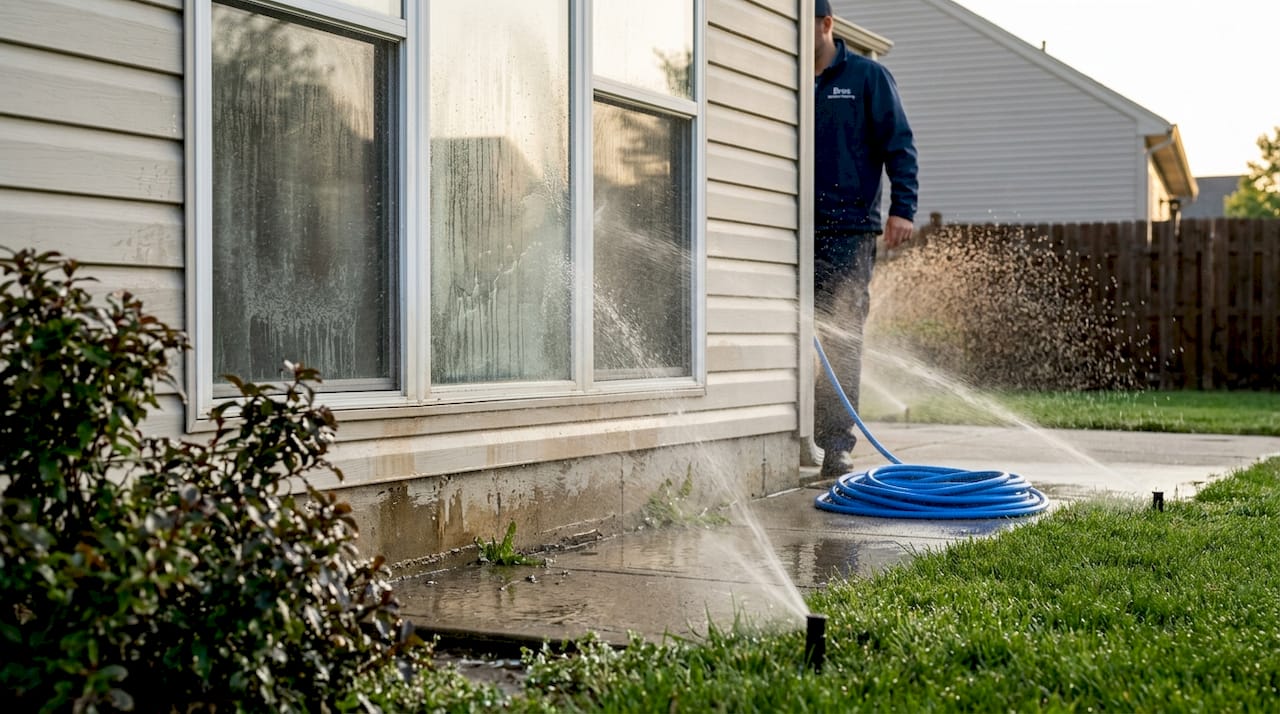
Sunlight accelerates the problem significantly. Heat bakes the calcium and magnesium into the glass, making the bond stronger and the stain harder to reverse. A window that gets direct afternoon sun and regular sprinkler contact is going to develop staining much faster than a shaded one. That’s why south and west-facing windows in Orange County homes tend to show water staining first.
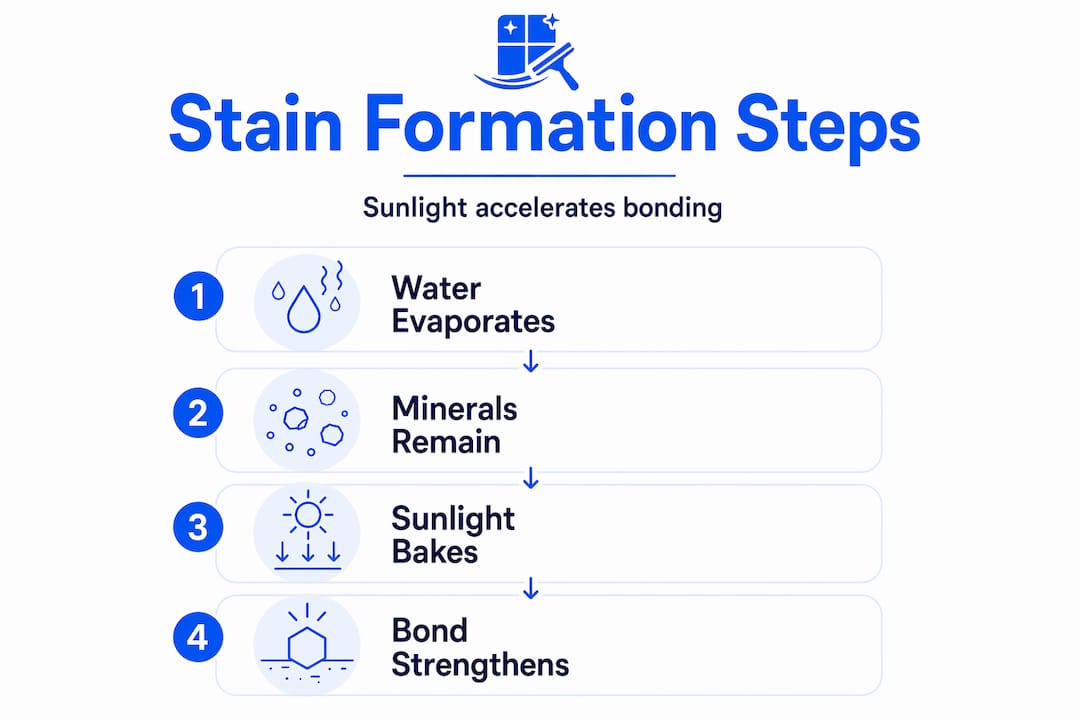
The difference between water staining and ordinary dirt matters because the solution is completely different. Dirt sits on the surface and washes away. Mineral deposits are chemically bonded to the glass and require an acid-based approach to dissolve them. Treating one like the other is how stains become permanent.
Why standard cleaning doesn’t remove water stains
This is where most homeowners lose time and money. You spray, you scrub, the window looks cleaner for a day, and then the haze comes right back. That’s because standard window washing removes surface dirt but has no effect on bonded mineral deposits.
The minerals in hard water stains have partially etched into the glass surface. Think of it like rust on metal. You can wipe the surface clean, but the oxidation has already changed the material underneath. The same principle applies here. Regular soap and water can’t dissolve calcium carbonate or magnesium silicate. You need an acidic solution to break the chemical bond.
Common mistakes that make the problem worse include:
- Cleaning windows in direct sunlight, which causes solutions to evaporate too quickly and leaves new residue behind
- Using tap water in your cleaning mixture, which adds fresh minerals to the glass you’re trying to clean
- Scrubbing with abrasive pads, which can scratch the glass surface and create micro-grooves where minerals accumulate faster
- Using ammonia or alcohol-based cleaners, which damage rubber seals on insulated glass units and accelerate fogging
The seal damage point is worth dwelling on. Many homeowners reach for whatever glass cleaner is under the sink, not knowing that ammonia-based products break down the rubber gaskets that keep insulated window units sealed. Once those seals fail, you get fogging between the panes, and that’s a repair that costs far more than a professional stain removal service.
Pro Tip: Always check whether your windows are single-pane or insulated double-pane before choosing a cleaning product. The wrong cleaner on an insulated unit can void the manufacturer’s warranty.
How to actually remove water stains from windows
The good news is that early-stage staining responds well to DIY treatment. The key is using the right materials and the right conditions. Here’s a step-by-step approach that works for moderate deposits:
- Mix your solution. Combine half a cup of high-purity white vinegar with two cups of distilled water. Never use tap water. Tap water contains the same minerals you’re trying to remove.
- Choose your timing. Work in the early morning or late afternoon. Avoid direct sunlight entirely. Heat causes the solution to evaporate before it can dissolve the minerals.
- Apply with a microfiber applicator. Soak the glass thoroughly and let the solution sit for two to three minutes. The acidity needs contact time to break down the deposits.
- Work in small sections. Don’t try to do the whole window at once. Treat one section, wipe, and move on.
- Finish with a professional-grade squeegee. A freshly cut rubber blade on a quality squeegee removes residue without scratching and gives you a streak-free result.
- Dry completely. Use a clean, dry microfiber cloth to remove any remaining moisture. Drying glass completely after cleaning stops new spots from forming immediately.
For tougher stains, a baking soda paste applied with a soft cloth adds mild abrasive action without scratching. Mix baking soda with just enough distilled water to form a thick paste, apply it to the stain, and let it sit for five minutes before working it in with gentle circular motions.
Here’s an honest comparison of DIY versus professional treatment:
| Method | Best for | Limitations |
|---|---|---|
| Vinegar and distilled water | Light to moderate early-stage stains | Won’t remove deeply etched or heavy deposits |
| Baking soda paste | Slightly tougher spots on single-pane glass | Risk of micro-scratching if applied too aggressively |
| Professional acidic treatment | Severe or long-standing mineral buildup | Requires trained application to avoid glass damage |
| Mechanical polishing | Etched glass restoration | Only available through professional services |
Pro Tip: For windows with visible etching or stains that have been there more than a year, skip the DIY stage entirely. Mechanical polishing by a professional is the only way to restore the glass without replacing it.
Preventing water stains on windows
Prevention is significantly cheaper than restoration. Once you understand how water staining forms, stopping it becomes straightforward. Here’s what actually works:
- Redirect your sprinklers. Moving sprinklers away from windows is one of the single most effective things you can do. Even a small adjustment in the spray arc can eliminate the primary source of mineral deposits on exterior glass.
- Apply a water-repellent treatment. A mix of vinegar, distilled water, and a plant-based surfactant encourages water to sheet off the glass rather than bead and evaporate. This dramatically reduces residue buildup.
- Dry windows after rain or washing. This sounds basic, but drying glass after rain is one of the most effective preventative habits you can build. A quick pass with a squeegee after a storm costs you two minutes and saves you hours of stain removal later.
- Inspect and clear weep holes. Weep holes are the small drainage slots at the bottom of window frames. When they clog, water pools in the frame and works its way into the glazing pocket, causing staining from the inside out. Clear them with a thin wire or toothpick every few months.
- Check your window seals seasonally. Failing seals allow moisture intrusion that creates staining patterns no amount of exterior cleaning will fix. Catching a failing seal early is far cheaper than replacing a fogged window unit.
- Establish a regular cleaning schedule. Light mineral deposits that have been on the glass for a week are far easier to remove than ones that have been baking in the sun for three months. For homes in Orange County, a quarterly exterior window cleaning routine keeps staining manageable. For more guidance on maintaining clean glass between professional visits, the streak-free cleaning guide from Broswindowcleaningoc covers the right tools and techniques for homeowners.
Climate matters here too. Coastal properties deal with salt air, which accelerates mineral bonding on glass. Inland properties in hotter, drier areas see faster evaporation, which means deposits form more quickly. Knowing your local environment helps you calibrate how often you need to clean and treat your windows.
My take: water stains reveal more than you think
I’ve looked at a lot of windows over the years, and what I’ve learned is that water staining is rarely just a cosmetic problem. It’s a symptom. When I see staining concentrated at the corners of a window frame, or running vertically down from the sill, that tells me something about the installation, not just the water.
The concept that shapes how I think about this is what professionals call the “Shingle Principle.” Water should always be directed away from the building envelope, with each layer of material overlapping the one below it, just like shingles on a roof. When that principle breaks down, whether from poor frame sealing or improper flashing installation, water finds its way behind siding and into the wall assembly. The staining you see on the glass is just the visible part of a larger problem.
I’ve also seen homeowners spend money on repeated cleaning treatments for windows where the real issue was a clogged weep hole forcing water into the glazing pocket. No amount of exterior cleaning fixes that. You have to address the drainage.
My honest advice: if you’re seeing recurring stains in the same spots after cleaning, get the window assembly inspected before spending more on stain removal. The cleaning is the easy part. Understanding why the water is getting there in the first place is what protects your investment long term.
— nolan
Professional water stain removal in Orange County

When DIY methods fall short, or when you’re managing multiple properties and don’t have time for trial and error, professional treatment makes a real difference. Broswindowcleaningoc specializes in window stain removal for residential and commercial properties across Orange County, using acid-based treatments and mechanical polishing that restore glass without damaging seals or frames.
Beyond stain removal, Broswindowcleaningoc offers pressure washing, gutter cleaning, and solar panel cleaning, so the same visit that clears your windows can address the drainage and debris issues that cause staining in the first place. If you want to understand the full scope of what professional window care involves, the window cleaning terms guide explains exactly what services cover and what to ask for. Professional cleaning also boosts curb appeal in ways that matter when it comes to property value.
FAQ
What exactly is window water staining?
Window water staining is the buildup of mineral deposits, primarily calcium and magnesium, left on glass after water evaporates. Unlike dirt, these deposits bond to the glass surface and require acid-based treatment to remove.
Do water stains affect visibility through windows?
Yes. Heavy mineral buildup creates a cloudy, hazy film that reduces light transmission and distorts the view. Severe or long-standing staining can permanently etch the glass, affecting clarity even after cleaning.
Is window water staining harmful to the glass?
Over time, yes. Minerals that sit on glass begin to etch the surface, and if left untreated, the damage becomes permanent. Early treatment prevents etching and preserves the integrity of the glass.
Can I remove water stains with regular glass cleaner?
No. Standard glass cleaners remove surface dirt but cannot dissolve bonded mineral deposits. You need an acidic solution like a vinegar and distilled water mixture, or a professional-grade treatment for severe staining.
How do I stop water stains from coming back?
Redirect sprinklers away from windows, apply a water-repellent treatment to the glass, clear weep holes regularly, and dry windows after rain. A consistent cleaning routine is the most reliable way to prevent mineral buildup from returning.