
You know the feeling. You spend a Saturday afternoon cleaning your windows, step back, and squint at a glass covered in smears, water spots, and streaks. In Orange County, that frustration hits harder because the conditions here work against you every single time. Coastal salt air, pollen, and intense sun mean your windows get dirtier faster than almost anywhere else in California. The good news? A simple, professional system turns this chore into a satisfying win, and you can do it yourself with the right knowledge.
Table of Contents
- What you need for streak-free window cleaning
- Step-by-step: How to clean windows the pro way
- Troubleshooting: Avoiding streaks and spots in Orange County
- How often should you clean your windows in OC?
- The reality of window cleaning: What most guides miss
- Ready for perfect windows? Get help from Orange County’s pros
- Frequently asked questions
Key Takeaways
| Point | Details |
|---|---|
| Right tools matter | Microfiber cloths, squeegee, and distilled water provide the best streak-free results. |
| Preparation prevents streaks | Dust and prep frames, tracks, and screens before cleaning the glass to avoid smears. |
| Method beats speed | Clean on the shaded side and dry thoroughly to prevent fast sun-dried streaks. |
| OC needs frequent care | Coastal and high-exposure windows in Orange County need cleaning every 6–8 weeks. |
| Troubleshoot with direction | If streaks persist, change wiping direction and spot-clean to find and remove them. |
What you need for streak-free window cleaning
Understanding the Orange County window cleaning challenges specific to this region is your first real advantage. Salt air deposits a filmy residue on glass within days of cleaning. Marine layer humidity traps particulates. Pollen season here runs nearly year-round, and the relentless sun bakes everything onto the surface fast. Generic cleaning advice from cold-climate guides simply doesn’t account for any of this.
Pro-approved window cleaning starts with removing loose dust from frames, tracks, and sills before you ever touch the glass. Skipping this step drags grit across the surface and creates micro-scratches that scatter light, making your windows look perpetually dirty even right after cleaning.
Here’s a quick comparison of what the pros use versus what most homeowners reach for:
| Tool/Material | Pro choice | DIY alternative | Why it matters |
|---|---|---|---|
| Cleaning solution | Dish soap + distilled water | Commercial glass cleaner | Fewer minerals, less residue |
| Applicator | T-bar washer with sleeve | Microfiber cloth | Even coverage, no lint |
| Squeegee | Professional 12-16 inch blade | Budget rubber squeegee | Clean, streak-free pull |
| Drying cloth | Lint-free microfiber | Newspaper | Absorbs without streaking |
| Bucket | Large 3-gallon bucket | Any basin | Allows full T-bar dip |
Essential supplies for any OC cleaning session:
- A good quality rubber squeegee (replace the blade at least once per season)
- Several clean microfiber cloths, washed without fabric softener
- Distilled water, especially near the coast where tap water is mineral-heavy
- A few drops of dish soap, nothing more
- A dry scrub pad for stubborn spots on exterior glass
- A vacuum or soft brush for tracks and sill debris
Pro Tip: Never clean windows on the sunny side of your house while the sun is hitting them directly. The solution evaporates in seconds, leaving behind exactly the streaks you were trying to avoid. Start on the shaded side and rotate as the sun moves.
Step-by-step: How to clean windows the pro way
With your tools prepped, here’s how to clean like a professional, one smart step at a time. Order matters here more than most people realize. Rushing to the glass before clearing debris from the frame is one of the most common causes of streaks and recontamination.
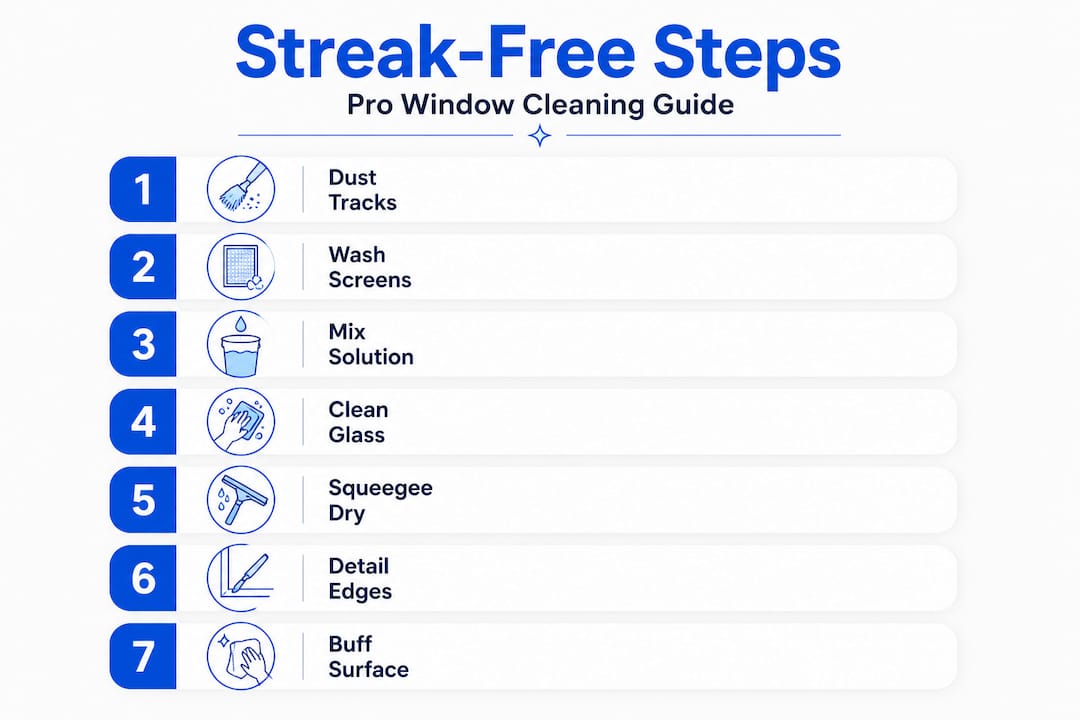
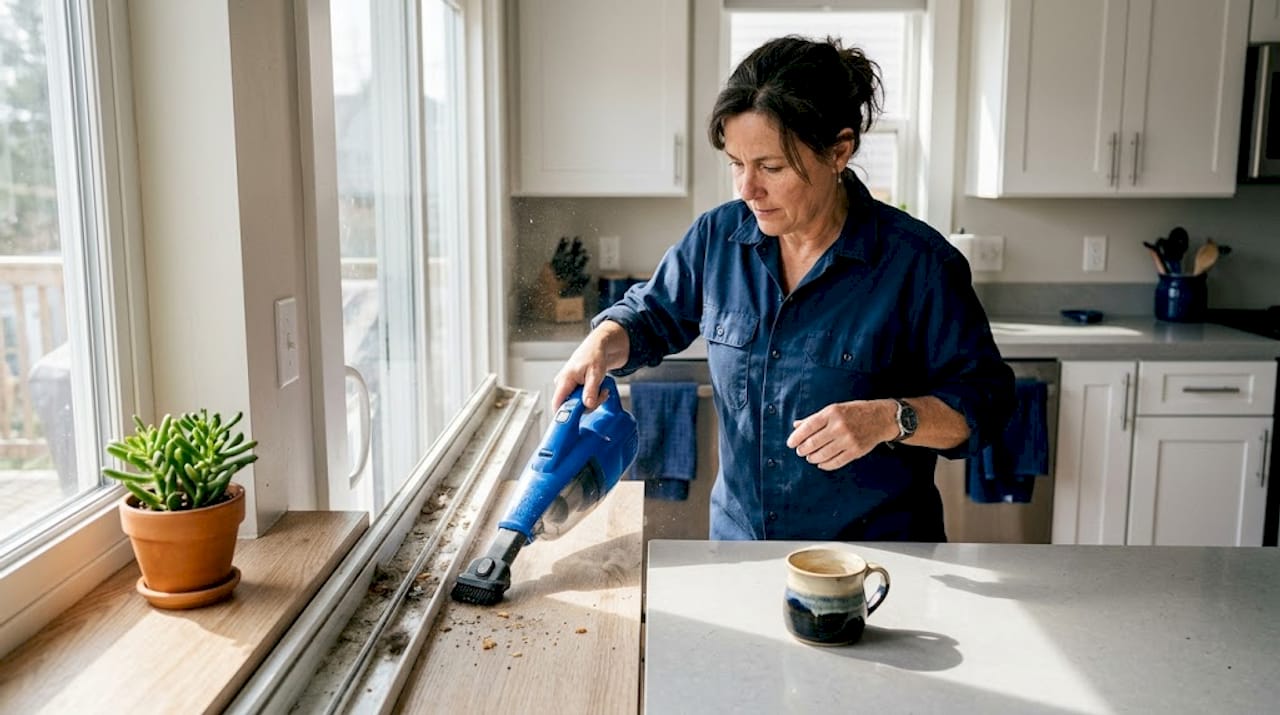
Step 1: Vacuum or brush all frames, tracks, and sills. Use a vacuum with a brush attachment or a dry paintbrush to clear every corner. Dirt hiding in the track will migrate onto clean glass the moment you apply any liquid.
Step 2: Remove and clean screens. Take screens outside, lay them flat, and rinse gently with a garden hose. Let them air-dry completely before reinstalling. A dirty screen sitting in a wet frame is a direct route to spotted glass.
Step 3: Prepare your solution. Mix warm water with just a few drops of dish soap in your bucket. Warm water plus dish soap is a widely trusted method: it cuts grease, loosens grime, and rinses clean without leaving a heavy soapy film. Too much soap is actually worse than too little; excess suds leave their own residue behind.
Step 4: Wet the glass fully. Dip your T-bar or microfiber applicator and saturate the glass completely. Work from top to bottom to avoid drips falling on already-cleaned sections.
Step 5: Squeegee in overlapping strokes. Start at the top corner and pull the blade horizontally across, then wipe the blade with a clean cloth after each stroke. Overlapping each stroke by about an inch ensures no solution is left behind.
Step 6: Detail the edges. Fold a dry microfiber cloth and run it along every edge where the blade can’t reach. This is where most streaks actually originate, not from the middle of the glass.
Step 7: Buff the surface. Do a final light pass with a clean, dry microfiber to catch any remaining moisture.
| Step | What to do | Common mistake |
|---|---|---|
| 1 | Vacuum frames, tracks, sills | Skipping and going straight to glass |
| 2 | Clean and dry screens | Reinstalling wet screens |
| 3 | Mix solution correctly | Using too much soap |
| 4 | Wet glass fully | Cleaning small sections at a time |
| 5 | Squeegee with overlapping strokes | Skipping blade wipes between strokes |
| 6 | Detail all edges | Ignoring corners and frame edges |
| 7 | Buff dry | Using a damp or linty cloth |
Pro Tip: To figure out whether a streak is on the inside or outside of the glass, wipe one surface horizontally and the other vertically. Whichever direction the streak runs tells you exactly which side needs more attention. This trick saves you from endlessly cleaning the wrong surface.
Caution: Using too much cleaning solution and working in direct sun are the two biggest self-inflicted mistakes. Excess soap means more residue to remove, and sun-baked cleaner is nearly impossible to buff out without starting over. If the glass feels sticky after drying, you used too much soap.
For more on preventing window streaks before they become a recurring problem, understanding your technique at each drying stage makes a significant difference.
Troubleshooting: Avoiding streaks and spots in Orange County
Even with the right method, local quirks cause headaches. Here’s how to troubleshoot and solve them before they ruin an otherwise clean job.
Orange County’s combination of hard municipal tap water, coastal salt, and strong UV exposure creates a perfect environment for mineral haze and stubborn water spots. Tap water in many OC cities contains
elevated mineral content, and pros often switch to deionized or distilled water for rinsing exterior glass to cut down on spotting dramatically. If you’ve ever cleaned your windows on a clear morning and noticed a chalky haze by afternoon, mineral deposits are the culprit.
Common streak and spot causes in Orange County:
- Hard water mineral deposits: White haze that doesn’t buff away easily; treat with white vinegar or a dedicated mineral remover before regular cleaning
- Salt film from coastal air: A slightly greasy film that smears if you don’t pre-rinse; always wet the glass thoroughly before applying any cleaner near the coast
- Pollen adhesion: Pollen particles are sticky and acidic; they can etch glass if left too long, especially in spring
- Sun-dried solution: Cleaner that evaporates mid-stroke leaves a concentrated residue that looks like a streak but is actually dried soap
- Dirty squeegee blade: A nicked or worn blade deposits streaks in a regular pattern across the glass; replace blades seasonally
The curb appeal ROI of window cleaning is real, but only if the glass actually looks clean. Homeowners often underestimate how much a light mineral haze reduces visual clarity, even if the window looks acceptable from inside.
Quick fixes that actually work:
- Change your wiping direction (horizontal to vertical or vice versa) to identify which surface and which layer is the problem
- Spot-clean a small affected area with undiluted white vinegar to break down mineral deposits, then clean normally
- For stubborn exterior spots, use a non-scratch scrubbing pad with your cleaning solution before squeegeeing
Pro Tip: Distilled or deionized water is worth the small extra cost if you live within a few miles of the coast or have noticeable hard water spots after every cleaning. Mineral-free water leaves nothing behind when it evaporates. It’s one upgrade that visibly changes your results with zero extra effort.
To understand more about what window cleaning industry terms like deionized water actually mean in practice, knowing the vocabulary helps you buy the right products.
How often should you clean your windows in OC?
Prevention is as important as technique, so how often should you clean, and what tells you it’s time?
OC’s coastal and environmental conditions mean that a “clean twice a year” approach works for very few properties here. Seasonal-only cleaning is a mainland cold-climate habit that simply doesn’t translate to a region with year-round pollen, marine layer humidity, and dust from hot, dry Santa Ana wind events. Each of those factors deposits a different type of residue that builds up fast.
Signs that it’s time to clean, regardless of how recently you last did it:
- Loss of clarity: You can see a visible film when looking through the glass toward a bright exterior scene
- Water spots that don’t disappear after rain: Rain in OC often contains dissolved minerals that spot glass rather than rinse it
- Visible pollen or dust haze: Common from late winter through early summer
- Salt film or sticky feel on exterior glass: A sign that ocean air has deposited residue
- Irrigation overspray: Hard water from sprinkler systems hitting window glass leaves heavy mineral deposits that worsen with each cycle
Recommended cleaning schedule by property type:
| Property type/location | Exterior cleaning frequency | Interior cleaning frequency |
|---|---|---|
| Coastal (within 3 miles of coast) | Every 6 to 8 weeks | Every 2 to 3 months |
| Inland residential | Every 8 to 12 weeks | Every 3 to 4 months |
| Near busy roads or construction | Every 4 to 6 weeks | Every 2 months |
| Commercial storefronts | Every 2 to 4 weeks | Every 4 to 6 weeks |
| Homes with heavy irrigation | Every 6 to 8 weeks | Every 3 months |
Window cleaning and property value are more connected than most homeowners expect. Clean, clear glass communicates pride of ownership and makes every other exterior feature look sharper. A dirty window can make a freshly painted home look neglected.
The reality of window cleaning: What most guides miss
Now that you have the step-by-step, here’s the reality that most guides won’t tell you.
After years of cleaning windows across Orange County, from beachfront properties in Newport Beach to hillside homes in Anaheim Hills, the pattern is always the same. The people who get consistently streak-free results are not the ones who found a better spray. They’re the ones who stopped treating window cleaning as a single task and started treating it as a system.
Treating window cleaning as a system means frames, tracks, screens, glass, and detailed edge drying are all part of one connected process. When any step gets skipped, the shortcut creates extra work at the end. Dirty tracks contaminate clean glass. Wet screens drip onto freshly squeegeed panes. Skipped edge drying leaves moisture that migrates to the center of the glass overnight and appears as a mysterious streak the next morning.
The single most common failure we see in Orange County is fast-drying sun combined with too much cleaner. Someone sprays a generous coat of solution onto a warm, south-facing window on a dry afternoon, makes a few swipes with a microfiber, and wonders why the glass looks worse than before. The solution evaporated and concentrated before it could be removed. Knowing this, the decision to start on the shaded side is not a suggestion. It’s the difference between clean and starting over.
Edge detail matters more here than in most regions because of how OC conditions deposit residue. Salt, minerals, and pollen accumulate at the frame edge where rubber gaskets meet glass. A squeegee never fully reaches that margin. Skipping the microfiber detail step on those edges means leaving the dirtiest part of the window untouched, and that border will bleed back onto the glass surface during the next rainfall or heavy dew.
We’ve seen beautifully cleaned center panes ruined by one dirty edge. The common Orange County window dirt sources that accumulate along edges are the same ones that make their way back to the glass if you don’t address them directly. Treat the entire window as a unit. Clean everything. Dry everything. That’s when results last.
Ready for perfect windows? Get help from Orange County’s pros
Knowing the right technique is a serious advantage. But some windows need more than the right technique.

Large multi-story properties, stubborn hard water etching, commercial storefronts that need consistent weekly service, and windows that haven’t been touched in years all fall into territory where professional window cleaning in Orange County pays off significantly. Bros Window Cleaning has spent over five years developing systems specifically for OC conditions, using professional-grade equipment and deionized water setups that simply aren’t practical for a DIY kit. If you want to understand the full ROI of pro window cleaning before committing, the numbers are worth reviewing. And if you want to go deeper on what separates spotless glass from frustrating results, our pro window cleaning tips cover every OC-specific factor in detail. Getting a quote is easy, and the difference in results is immediate.
Frequently asked questions
What is the best homemade window cleaning solution?
Mix warm water with a small amount of dish soap and dry thoroughly with a microfiber cloth or newspaper; this DIY method is one of the most widely recommended approaches for streak-free results.
How can I clean windows without leaving streaks?
Avoid direct sun, remove loose dust first, use a lint-free microfiber for drying, and always detail the edges where the squeegee can’t reach.
How often should windows be cleaned in coastal OC homes?
Clean exterior windows every 6 to 8 weeks for coastal properties because salt air, pollen, and humidity build up far faster near the ocean than inland.
Does distilled water really reduce spots on windows?
Yes, because deionized or distilled water contains no minerals, it leaves nothing behind when it evaporates, eliminating the chalky water spots that tap water causes on exterior glass.
What if my windows still look streaky after cleaning?
Changing your wiping direction from horizontal to vertical, or vice versa, helps identify whether the streak is on the inside or outside surface so you can target the right side.