
Power washing misconceptions are the leading cause of preventable property damage and missed maintenance among homeowners, business owners, and property managers. The industry term is pressure washing, and it refers to using high-velocity water jets to remove dirt, mold, algae, and grime from exterior surfaces. When you act on bad information, you risk cracked concrete, stripped paint, hidden moisture damage, or a surface that looks clean but is quietly rotting underneath. This article cuts through the most common myths so you can make decisions grounded in fact, not guesswork passed down from a neighbor or a YouTube comment section.
1. Power washing misconceptions about surface damage
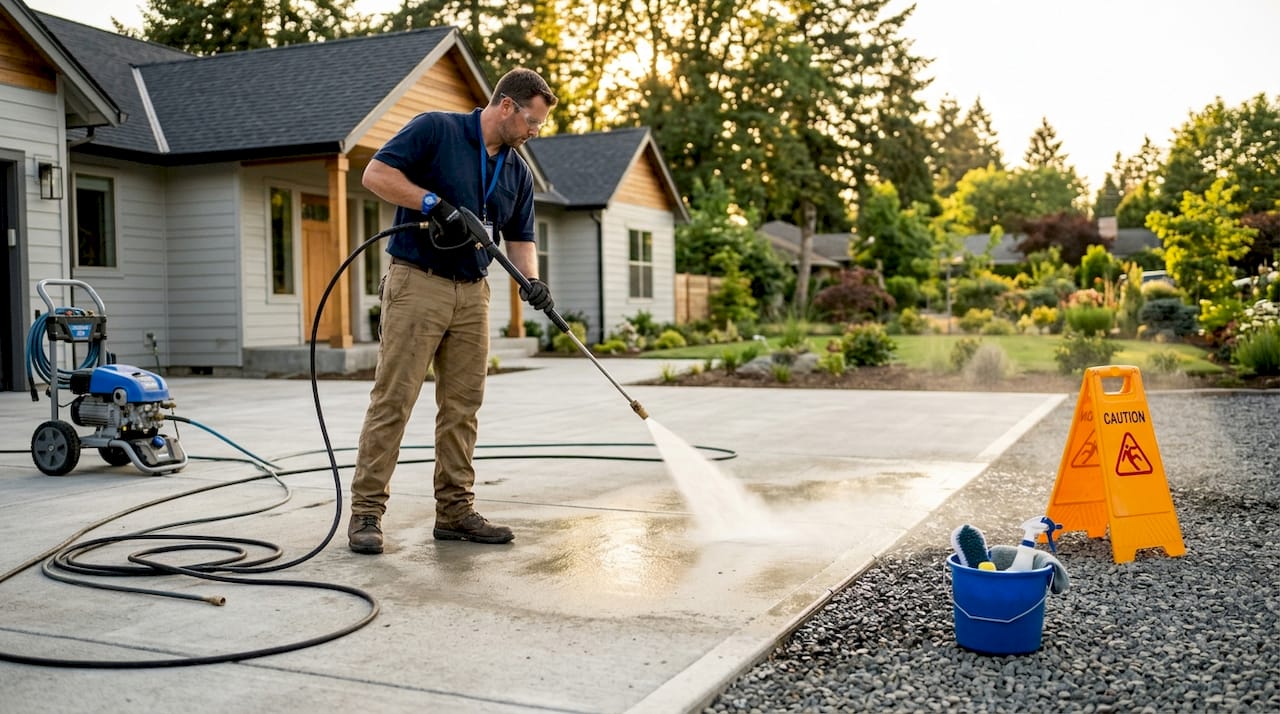
The most common myth is that power washing always damages surfaces. Damage only happens when the wrong pressure is applied to the wrong material. Professionals adjust PSI settings and nozzle distances based on what they are cleaning. For example, concrete cleaning standards recommend 3,000–4,000 PSI with nozzle distances of 12–18 inches to remove grime without gouging the surface.
New concrete is a different story. Pressures above 1,800 PSI on freshly poured concrete damage the delicate cream coat and cause irreversible streaking. That is not a flaw in power washing as a method. It is the result of applying the wrong setting to a material that needs a gentler approach.
Painted siding, wood decks, and stucco all require lower pressure and, in many cases, a soft wash technique. Soft washing uses low pressure combined with cleaning detergents to lift organic buildup without blasting the surface. You can learn more about when this method applies in this soft wash cleaning guide.
Pro Tip: Never hold a pressure washer nozzle closer than 12 inches to any surface. Moving it farther away reduces impact force significantly, giving you more control over the result.
2. Power washing is purely cosmetic
Power washing is a preventative maintenance tool, not just a way to make your driveway look good before a party. Experts identify power washing as a method that extends the lifespan of siding, decks, and walkways by removing mold, algae, and rot-causing organic buildup before it penetrates the material.
Left untreated, mold and algae do not stay on the surface. They work their way into wood grain, grout lines, and siding seams, causing decay that requires full replacement rather than a simple cleaning. Regular washing removes these threats before they become structural problems.
“Power washing prevents costly structural damage by removing organic buildup and extending the life of materials.” — Catchlight Painting
The surfaces that benefit most from regular cleaning include:
- Wood decks and fences: Algae and mildew accelerate wood rot when left to sit through wet seasons.
- Concrete driveways and walkways: Moss and oil buildup create slip hazards and degrade the surface over time.
- Vinyl and fiber cement siding: Mold staining is cosmetic at first but becomes a moisture problem if ignored.
- Roof edges and gutters: Organic debris traps moisture against fascia boards, leading to rot.
3. Anyone can do it safely
DIY power washing looks simple. You rent a machine, point it at a dirty surface, and pull the trigger. The reality is more complicated, and the hidden costs of DIY mistakes frequently exceed what a professional service would have charged in the first place.
The most common DIY errors include:
- Using too much pressure on siding. Blasting vinyl or wood siding at high PSI strips paint, cracks panels, and forces water behind the cladding.
- Spraying at the wrong angle. Spraying upward under siding drives water into wall cavities, where it sits and causes hidden mold growth and rot.
- Running the pump dry. Operating the pump without water flow builds heat rapidly and destroys seals, turning a rental into a repair bill.
- Using a ladder. Kick-back force from a pressure washer gun is strong enough to destabilize an experienced operator on flat ground. On a ladder, that force becomes a fall risk.
- Choosing the wrong nozzle. A zero-degree red nozzle concentrates all force into a pinpoint jet. On wood or painted surfaces, it cuts like a knife.
Professional crews bring commercial-grade equipment, trained technicians, and surface-specific protocols. They also carry insurance, which matters when a mistake causes $3,000 in siding damage. For a detailed breakdown of safe technique, the pressure washing safety guide from Broswindowcleaningoc covers every step.
Pro Tip: If you do rent a machine, always start with the widest nozzle angle (40 degrees or more) and test on a hidden area first. You can always increase pressure, but you cannot undo surface damage.
4. Power washing harms plants and the environment
This concern is understandable but largely overstated when professionals handle the job. Modern pressure washers are energy-efficient, and trained crews use specific techniques to protect landscaping during cleaning.
Standard plant protection measures used by professional services include:
- Pre-wetting plants before cleaning begins to dilute any detergent that drifts onto leaves.
- Using physical barriers such as tarps or plastic sheeting around flower beds and shrubs near the work area.
- Rinsing plants thoroughly after the job is complete to remove any chemical residue.
- Choosing biodegradable detergents that break down quickly and do not accumulate in soil.
Detergent application also follows a specific protocol. Cleaning solutions should dwell on surfaces for 5–10 minutes and must not be allowed to dry. Letting detergent dry on a surface concentrates the chemicals and causes staining or chemical burns, which is why professionals monitor dwell time carefully.
Runoff is a real concern in areas near storm drains, but professional crews plan their work to minimize it. Biodegradable formulas and controlled rinsing keep the environmental footprint small.
5. High pressure always means better results
More pressure does not equal a cleaner surface. Higher pressure on delicate materials produces worse results because it damages the surface before it removes the stain. Soft washing, which pairs low pressure with the right detergent chemistry, consistently outperforms brute-force blasting on roofs, painted wood, and older siding.
The logic is straightforward. Mold and algae are biological organisms. A detergent that kills them at the root is more effective than water pressure that physically scrapes the surface. Scraping without killing the root means the growth returns within weeks. Detergent-based soft washing kills the organism and slows regrowth significantly.
This is one of the most persistent misunderstandings about power washing because it feels counterintuitive. You expect more force to do more work. For hard surfaces like concrete and brick, that holds true within the correct PSI range. For everything else, chemistry does the heavy lifting.
6. Power washing works on every stain
Power washing removes dirt, mold, mildew, algae, and general surface grime with excellent results. It does not fix every stain, and knowing the difference saves you time and money.
| Stain or surface type | Power washing result | What actually works |
|---|---|---|
| Mold and algae on siding | Excellent with soft wash | Soft wash with biocide detergent |
| General dirt and grime | Excellent | Standard pressure wash |
| Deep oil stains on concrete | Partial | Pre-treatment with degreaser, then wash |
| Rust stains on concrete | Minimal | Oxalic acid treatment before washing |
| Old paint on wood | Strips paint, not a stain fix | Sanding or chemical stripping |
| Efflorescence on brick | Moderate | Acid wash followed by pressure rinse |
Deep oil stains on driveways are the most common example of unrealistic expectations. Power washing lifts surface-level oil, but oil that has soaked into concrete pores requires a degreaser applied and left to break down the bond before water can flush it out. Skipping that step leaves a faded stain that looks worse than the original. For a full list of surfaces and applications, the power washing uses guide covers ten property types in detail.
Key takeaways
Power washing done correctly is a safe, effective maintenance method. Damage, wasted money, and poor results come from acting on myths rather than technique.
| Point | Details |
|---|---|
| Pressure must match the surface | Use under 1,800 PSI on new concrete; 3,000–4,000 PSI suits standard concrete cleaning. |
| Power washing is preventative | Regular cleaning removes mold and algae before they cause rot, decay, and structural damage. |
| DIY carries real financial risk | Hidden costs from DIY mistakes frequently exceed the price of hiring a professional service. |
| Soft washing beats high pressure on delicate surfaces | Low pressure plus detergent kills biological growth at the root and prevents fast regrowth. |
| Not all stains respond to water alone | Oil, rust, and efflorescence require pre-treatment before power washing delivers results. |
What I have learned from watching property owners get this wrong
The myth that costs the most
After years of working in exterior cleaning, the misconception I see cause the most financial damage is the belief that power washing is a simple weekend task. Homeowners rent a machine, skip the research, and spend the next month dealing with water-damaged walls or stripped paint. The repair bill is always more painful because it was avoidable.
The second most costly myth is that skipping regular cleaning saves money. A deck that goes three years without cleaning does not just look bad. It develops rot in the wood fibers that no amount of washing will reverse. At that point, you are replacing boards, not cleaning them.
What I have found is that property owners who treat power washing as a scheduled maintenance task, the same way they treat HVAC servicing or roof inspections, spend far less over time. They catch mold early. They preserve paint longer. They avoid the compounding cost of neglect.
The technical side matters too. Choosing the right PSI, the right nozzle, and the right detergent for each surface is not complicated once you understand the principles. But it does require knowing those principles before you start, not after you have already caused damage.
— nolan
Professional power washing that protects your property
Broswindowcleaningoc has served Orange County homeowners and property managers for over five years, handling pressure washing, soft washing, window cleaning, gutter cleaning, and more. Every job uses surface-specific pressure settings, commercial-grade equipment, and fully insured technicians who know the difference between a surface that needs 800 PSI and one that needs 3,500 PSI.

If you want to understand what professional pressure washing involves before booking, the Broswindowcleaningoc resource library covers techniques, surface types, and what to expect from a professional visit. You can also review the quality service checklist to know exactly what separates a trained crew from a rental machine and a guess. Reach out to Broswindowcleaningoc to schedule a visit and get a clear assessment of what your property actually needs.
FAQ
Does power washing damage paint and siding?
Power washing damages paint and siding only when the wrong pressure or technique is used. Soft washing with low pressure and appropriate detergents cleans painted and vinyl surfaces safely without stripping or cracking.
Is power washing safe for plants and landscaping?
Professional crews pre-wet plants, use physical barriers, and rinse thoroughly after cleaning to protect landscaping. Biodegradable detergents break down quickly and do not accumulate in soil when applied correctly.
How often should you power wash your home exterior?
Most home exteriors benefit from cleaning once a year. Properties in humid climates or areas with heavy tree cover may need cleaning twice a year to prevent mold and algae from taking hold.
Can power washing remove oil stains from a driveway?
Power washing alone removes surface-level oil but not deep stains. Oil that has soaked into concrete requires a degreaser pre-treatment to break down the bond before water can flush it out effectively.
Is DIY power washing worth it compared to hiring a professional?
DIY power washing carries significant risk of surface damage, water intrusion, and equipment misuse. The hidden repair costs from common mistakes frequently exceed the cost of hiring a professional service from the start.
Pingback: Pressure Washing's Role in Graffiti Prevention for Owners