
Once a year is the right default for most driveways. Bump that up to every 6 to 12 months if you’re dealing with heavy vehicle traffic, and drop to every 6 months if your driveway sits in deep shade or a humid, tree-covered yard. Sealing your concrete or pavers stretches that window further, but washing more often than necessary, especially at high pressure, can do more harm than the dirt ever would.
TL;DR:
- Driveways with heavy traffic, shade, or coastal humidity typically need pressure washing every 6 months, while sunny, low-traffic driveways can go up to 12-18 months.
- Asphalt surfaces are more vulnerable to pressure damage and should be washed with lower pressure, whereas concrete tolerates annual cleaning well and benefits from resealing.
- Organic growth, oil stains, or persistent grime indicate the surface requires cleaning sooner than scheduled, especially if safety hazards like slipperiness develop.
- Professional pressure washing with surface cleaners and appropriate chemical use preserves driveway integrity, reduces streaking, and optimizes stain removal.
- Spring and fall are prime seasons for washing, with key tasks including inspecting for stains, spot-treating, and scheduling before extreme weather or heavy debris.
Table of Contents
- Driveway Pressure Washing Frequency by Homeowner Scenario
- How Driveway Material Changes the Cleaning Schedule
- What Actually Changes How Often You Need to Clean
- Signs Your Driveway Needs Cleaning Sooner Than Planned
- DIY or Call a Pro? What Actually Matters
- The Best Months to Schedule a Driveway Wash
- What Homeowners Consistently Get Wrong About This Schedule
- Book a Professional Driveway Wash With Broswindowcleaningoc
- Sources
- FAQ
Driveway Pressure Washing Frequency by Homeowner Scenario
The right cleaning schedule depends less on the calendar and more on how your driveway actually gets used. A single-car driveway in full sun with no trees nearby can often go 12 to 18 months between cleanings and still look decent. Add a second or third vehicle, or a canopy of oak or pine trees dropping sap and pollen, and that window shrinks fast.
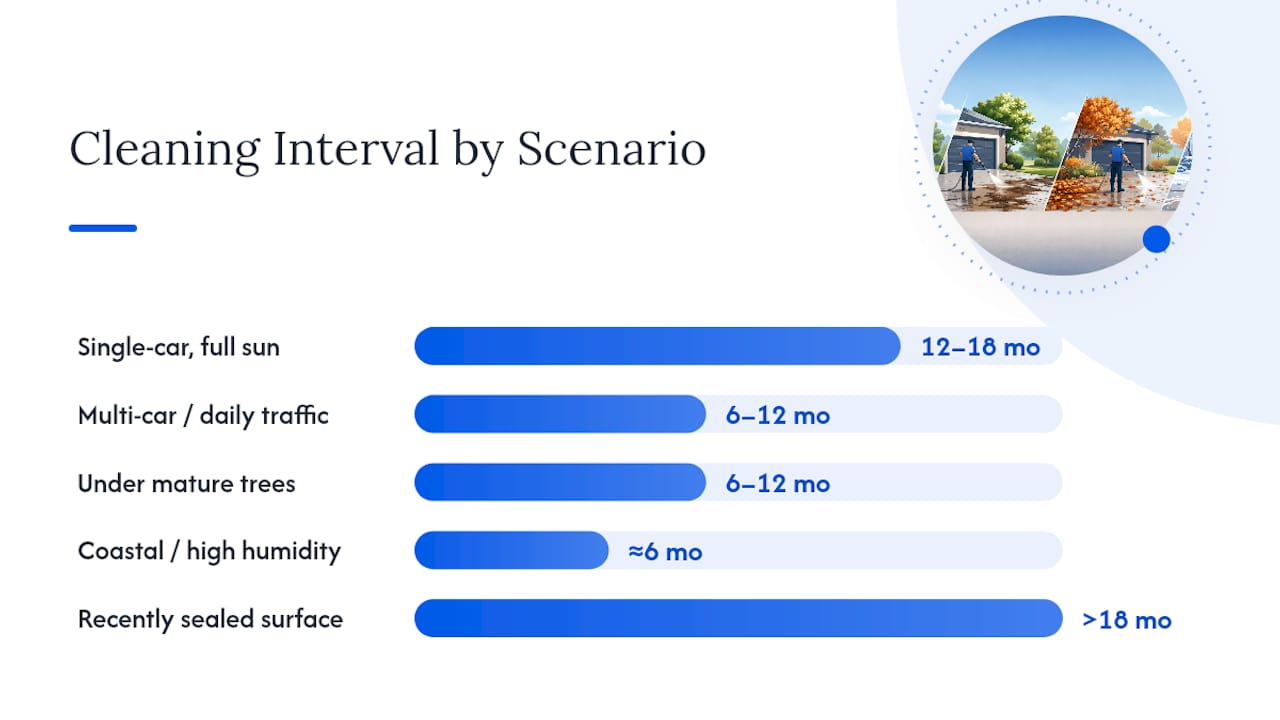
Cleaning professionals commonly point homeowners toward an annual baseline, then recommend tightening that to every 6 to 12 months once traffic or shade becomes a factor. A professional wash tends to keep a driveway looking clean for roughly 12 to 24 months, with sunny, low-tree properties landing toward the longer end of that range.
Here’s how that breaks down by common setup:
- Single-car, full sun, no trees: every 12 to 18 months
- Multi-car household or daily commuter traffic: every 6 to 12 months
- Under mature trees or near a lawn sprinkler zone: every 6 to 12 months
- Coastal or high-humidity climate: closer to every 6 months
- Recently sealed surface: can often stretch past the 18 month mark
If you’re unsure where your property falls, our deeper pressure washing frequency guide walks through more edge cases.
How Driveway Material Changes the Cleaning Schedule
Concrete, asphalt, and pavers age differently, and that changes both how often you should clean them and how you should do it.
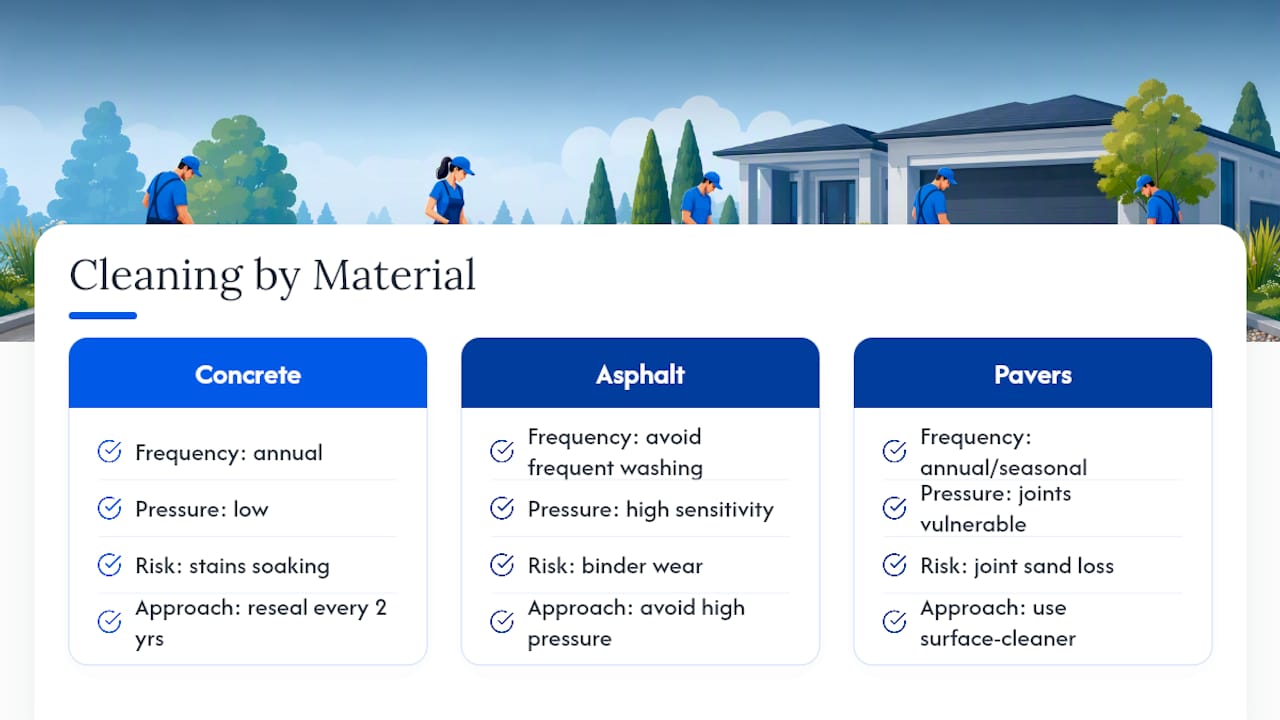
Concrete holds up well to routine washing and works fine on an annual schedule. Resealing every couple of years extends that interval by keeping stains from soaking into the surface in the first place.
Asphalt is softer and more vulnerable to pressure. Frequent high-pressure washing can wear down the binder holding the aggregate together, which shortens the life of the whole driveway. Trade guides consistently warn against over-washing or excessive pressure on asphalt for exactly this reason.
Pavers and brick carry their own risk: aggressive pressure or a narrow wand tip can blast the joint sand right out from between the stones, leading to shifting and weeds. Surface cleaner attachments spread the pressure evenly and are the safer approach here. Our guide on pressure washing pavers without losing joint sand covers the specific technique.
Pro Tip: Sealing before your next scheduled wash, rather than after, protects the surface during the exact season it takes the most abuse.
What Actually Changes How Often You Need to Clean
A few practical factors decide whether you’re on the 12 month plan or the 6 month plan.
- Traffic and vehicle type: daily driving, trucks, or trailers grind grit into the surface faster than a car that mostly sits parked.
- Humidity and shade: damp, shaded conditions feed algae and moss, which spread faster than plain dirt.
- Nearby vegetation: sap-dropping trees, overhanging leaves, and heavy pollen seasons leave residue that plain rinsing won’t lift.
- Salt exposure: winter de-icing salt or coastal salt air accelerates surface wear and pushes the schedule toward the shorter end.
- Oil and grease stains: these need to spot treatment as soon as you notice them. Waiting for the next scheduled wash lets them set permanently into porous concrete. Our oil stain removal guide covers when a poultice will lift a stain and when it’s already too late for DIY.
Signs Your Driveway Needs Cleaning Sooner Than Planned
Skip the calendar and look at the surface itself if you notice any of these:
- Dark staining that won’t sweep away, especially where oil or grease has soaked in.
- Green or black growth that feels slick underfoot. Algae and moss are a slip hazard, not just an eyesore, and the CDC’s mold guidance notes these organisms thrive in exactly the damp, shaded spots common on driveways.
- Uneven discoloration or a rougher texture, which can signal the surface itself is starting to break down underneath the grime.
- Pollen or sap film that keeps coming back within days of sweeping, a sign the buildup has moved past a quick clean.
DIY or Call a Pro? What Actually Matters
A pressure washer rental looks simple until the first pass leaves streaky “zebra stripes” across the concrete. That uneven look happens when the nozzle overlaps unevenly, and it’s one of the most common DIY mistakes alongside using too much pressure and accidentally stripping paint off nearby fences or damaging garden beds.
Professionals avoid this because they use surface cleaner attachments instead of a bare wand, which spreads pressure evenly across the whole slab. They also know which detergent lifts which stain, and they carry insurance in case something goes wrong on your property. If you’d rather understand the process before deciding, our homeowner’s guide to pressure washing breaks down what a professional visit actually involves, and our safe pressure washing steps guide is worth reading before you attempt it yourself.
- Correct pressure calibrated to your specific surface
- Surface cleaners for even, streak-free results
- Chemical know-how for stubborn oil and organic stains
- Insurance coverage if landscaping or siding gets damaged
Pro Tip: If your driveway has never been sealed, ask about sealing right after the wash. Cleaning first means the sealant bonds to a truly bare surface instead of trapping dirt underneath.
The Best Months to Schedule a Driveway Wash
Spring and fall are the two windows worth building your schedule around. Spring cleaning, ideally April or May, clears out winter salt residue and the season’s first pollen before summer heat bakes it into the surface. Fall cleaning, from September through November, strips away leaves and sap before freeze-thaw cycles can work debris into cracks. Either season, start by inspecting the surface, spot-treat any stains you find, then schedule the full wash.
What Homeowners Consistently Get Wrong About This Schedule
Most people treat driveway washing as a curb-appeal chore and end up either neglecting it for years or overdoing it every few months out of anxiety. Neither serves the surface. The annual baseline exists because it matches how fast most contaminants actually penetrate concrete or asphalt, and pushing past that interval only when traffic, shade, or staining genuinely demand it protects the material far better than a rigid quarterly habit ever could.
— nolan
Book a Professional Driveway Wash With Broswindowcleaningoc
Broswindowcleaningoc gives Orange County homeowners a fully insured alternative to renting equipment and risking zebra stripes or joint-sand loss on a DIY attempt. We bring the same attention to pressure washing driveways, patios, and walkways, using surface cleaner attachments and pressure levels matched to your specific material.

If you’re not sure whether your driveway needs a wash now or can wait until spring, an inspection settles it fast. Visit our pressure washing service page to check availability and get a quote for your next seasonal clean.
Sources
- How Often Should You Pressure Wash Your Driveway? — Southern Living
- How Long Does Pressure Washing Actually Last? (And When to Schedule Your Next One) | Red Moose Exterior
FAQ
How long does it take to pressure wash a 1,000 square foot driveway?
A professional crew typically finishes a driveway that size in one to two hours, depending on the amount of staining and whether a surface cleaner attachment is used.
Is 2,000 PSI enough to clean a driveway?
Yes, for most concrete driveways moderate pressure is plenty; going higher raises the risk of etching the surface or eroding asphalt binder without actually cleaning any better.
How much does it cost to pressure wash a 2,000 square foot driveway?
Pricing varies by region and how much staining or algae removal is involved, so it’s best to request a quote based on your specific driveway rather than rely on a flat number.
Is a 3,000 PSI pressure washer enough for a driveway?
Yes, moderate pressure comfortably handles concrete and most stains, but this is on the high end for asphalt or paver joints where lower pressure paired with a surface cleaner protects the material better.
How do I know if I should pressure wash sooner than my usual schedule?
Persistent staining, slippery algae or moss growth, or discoloration that survives sweeping are all signs to clean ahead of schedule rather than wait for the next planned visit.