
Cleanliness is the single most visible signal of management quality in any rental property, and the role of cleaning for tenant retention is more measurable than most landlords realize. More than three out of four tenants cite cleanliness as a primary factor in their lease renewal decisions. That number alone reframes cleaning from a routine expense into a retention strategy. Property managers who treat cleaning as a background task are quietly losing tenants to competitors who treat it as a core management commitment.
How does cleanliness shape tenant trust and renewal decisions?
Cleanliness functions as a silent but constant signal of how well a property is managed. Tenants do not read lease terms every day, but they do walk through lobbies, use restrooms, and notice whether shared spaces are maintained. Visible cleanliness strongly influences tenant trust and indicates management quality far more frequently than any formal communication does.
“Cleaning reflects management attention more frequently than lease terms, shaping tenant trust daily.” — The IMG Group
The psychological effect runs deeper than aesthetics. A dirty environment signals neglect, and tenants interpret neglect as a preview of how management will handle bigger problems. Poor cleanliness leads to a measurable drop in tenant morale, which compounds over time into a decision to leave. Inconsistent cleanliness quietly pushes tenants toward the exit before renewal paperwork even appears.
The difference between reactive and proactive cleaning is where most property managers lose ground. Reactive cleaning responds to complaints. Proactive cleaning runs on a schedule, catches problems early, and communicates care before tenants have a reason to feel dissatisfied. Proactive cleaning builds trust. Reactive cleaning, at best, repairs it.
Key signals tenants read from cleanliness include:
- Lobby and hallway condition on a daily basis, not just after complaints
- Restroom supplies, odor control, and surface cleanliness in shared facilities
- Window clarity and exterior appearance, which set first impressions before tenants enter
- Trash and debris management in parking areas and common outdoor spaces
- Consistency across units, which signals fair and equal treatment of all tenants
What cleaning strategies actually improve tenant satisfaction?
Scheduling is the foundation of any cleaning program that supports tenant retention. Cleaning tasks should be staggered to avoid disrupting tenant workflows, with intrusive tasks scheduled after busy periods and high-impact areas refreshed mid-day. A property manager who schedules floor scrubbing during peak office hours is creating friction, not care.
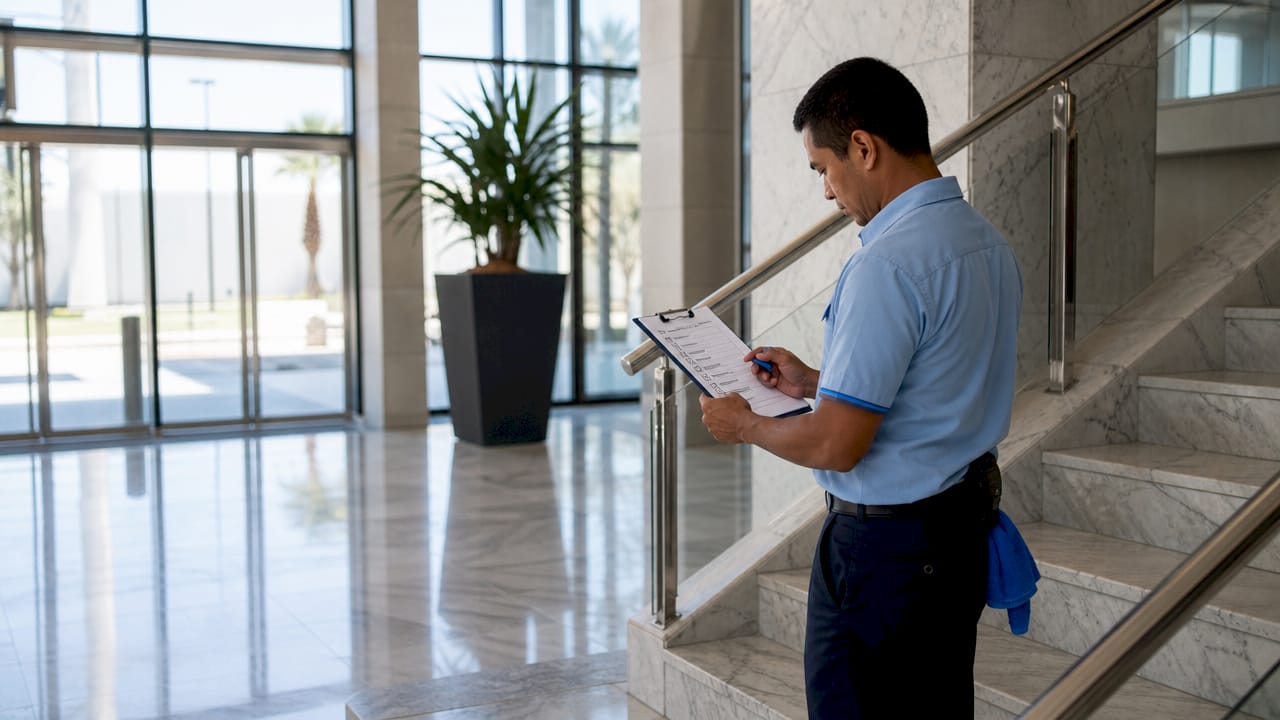
A structured approach to common areas works best when it includes regular audits. Weekly mini-audits covering 10 points in restrooms prevent small issues from becoming major complaints. The 10-point checklist covers supplies, surfaces, odors, drains, and partitions. Running this audit weekly catches problems before tenants notice them, which is the entire point of proactive maintenance.
Staff training is where many cleaning programs break down. Training drills under 2 minutes, stored in digital folders, keep staff consistent during peak traffic periods. Short, repeatable drills are more effective than long training sessions because they are easy to revisit and apply immediately. Consistency across staff is what tenants actually experience.
- Build a cleaning schedule aligned with tenant traffic patterns and peak hours
- Run weekly 10-point restroom audits covering supplies, surfaces, odors, drains, and partitions
- Train staff with short drills under 2 minutes, stored digitally for easy access
- Install touch-free fixtures in shared restrooms to reduce contact points and improve hygiene perception
- Schedule exterior cleaning, including windows and pressure washing, on a quarterly cycle
- Document every cleaning cycle and share visible improvements with tenants through brief updates
Pro Tip: Use a commercial cleaning checklist to audit shared spaces on a fixed weekly schedule. Consistency in documentation is what separates a reactive cleaning program from a proactive one.
Health is a direct benefit of consistent cleaning that property managers often understate. Consistent cleaning controls dust, allergens, and pathogens, resulting in fewer tenant complaints and better indoor air quality. Tenants who feel physically well in their space are far more likely to renew. This is not a soft benefit. It is a measurable reduction in complaint volume and sick days that tenants associate directly with their environment.
How does cleaning support leasing efficiency and property marketing?
A consistently clean property gives leasing teams a real operational advantage. Regular cleaning enables leasing teams to pivot tours quickly, increasing efficiency during demand spikes. When every unit is show-ready, a leasing agent can respond to a same-day inquiry without scrambling for a last-minute touch up. That agility directly affects how many leases close during peak seasons.
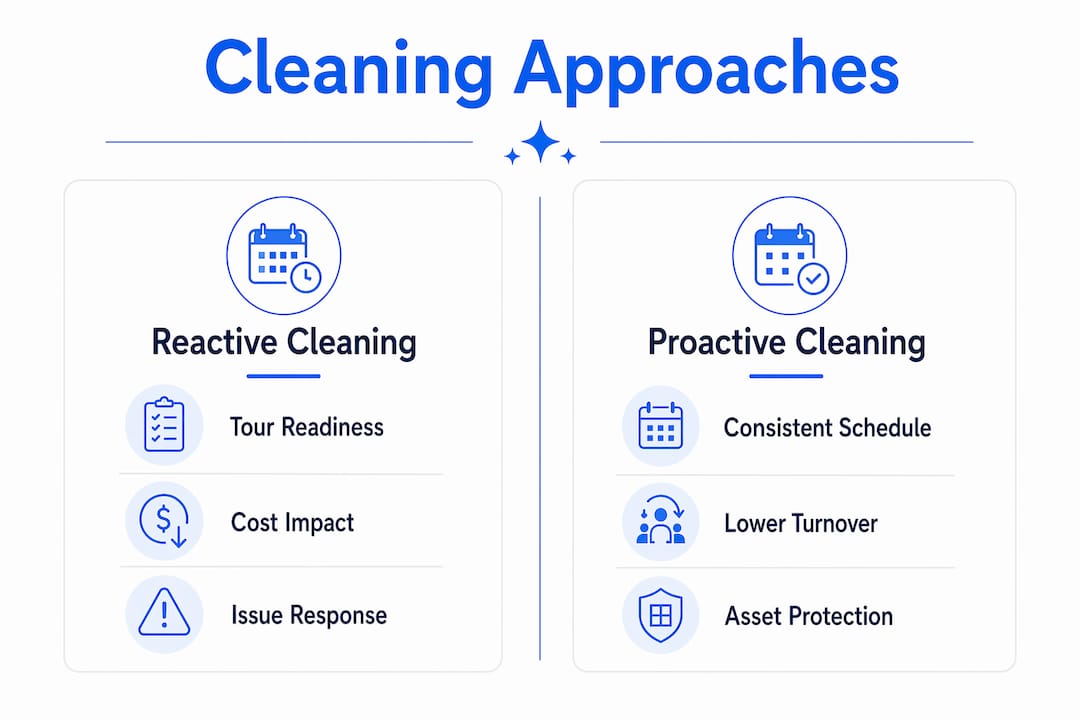
The table below compares reactive and proactive cleaning approaches across four operational dimensions.
| Dimension | Reactive cleaning | Proactive cleaning |
|---|---|---|
| Tour readiness | Units require preparation before each showing | Units are show-ready at all times |
| Tenant complaints | Addressed after they are filed | Prevented through scheduled audits |
| Leasing team stress | High during demand spikes | Low, with consistent unit condition |
| Tenant renewal rate | Lower, due to accumulated dissatisfaction | Higher, due to sustained trust |
Cleaning also supports property value preservation in ways that vacancy costs make concrete. A unit that sits vacant for 60 days while being cleaned and repaired costs far more than a quarterly professional cleaning program. Cleaning consistency across units enables leasing teams to adapt during high-demand or renovation cycles, which directly affects occupancy rates.
Pro Tip: Pair your cleaning schedule with a scalable cleaning workflow so your team can handle demand spikes without dropping standards. A documented workflow is also a strong selling point when onboarding new tenants.
Transparency about cleaning efforts is a retention tool that most property managers overlook. Sharing cleaning improvements with tenants through brief updates reduces resistance in renewal negotiations. When tenants see documented evidence of management responsiveness, they enter renewal conversations with a higher baseline of trust. That trust is worth more than any lease incentive.
What does the data say about cleaning and lease renewals?
The business case for professional cleaning is grounded in clear numbers. 78% of tenants identify professional building maintenance and cleanliness as a primary factor in lease renewal decisions. That figure means a property manager who neglects cleaning is working against the renewal preferences of more than three quarters of their tenant base.
Complaint reduction is a direct financial benefit of consistent cleaning. Professional cleaning controls allergens and pathogens, which lowers the volume of health-related tenant complaints. Fewer complaints mean less time spent on reactive management, lower maintenance costs, and a stronger relationship between tenants and management. Each of those outcomes supports long-term occupancy.
The ROI calculation is straightforward when you compare cleaning costs against turnover expenses. Tenant turnover typically involves vacancy loss, unit preparation, leasing commissions, and marketing costs. A professional cleaning program that prevents even one unnecessary vacancy per year pays for itself many times over. Property managers who treat cleaning as a cost center rather than a retention investment are misreading the math.
Detailed cleaning inspections also protect physical assets by catching deterioration early. Grout, flooring, fixtures, and windows all last longer when cleaned regularly. That extends the useful life of property assets and reduces capital expenditure over time. Cleaning is not just about tenant perception. It is about protecting the physical investment that generates rental income.
Key Takeaways
Consistent cleaning is the most direct and measurable management action that increases tenant renewal rates, reduces complaints, and protects property value over time.
| Point | Details |
|---|---|
| Cleaning drives renewals | 78% of tenants cite cleanliness as a primary factor in lease renewal decisions. |
| Proactive beats reactive | Scheduled cleaning prevents complaints and builds tenant trust before problems arise. |
| Health outcomes matter | Controlling allergens and pathogens through regular cleaning reduces complaint volume directly. |
| Leasing efficiency gains | Show-ready units let leasing teams respond to inquiries quickly during peak demand. |
| Transparency builds trust | Sharing documented cleaning improvements with tenants lowers resistance in renewal negotiations. |
Why I think most landlords are undervaluing their cleaning program
Property managers spend significant time on lease terms, pricing, and amenities. Cleaning rarely gets the same attention, and that is a strategic mistake I have seen play out repeatedly. Tenants do not evaluate their renewal decision in a single moment. They build it over months of daily experience, and cleanliness is the most frequent input in that process.
The landlords who retain tenants consistently are not always the ones with the best amenities or the most competitive rents. They are the ones whose properties feel cared for every single day. That feeling comes from cleaning. It comes from a lobby that is never dusty, a restroom that is never out of supplies, and windows that are never streaked. These are not luxury details. They are baseline signals of respect.
What I recommend to any property manager reading this: treat your cleaning program the way you treat your lease renewal outreach. Document it, schedule it, and communicate it to tenants. A tenant who receives a monthly update showing what was cleaned, repaired, and improved is a tenant who feels seen. That feeling is what keeps people from shopping for alternatives when their lease comes up.
The data from 2026 confirms what experienced property managers already know intuitively. Cleaning is not a background function. It is a daily vote of confidence in the tenant relationship, and tenants are counting those votes.
— nolan
Professional cleaning support for property managers in Orange County
Property managers who want to protect occupancy rates and tenant satisfaction need a cleaning partner who shows up on schedule and delivers consistent results.
Broswindowcleaningoc serves commercial and residential properties across Orange County, CA, with fully insured cleaning services that include window cleaning, pressure washing, gutter cleaning, solar panel cleaning, and roof cleaning. Every service is built around punctuality and repeatable quality, which is exactly what a tenant retention program requires. Property managers can review quality indicators for cleaning services to understand what a professional cleaning partnership should deliver. For a full overview of available services, visit Broswindowcleaningoc and request a customized cleaning plan for your property.
FAQ
How does cleanliness affect tenant lease renewals?
Cleanliness is a primary factor in lease renewal decisions for 78% of tenants, according to 2026 industry data. Properties that maintain consistent cleaning standards signal management quality and build the trust that drives renewals.
What is the difference between reactive and proactive cleaning?
Reactive cleaning responds to tenant complaints after problems occur. Proactive cleaning runs on a fixed schedule, catches issues early, and prevents the dissatisfaction that leads tenants to consider leaving.
How often should property managers audit shared spaces?
Weekly mini-audits covering at least 10 checkpoints in restrooms and common areas prevent small issues from becoming major complaints. Consistent auditing is more effective than periodic deep cleans alone.
Does professional cleaning reduce tenant health complaints?
Consistent professional cleaning controls dust, allergens, and pathogens, which directly reduces health-related tenant complaints and improves indoor air quality across shared spaces.
What is the ROI of professional cleaning for rental properties?
The cost of a professional cleaning program is typically far lower than the combined expense of vacancy loss, unit preparation, and leasing fees that follow a single preventable tenant departure.