
Detailed cleaning inspections are structured audits that verify whether cleaning tasks meet defined hygiene and safety standards, rather than simply assuming the work was done. Known in facilities management as cleanliness audits or janitorial quality assessments, these inspections use scoring systems, physical checks, and increasingly digital tools to produce measurable proof of cleaning performance. Facilities using structured inspection scoring identify hygiene failures three times earlier and improve cleanliness scores by up to 25%. That number matters because it means problems get fixed before they affect occupants, clients, or property value. For homeowners, property managers, and business owners in Orange County and beyond, understanding the role of detailed cleaning inspections is the first step toward turning cleaning from a guessed task into a managed, verifiable service.
How do detailed cleaning inspections improve property cleanliness and safety?
The most direct benefit of a cleaning inspection is catching what the eye misses. A surface can look clean and still harbor bacteria, mold spores, or chemical residue from improper dilution. Audits reveal hidden hygiene gaps such as missed high-touch points like light switches and door handles, or cleaning products applied at the wrong concentration. These are risks that no visual walkthrough will catch without a structured checklist.
Inspections also prevent what professionals call “cleaning drift.” This is the gradual decline in cleaning quality that happens when standards are assumed rather than verified. Weekly cleaning inspections catch small issues early, improve accountability, and stop this drift before it becomes a pattern. Without regular checks, even a good cleaning team will unconsciously deprioritize less visible areas over time.
Unannounced spot checks add another layer of protection. Quality spot checks are unannounced inspections that drive accountability and catch overlooked cleaning tasks that scheduled reviews might miss. When cleaning staff know that any visit could include an inspection, consistency becomes the default rather than the exception.
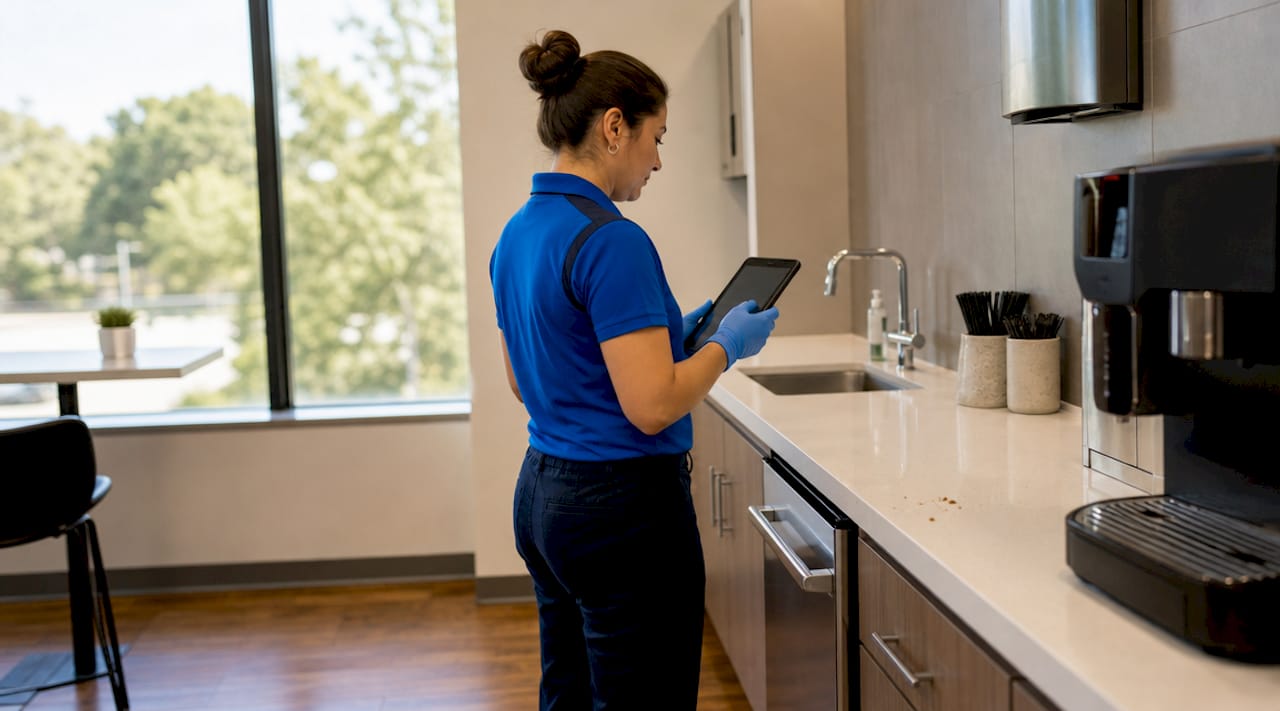
The safety dimension is equally concrete. Inspections identify risks from improper chemical storage, wet floors left unmarked, or restrooms that have not been sanitized to standard. For commercial properties, these are liability issues. For residential properties, they affect the health of everyone living or working in the space.
Key areas that detailed cleaning checks consistently flag include:
- High-touch surfaces: door handles, elevator buttons, light switches
- Restrooms: grout lines, behind fixtures, soap dispenser cleanliness
- Kitchen and break room surfaces: under appliances, inside microwaves
- Floor edges and corners where mopping misses
- Air vents and return grilles collecting dust and allergens
Pro Tip: Schedule at least one unannounced inspection per month in addition to any scheduled audits. The gap between announced and unannounced results tells you exactly how much your cleaning standard depends on preparation rather than habit.
What are the common methods and scoring systems used in cleaning inspections?
Professional cleaning inspections use a 4-point scoring scale where scores below 2.5 trigger a mandatory review within 48 hours. This threshold is not arbitrary. It reflects the point at which cleaning quality has dropped far enough to affect occupant health or perception. A score of 4 means the area exceeds expectations. A score of 1 means it is unacceptable and requires immediate corrective action.
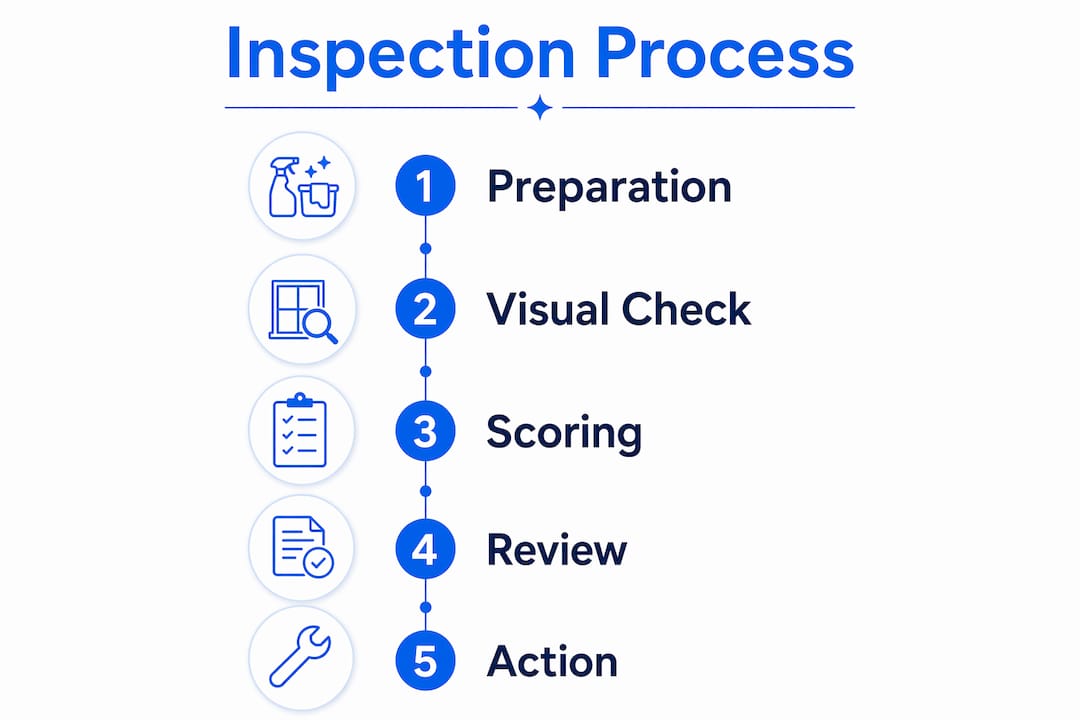
Weighted scoring rubrics prioritize high-risk zones like restrooms, which carry more weight in the final score because they generate the highest volume of complaints and pose the greatest hygiene risk. A restroom scoring 1.8 pulls the overall facility score down more than a storage room scoring the same. This weighting reflects real-world risk rather than treating all spaces equally.
The APPA (Association of Physical Plant Administrators) cleanliness standards are a widely used benchmark in facilities management, defining five levels of cleanliness from “orderly spotlessness” at Level 1 to “unkempt neglect” at Level 5. Many commercial property managers use APPA Level 2 or Level 3 as their contractual minimum, giving inspectors a clear pass or fail line.
Here is how paper-based and digital inspection tools compare in practice:
| Feature | Paper-based inspections | Digital inspection tools |
|---|---|---|
| Speed of reporting | Slow, manual transcription required | Real-time, auto-generated reports |
| Proof of completion | Signature only | Timestamps, GPS, photo evidence |
| Trend tracking | Difficult, requires manual analysis | Automated trend graphs and alerts |
| Corrective action tracking | Often lost or delayed | Open work orders tracked to resolution |
| Client transparency | Low | High, shareable digital reports |
Digital inspection records with timestamps and GPS serve as objective proof of cleaning performance, unlike simple presence logs. This matters in disputes, contract renewals, and insurance claims. A paper sign-in sheet proves someone was present. A digital audit proves what they did and where.
For settings with strict hygiene requirements, such as food service facilities, medical offices, or childcare centers, scientific audits go further. ATP (adenosine triphosphate) testing measures biological residue invisible to the naked eye. UV fluorescent testing reveals areas where cleaning was skipped entirely. These tools validate hygienic safety beyond visible cleaning and are increasingly used in commercial property management as a premium verification layer.
How often should cleaning inspections be conducted, and who performs them?
Inspection frequency depends on three factors: how often the space is cleaned, how much traffic it receives, and what the risk level is if hygiene fails. A high-traffic commercial office with daily cleaning needs at minimum a weekly inspection. A residential property with bi-weekly cleaning can operate on monthly inspections. A medical or food service facility may require daily spot checks.
The most effective inspection programs combine scheduled audits with random unannounced visits. Here is a practical framework for determining frequency and ownership:
- Daily spot checks by onsite supervisors in high-traffic or high-risk areas. These are quick, focused reviews of the most complaint-prone zones, not full audits.
- Weekly formal inspections conducted by a dedicated quality supervisor using a standardized checklist and scoring system. Results are logged and shared with the cleaning team.
- Monthly independent audits performed by someone outside the cleaning team, either a property manager, a third-party inspector, or a senior company representative. Independence removes bias.
- Quarterly deep reviews that analyze trend data from all previous inspections, identify recurring problem areas, and trigger contract or training reviews if scores remain below threshold.
The role of who conducts the inspection matters as much as how often it happens. Onsite supervisors catch day-to-day issues but may unconsciously overlook problems to protect their team. External auditors bring objectivity but lack the context of daily operations. The most reliable programs use both. Routine inspections by homeowners and property managers also serve as a first line of accountability, even without formal scoring tools.
An open corrective action work order must remain active until the issue is documented as fixed. Closing an inspection without resolving flagged items defeats the entire purpose of the audit. This single rule separates inspection programs that improve performance from those that simply generate paperwork.
How can property owners use inspection results to maintain high standards?
Inspection data becomes useful only when it connects directly to action. The most effective approach is to treat each inspection report as an input to three outputs: a corrective work order, a training note, and a trend entry. Facilities with formal cleaning audit programs achieve 23% higher occupant satisfaction versus those using informal methods. That gap comes from the feedback loop, not just the inspection itself.
Linking inspection outcomes to staff training is where most property managers leave value on the table. If restroom scores consistently fall below threshold, the response should not be a verbal reminder. It should be a targeted retraining session on restroom protocols, followed by a re-inspection within two weeks to confirm improvement. Effective cleaning inspections act as a control system linked to staff training and operational adjustments in a data-driven feedback loop.
Seasonal patterns show up clearly in audit data. Properties in Orange County, CA often see exterior surface degradation from marine layer moisture in spring and dust accumulation in late summer. Tracking inspection scores by month reveals these cycles and allows property managers to adjust cleaning schedules proactively rather than reactively. A commercial cleaning checklist built around these seasonal patterns performs significantly better than a generic one-size-fits-all approach.
Sharing inspection results with stakeholders builds trust and reduces disputes. When a tenant questions whether common areas are being maintained, a documented inspection history with scores and corrective actions is a definitive answer. Cleaning audits create objective proof of completion, supporting transparency and client trust in ways that verbal assurances never can.
Pro Tip: Create a simple monthly dashboard showing average inspection scores by zone, number of corrective actions opened, and number closed. Sharing this with tenants or clients takes five minutes and eliminates the most common source of cleaning-related complaints.
Here is how inspection data maps to practical management actions:
| Inspection finding | Recommended action | Timeline |
|---|---|---|
| Score below 2.5 in any zone | Open corrective work order, re-inspect within 48 hours | Immediate |
| Recurring low scores in same area | Schedule targeted retraining for assigned staff | Within 1 week |
| Consistent low restroom scores | Review cleaning frequency and product protocols | Within 2 weeks |
| Seasonal score decline | Adjust cleaning schedule and add exterior checks | Before season onset |
| Contractor scores below threshold for 3 months | Initiate contract review or replacement process | Within 30 days |
Key takeaways
Detailed cleaning inspections protect property value and occupant safety by converting cleaning from an assumed task into a verified, measurable, and continuously improving service.
| Point | Details |
|---|---|
| Inspections catch invisible risks | Audits identify missed high-touch surfaces, chemical misuse, and hygiene gaps no visual check reveals. |
| Scoring systems drive accountability | A 4-point scale with a 2.5 threshold triggers mandatory corrective action before problems escalate. |
| Digital tools outperform paper | Timestamped, GPS-verified digital records provide objective proof that paper sign-ins cannot match. |
| Frequency must match risk level | High-traffic commercial spaces need weekly formal inspections; residential properties need at minimum monthly checks. |
| Data must connect to action | Inspection results only improve outcomes when linked to corrective work orders, retraining, and trend tracking. |
Why inspections changed how I think about cleaning quality
Most people treat a cleaning inspection as a report card. Pass or fail, filed away, forgotten. That framing is exactly why so many inspection programs produce paperwork but not results.
What I have seen working with property owners and cleaning teams is that the inspection itself is not the product. The conversation it starts is. When a score drops in a specific zone, the right question is not “who failed?” It is “what changed?” Maybe a new staff member was assigned that area. Maybe a product was swapped out. Maybe foot traffic increased and the schedule was not adjusted. The inspection surfaces the symptom. The follow-up conversation finds the cause.
The other misconception I run into constantly is that inspections are punitive. Cleaning staff sometimes see them as surveillance rather than support. The programs that work best are the ones where inspection results are shared openly with the team, where improvements are acknowledged, and where the data is used to argue for better resources or adjusted schedules. When the team understands that a low score triggers a conversation rather than a consequence, the culture shifts. Accountability becomes something people want rather than something they fear.
For homeowners and property managers who are not running formal programs yet, the starting point does not need to be complex. A simple checklist, a consistent schedule, and the discipline to follow up on every flagged item will produce measurable results within 90 days. The exterior cleaning services that hold their value over time are always the ones backed by documented inspection records, not just good intentions.
— nolan
How Broswindowcleaningoc delivers inspection-backed cleaning in Orange County
Broswindowcleaningoc builds every service around documented, verifiable results rather than assumed completion. Whether you need window cleaning, pressure washing, gutter cleaning, or solar panel maintenance, every job is backed by a professional standard that protects your property investment.
Broswindowcleaningoc provides clients with transparent reporting on work completed, giving homeowners and property managers the confidence that comes from proof rather than promises. If you want cleaning that holds up to scrutiny and boosts your property’s curb appeal, Broswindowcleaningoc is the Orange County team built for that standard. Contact Broswindowcleaningoc today to schedule an inspection-driven cleaning service for your home or commercial property.
FAQ
What is the role of detailed cleaning inspections?
Detailed cleaning inspections verify that cleaning tasks meet defined hygiene and safety standards using structured scoring systems and documented audits. Their primary role is to identify gaps, prevent cleaning drift, and provide measurable proof of service quality.
How often should cleaning inspections be conducted?
High-traffic commercial spaces require at minimum weekly formal inspections, while residential properties benefit from monthly checks. Unannounced spot checks should supplement any scheduled audit program for consistent accountability.
What scoring system do professional cleaning inspections use?
Professional inspections use a 4-point scoring scale where any score below 2.5 triggers a mandatory review within 48 hours. Weighted rubrics assign higher importance to high-risk zones like restrooms, which carry more weight due to complaint density and hygiene risk.
Why are cleaning inspections necessary beyond visual checks?
Visual checks miss hidden hygiene risks including improper chemical dilution, bacteria on high-touch surfaces, and areas where cleaning was skipped entirely. Scientific tools like ATP testing and UV fluorescent audits validate cleanliness that the eye cannot confirm.
How do inspection results improve cleaning performance over time?
Inspection data improves performance when it connects directly to corrective work orders, staff retraining, and trend tracking. Facilities with formal audit programs achieve 23% higher occupant satisfaction than those relying on informal methods, because the feedback loop drives continuous improvement rather than one-time fixes.