
Flush the glass first with fresh or deionized water to knock loose sand and grit off the surface, then wash with a diluted white-vinegar solution or mild pH-neutral soap using microfiber cloths or a soft nylon brush. Skip the squeegee until that rinse is done, since dragging trapped grit across dry salt film scratches glass. If haze remains after a proper cleaning, the surface is likely etched, and no amount of scrubbing brings it back.
TL;DR:
- Rinsing with water before any scrubbing is crucial to remove loose salt and debris, preventing scratches caused by grit dragged across the glass.
- Using deionized or distilled water for the final rinse is essential, as regular tap water can leave minerals that cause new spots and spots reappearance.
- Salt deposits can chemically etch into glass over months of exposure, making timely cleaning every 8 to 16 weeks vital for oceanfront and nearshore properties.
- Frames, tracks, and seals must be cleaned and inspected regularly, as salt that accumulates there recontaminates the glass and accelerates damage.
- Professionals often include frame and track flushing, DI rinses, and final spot-free finishes in their services, which homeowners should request to ensure long-lasting clarity.
Table of Contents
- How to Clean Salt Spray Off Windows Step by Step
- How Often Should Coastal Windows Be Cleaned?
- Which Cleaning Products Actually Work on Salt Residue?
- What Field Crews Know That Most Guides Don’t Mention
- Why Most Salt-Cleaning Advice Skips the Part That Matters
- Get Coastal Salt Buildup Handled Without the Ladder Work
- Sources
- FAQ
How to Clean Salt Spray Off Windows Step by Step
Salt residue on glass isn’t just dirt. It’s a mineral film left behind after ocean mist evaporates on the surface, and treating it like ordinary window grime is how homeowners end up scratching their own glass. Here’s the sequence that actually works, in order.
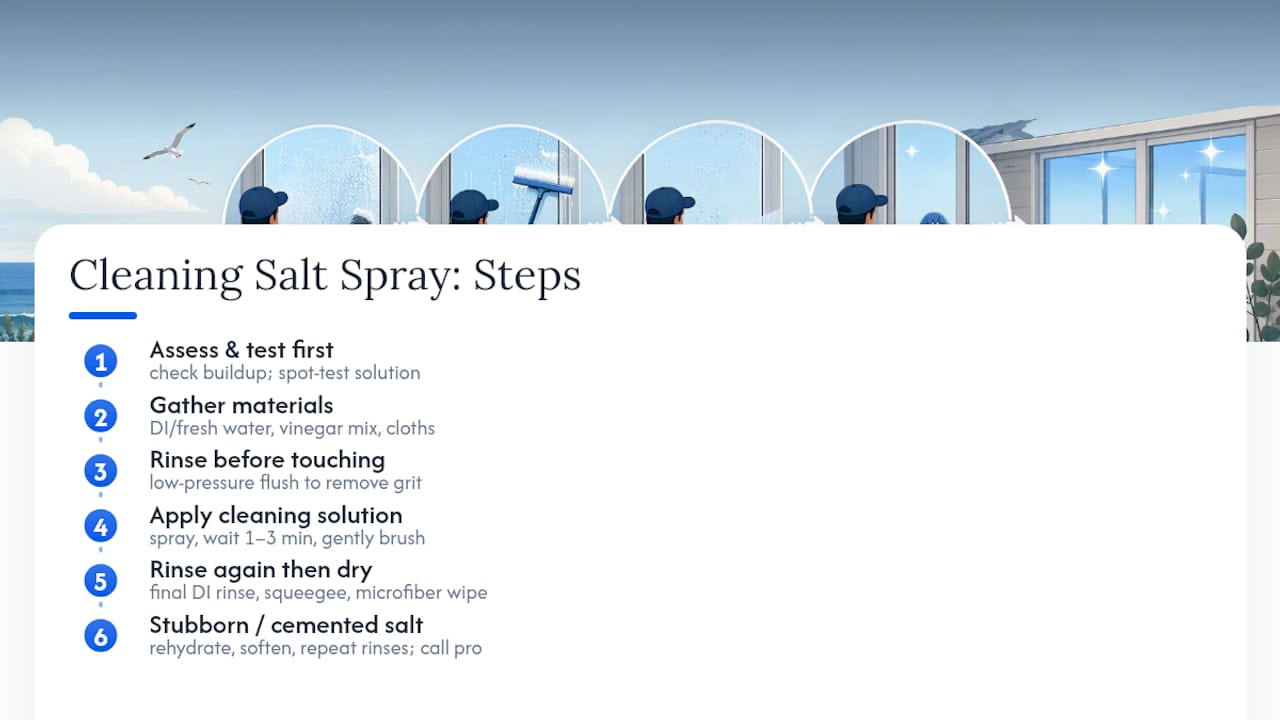
1. Assess and test first. Look at how heavy the buildup is and test your cleaning solution on a small, hidden corner of the pane before working the whole window. Some tinted or coated glass reacts differently to vinegar than plain float glass.
2. Gather your materials. You’ll want a hose or water-fed pole for the rinse, fresh or deionized (DI) water, a spray bottle mixed at a 1:1 ratio of white vinegar to water (or a gallon of water with one to two teaspoons of mild dish soap), microfiber cloths, a soft nylon brush, a bucket, and a squeegee you won’t touch until stage three.
3. Rinse before you touch the glass. A low-pressure flush with fresh or DI water removes loose sand and salt crystals before any cloth or brush makes contact. This step exists because salt-laden grit acts like sandpaper when it’s dragged across glass under pressure, whether from a rag or a squeegee blade. Skipping it is the single most common mistake coastal homeowners make.
4. Apply your cleaning solution. Spray the vinegar mix or soapy water across the pane and let it sit for one to three minutes. That dwell time gives the acid a chance to break down mineral deposits without long enough contact to damage nearby caulking, tint film, or painted trim. Agitate stubborn spots gently with the soft brush.
5. Rinse again, then dry. A second rinse with fresh or DI water clears away dissolved salt and soap residue. Only bring out the squeegee now, once the water sheeting off the glass is essentially free of dissolved solids. Finish by wiping the pane dry with a clean microfiber cloth to catch water beads before they evaporate and leave new spots.
Crusted or cemented salt needs patience, not muscle. Rehydrate the area with your spray bottle, let it soften for a few minutes, then work it loose with the soft brush and repeat the rinse cycle two or three times. If the deposit is thick and cemented onto the frame or glass edge, that’s a sign to call in a professional DI-based service rather than risk grinding it in deeper.
Pro Tip: Crews working oceanfront properties often rinse their brush heads and buckets between panes to avoid dragging contaminated grit from one window to the next. It’s a small habit that prevents cross-contamination scratches on an otherwise clean job.
A safety note worth repeating: avoid strong acids beyond diluted vinegar on coated or tinted glass, and be careful directing pressurized water at window seals, since forcing water behind gaskets can cause leaks down the line. If you’re working above ground level, second-story window cleaning carries its own ladder and rinse-pressure risks worth reading up on before you start.
How Often Should Coastal Windows Be Cleaned?
Salt doesn’t behave like regular dust. It cycles onto the glass as mist, dries into a mineral film, then rehydrates and dries again every time humidity swings, and each cycle bonds it a little more tightly to the glass surface. Over months of that repetition, salt film can chemically etch into the glass itself, which is why homes a block from the water need a completely different maintenance rhythm than homes ten miles inland.
A realistic cadence looks like this:
- Oceanfront properties (direct spray exposure): every 8 to 12 weeks
- Nearshore homes (a few blocks back): every 12 to 16 weeks
- One to three miles inland: every 16 to 20 weeks
- After any major storm or high-wind event: move your next cleaning up regardless of schedule
That storm-driven bump matters more than most owners realize. Salt exposure runs in cycles tied to wind and surf conditions, and timing a cleaning right after a windy stretch catches the film before it has time to bond and etch.
DI or pure-water rinses earn their reputation here because they leave zero dissolved solids behind. Tap water, even after a good scrub, can leave trace minerals that crystallize as it dries and creates the exact spotting you were trying to remove. A 0 TDS final rinse is why professional jobs tend to stay clear longer than a garden-hose rinse.
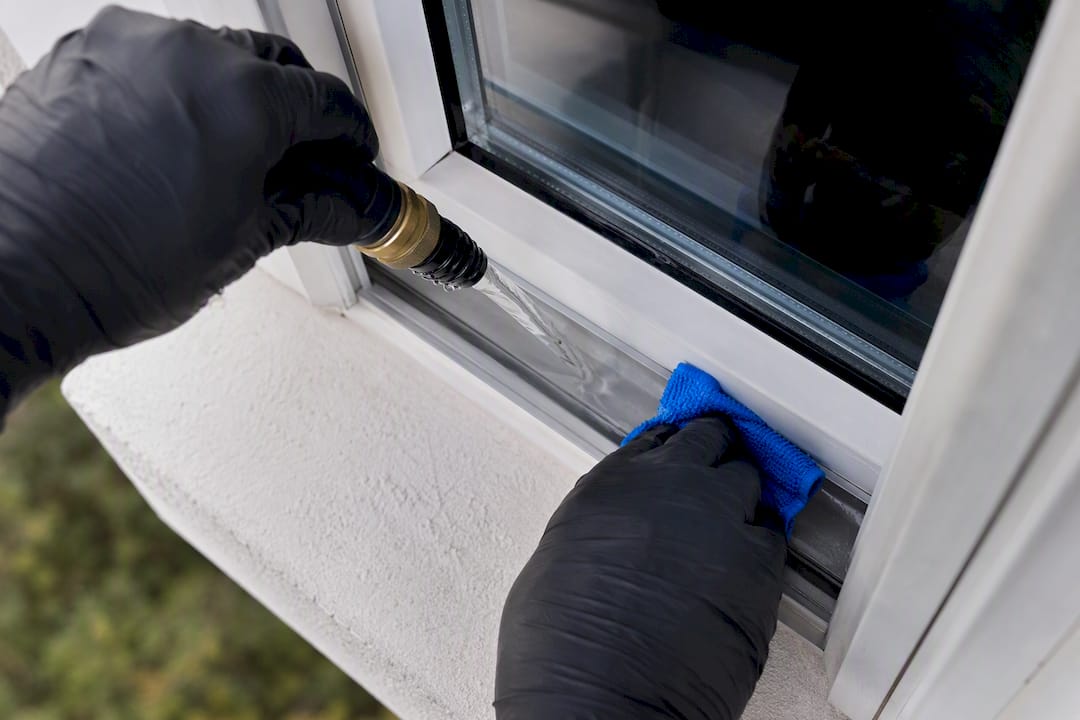
Don’t stop at the glass. Salt sitting in tracks and frame corners keeps recontaminating the pane no matter how often you clean it, since hardware and tracks act as a reservoir that reintroduces salt every time it rains or the wind kicks up. Flush tracks with your hose, wipe frames with the same diluted solution, and check seals and rollers for corrosion while you’re at it.
Protective coatings can reduce how fast film builds back up, but only when applied to glass that’s already clean and undamaged. Coatings don’t make a window immune to salt spray. They buy you time between cleanings, not a permanent fix. For a closer look at sealing options and realistic upkeep expectations, see our guide on protecting windows after cleaning.
Which Cleaning Products Actually Work on Salt Residue?
The materials that work on salt spray are almost boringly simple, and that’s the point. Anything harsher tends to cause more damage than the salt would have on its own.
Stick with these:
- DI or distilled water for rinsing
- A 1:1 white vinegar and water solution for dissolving mineral deposits
- Mild pH-neutral dish soap, at a few teaspoons per gallon of water
- Microfiber cloths for wiping and drying
- Soft nylon brushes for agitating stubborn spots
- A clean squeegee, used only after the grit has been rinsed away
Avoid these entirely:
- Abrasive pads or scouring pads, which grind grit directly into the glass
- Concentrated acids beyond diluted vinegar
- Powdered scouring cleansers
- High-pressure nozzles aimed directly at window seals
- Squeegeeing or wiping before the initial rinse removes sand
Practitioners in coastal window care consistently point to abrasive pads and direct high-pressure blasting as the fastest way to turn a cleaning job into a scratch-repair job. If you’re building out a basic kit, our homeowner tools and hiring guide breaks down what’s worth buying versus what to skip.
Know when to stop DIYing it. If haze persists after a correct multi-stage cleaning, that’s usually etching, not dirt, and no amount of scrubbing reverses it. Multi-story homes or hard-to-reach exterior glass raise the fall risk enough that it’s worth paying a pro rather than improvising on a ladder. And if frames, tracks, and screens all need restoration at once, that’s a bigger job than a Saturday afternoon with a spray bottle.
What Field Crews Know That Most Guides Don’t Mention
Bros Window Cleaning has spent years on Orange County properties where onshore wind carries salt mist onto glass daily, and the pattern holds regardless of neighborhood: owners who wait until windows look visibly hazy have usually already let etching start. The fix isn’t more elbow grease. It’s catching the film earlier and rinsing it correctly.
A few things separate a solid coastal cleaning job from one that just moves grit around:
- The crew flushes grit off with water before any brush or cloth touches the glass
- They can tell you whether they use DI water and what TDS reading they aim for on the final rinse
- Frame and track flushing is included in the quote, not treated as an afterthought
- Seals get inspected before any aggressive rinsing near the frame
Pro Tip: When getting quotes from any window service in a coastal zone, ask directly whether the final rinse is DI or tap water. A 0 TDS reading on that last pass is the difference between windows that stay clear for weeks and ones that spot again within days.
If you’re vetting a pro for salt-heavy properties, ask about insurance, experience specifically with coastal salt exposure, and whether frames, tracks, and screens are part of the scope. For more on common causes of buildup around the region, our piece on Orange County window dirt and pro cleaning tips covers ground this article doesn’t.
Why Most Salt-Cleaning Advice Skips the Part That Matters
Most articles on cleaning salt spray focus entirely on the glass and treat frames, tracks, and hardware as an afterthought. That’s backwards. Salt sitting in a track is going to migrate back onto clean glass the next time it rains or the wind picks up, so cleaning the pane without touching the frame is a temporary win at best.
The other place conventional advice falls short is sequencing. Plenty of guides tell you to spray a cleaner and squeegee it off, full stop. That order works fine on a landlocked window with regular dust. On a coastal pane with embedded sand, it’s how scratches happen, because the squeegee blade drags grit across glass under pressure before that grit has anywhere to go.
If there’s one thing worth prioritizing over everything else in this guide, it’s the pre-rinse. Every other step matters, but skipping the rinse is the one mistake that causes damage you can’t undo later. Get that right, tie your cleaning schedule to your actual exposure level instead of a generic calendar reminder, and the rest of the maintenance becomes routine rather than reactive.
— nolan
Get Coastal Salt Buildup Handled Without the Ladder Work
DIY salt removal works, but it takes the right materials, patience with dwell times, and a willingness to redo the rinse stage until it’s actually grit-free. Professional window cleaning services handle that entire sequence for you, including DI rinses, frame and track flushing, and a final pass that leaves no mineral residue behind to spot as it dries.

For Orange County properties sitting anywhere from oceanfront to a few miles inland, that means windows that stay clear longer between visits instead of hazing back up within weeks. Experienced window cleaning crews understand salt-heavy properties across coastal areas and can build a cleaning cadence around your actual exposure rather than a one-size schedule. If you’re unsure whether what you’re seeing on your glass is surface salt or early etching, our window cleaning myths guide clears up a lot of the confusion homeowners run into. Ready to get your windows back to clear? Request a quote and get on a schedule built for your property’s exposure level.
Sources
- How to clean windows that have saltwater from the ocean — Hunker
- Yacht care tips: removing salt and scratches from windows — Strataglass
- Window Cleaning Wizards — Salt air glass damage (Carolina Beach example)
FAQ
What does putting salt on windows do?
Salt mist that lands on glass evaporates and leaves behind a mineral film, and repeated cycles of that film wetting and drying can chemically bond with the glass surface, eventually causing permanent etching if left uncleaned.
How do you get salt spray off windows?
Rinse first with fresh or deionized water to remove loose grit, apply a 1:1 white vinegar and water solution or mild soap, agitate with a soft brush, then rinse again and dry with microfiber before squeegeeing.
How do you make windows crystal clear after salt exposure?
Use a deionized or distilled water rinse as your final pass since it leaves no dissolved minerals to crystallize as it dries, which is the main reason spots reappear after using regular tap water.
Can salt water damage glass permanently?
Yes. If mineral film sits long enough, it can etch into the glass surface itself, and that clouding does not come out with cleaning once it’s set. Persistent haze after a correct cleaning is usually a sign the damage is already permanent, at which point a professional evaluation is the next step.
How often should coastal homes clean salt off their windows?
Oceanfront properties typically need cleaning more frequently, nearshore homes somewhat less often, and homes farther inland require cleaning at intervals suited to their exposure, with extra cleanings after major storms or high-wind stretches.