
Communal window cleaning is the scheduled, professional cleaning of windows and glass surfaces in shared areas of residential or commercial buildings. It covers every pane that residents share rather than own privately, from lobby panels to stairwell glazing, entrance doors to balcony screens. Property managers rely on it to protect building assets, meet maintenance standards, and keep residents satisfied. Understanding how it works helps you set realistic expectations and make better decisions about your shared property.
What is communal window cleaning and what does it cover?
Communal window cleaning involves professional, scheduled cleaning of non-private windows in shared residential or commercial buildings. The industry term used by facilities managers is “communal glazing maintenance,” though both terms describe the same service. Unlike private home window cleaning, this service targets every glass surface that all residents access or see daily.
Typical areas covered include main entrance doors, lobby glazing, stairwell windows, shared corridor glass, lift mirrors, and balcony screens. The scope varies by building type. A low-rise apartment block may need only external glazing and entrance glass cleaned, while a high-rise tower requires specialist access equipment for upper floors. Knowing exactly what your building includes prevents billing disputes and unmet expectations.
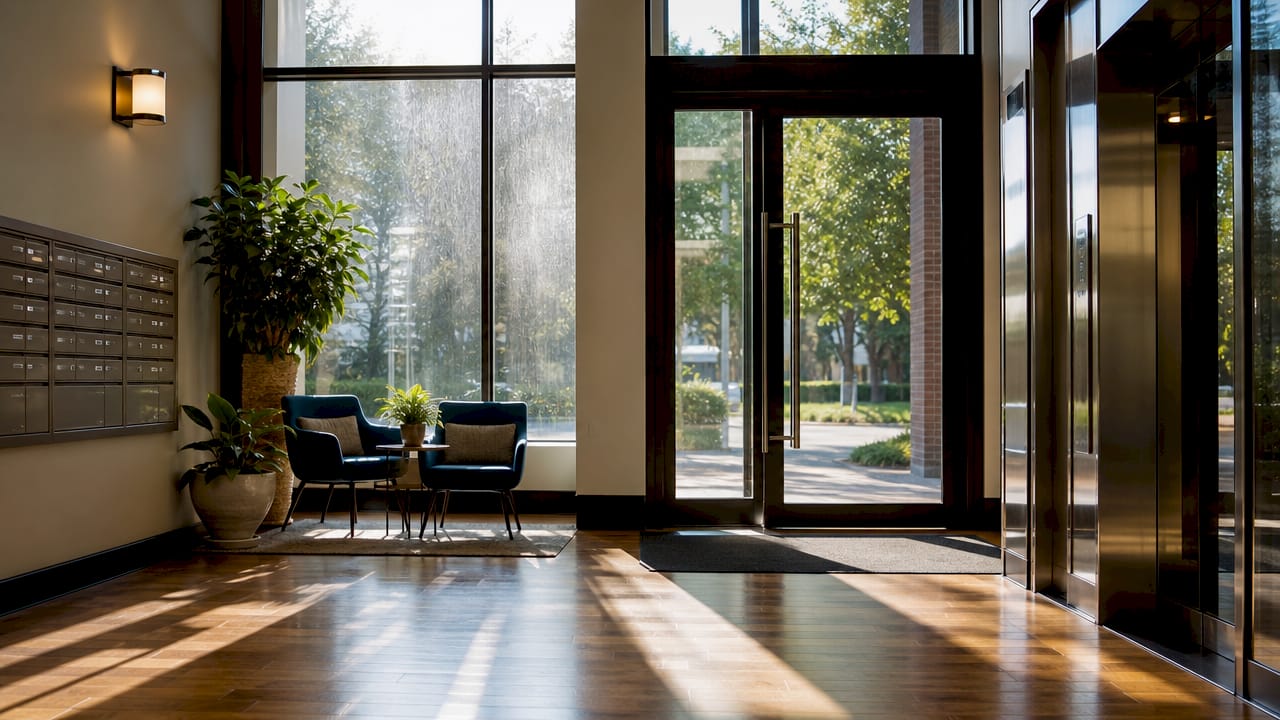
Internal and external communal windows are both part of the service, though they require different techniques. External glass faces weather, pollution, and bird debris. Internal glass in lobbies and stairwells collects fingerprints, dust, and condensation. A complete communal cleaning program addresses both.
| Area | Typical frequency |
|---|---|
| Main entrance doors | Weekly to fortnightly |
| Lobby and reception glazing | Monthly |
| Stairwell and corridor windows | Monthly to quarterly |
| Balcony screens and panels | Quarterly |
| Lift mirrors and internal glass | Monthly |
Pro Tip: Before your first scheduled clean, ask residents to clear items from balconies and window ledges. A quick notice posted 48 hours in advance prevents delays and keeps the crew on schedule.
How is communal window cleaning performed safely?
Modern communal cleaning uses water-fed pole systems with purified water to clean high-level windows safely from the ground. This method eliminates the need for ladders on most buildings up to four or five stories. That single change reduces fall risk significantly and speeds up the entire job.
Purified water leaves no mineral residue when it dries, which means windows stay cleaner longer than with traditional soap-and-squeegee methods. The poles extend to reach upper floors while the operative stands safely on the ground. Some providers also offer digital audit reports after each visit, giving property managers a clear record of what was cleaned and when.
Traditional methods using ladders and buckets still appear in some contracts, but they carry higher liability and slower turnaround times. Professional communal cleaning services have largely moved away from them for multi-story work. For ground-floor and internal glass, squeegee and microfiber techniques remain standard.
Key tools and safety protocols used by professional communal window cleaners include:
- Water-fed pole systems with deionized or reverse-osmosis purified water
- Telescopic carbon fiber poles for lightweight reach at height
- Non-slip footwear and high-visibility vests on site
- Risk assessments completed before each visit
- Digital job sheets recording areas cleaned and any issues noted
- COSHH-compliant cleaning solutions for internal glass surfaces
What are the benefits of communal window cleaning?
Regular communal cleaning improves tenant satisfaction and signals proactive building management, which directly influences lease renewals and property valuations. Clean shared spaces tell residents that the building is well run. That perception shapes how long they stay and how much they recommend the property to others.
“Clean communal areas are linked with higher tenant retention rates and stronger property valuations. Facilities managers should treat communal cleaning as a long-term asset protection investment, not a recurring expense.”
Asset protection is the less obvious but equally important benefit. Neglecting communal windows allows pollutants to degrade window seals and frames over time, leading to costly repairs and energy inefficiencies. Catching seal failures early during a routine clean costs a fraction of a full frame replacement. Cleaning crews act as a first line of inspection, spotting damage that residents walk past without noticing.
The behavioral ripple effect is real. Well-maintained communal spaces foster community pride and reduce maintenance violations among residents. When a building looks cared for, residents treat it with more respect. That dynamic reduces litter, graffiti, and general wear in shared areas over time. The connection between clean shared spaces and resident behavior is well documented in property management research.
Window cleaning also functions as a diagnostic tool. Technicians detect seal failures and frame damage not visible to casual observers during routine visits. Proactive, lower-cost repairs become possible because problems are caught early. That makes the cleaning contract worth more than its face value.
How does communal window cleaning differ from private window cleaning?
Communal cleaning differs from private home window cleaning by prioritizing minimal disruption and sensitivity to resident experience. A private home clean is arranged directly with one homeowner who controls access entirely. A communal clean involves multiple residents, shared access points, and a building manager coordinating the whole process.
Scheduling is the biggest operational difference. Private window cleaning is booked on demand, often with same-week availability. Communal cleaning runs on pre-arranged, recurring schedules that are communicated to all residents in advance. That predictability is a feature, not a limitation. Residents know when crews will arrive, and property managers do not need to chase bookings each month.
Sensitivity to resident experience shapes every decision in communal cleaning. Crews work during reasonable hours, avoid blocking entrances for extended periods, and complete work with minimal noise. Commercial cleaning contracts focus on operational output. Communal contracts balance output with the lived experience of the people who call the building home.
Access in multi-tenant buildings adds complexity that private cleaning never faces. Locked stairwells, key fob systems, and residents who are home during the day all require coordination. A good communal cleaning provider builds those logistics into their process rather than leaving them to the property manager.
Pro Tip: Bundled contracts that combine window cleaning with other communal maintenance services, such as gutter clearing or pressure washing, reduce coordination time and often lower the per-service cost. Ask providers about package pricing before signing individual contracts.
What practical steps ensure effective communal cleaning management?
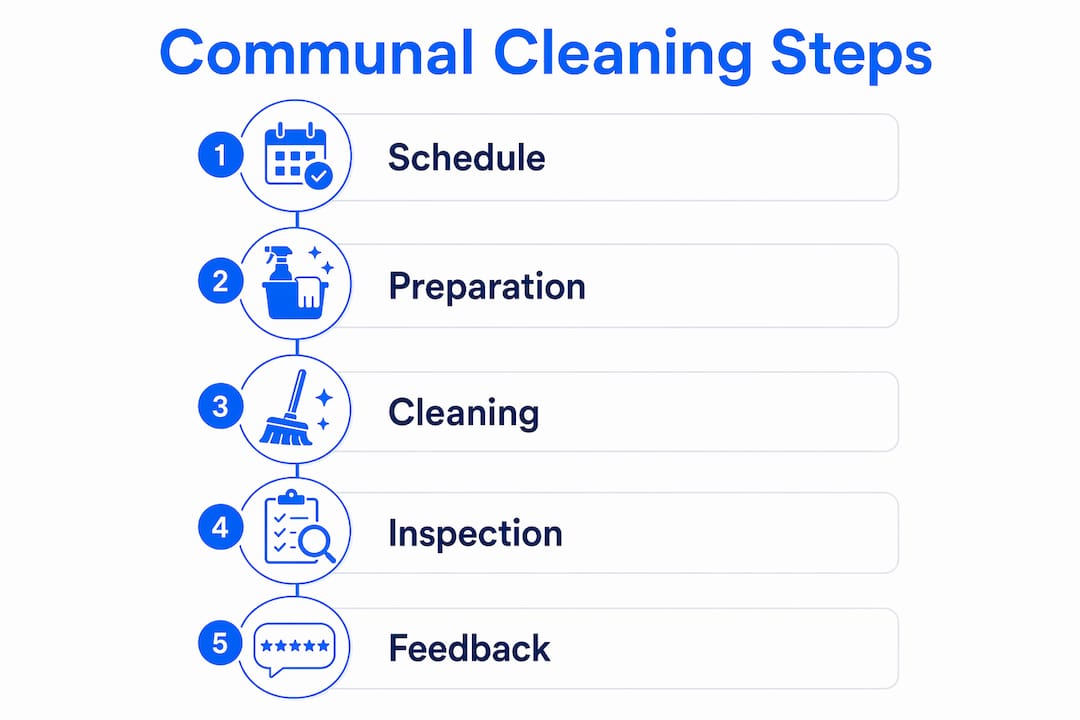
Whole-building cleaning in coordinated visits produces uniform results and avoids the patchy appearance that comes from cleaning different areas on different days. Contracts structured around complete building visits maximize visual consistency and crew efficiency. Piecemeal approaches leave some areas gleaming while others remain dirty, which undermines the entire effort.
Advance communication with residents is not optional. A notice posted 48 hours before a scheduled clean prevents access issues, protects residents’ belongings on balconies, and reduces complaints. Property managers who build communication into their cleaning schedule report fewer service disruptions and higher resident satisfaction scores.
Automated scheduling removes the management burden from property teams. Pre-arranged visits communicated clearly to residents avoid the logistical problems that come with individual bookings. The property manager sets the schedule once, and the system runs without constant oversight. That efficiency matters in large multi-tenant buildings where manual coordination becomes a full-time task.
Best practices for managing communal window cleaning services include:
- Set a whole-building cleaning schedule at contract start, not area by area
- Send written notice to all residents at least 48 hours before each visit
- Integrate window cleaning with other communal maintenance visits where possible
- Require providers to submit digital job reports after every clean
- Choose providers with documented risk assessments and public liability insurance
- Review the contract annually to adjust frequency based on building usage and seasonal conditions
Choosing a provider with safety compliance and quality assurance processes protects the property manager legally and ensures consistent results. Fully insured crews with documented risk assessments reduce liability exposure. Providers who offer property cleaning investment guidance alongside their service contracts add genuine value beyond the clean itself.
Key Takeaways
Communal window cleaning is a scheduled, professional service that protects building assets, improves tenant retention, and maintains shared spaces to a consistent standard across the entire property.
| Point | Details |
|---|---|
| Defined scope | Communal cleaning covers shared glass only: entrances, lobbies, stairwells, corridors, and balcony panels. |
| Modern methods | Water-fed pole systems with purified water clean high-level windows safely from the ground. |
| Asset protection | Regular cleaning prevents pollutant damage to seals and frames, avoiding costly repairs. |
| Resident impact | Clean shared spaces improve tenant retention and create a community pride ripple effect. |
| Management efficiency | Automated, pre-arranged schedules reduce coordination burden and prevent service failures. |
Why I think most buildings undervalue communal window cleaning
Most property managers I have spoken with treat communal window cleaning as a line item to minimize rather than an investment to protect. That framing costs them more in the long run. A building that looks neglected from the outside signals poor management to prospective tenants before they ever step inside.
The diagnostic value of regular cleaning is the most underappreciated benefit. Cleaning crews see every inch of your glazing on a schedule. They notice the seal that is starting to fail, the frame that has developed a crack, and the balcony panel that is coming loose. Catching those issues early costs a fraction of emergency repairs.
Resident behavior is the other factor that rarely gets discussed. A building that is visibly maintained sets a standard. Residents who live in a clean, well-kept environment are less likely to leave litter in stairwells or damage communal property. That behavioral shift reduces maintenance costs across the board, not just for windows.
The future of communal cleaning is moving toward digital integration. Providers who deliver job reports with photos after every visit give property managers a compliance record and an early warning system in one package. That transparency is worth paying for. If your current provider cannot tell you exactly what was cleaned and when, it is time to ask why.
— nolan
Professional communal window cleaning resources from Broswindowcleaningoc
Broswindowcleaningoc has spent over five years working with residential and commercial properties across Orange County, CA, building expertise in shared space cleaning that goes beyond a standard window clean.
Whether you manage an apartment block, an HOA community, or a mixed-use building, understanding what separates a reliable provider from a basic one matters. The quality window cleaners guide from Broswindowcleaningoc covers the specific criteria to look for, from equipment standards to insurance requirements. For residents new to shared property maintenance, the window cleaning terms guide explains the industry language clearly. Broswindowcleaningoc offers fully insured, scheduled communal cleaning services built around the needs of shared properties in Orange County.
FAQ
What is communal window cleaning exactly?
Communal window cleaning is the professional, scheduled cleaning of shared glass surfaces in residential or commercial buildings, including entrance doors, lobby panels, stairwell windows, and balcony screens. It covers areas used by all residents rather than privately owned windows.
How often should communal windows be cleaned?
Frequency depends on the area and building type. Entrance doors and lobby glazing typically need cleaning monthly, while stairwell windows and balcony panels are cleaned quarterly. High-traffic or high-pollution locations may require more frequent visits.
What equipment do professionals use for communal window cleaning?
Professional communal window cleaners use water-fed pole systems with purified water, which allows safe cleaning of upper-floor windows from the ground without ladders. Internal glass is cleaned with squeegee and microfiber techniques.
How does communal window cleaning affect property value?
Regular communal cleaning is linked to higher tenant retention rates and stronger property valuations by signaling proactive building management. It also prevents pollutant damage to window seals and frames, avoiding expensive repairs.
Who is responsible for arranging communal window cleaning?
The property manager or building management company typically arranges and coordinates communal window cleaning. They set the schedule, communicate with residents, and select a provider with appropriate insurance and safety compliance.