
Cleaning window blinds properly means applying the right method for each blind material, in the right order, at the right frequency. Skip that match between method and material, and you risk warping wood slats, shrinking fabric, or grinding dust into a muddy film that no cloth can fix. The two core practices are routine dusting every 1–2 weeks and a quarterly deep clean that removes built-up grime before it bonds to the surface. Get both right, and your blinds stay bright, fresh, and intact for years longer than blinds that only get attention when they look visibly dirty.
What tools and materials do you need for cleaning different types of blinds?
The right tools make the difference between a five-minute job and a frustrating mess. Using the wrong cleaner on the wrong material is the most common way homeowners accidentally damage their blinds.
Essential tools for blind cleaning:
- Microfiber cloths: Trap dust without scratching. Use dry for routine dusting, lightly damp for spot work.
- Vacuum with a soft brush attachment: Ideal for fabric, cellular, and delicate slat blinds. Always use the lowest suction setting.
- Feather duster: Good for quick passes on vinyl or metal blinds between deeper cleans.
- Mild dish soap: Safe for vinyl, plastic, and metal. Mix a few drops into warm water.
- White vinegar: Cuts grease and light stains on vinyl and metal without harsh chemicals.
- Cotton gloves: Slip them on, dampen slightly, and clean both sides of a slat at once.
Tool and material compatibility at a glance:
| Blind material | Recommended tools | Avoid |
|---|---|---|
| Vinyl / plastic | Microfiber cloth, mild soap, cotton gloves | Abrasive scrubbers |
| Metal / aluminum | Microfiber cloth, mild soap solution | Steel wool, bleach |
| Real wood | Dry microfiber cloth, furniture polish | Water, soaking |
| Fabric / cellular | Soft brush vacuum attachment, spot cleaner | Soaking, wringing |
| Faux wood | Damp microfiber cloth, mild soap | Harsh solvents |
Pro Tip: Add two drops of dish soap to a spray bottle of warm water and keep it under the sink. You will always have a safe, ready-made cleaning solution without reaching for anything stronger.
Safety note: never mix vinegar and bleach. The combination produces toxic fumes. Stick to one cleaner at a time, and rinse surfaces thoroughly after any soap application.
How to do routine and light cleaning correctly

Routine cleaning is the single most effective thing you can do to extend blind life. Consistent light cleaning prevents grime from bonding to slats, which means you never need harsh scrubbing or soaking.
Follow these steps every 1–2 weeks:
- Close the blinds flat. Tilt slats to one side so the full surface faces you. This gives you maximum contact with each slat.
- Start at the top. Work top to bottom so any dislodged dust falls onto uncleaned slats below, not onto areas you just finished.
- Dust with a dry microfiber cloth or feather duster. Use long, gentle horizontal strokes across each slat. Do not press hard.
- Flip the slats. Tilt them to the opposite side and repeat the dusting motion on the back face.
- Vacuum fabric or cellular blinds. Use a soft brush attachment on the lowest suction setting. Move side to side across horizontal blinds to avoid bending or creasing the material.
- Wipe vertical blinds top to bottom. Hold each vane at the bottom to keep it steady while you wipe downward with a dry cloth.
For horizontal blinds, the side-to-side vacuuming motion matters more than most homeowners realize. Pulling a vacuum brush straight down on aluminum mini-blinds bends the slats out of alignment permanently.
Pro Tip: Wipe vinyl or PVC blinds with a used dryer sheet after dusting. The anti-static coating left behind repels dust for weeks, cutting your next cleaning time in half.
How to deep clean window blinds by material type
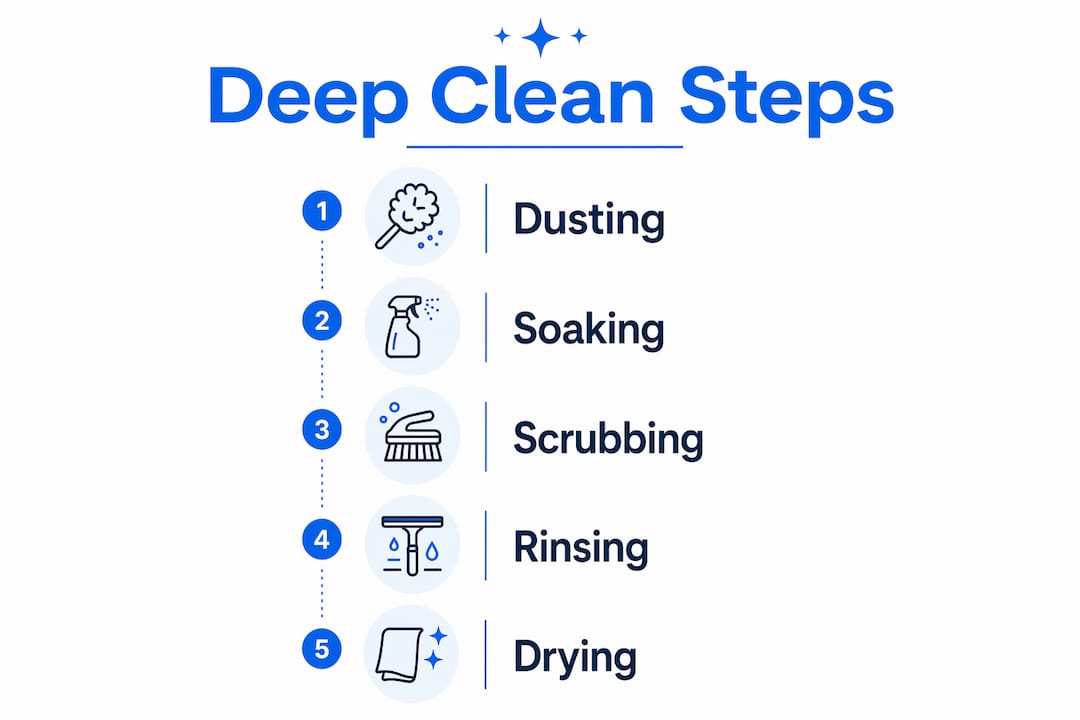
Deep cleaning every three months removes the grease, cooking residue, and allergens that routine dusting leaves behind. The method depends entirely on the material.
Vinyl, plastic, and metal blinds
These are the most forgiving materials. Soaking in warm soapy water for 20–60 minutes dissolves built-up grime without scrubbing.
- Remove the blinds from the window and take them to a bathtub.
- Fill the tub with warm water and a few drops of mild dish soap.
- Submerge the blinds fully and let them soak for 20–60 minutes depending on how dirty they are.
- Wipe each slat with a soft cloth or sponge. No hard scrubbing needed after soaking.
- Rinse thoroughly with clean water to remove all soap residue.
- Hang the blinds over the tub or a shower rod and let them air dry completely before rehanging.
Real wood blinds
Water is the enemy of real wood. Moisture causes warping and internal damage that cannot be reversed. Stick to dry methods only.
- Dust each slat with a dry microfiber cloth, working top to bottom.
- For stubborn spots, apply a small amount of wood furniture polish to a dry cloth and rub gently.
- Never spray any liquid directly onto wood slats.
Fabric and cellular blinds
Fabric blinds need the gentlest approach. Soaking causes shrinkage, color bleeding, and structural collapse in cellular shades.
- Vacuum with a soft brush attachment on low suction.
- For spots, mix a drop of gentle laundry detergent with cool water.
- Blot the stain with a clean cloth. Do not rub.
- Blot dry immediately with a second clean cloth.
- Leave the blind in place and let it air dry fully before raising it.
Pro Tip: After deep cleaning vinyl blinds, hang them in direct sunlight to dry. Sunlight speeds drying and kills any remaining bacteria without any extra product.
| Material | Deep clean method | Water safe? | Soak time |
|---|---|---|---|
| Vinyl / plastic | Bathtub soak, mild soap | Yes | 20–60 min |
| Metal / aluminum | Bathtub soak, mild soap | Yes | 20–60 min |
| Real wood | Dry cloth, furniture polish | No | None |
| Fabric | Spot clean only, gentle detergent | Spot only | None |
| Cellular shades | Dry vacuum only | No | None |
How do you spot clean and remove stains from blinds?
Spot cleaning handles the marks that appear between deep cleans. Grease splatter near a kitchen window, a child’s fingerprints, or a water stain from a leaky sill all need targeted treatment.
Follow these rules every time:
- Dust or vacuum first. Never apply water to a dusty blind. Wet dust turns into mud that smears across the surface and is far harder to remove than the original stain.
- Test your cleaner first. Apply any cleaning solution to a hidden area, such as the back of a bottom slat, and wait 24 hours to check for discoloration or damage. Leading manufacturers and professional cleaners treat this step as non-negotiable.
- Blot, never rub. Rubbing spreads the stain and can damage fibers or scratch a surface finish. Press a damp cloth onto the stain and lift straight up.
- Use a cotton glove for slat blinds. A dampened cotton glove lets you clean both sides of a slat at once by pinching it between your fingers. This cuts spot cleaning time significantly.
- Try a vinegar and baking soda paste for stubborn stains. Mix equal parts white vinegar and baking soda into a paste, apply to vinyl or metal slats, let it sit for five minutes, then wipe clean with a damp cloth.
- Dry immediately. After any wet treatment, blot the area dry with a clean cloth. Leaving moisture on blinds, especially near the headrail or cords, encourages mold growth.
Pro Tip: Keep a small spray bottle of diluted white vinegar near your cleaning supplies. A quick spritz and blot handles most kitchen grease stains on vinyl blinds in under a minute.
Maintenance tips to prolong blind life and avoid common mistakes
The best way to protect your blinds is to make small habits part of your regular home routine. Regular maintenance prevents buildup that forces you into harsh cleaning methods, which are the leading cause of blind damage.
Key habits that protect your blinds:
- Clean your windows before your blinds. Wiping down the glass stirs up dust that settles directly onto freshly cleaned slats. Do the windows first, then the blinds.
- Never use high vacuum suction on any blind type. High suction bends aluminum slats, pulls fabric out of shape, and can snap cellular shade cells.
- Avoid harsh chemical sprays. Bleach, ammonia-based cleaners, and abrasive powders strip surface coatings and cause discoloration over time.
- Never soak wood or cellular blinds. Moisture causes irreversible warping in wood and collapses the internal structure of cellular shades.
- Air dry completely before rehanging. Rehinging damp blinds traps moisture in the headrail and cords, which leads to mold and mechanical failure.
- Wipe cords and headrails. Most homeowners clean the slats and ignore the cords. Cords collect grease and grime that transfers back onto clean slats every time you raise or lower the blind.
“Consistent, gentle cleaning done regularly will always outperform aggressive cleaning done rarely. Treat your blinds like you treat your floors: a quick pass often beats a deep scrub once a year.”
Key takeaways
Cleaning window blinds properly requires matching the method to the material, always dusting before any wet treatment, and maintaining a regular schedule to prevent grime from bonding to surfaces.
| Point | Details |
|---|---|
| Match method to material | Use soaking for vinyl and metal; dry cleaning only for wood and cellular blinds. |
| Dust before any wet cleaning | Applying water to dusty blinds creates mud that is harder to remove than the original dirt. |
| Clean top to bottom | Always work downward so dislodged dust falls onto uncleaned areas, not finished ones. |
| Test cleaners before use | Apply any new solution to a hidden slat and wait 24 hours to check for damage. |
| Maintain a regular schedule | Dust every 1–2 weeks and deep clean quarterly to prevent buildup and extend blind life. |
What I have learned from years of watching homeowners clean their blinds
The single most common mistake I see is skipping the dusting step and going straight to a wet cloth. It feels faster. It is not. Wet dust turns into a gray film that takes three times as long to remove as a dry dusting pass would have taken in the first place.
The second thing most homeowners miss is the cords and headrail. You can spend twenty minutes cleaning every slat perfectly and then watch grease from the headrail drip back down within a week. Clean the hardware every time you clean the slats.
The third thing I would tell any homeowner is this: simple products work better than specialty products for most blind types. Mild dish soap, white vinegar, and a microfiber cloth handle the vast majority of blind cleaning jobs. Specialty sprays often contain solvents that degrade plastic and vinyl finishes over time.
One more thing worth saying: integrate blind cleaning into your window cleaning routine. When you clean your windows, do the blinds at the same time. The two tasks take less than thirty minutes combined, and your whole window area looks noticeably cleaner. Doing them separately means you are always stirring up dust from one onto the other.
Consistency beats intensity every time. A five-minute dusting pass every two weeks keeps blinds looking new. Waiting six months and then scrubbing hard is how slats get bent, fabric gets damaged, and wood gets warped.
— nolan
When professional cleaning makes sense for your blinds
Some blinds need more than a DIY pass. Heavily soiled fabric shades, delicate wood blinds with years of buildup, or blinds in commercial spaces with high grease exposure all benefit from professional attention.

Broswindowcleaningoc serves homeowners and businesses across Orange County, CA with thorough, fully insured cleaning services that cover windows, blinds, and the full exterior of your property. If your blinds are overdue for a deep clean or you want a professional eye on your window cleaning needs, the Broswindowcleaningoc team is ready to help. Scheduling is straightforward, pricing is transparent, and the results speak for themselves. Visit Broswindowcleaningoc to get started.
FAQ
How often should you clean window blinds?
Dust blinds every 1–2 weeks and perform a full deep clean quarterly. This schedule prevents grime from bonding to surfaces and keeps blinds looking fresh year-round.
Can you put blinds in the washing machine?
Most blinds should not go in a washing machine. Vinyl, metal, and plastic blinds are best soaked in a bathtub, while fabric and wood blinds require spot cleaning or dry methods only.
What is the best way to clean wood blinds?
The best way to clean wood blinds is with a dry microfiber cloth and, for stubborn spots, a small amount of furniture polish. Never use water on wood blinds because moisture causes permanent warping.
How do you remove stubborn stains from vinyl blinds?
Mix equal parts white vinegar and baking soda into a paste, apply it to the stain, let it sit for five minutes, then wipe clean with a damp cloth. Always dust the blind first to avoid smearing dust into the wet cleaner.
Is it safe to use bleach on blinds?
Bleach is not safe for most blind materials. It strips surface coatings, causes discoloration on vinyl and fabric, and weakens cord fibers over time. Mild dish soap or diluted white vinegar handles the same jobs without the damage risk.