
The window cleaning industry is defined by a $10 billion annual market in the U.S., and the window cleaning trends 2026 brings are reshaping how homeowners and property managers think about exterior maintenance. Residential properties typically need professional service 2–4 times per year, and the methods used for those visits are changing fast. Technology, sustainability, and convenience are the three forces driving every major shift this year. Understanding these trends helps you protect your property’s value, reduce long-term costs, and get better results from every cleaning.
1. Window cleaning trends 2026: automation and robotics take center stage
Autonomous facade robotics and AI-powered drones are no longer experimental. They are moving into standard protocol for high-rise maintenance in 2026, driven by improved safety and cleaning consistency. These systems use ultrasonic sensors and nano-mist technology to reduce water use and eliminate human risk at heights. For commercial property managers, this means fewer liability concerns and more predictable cleaning schedules.
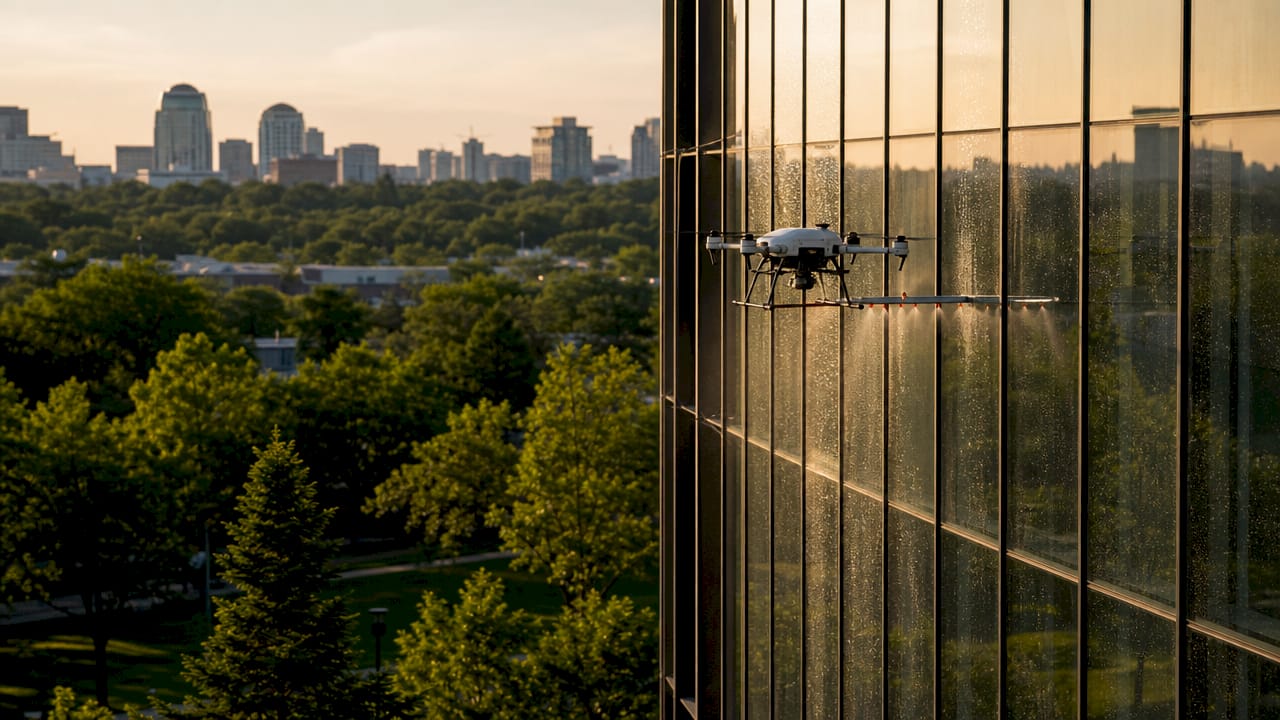
The numbers behind this shift are significant. The global outdoor cleaning robot market is valued at $1.8 billion in 2026 and is projected to grow at a compound annual growth rate of 18.40%, reaching $8.23 billion by 2035. That growth rate signals a technology category moving from niche to mainstream within a single decade. Solid-state lidar now compresses sensor module costs below $200 per unit, making autonomous cleaning systems far more accessible to mid-market service providers.
For residential properties, robotic cleaning is still primarily delivered through professional services rather than consumer devices. The practical benefit for homeowners is consistency. Robots clean at the same pressure and pattern every time, which eliminates the uneven results common with manual crews working under time pressure.
- Autonomous robots reduce injury risk on multi-story homes and commercial facades
- Nano-mist systems cut water consumption compared to traditional hose-fed methods
- Solid-state lidar enables precise navigation around window frames, sills, and trim
- Cleaning frequency increases because robotic services cost less per visit at scale
Pro Tip: Clear window sills of potted plants, screens, and decorative items before a robotic cleaning visit. Obstacles slow the process and can cause the system to skip sections.
2. Soft washing and eco-friendly methods become the residential standard
Soft washing is defined as a low-pressure cleaning method that relies on biodegradable detergents rather than water force to remove organic stains. The exterior cleaning sector expects 3.2%–4.1% growth in 2026, with 68,000–75,000 contractors shifting to specialized soft washing. That contractor shift reflects where client demand is pointing. Homeowners with wood siding, vinyl frames, and stucco exteriors are actively requesting methods that will not erode their surfaces.
Soft washing protects materials like wood, vinyl, and stucco that traditional high-pressure washing damages over time. High pressure forces water into micro-cracks, accelerating deterioration. Soft washing dissolves the organic matter at the source, which means the surface stays cleaner longer after each treatment.
Pure-water technology pairs naturally with soft washing. Pure-water systems using reverse osmosis and deionization are the industry standard in 2026, leaving streak-free glass without chemical residue that attracts dirt. The result is glass that stays visibly clean longer between service visits. That extended cleanliness interval is a real cost benefit for property managers overseeing multiple buildings.
- Biodegradable detergents break down organic stains without harming surrounding landscaping
- Pure-water systems eliminate the need for squeegees and reduce streak risk to near zero
- Low-pressure delivery protects window seals, caulking, and painted frames
- Soft washing is safe for solar panels, which are now common on Orange County homes
Pro Tip: Ask any prospective cleaning provider whether they use deionized water for final rinse. If they do not, the glass will attract dust faster and require more frequent service.
3. Data-driven scheduling using weather and UV sensor technology
Cleaning windows at the wrong time causes streaks, water spots, and surface stress. Hyper-local weather forecasting and UV index monitoring now allow professionals and informed homeowners to schedule cleaning during optimal conditions. The ideal window is an overcast day with low wind, moderate temperature, and a UV index below 3. Direct sunlight causes cleaning solution to dry before it can be rinsed, leaving residue baked onto the glass.
Smart weather apps and affordable UV sensors give property owners real-time surface condition data. Professionals use these tools to build cleaning schedules that avoid the hottest hours of summer days and the freezing mornings of winter months. For property managers with multiple sites, automated alerts can trigger service calls when conditions align across a geographic area.
The practical payoff is fewer callbacks and fewer damaged surfaces. Cleaning done in unsuitable conditions often requires a second visit, which doubles the cost. Scheduling around weather data eliminates that waste.
- Schedule cleaning between 8 a.m. and 11 a.m. on overcast days for best results
- Avoid cleaning when surface temperatures exceed 90°F or drop below 40°F
- UV sensors detect surface heat that thermometers miss, especially on south-facing glass
- Wind above 15 mph carries airborne debris that recontaminates wet glass before it dries
4. The shift toward integrated maintenance contracts
Homeowners are moving away from DIY and equipment rental toward full-service professional contracts that combine convenience with skilled workmanship. This shift is not about cost avoidance. It is about risk management. Chemical mishandling, wrong pressure settings, and improper ladder use cause surface damage that costs far more to repair than a professional service contract.
Integrated maintenance plans bundle window cleaning with related exterior services such as gutter cleaning, solar panel cleaning, and pressure washing on a scheduled basis. Property managers find these plans especially valuable because they replace reactive, emergency-driven service calls with predictable budgets and consistent results. A single provider who knows the property’s surfaces, drainage patterns, and seasonal exposure delivers better outcomes than rotating vendors.
Preventative cleaning planning based on local climate and surface exposure significantly reduces costly future restoration. Moss, algae, and mineral deposits that go untreated for two or more seasons can permanently etch glass and stain masonry. A scheduled maintenance contract catches these issues at the early stage, when a single soft wash visit resolves them.
- Annual contracts typically include 2–4 window cleaning visits plus seasonal exterior checks
- Bundled services cost less per visit than booking each service separately
- A single provider builds institutional knowledge of your property’s specific problem areas
- Insured, licensed providers protect you from liability if damage occurs during service
5. Comparison of 2026 window cleaning methods by property type
Different properties need different approaches. The table below maps the leading 2026 exterior cleaning methods to the property types they serve best, along with the primary benefit and key consideration for each.
| Method | Best for | Primary benefit | Key consideration |
|---|---|---|---|
| Autonomous facade robotics | Commercial high-rises, multi-story buildings | Consistent results, reduced labor risk | Requires flat or standard facade geometry |
| Soft washing | Residential homes, wood, vinyl, stucco | Surface-safe organic stain removal | Needs licensed chemical handling |
| Pure-water (RO/DI) systems | All glass surfaces, solar panels | Streak-free, chemical-free finish | Water supply must be accessible on site |
| Data-driven scheduling | All property types | Prevents streaking and surface stress | Requires weather app or sensor setup |
| Integrated maintenance contracts | Residential and commercial portfolios | Predictable cost, proactive care | Requires vetting provider credentials |
Urban high-rises benefit most from robotic systems and data-driven scheduling, where scale and height make manual methods expensive and dangerous. Suburban homeowners get the most value from soft washing and pure-water technology, which protect the diverse surface materials common on single-family homes. Commercial property managers with multiple sites gain the most from integrated contracts that standardize quality across locations.
For a deeper look at what separates good providers from great ones, the key features of quality window cleaners guide covers the specific credentials and methods to look for when evaluating service options in 2026.
Key takeaways
The most effective approach to window cleaning in 2026 combines surface-appropriate methods, weather-timed scheduling, and a proactive maintenance contract to protect property value and reduce long-term costs.
| Point | Details |
|---|---|
| Robotics are mainstream | Autonomous systems now serve commercial and multi-story residential properties at scale. |
| Soft washing protects surfaces | Low-pressure, biodegradable methods outperform high-pressure washing on most residential materials. |
| Pure-water systems reduce frequency | Deionized water leaves no residue, so glass stays cleaner longer between visits. |
| Weather timing prevents damage | Scheduling around UV index and temperature data eliminates streaking and surface stress. |
| Integrated contracts cut costs | Bundled maintenance plans deliver better results and lower per-visit costs than reactive booking. |
What I’ve learned watching these trends reshape property care
The biggest mistake I see homeowners make is treating window cleaning as a cosmetic task rather than a maintenance task. Clean windows are not just about appearance. They are about catching early signs of seal failure, frame rot, and mineral buildup before those issues become expensive repairs. The curb appeal ROI from professional cleaning is real, but the deeper value is in what you prevent, not just what you improve.
The technology trends in 2026 are genuinely useful, but they do not replace skilled judgment. A robotic system cannot identify a failing window seal. A weather app cannot tell a technician that a particular pane has a micro-crack that will worsen under pressure. The best service providers use technology as a tool, not a replacement for experience.
My practical advice for property owners: stop waiting for windows to look dirty before scheduling service. Organic buildup, mineral deposits, and UV degradation happen on a timeline that is invisible to the naked eye until the damage is done. A twice-yearly scheduled service, timed to your local climate, costs a fraction of what a single glass replacement or frame restoration runs. Proactive maintenance is not a luxury. It is the cheaper option.
— nolan
Broswindowcleaningoc brings 2026 cleaning methods to Orange County
Broswindowcleaningoc applies soft washing, pure-water technology, and weather-timed scheduling to every residential and commercial job in Orange County. The team handles window cleaning, pressure washing, gutter cleaning, solar panel cleaning, and roof cleaning under a single integrated service model. That means one provider, one schedule, and consistent results across every surface on your property.
Property owners who want to stay ahead of exterior maintenance without managing multiple vendors can review the quality window cleaner checklist to see exactly what Broswindowcleaningoc brings to every job. Scheduling is straightforward, pricing is transparent, and every service is fully insured. Call or book online to set up your 2026 maintenance plan today.
FAQ
What are the top window cleaning trends for 2026?
The leading trends are autonomous facade robotics, soft washing with biodegradable detergents, pure-water deionized systems, and data-driven scheduling using UV sensors and weather apps. Integrated maintenance contracts are also growing fast among homeowners and property managers.
How often should residential windows be professionally cleaned?
Residential windows typically need professional service 2–4 times per year. Properties in high-dust, coastal, or high-pollen environments benefit from the higher end of that range.
What is soft washing and why is it replacing pressure washing?
Soft washing uses low pressure and specialized detergents to remove organic stains without damaging surfaces like wood, vinyl, or stucco. High-pressure washing forces water into micro-cracks and accelerates surface deterioration over time.
What is pure-water window cleaning?
Pure-water cleaning uses reverse osmosis and deionization to remove all minerals from the water before it contacts glass. The result is a streak-free, residue-free finish that stays cleaner longer than glass cleaned with tap water or chemical solutions.
How do weather apps improve window cleaning results?
Scheduling cleaning on overcast days with low UV index and wind below 15 mph prevents solution from drying on the glass before rinsing. Hyper-local weather data eliminates the guesswork that leads to streaks, water spots, and callbacks.