
Cleaning between double pane windows is not possible without professional intervention because modern units are hermetically sealed Insulated Glass Units (IGUs). The sealed space between the panes traps an insulating gas, typically argon, to reduce heat transfer and block moisture. When you see fog, haze, or streaks inside the glass, that is a sign of seal failure and moisture ingress that no surface cleaning can fix. What you can do is maintain the accessible surfaces properly and recognize when a glazing specialist needs to step in.
Why cleaning between double pane windows is impossible
Double pane windows are engineered units, not just two sheets of glass. The gap between the panes is sealed at the factory under controlled conditions, filled with argon or krypton gas, and bonded with a desiccant-lined spacer bar. That sealed cavity is what gives the window its insulating value. You cannot access it with a cloth, spray bottle, or any standard cleaning tool.
Seal failure changes everything. When the perimeter seal degrades, outside air and humidity enter the cavity. The moisture condenses on the inner glass surfaces, leaving fog, water spots, or mineral streaks that look like dirt. The critical point: internal cloudiness despite cleaning signals a seal breach, not a surface problem.
The fog you see inside a double pane window is trapped moisture from a failed seal. No amount of wiping the outside glass will remove it.
Attempting to open the unit yourself makes things worse. Drilling or opening sealed IGUs destroys the thermal properties of the window and typically voids the manufacturer warranty. The only real fix is IGU replacement by a qualified technician.
Pro Tip: If you can wipe away the haze with a cloth, it is surface condensation from indoor humidity. If the haze stays no matter how much you clean, the seal has failed.

How to safely clean accessible surfaces of double pane windows
The surfaces you can clean are the outer face of each pane, the frames, tracks, and weatherstripping. Cleaning twice a year with gentle methods preserves seal integrity and keeps windows looking clear. The right technique takes 20–30 minutes per window and protects the seals from premature wear.
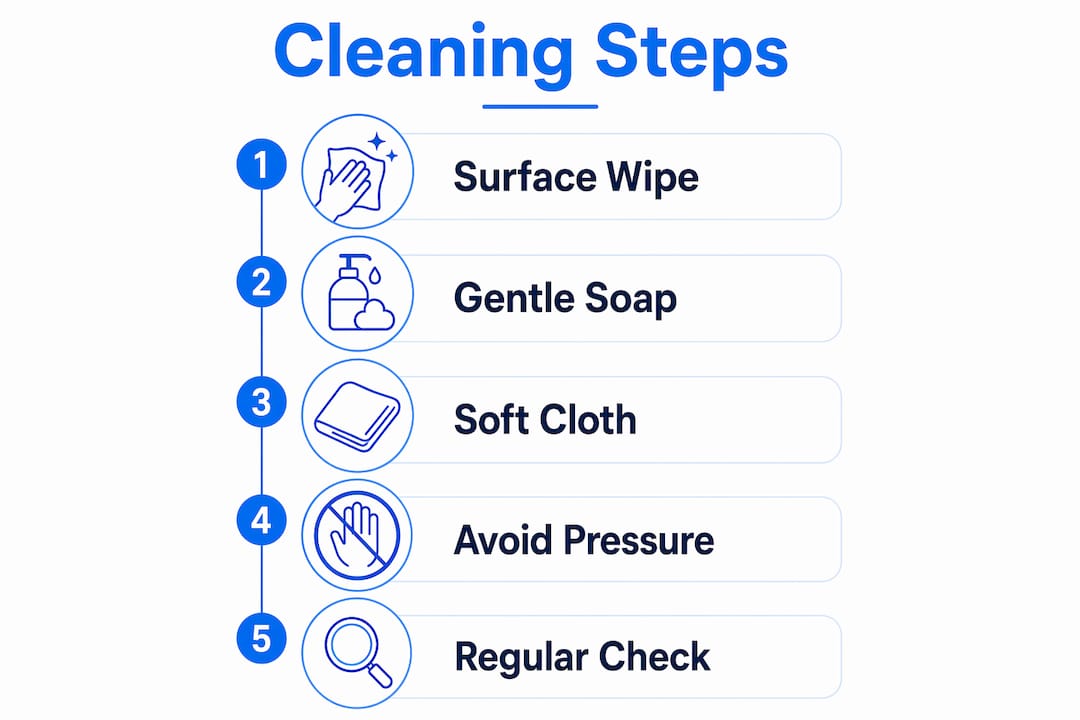
Step-by-step cleaning sequence
- Dust the frame and tracks first. Use a dry microfiber cloth or a soft brush to remove loose dirt. Skipping this step drags grit across the glass and scratches it.
- Mix your cleaning solution. Combine a few drops of mild dish soap with warm water. That is all you need.
- Apply solution to the cloth, not the glass. Wet the microfiber cloth and wipe the glass in overlapping sections. Never spray directly onto the window, as liquid can seep into the frame and reach the seal.
- Use a squeegee with vertical strokes, then horizontal. This two-pass method removes solution evenly and prevents streaks. For streak-free results, overlap each stroke by about an inch.
- Dry the edges immediately. Use a dry cloth to wipe the perimeter of the glass and the frame. Water pooling at the edges is one of the leading causes of early seal degradation.
- Clean the weatherstripping gently. Wipe it with a damp cloth and let it air dry. Cracked or stiff weatherstripping should be replaced before it allows moisture to reach the seal.
What to avoid
- Bleach, ammonia, and vinegar all degrade the rubber seals and frame finishes over time. Stick to mild soap and water.
- Abrasive scrubbers and steel wool scratch glass and strip protective coatings.
- Paper towels leave lint and micro-scratches. Microfiber cloths are the correct tool.
- Never clean in direct sunlight. The solution dries too fast, leaving streaks and creating thermal stress on the glass.
Pro Tip: For stubborn hard water spots on the outer glass, use a solution of distilled water and a small amount of rubbing alcohol. Apply it with a microfiber cloth and rinse immediately.
Tools and materials for effective double pane window cleaning
The right tools make the difference between a clean window and a damaged seal. Modern double pane windows require careful handling rather than the aggressive scrubbing you might use on single pane glass.
| Tool or Material | Purpose | Caution |
|---|---|---|
| Microfiber cloths | Apply solution and dry surfaces without scratching | Replace when worn; dirty cloths scratch glass |
| Rubber squeegee | Remove cleaning solution streak-free | Use light, even pressure; avoid metal-edged models |
| Mild dish soap | Gentle cleaning without seal damage | Use sparingly; rinse residue completely |
| Soft brush or vacuum | Remove dust from tracks and frames | Avoid stiff bristles near weatherstripping |
| Distilled water | Prevents mineral deposits on glass | Tap water leaves spots in hard water areas |
A few tools belong nowhere near a double pane window. Pressure washers and steam cleaners force moisture into the perimeter seals and are a leading cause of premature fogging. High-pressure nozzles also crack frames and strip caulking. Keep both away from your windows entirely.
When to seek professional repair or replacement
Surface cleaning has a clear limit. Once you identify internal fogging, condensation between the panes, or permanent discoloration that does not wipe away, the window needs professional evaluation, not more cleaning.
The signs that point to seal failure are specific:
- Fog or condensation that appears between the panes, not on the surface
- Haze that shifts position as temperatures change
- Mineral streaks or white residue visible inside the unit
- A noticeable drop in the window’s insulating performance, felt as drafts or cold spots near the glass
IGU replacement restores energy efficiency and clarity without requiring full window replacement. A technician removes the failed glass unit, installs a new sealed IGU into the existing frame, and completes the job in a single visit. This approach preserves your frames and costs significantly less than replacing the entire window.
IGU replacement is the correct repair for a failed seal. It restores insulation, eliminates internal fogging, and protects the existing frame investment.
DIY defogging kits exist, but they are not a real solution. Desiccant insertion only masks symptoms and does not restore the gas-filled cavity or the thermal performance of the original seal. These fixes are temporary at best and void warranties at worst. A qualified glazing specialist or a professional window service like Broswindowcleaningoc can assess whether IGU replacement or full window replacement is the right call for your specific unit.
Inspecting seals, hardware, and weatherstripping twice a year catches problems before they become expensive. Worn or cracked gaskets should be addressed quickly to prevent moisture from reaching the sealed cavity.
Common mistakes and troubleshooting when cleaning double pane windows
Most window damage from cleaning comes from using the wrong tools or the wrong timing. Cleaning in direct sunlight causes streaks and seal stress because the solution evaporates before you can squeegee it off. Clean in the early morning or on overcast days for the best results.
- Aggressive scrubbing with abrasive pads removes low-emissivity (Low-E) coatings that improve energy efficiency. Once that coating is gone, the window cannot be restored.
- Spraying cleaning solution directly onto the glass sends liquid into the frame channels, where it sits against the seal.
- Using too much soap leaves a film that attracts dust faster and requires more frequent cleaning.
- Ignoring the tracks allows grit and debris to build up, which then gets dragged across the glass during cleaning.
Pro Tip: If streaks remain after cleaning, the issue is usually soap residue. Wipe the glass again with a cloth dampened with plain distilled water and squeegee immediately.
If haze or a white film persists on the outer surface after correct cleaning, the glass may have hard water mineral deposits. A product like a calcium lime remover designed for glass can address this safely. Apply it with a cloth, let it sit for two minutes, then rinse and squeegee. Never use it near the frame edges or weatherstripping.
For homeowners in Orange County, timely window cleaning also protects against the specific grime challenges of coastal and inland environments, including salt air deposits and hard water from irrigation systems.
Key Takeaways
Cleaning between double pane window panes is physically impossible without professional repair because the sealed IGU cavity cannot be accessed by standard cleaning tools.
| Point | Details |
|---|---|
| Sealed IGUs cannot be cleaned inside | Internal fog or haze signals seal failure, not surface dirt. |
| Gentle methods protect seals | Use mild soap, warm water, and microfiber cloths twice a year. |
| Avoid pressure washers and steam cleaners | Both force moisture into perimeter seals and cause premature fogging. |
| IGU replacement beats DIY fixes | A technician replaces the failed unit in one visit, restoring insulation and clarity. |
| Regular inspections prevent costly repairs | Check seals, gaskets, and weatherstripping twice a year to catch problems early. |
What I’ve learned after years of watching homeowners damage their own windows
The most common mistake I see is homeowners assuming that foggy double pane windows are a cleaning problem. They scrub the outside glass harder, try vinegar sprays, and sometimes even attempt to drill a small hole to “let the moisture out.” Every one of those actions makes the situation worse and more expensive to fix.
The truth is that prevention through non-abrasive care is the single most effective thing a homeowner can do to extend window life. Gentle, twice-yearly cleaning with the right tools costs almost nothing. Replacing a failed IGU costs real money. The gap between those two outcomes is almost always created by using the wrong chemicals or tools on the accessible surfaces over time.
What I tell every homeowner: treat your double pane windows like you would a good pair of eyeglasses. You would not scrub them with a paper towel soaked in bleach. The same logic applies here. Soft cloth, mild solution, dry the edges, done. When you see fog between the panes, stop cleaning and call a professional. That is not a job for a spray bottle.
— nolan
Professional window care for double pane windows in Orange County
Double pane windows perform best when their accessible surfaces are cleaned correctly and their seals are monitored by someone who knows what to look for. Broswindowcleaningoc has served Orange County homeowners for over five years, handling everything from routine window cleaning to identifying seal failures that need specialist attention.

Whether your windows need a thorough exterior clean or you have noticed internal fogging that suggests a seal problem, Broswindowcleaningoc provides fully insured, professional service with a focus on protecting your windows, not just cleaning them. Check the quality window cleaner guide to understand exactly what a professional service should deliver before you book. Schedule your evaluation today and get clear windows without the risk of DIY damage.
FAQ
Can you actually clean between double pane window panes?
No. Modern double pane windows have a hermetically sealed space that cannot be accessed without specialized repair. Any fog or haze inside the unit requires IGU replacement, not cleaning.
What causes fogging inside double pane windows?
Fogging inside double pane windows is caused by seal failure. When the perimeter seal breaks down, outside humidity enters the cavity and condenses on the inner glass surfaces.
Is it safe to use vinegar on double pane windows?
Vinegar degrades rubber seals and frame finishes over time and should be avoided. Use mild dish soap and warm water applied with a microfiber cloth instead.
How often should double pane windows be cleaned?
Cleaning twice a year with gentle methods preserves seal integrity and keeps the glass clear. Spring and fall are ideal timing for most climates.
When does a foggy double pane window need professional repair?
A window needs professional repair when internal fog, condensation, or mineral streaks appear between the panes and do not wipe away from the surface. IGU replacement restores clarity and insulation without requiring full window replacement.