
Yes, but only under certain conditions: light rain or drizzle is workable if you adjust your technique; heavy rain, wind-driven mud, or storms are not. Existing dirt is almost always the real problem, not the rain itself, since clean glass sheds water instead of spotting. Check your frames and screens first, then either clean now with a few rainy-day tweaks or wait for calmer weather.
TL;DR:
- Light, steady rain with no wind is suitable for window cleaning if frames and screens are thoroughly cleaned beforehand to prevent mud and dirt streaks.
- Heavy rain or storm conditions, especially with wind-driven mud or exposure to icy temperatures, make window cleaning unsafe and ineffective, requiring you to skip outside work.
- Rain reveals existing grime and mineral deposits on glass, making proper preparation and cleaning more critical to prevent streaks and ensure streak-free results.
- For post-rain cleaning, always clear debris from frames and screens first, then use stronger solutions and precise techniques to manage ongoing moisture and dirt buildup.
- Professional cleaners can work in light rain by adjusting soap ratios and techniques, but homeowners should prioritize safety and skip cleaning during active storms or hazardous weather conditions.
Table of Contents
- Is Light Rain Different From Heavy Rain for Window Cleaning?
- Why Do Windows Look Dirtier Right After It Rains?
- When Should You Skip Cleaning Windows Altogether?
- How Do You Clean Exterior Windows in Light Rain?
- What Should You Do to Windows After the Rain Stops?
- What Do Professional Window Cleaners Do Differently in the Rain?
- The Rain Isn’t Your Real Problem, Neglect Is
- A Local Option When Rain Timing Gets Complicated
- Sources
Is Light Rain Different From Heavy Rain for Window Cleaning?
Light rain and drizzle behave nothing like a downpour. A steady mist keeps glass cool and humidity high, which slows evaporation and gives your cleaning solution more time to work before it dries into streaks. Overcast skies help for the same reason pros avoid cleaning in direct sun: fast evaporation is the enemy of a streak-free finish, according to Good Housekeeping’s pro cleaning tips. Rainwater itself carries far fewer dissolved minerals than tap water, so it can act almost like a natural rinse when the glass underneath is already prepped, a point Gardenspace lays out well.
Heavy rain is a different story. Wind-driven splashing kicks mud and grit up from the ground straight onto lower panes, undoing your work in seconds. Use this quick check before you grab a squeegee:
- Rain type: Light, steady drizzle with no wind is fine; sideways rain or downpours are not.
- Ground condition: Standing puddles or exposed dirt near the foundation mean mud splash is likely.
- Wind: Anything strong enough to sway branches will blow water and debris onto clean glass.
- Duration: A short window between showers is workable; a storm system moving through is not.
Why Do Windows Look Dirtier Right After It Rains?
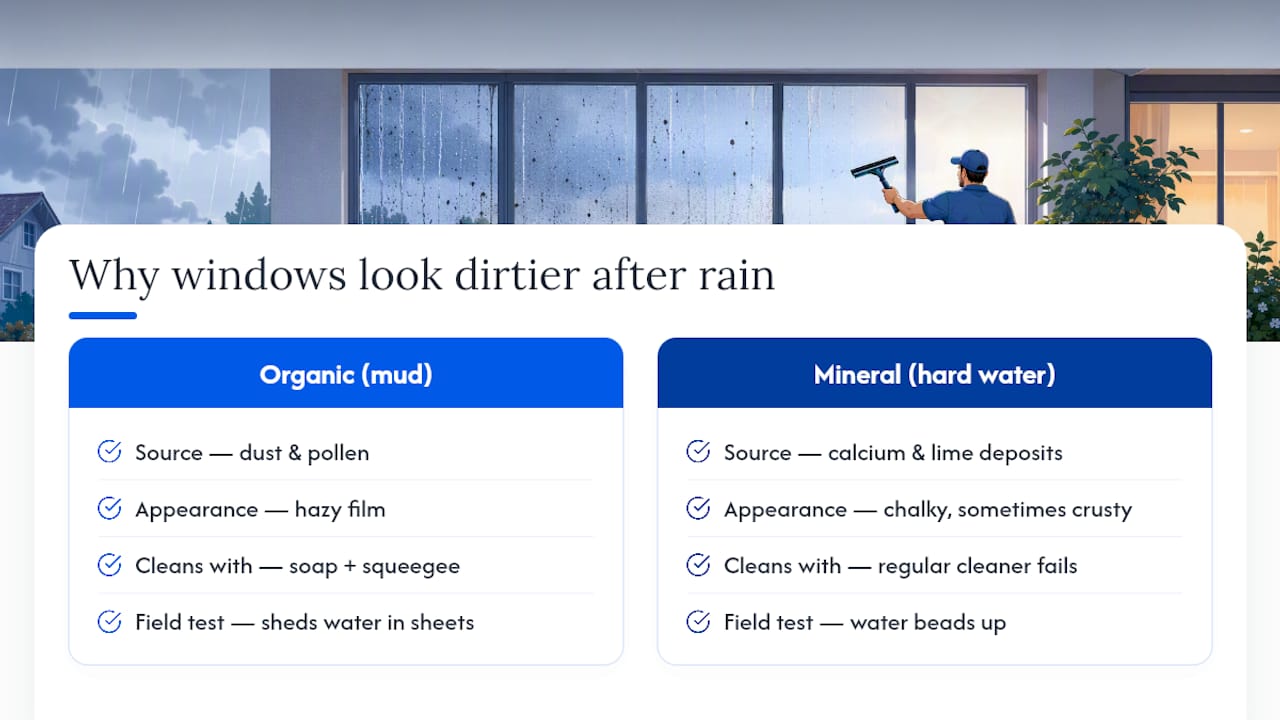
Rain doesn’t create grime, it reveals it. Dust, pollen, and thin oily films build up on glass between cleanings, and when raindrops hit that layer, they smear it into streaky patterns instead of rinsing it clean. Frames, screens, and gutters make it worse. Water running off a dirty screen or a clogged gutter carries that debris straight down the glass, so you can wash a window perfectly and still watch it get dirty again minutes later if the frame above it is loaded with grit.
There’s also a chemistry difference worth knowing. Organic “mud” spots come from dirt and pollen mixing with water and drying into a hazy film that usually wipes off with soap and a squeegee. Mineral spotting is different. Hard water leaves behind calcium and lime deposits that dry into a chalky, sometimes crusty residue that regular glass cleaner won’t fully lift. Genuinely clean glass sheds water in sheets rather than beading up, which is the simplest field test for whether you’re looking at a dirt problem or a mineral one.
When Should You Skip Cleaning Windows Altogether?
Some conditions aren’t worth the risk or the wasted effort. Lightning, gusty winds, icy surfaces, or a slippery ladder are safety issues first. NOAA’s weather guidance is the standard reference for checking short-term storm and lightning risk before you go near a ladder or extension pole.
Effectiveness matters too. Skip it during:
- Active downpours — you’re rinsing, not cleaning, and streaks will reappear as it dries.
- Wind-blown mud or dust — construction sites or dry, exposed dirt nearby make splash-back inevitable.
- Storm-adjacent conditions — even a lull between bands can turn on you fast.
- Icy overnight temperatures — water can refreeze on contact and create a hazard on ladders and walkways.
If any of those apply, clean the interior only, wait for a calmer stretch, or bring in a professional for high or hard-to-reach glass, following best tips to clean your beautiful interior doors for related home maintenance advice.
How Do You Clean Exterior Windows in Light Rain?
Preparation matters more than the weather itself. Clear loose debris from frames, tracks, and screens before you touch the glass, since anything left behind will wash straight down onto your clean pane, a step Good Housekeeping’s cleaning experts flag as the most-skipped step in DIY cleaning. Grab a squeegee, a T-bar or scrubber, microfiber cloths, and an extension pole if you’re working above ground level.
- Clear the frame and screen first. Wipe or brush away loose dirt so it can’t redistribute onto wet glass.
- Mix your solution stronger than usual. Bump your dish soap ratio up by roughly 15 to 20 percent to compensate for the extra moisture already on the glass, a trick pros lean on during drizzle, per Gardenspace.blog’s rain-cleaning research.
- Scrub top to bottom. Work each pane in one direction so you’re not reworking areas that are already clean.
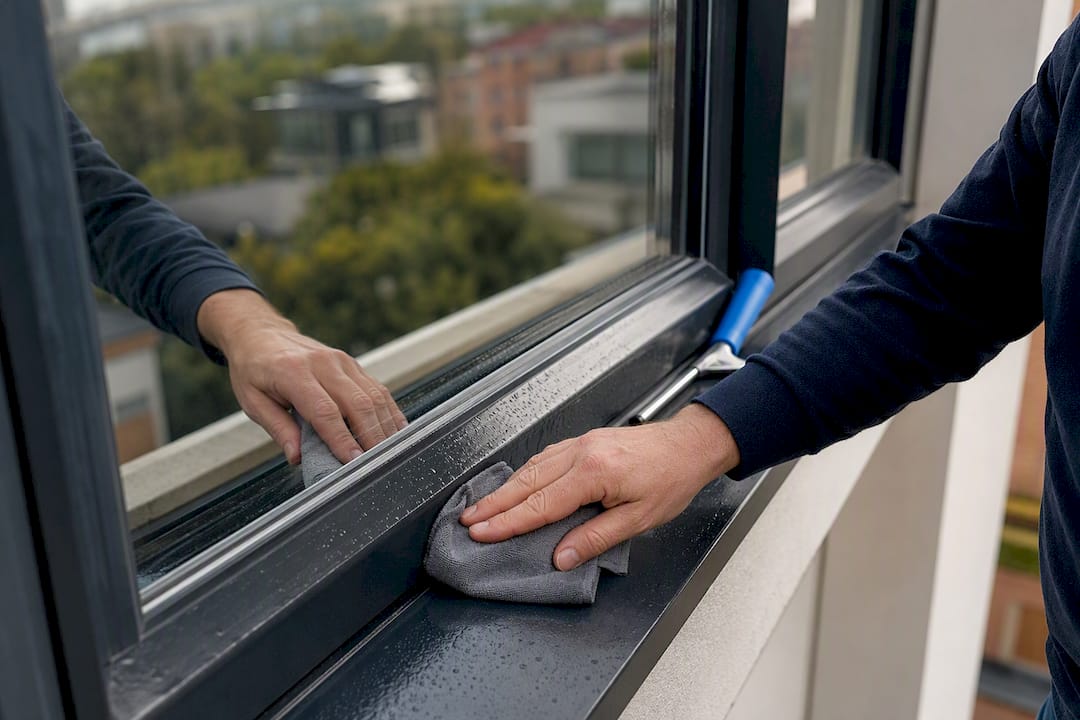
- Squeegee in overlapping strokes. Pull the blade in a steady S-pattern, wiping it dry between passes.
- Run a dry cloth around the perimeter. This catches drip-back from the frame before it bleeds onto the glass you just finished.
- Work one panel at a time. Smaller sections dry more evenly and let you adjust if rain picks up mid-job.
Family Handyman’s step-by-step window-washing method follows this same wash-squeegee-wipe sequence, and it holds up well even when the glass is already damp from rain. If you’ve got a helper, have them manage drips and hand you fresh cloths so you’re not stopping mid-panel. If the rain intensity picks up, stop and finish the panel you’re on rather than starting a new one.
Pro Tip: The “dry-rag edge” trick separates a rushed rainy-day clean from a good one: after squeegeeing, run a dry microfiber cloth along the frame edge and sill before moving to the next pane. It intercepts frame runoff before gravity pulls it back onto glass you already finished.
What Should You Do to Windows After the Rain Stops?
The job isn’t done when the glass looks clear. Frames and tracks hold onto grit long after the rain passes, and if you skip them, that debris washes right back onto your windows during the next storm. Wipe frames dry and clear tracks of standing water so nothing sits there breeding mildew or corrosion.
Screens need their own pass. Vacuum loose debris, rinse with a mild soap solution, and let them dry fully before reinstalling, since a damp screen pressed back against wet glass just recreates the smear you were trying to remove. Pull screens off entirely if they’re heavily caked with pollen or dust.
Mineral spots and organic residue need different fixes:
- Mineral (hard-water) spots usually respond to a vinegar soak or a commercial hard-water remover applied directly to the dried residue.
- Organic residue from dirt and pollen typically lifts with a normal soap-and-squeegee pass, no special treatment needed.
- Etched glass, where hard-water deposits have pitted the surface rather than sitting on top of it, needs professional polishing rather than scrubbing, since aggressive scraping risks scratching the glass further, per guidance on removing hard water spots.
If spotting keeps coming back after multiple treatments, that’s usually a sign the etching has already happened and a professional restoration pass is the only real fix.
What Do Professional Window Cleaners Do Differently in the Rain?
Professional window cleaning companies with experience in residential and commercial glass often find that light rain rarely prevents them from working. The difference is in the details: we increase soap concentration to offset dilution, run tighter squeegee control to manage drip-back, and follow strict safety protocols around ladders and extension poles on wet surfaces.
Hire a professional when access is unsafe from the ground, when mineral etching has gone past a simple vinegar soak, or when frame damage needs a closer look. If you’re unsure whether current conditions are workable, ask about a rain policy or quote before scheduling.
The Rain Isn’t Your Real Problem, Neglect Is
Most of the advice floating around about rain “ruining” a window clean gets the cause backward. Rain doesn’t create the mess, it exposes whatever was already sitting on the glass, the frame, and the screen. That’s the part conventional wisdom skips: the weather is almost never the variable that determines whether your windows look good afterward. Preparation is.
The bigger mistake I see homeowners make isn’t cleaning in a light drizzle, it’s assuming any rain means postponing the whole job, then letting grime build up for months until a heavy cleaning is unavoidable. A five-minute frame and screen check before you start will tell you more about whether today is a good cleaning day than checking a weather app ever will.
If you take one thing from this, prioritize the frames and screens before you touch the glass. That single habit prevents more streaking than any squeegee technique or soap ratio ever will.
— nolan
A Local Option When Rain Timing Gets Complicated
Chasing the right weather window between storms gets old fast, especially if you’re managing more than one property or a schedule that doesn’t bend easily. Some window cleaning crews offer services that can accommodate light rain and post-storm conditions safely, applying soap ratios, squeegee control, and frame care as described in this guide to reduce the need to schedule strictly around weather.

Some professional cleaning services handle routine window cleaning, as well as gutter clearing and pressure washing, and maintain insurance coverage for residential and commercial properties. If persistent mineral spotting or hard-to-reach glass issues arise, some professional cleaners can explain potential solutions before starting any work. Check out our window cleaning myths guide for more on when timing actually matters, then request a quote and get a cleaning scheduled around your actual weather window instead of an arbitrary one.
Sources
For deeper reading: Family Handyman’s window-washing guide covers technique basics, and our hard-water spot guide walks through mineral-deposit removal and aftercare like protecting windows after cleaning.
- How to Clean Windows Without Streaks, According to Cleaning Experts
- How to wash windows — Family Handyman
- Gardenspace