
Sustainable cleaning is defined as the practice of minimizing environmental impact across the full cleaning lifecycle, including product ingredients, packaging, tool selection, and usage habits, while maintaining effective cleaning results. The term overlaps with what the industry formally calls “green cleaning,” a phrase recognized by the EPA and third-party certification bodies like EPA Safer Choice and Design for the Environment (DfE). These programs set the standard for what genuinely qualifies as eco-friendly, cutting through the noise of vague marketing claims. Understanding the difference between certified green cleaning and greenwashing is the first practical step for any household or business serious about reducing its environmental footprint.
What is sustainable cleaning and how is it defined?
Sustainable cleaning reduces environmental footprint across waste, packaging, chemical load, and lifecycle impact while keeping cleaning performance intact. This definition matters because it rules out a large category of products that use words like “natural” or “plant-based” without any third-party verification. The EPA explicitly warns that vague green marketing claims can mislead consumers, making certified labels the only reliable filter.
The EPA’s Safer Choice program and its Design for the Environment (DfE) label are the two most credible benchmarks in the U.S. market. Both programs certify products that meet strict health and environmental standards, and both offer searchable online databases so you can verify a product before buying. If a cleaner does not appear in either database, its “eco-friendly” label is a marketing choice, not a verified claim.
Lifecycle impact is a concept most shoppers overlook. A product can use plant-derived surfactants but still carry a heavy environmental cost if it ships in single-use plastic, requires high-temperature water to activate, or demands frequent reapplication. Truly sustainable products score well across all of these dimensions, not just one. Refillable concentrate systems, like those offered by brands such as Blueland and Grove Collaborative, address packaging waste directly by reducing plastic per cleaning cycle.
Pro Tip: Search the EPA’s Safer Choice product finder at epa.gov before your next cleaning supply purchase. It takes under two minutes and removes all guesswork about whether a label is real.
| Product claim | What it actually means |
|---|---|
| “Natural” or “plant-based” | No regulatory definition; no guaranteed safety or eco-performance |
| EPA Safer Choice certified | Meets EPA standards for ingredient safety, packaging, and environmental impact |
| DfE labeled | Formulated without chemicals of concern; reviewed by EPA scientists |
| “Biodegradable” | Partially regulated; timeframe and conditions for breakdown vary widely |
| “Non-toxic” | No legal definition in cleaning products; treat as marketing language |
What sustainable cleaning methods and tools reduce environmental impact?
The most effective sustainable methods combine product selection with behavior changes, because using a certified green cleaner at three times the recommended dose still generates excess chemical waste. Proper dilution is one of the highest-leverage habits you can build. Concentrated formulas used at the correct ratio reduce both cost and the volume of chemicals entering wastewater systems.
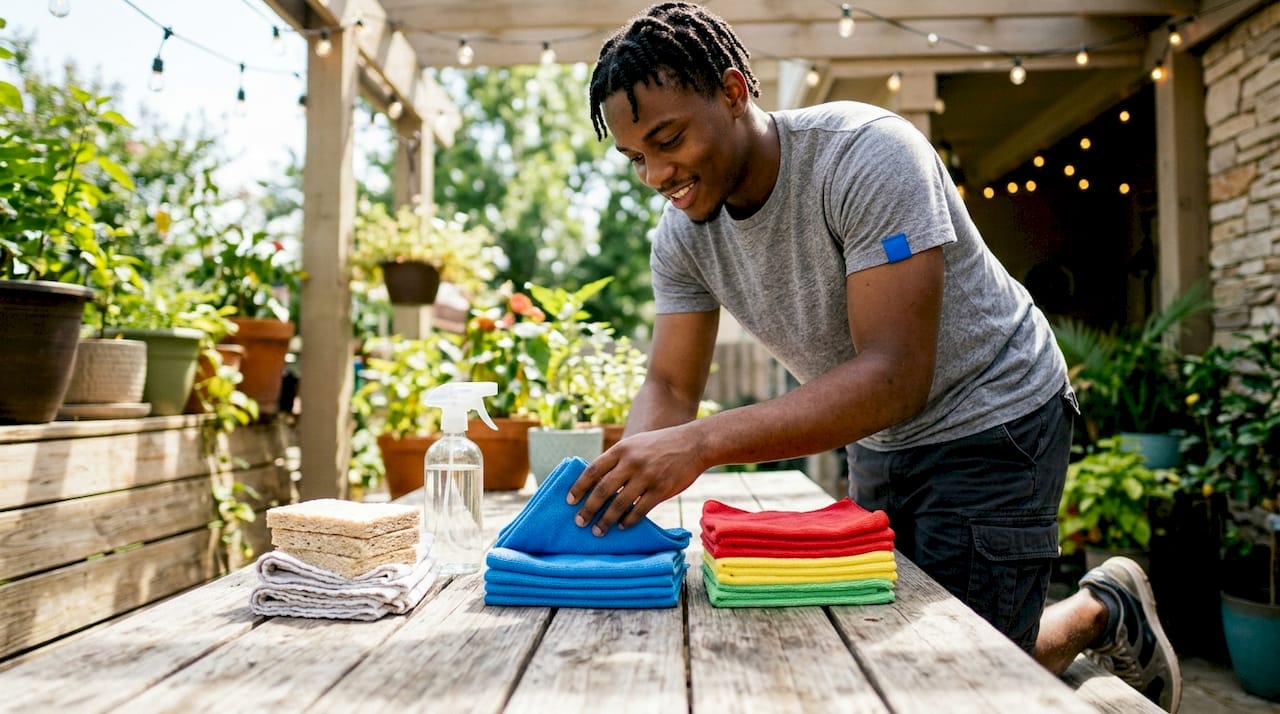
Reusable tools are the second major lever. Microfiber cloths, cotton rags, and biodegradable cellulose sponges replace paper towels and single-use wipes that generate significant landfill volume over a year. A household that switches from paper towels to washable microfiber cloths for daily surface cleaning eliminates hundreds of disposable items annually. The professional cleaning tools used by experienced service providers follow this same logic at commercial scale.
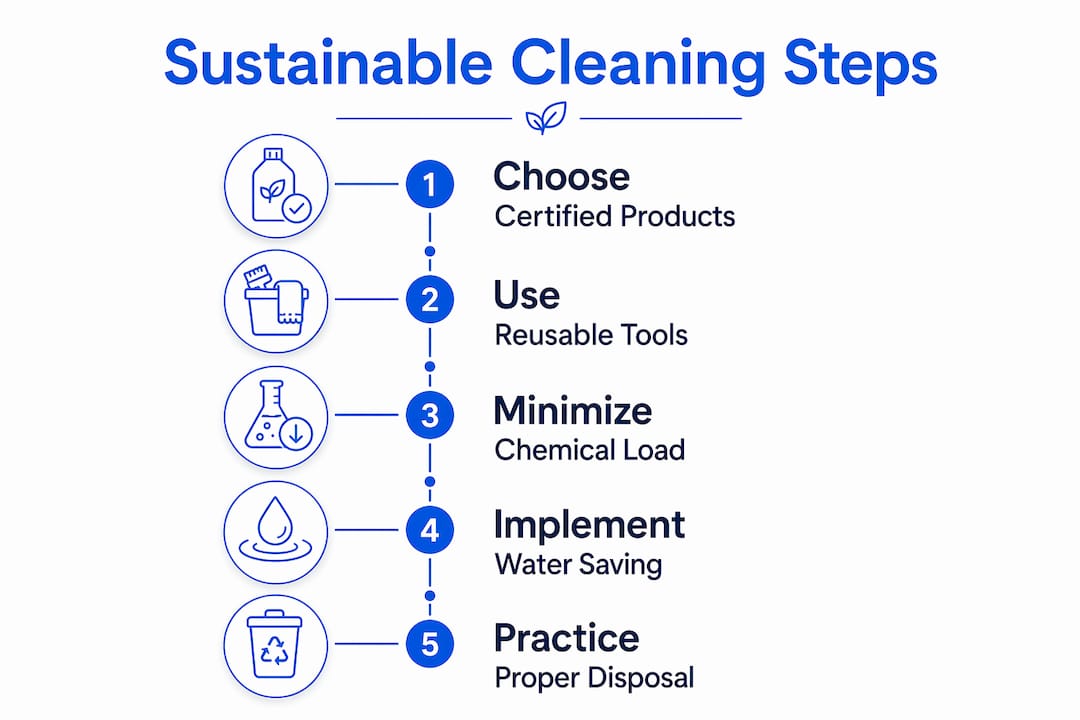
Fragrance is a factor most guides ignore. Synthetic fragrances in cleaning products are among the most common sources of indoor air quality issues, and many contain compounds not disclosed on labels. Choosing fragrance-free or naturally scented formulas is a straightforward way to reduce chemical exposure without sacrificing cleaning performance.
Here are the core sustainable cleaning methods worth adopting today:
- Use concentrated formulas and follow dilution instructions precisely to avoid overuse
- Replace single-use paper towels and disposable wipes with washable microfiber or cotton cloths
- Choose refillable or recyclable packaging to cut plastic waste per cleaning cycle
- Select fragrance-free or naturally scented products to reduce indoor air pollutant load
- Store products correctly to extend shelf life and prevent premature disposal
Pro Tip: Label a set of color-coded microfiber cloths by task: one color for glass, one for surfaces, one for bathrooms. This prevents cross-contamination and extends the life of each cloth, since you wash them only when actually soiled.
What recent innovations are enhancing sustainable cleaning?
A 2026 study published in Communications Chemistry introduced a self-cleaning fabric coating that functions as a detergent-free laundry system. The coating creates an ultra-dense hydration layer on fabric fibers, allowing water rinsing alone to remove dirt effectively. The result is a reduction of approximately 82% in water, electricity, and detergent use per wash cycle, with the coating lasting over 100 uses.
This matters beyond laundry. The same hydrophilic coating principle is being explored for hard surfaces, window glass, and commercial flooring, where self-cleaning properties could dramatically cut the frequency of chemical application. For businesses running daily cleaning programs, even a 30% reduction in chemical application frequency translates to measurable cost and waste savings over a year.
The table below shows how this innovation compares to conventional and standard green cleaning approaches:
| Method | Detergent use | Water use | Microplastic discharge | Durability |
|---|---|---|---|---|
| Conventional laundry | High | High | Present | N/A |
| Standard green detergent | Moderate | High | Reduced | N/A |
| Detergent-free coating (2026) | None | Low (~82% reduction) | Eliminated | 100+ wash cycles |
These innovations complement rather than replace traditional sustainable practices. You still need certified products for disinfection tasks, proper tool hygiene, and waste management. But emerging technologies like self-cleaning coatings signal that the ceiling for what “sustainable cleaning” can achieve is rising faster than most people realize.
How can individuals and businesses implement sustainable cleaning effectively?
Sustainable cleaning for individuals starts with product selection and extends through every habit in your cleaning routine. For businesses, the stakes are higher because scale amplifies both the benefits and the mistakes. A commercial facility that overuses even a certified green cleaner across 50,000 square feet still generates significant chemical waste. The EPA notes that dilution systems and usage controls are critical to preventing this outcome.
Follow these steps to build a sustainable cleaning routine that holds up over time:
- Audit your current products. List every cleaning product in use and check each against the EPA Safer Choice database. Replace non-certified products with certified alternatives as they run out, not all at once, to manage cost.
- Standardize dilution. Purchase a measured dilution dispenser for concentrated products. Eyeballing concentrate ratios is the single most common source of overuse in both homes and commercial settings.
- Switch to reusable tools. Replace disposable wipes and paper towels with washable microfiber cloths. For businesses, establish a laundering schedule so tools stay clean and effective.
- Train everyone involved. In commercial settings, staff training on use is as important as product selection. Employees who understand why dilution matters and how to read product labels make the program work in practice.
- Address disinfection separately. Green cleaning products are not always disinfectants. When sanitization is required, safer options include hydrogen peroxide, citric acid, lactic acid, ethanol, and properly diluted bleach. Use them only where hygiene standards demand it, not as a default for every surface.
- Track and improve. Review product consumption quarterly. If usage is higher than expected, investigate whether dilution instructions are being followed or whether product selection needs adjustment.
For households, the eco-friendly cleaning practices that deliver the fastest results are refillable packaging, reusable tools, and concentrated formulas. These three changes alone can cut cleaning-related plastic waste by more than half in most homes. For businesses, the repeatable loop of purchasing EPA-certified products, training staff, controlling dilution, and verifying performance is the foundation of any credible green cleaning program.
Key takeaways
Sustainable cleaning works because it combines certified product selection, proper usage habits, and reusable tools to reduce environmental harm without sacrificing cleaning effectiveness.
| Point | Details |
|---|---|
| Certification over claims | Only EPA Safer Choice and DfE labels guarantee verified eco-friendly standards. |
| Dilution is non-negotiable | Overusing even certified green products negates their environmental benefits. |
| Reusable tools multiply impact | Microfiber cloths and refillable packaging cut plastic and chemical waste significantly. |
| Innovation raises the ceiling | Detergent-free coatings can reduce water and energy use by approximately 82% per cycle. |
| Training drives commercial results | Staff education on dilution and product use is as critical as product selection for businesses. |
Why sustainable cleaning is harder than it looks, and worth it anyway
The most common mistake I see is treating sustainable cleaning as a one-time product swap. Someone replaces their conventional all-purpose spray with a certified green alternative, feels good about it, and then uses twice as much of it because it “seems less harsh.” That behavior erases the environmental gain entirely. The EPA’s own guidance makes this point directly: excess chemical dosing and frequent reapplication can negate the gains from greener formulas.
The second mistake is trusting labels without verification. “Natural,” “non-toxic,” and “eco-friendly” have no legal definition in the U.S. cleaning market. I have reviewed products carrying all three claims that contained synthetic fragrances, petroleum-derived surfactants, and packaging with no recycled content. The only reliable shortcut is the EPA Safer Choice database, and it takes less time to check than reading the back of a bottle.
What actually works is treating sustainability as a holistic cleaning practice that covers product composition, packaging, usage habits, and tools together. No single change delivers the full benefit. But the cumulative effect of certified products, proper dilution, reusable tools, and informed disinfection choices is genuinely significant, both for your indoor environment and for the broader waste and chemical load your household or business sends into the world. Start with one change, measure it, and build from there. Perfection is not the goal. Consistent improvement is.
— nolan
Clean smarter with Broswindowcleaningoc
Broswindowcleaningoc brings over five years of professional cleaning experience to residential and commercial properties across Orange County, CA. The team applies EPA-aligned practices across every service, from window cleaning in Orange County to solar panel cleaning, pressure washing, and gutter maintenance. Hiring certified professionals means your property gets cleaned with the right products at the right concentrations, without the guesswork. If you want exterior cleaning results that protect both your property and the environment, Broswindowcleaningoc is the local team built for that job. Explore services and schedule online at broswindowcleaningoc.com.
FAQ
What is the difference between green cleaning and sustainable cleaning?
Green cleaning and sustainable cleaning describe the same core practice: reducing chemical hazards and environmental impact while maintaining cleaning effectiveness. The EPA uses “green cleaning” as the formal term, while “sustainable cleaning” emphasizes the broader lifecycle view including packaging, tools, and usage habits.
How do I know if a cleaning product is truly eco-friendly?
Check the EPA Safer Choice database or look for the DfE label on the product. These are the only U.S. certifications with verified ingredient and environmental standards. Marketing terms like “natural” or “non-toxic” carry no regulatory definition.
Can sustainable cleaning products still disinfect effectively?
Yes. When disinfection is required, safer options include hydrogen peroxide, citric acid, lactic acid, ethanol, and properly diluted bleach. The key is using disinfectants only where hygiene standards require them, not as a default for every surface.
What is the biggest mistake people make with sustainable cleaning?
Overusing certified green products is the most common error. The EPA confirms that excess dosing and frequent reapplication negate the environmental benefits of greener formulas. Proper dilution is as important as product selection.
How can businesses build a sustainable cleaning program?
Successful commercial programs follow a repeatable loop: purchase EPA-certified products, train staff on correct dilution and usage, implement dilution control systems, and verify performance quarterly. Certified cleaning professionals can also manage this process on behalf of businesses that lack in-house expertise.