
Pressure washing sounds simple enough: point a powerful stream of water at a dirty surface and watch the grime disappear. But that picture leaves out a lot. Every year, homeowners across Orange County spend money fixing surfaces that were supposed to be getting cleaned. Cracked concrete, stripped paint, and water-damaged siding are all real consequences of using the wrong technique or the wrong equipment. This guide breaks down exactly what pressure washing is, how it works, which surfaces it suits, and when it makes sense to call in a professional instead of tackling the job yourself.
Table of Contents
- What is pressure washing? The basics explained
- How does pressure washing work?
- Common surfaces: What can (and can’t) be safely pressure washed
- Professional vs. DIY: When to call an expert
- The surprising truth about pressure washing safety and results
- Get expert pressure washing for a spotless Orange County home
- Frequently asked questions
Key Takeaways
| Point | Details |
|---|---|
| Not all surfaces are equal | Pressure washing works best on hard, durable exteriors but can harm delicate surfaces if misused. |
| Technique is critical | Using the correct pressure, nozzle, and distance keeps cleaning safe and effective. |
| Testing prevents damage | Always test a small area and start with low pressure to avoid expensive mistakes. |
| Pros know the nuances | Professional cleaners understand local material risks and how to get spotless results without damage. |
What is pressure washing? The basics explained
Pressure washing is the use of a high-velocity water jet to strip away dirt, algae, mold, oil stains, and other buildup from outdoor surfaces. The equipment forces water through a narrow nozzle at high speed, creating enough force to blast away what years of weather and foot traffic leave behind. It is one of the fastest ways to restore the look of a driveway, patio, or fence without scrubbing by hand for hours.
Here are the most common surfaces that homeowners use pressure washing on:
- Concrete driveways and sidewalks
- Stone and brick patios
- Vinyl, stucco, or composite siding
- Wood decks and fences
- Retaining walls and exterior steps
- Garage floors
A lot of people use the terms pressure washing and power washing interchangeably, but there is one important difference. Power washing uses heated water along with high pressure. The heat helps break down grease and stubborn biological growth like mold and mildew faster. Pressure washing relies on water pressure alone. For most residential jobs in Orange County, cold-water pressure washing gets the job done, but power washing can be the better choice for surfaces with heavy grease or persistent organic staining.
Here is a misconception worth addressing directly: more pressure does not equal better cleaning. Many people assume cranking up the PSI (pounds per square inch, which measures water pressure) will get a surface cleaner faster. In practice, using the wrong pressure or nozzle can etch concrete, strip paint, gouge soft wood, and even force water behind siding where it causes hidden moisture damage. The right result comes from matching your pressure setting and technique to the specific surface you are cleaning, not from maxing out the dial.
Property owners in Orange County turn to pressure washing for a few practical reasons. It dramatically improves curb appeal before a sale or rental listing. It removes slippery algae and moss from walkways, which is a genuine safety issue. It also preps surfaces before painting or sealing, helping new coatings bond properly and last longer.
How does pressure washing work?
Understanding what pressure washing is, let’s explore how the process actually works and why technique is crucial.
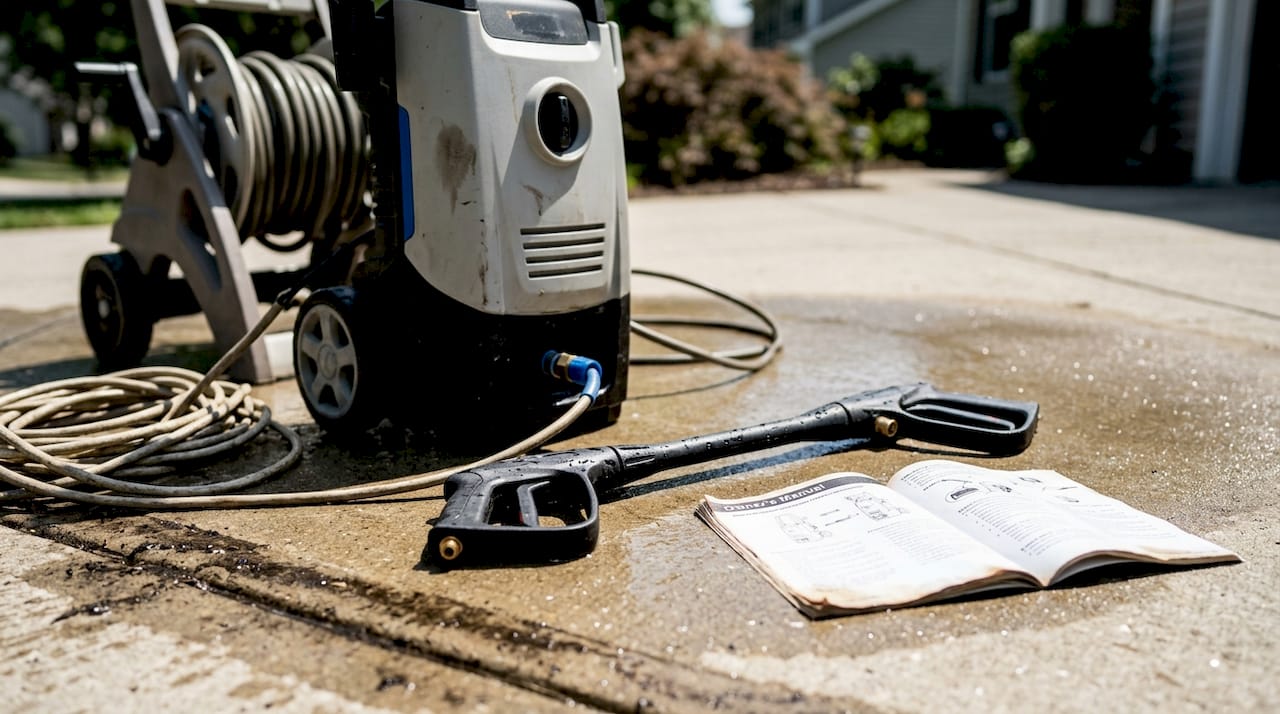
A pressure washer is built around a few core components working together. The motor (either electric or gas-powered) drives a pump that pushes water from your supply line through a high-pressure hose and out through a spray gun fitted with a nozzle. Gas models generate higher PSI and work well for large, tough jobs. Electric models are lighter, quieter, and sufficient for most household tasks.
Nozzle selection matters more than most people realize. Nozzles are color-coded by spray angle:
| Nozzle color | Spray angle | Best use |
|---|---|---|
| Red | 0 degrees | Heavy-duty spot cleaning (use with extreme caution) |
| Yellow | 15 degrees | Concrete, stripping paint |
| Green | 25 degrees | General cleaning, cars, siding |
| White | 40 degrees | Windows, delicate surfaces |
| Black | 65 degrees | Applying soap/detergent |
The narrower the angle, the more concentrated and powerful the spray. That red zero-degree nozzle, for example, focuses all the pressure into a single point and can easily damage most surfaces if held too close.
Here is a step-by-step look at how a safe pressure washing session goes:
- Clear the area of furniture, vehicles, and any items that could get damaged or become projectiles.
- Pre-rinse the surface with a garden hose to remove loose debris.
- Select a wide-angle nozzle (40 degrees or 25 degrees) and set pressure to the lowest effective level.
- Test a small, hidden spot first and look for any surface damage before proceeding.
- Work in overlapping sections, keeping a consistent distance and moving at a steady pace.
- Always maintain at least 12 inches between the nozzle and the surface to prevent etching or damage.
- Rinse thoroughly and let the surface dry completely before applying sealers or paint.
Maintaining that 12-inch distance rule is easy to forget when you are focused on a stubborn stain, but closing the gap even slightly can leave visible streaks or gouges in softer materials.
Common surfaces: What can (and can’t) be safely pressure washed
Now that you know how pressure washing works, here’s how to match the method to your property’s surfaces.
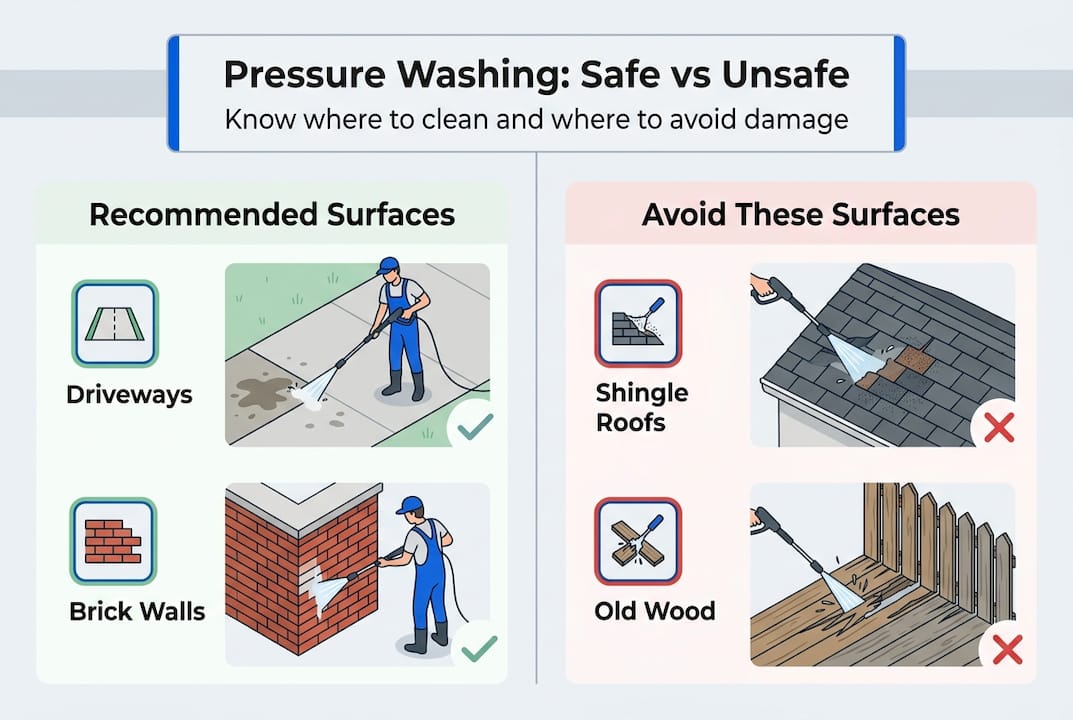
Not every exterior material handles high-pressure water the same way. This table gives a quick overview of what is generally safe and what requires extra care:
| Surface | Safe to pressure wash? | Notes |
|---|---|---|
| Concrete driveway | Yes | Use 2500-3000 PSI, green or yellow nozzle |
| Brick and stone patio | Yes | Medium pressure, watch for crumbling mortar |
| Vinyl siding | With caution | Keep angle low, never spray upward |
| Wood deck | With caution | Use low PSI, wood-safe nozzle |
| Painted surfaces | With caution | High PSI strips paint easily |
| Asphalt shingles | No | High PSI risks granule loss and water intrusion |
| Old or soft masonry | No | High pressure can crack or erode mortar |
| Stucco | No | Water intrusion risk is very high |
The surfaces in the bottom rows are common problem areas for homeowners who assume everything outside can take a blast of high-pressure water. Asphalt roof shingles are especially vulnerable. The granules on shingle surfaces protect against UV damage and add fire resistance. Strip them with too much pressure and you are shortening the life of your roof significantly.
A few safer alternatives for sensitive surfaces:
- Soft washing: Uses very low pressure combined with a cleaning solution to kill mold, algae, and mildew without physical force. It is the right method for roofs and stucco.
- Hand scrubbing with detergent: Best for painted wood trim or ornamental surfaces.
- Steam cleaning: Works well on delicate materials where hot vapor does the work instead of pressure.
Pro Tip: Before cleaning any surface you are unsure about, test a small area in a spot that is not visible from the street. Wait a few minutes and inspect for any color change, etching, or material loss before continuing.
Professional vs. DIY: When to call an expert
With surface knowledge in mind, homeowners next want to know: is DIY pressure washing right, or should you hire an expert?
Renting or buying a pressure washer for a simple concrete driveway clean is a perfectly reasonable project for most homeowners. Equipment rentals in Orange County typically run $50 to $100 per day, and the job itself is not complicated on a flat, open surface. The savings over hiring a professional can be real for straightforward situations.
But the risk changes the moment you move to more complex surfaces or harder-to-reach areas. Here is a practical way to decide:
- Assess your skill and comfort level. Have you used a pressure washer before? If not, starting on a forgiving surface like a concrete slab makes sense before moving to siding.
- Identify the surface type. Concrete and stone are forgiving. Wood, old brick, painted surfaces, and anything on your roof are not.
- Evaluate the scope. A small patio is manageable. A two-story home’s siding or a large commercial property parking lot is a different matter entirely.
- Factor in safety risks. Using a pressure washer on a ladder is genuinely dangerous and not recommended for most homeowners.
- Consider equipment needs. Some jobs require commercial-grade PSI levels or heated water that consumer rentals simply do not deliver.
“Poor technique can lead to costly surface damage, granule loss, or water intrusion that goes unnoticed until it becomes a major repair.”
Pro Tip: If your project involves anything above the ground floor or includes materials like painted wood, old stucco, or roof surfaces, budget for a professional. The cost of one repair call almost always exceeds what you would have paid for professional window cleaning or exterior services from the start.
The surprising truth about pressure washing safety and results
Most guides about pressure washing give you the basics and send you on your way. What they often leave out is the mindset difference between an average job and a truly good one.
Here is what five-plus years of Orange County exterior cleaning work has taught us: the most expensive mistakes almost never come from using too little pressure. They come from impatience. Someone sees a stubborn oil stain and moves the nozzle closer. Someone switches to a narrower nozzle and does not test first. Someone skips the pre-rinse because they are in a hurry.
Conventional wisdom says match your PSI to your surface. That is true, but it misses the bigger point. The best results come from the willingness to slow down, test, and adjust at every stage. In our experience, a lower-pressure method paired with the right cleaning solution often produces cleaner, longer-lasting results than blasting a surface at maximum PSI. The surface stays intact, the cleaning solution does the chemical work, and you are not creating micro-damage that traps new dirt faster in the future. Shortcuts always cost more than they save.
Get expert pressure washing for a spotless Orange County home
If you want expert help restoring your property’s curb appeal the safe way, here’s your next step.
Knowing the right technique is one thing. Having the equipment, experience, and insurance to back it up is another. Handling pressure washing properly protects your investment and keeps your property looking sharp year-round.

At Bros Window Cleaning, we bring over five years of experience serving homeowners and property managers across Orange County. Our team is fully insured and knows exactly how to match the right method to every surface. Whether it is a concrete driveway, a wood deck, or a full exterior refresh, we handle it safely and efficiently. Explore our Orange County pressure washing services and schedule your appointment today. Your property deserves more than a quick rinse.
Frequently asked questions
Can pressure washing damage my siding or roof?
Yes. High PSI risks granule loss and water intrusion on roofs, while wrong technique or spray angle can crack, strip, or penetrate siding materials.
What’s the safest way to pressure wash delicate surfaces?
Always test a small area first, use a wide-angle nozzle at low pressure, and keep the spray at least 12 inches from the surface to avoid etching or damage.
Should I hire a pro or do my own pressure washing?
For large, complex, or delicate projects, a professional is the safer choice. Poor technique leads to costly surface damage that often costs more to fix than the service itself.
What should I avoid pressure washing?
Avoid pressure washing asphalt shingles, old or soft masonry, stucco, and painted wood siding. High PSI on roofs and delicate siding types risks granule loss, water intrusion, and etching that shortens surface lifespan.