
Most Orange County homeowners assume scratched or cloudy windows have only one fix: full replacement. That assumption costs thousands of dollars every year. Glass restoration is the process of repairing and renewing existing glass surfaces rather than swapping them out, and it handles a wider range of damage than most people realize. From construction scratches to hard water etching left by sprinklers, restoration can renew your windows at a fraction of replacement cost. This guide explains exactly how the process works, what it costs, and how to decide if it fits your situation.
Table of Contents
- Understanding glass restoration: what it is and how it works
- The glass restoration process: from scratches to etched damage
- Restoration versus replacement: benefits, costs, and practical considerations
- Evaluating glass restoration quality: inspection standards and homeowner considerations
- Applying glass restoration knowledge: tips for Orange County homeowners and property managers
- The overlooked value and expert insights on glass restoration for homes
- How Bros Window Cleaning OC enhances your glass restoration experience
- Frequently asked questions
Key Takeaways
| Point | Details |
|---|---|
| Glass restoration defined | It repairs surface damage on existing glass, improving clarity without replacing panes. |
| Cost and time benefits | Restoration is cheaper and faster than full window replacement, causing less disruption. |
| Restoration methods vary | Techniques differ for scratches versus acid etching, requiring precise controlled removal and polishing. |
| Quality standards matter | Restored glass should meet visual inspection criteria to ensure clarity and optical flatness. |
| Choosing restoration | Ideal for homeowners with minor damage and strong frames seeking cost-effective longevity. |
Understanding glass restoration: what it is and how it works
Glass restoration targets surface-level damage rather than the glass itself in full. Think of it like refinishing hardwood floors instead of tearing them out. The goal is to remove or neutralize damage at the outermost layer of the glass without compromising structural integrity.
Glass restoration is the process of repairing and renewing existing glass surfaces by correcting surface damage such as scratches, stains, etching, and weathering to restore clarity and extend usable life. That definition matters because it draws a clear line between what restoration can fix and what it cannot. It works on damage that lives on the glass surface, not damage that penetrates through it or compromises the seal.
Here is what glass restoration typically addresses:
- Scratches from contractor tools, screen abrasion, or cleaning with wrong materials
- Hard water stains caused by sprinkler overspray or mineral-heavy rain runoff, which is especially common in Southern California
- Acid etching from construction chemicals, graffiti, or industrial pollution
- Oxidation and weathering that leaves glass looking dull or foggy
- Surface contamination from paint, silicone, or adhesive residue
Understanding preventing window streaks and surface contaminants is the first step in knowing when cleaning stops and restoration begins. Not everything cloudy on a window is a stain you can wipe away. Some damage, particularly hard water etching, has chemically bonded to the glass and requires a completely different approach than standard cleaning.
One key point most homeowners miss: restoration preserves your existing glass. No removal, no disposal, no new glass delivery, no multi-day installation. The process uses specialized polishing compounds and controlled abrasion, often with a mineral compound called cerium oxide, to renew clarity without adding or subtracting glass material in any significant structural way. The causes of window dirt in Orange County, from coastal salt air to inland hard water, often lead directly to the types of surface damage that restoration handles well.
The glass restoration process: from scratches to etched damage
Not all damage gets treated the same way. The glass restoration process is really a family of related techniques, and the right one depends on what kind of damage you have.
Scratch removal is the most common application. Restoration removes a thin, controlled microscopic layer using progressively finer abrasives and polishes with cerium oxide to achieve optical clarity. The process works in stages: coarser abrasives remove the scratch first, then progressively finer compounds refine the surface, and final polishing with cerium oxide brings back optical clarity. A critical step is “feathering,” where the technician blends the treated area outward to avoid creating a visible dip or lens effect in the glass.
Here is the typical step-by-step sequence for scratch repair:
- Damage assessment to determine scratch depth and whether it is repairable without distortion
- Surface preparation by cleaning the area thoroughly to remove contamination
- Grinding stage using controlled diamond or cerium abrasive pads to remove the scratch
- Feathering to blend the treated zone with surrounding glass
- Progressive refinement with increasingly fine compounds
- Final polish using cerium oxide to restore full optical clarity
- Multi-angle inspection under defined lighting to check for haze or distortion
Acid-etch restoration is more complex. Acid-etched glass restoration requires staged removal of controlled microns of material through refinement, polish, and inspection under defined lighting to restore flatness and uniform clarity. Masking surrounding areas is essential to prevent unintended treatment spread. The margin for error is tight because removing too much material creates distortion, while removing too little leaves the etch visible.
Pro Tip: Always ask a contractor to perform a small test patch before committing to a full restoration. A qualified technician will agree to this without hesitation. It lets you see the finished result quality on an inconspicuous area before the full job is done.
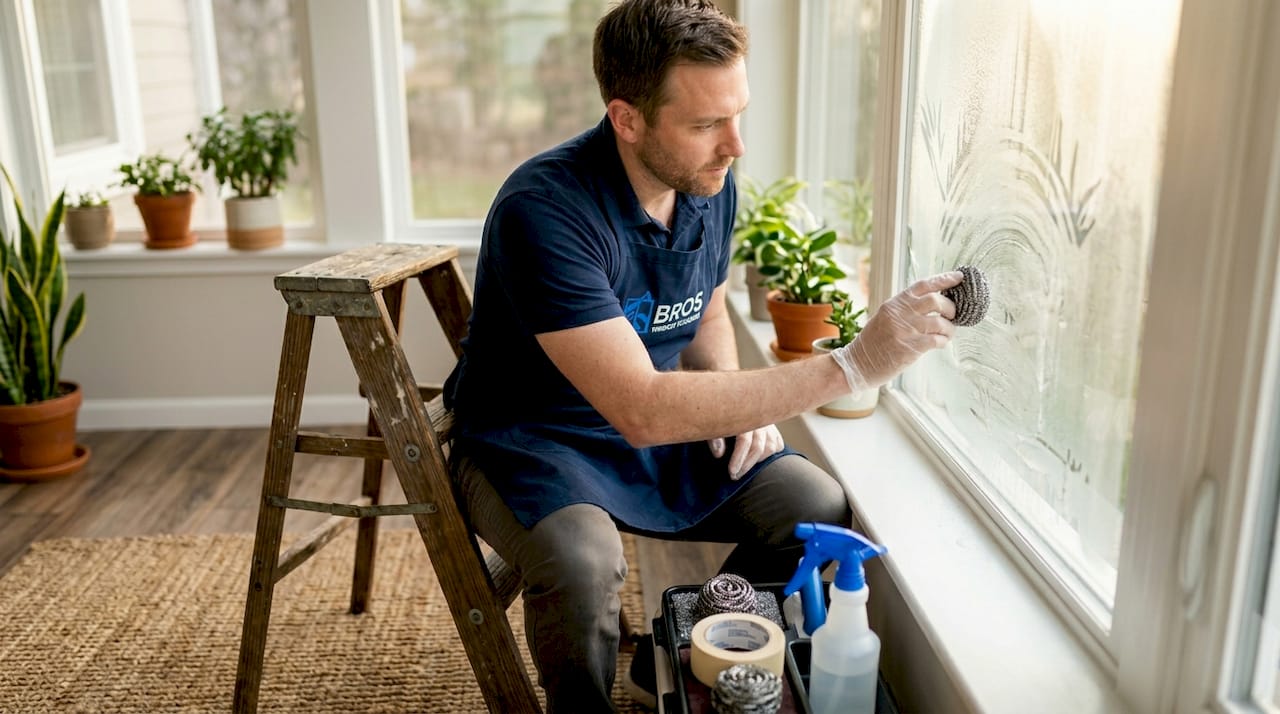
Proper technique for streak-free cleaning matters even after restoration is complete. Restored glass is clean glass, but it still needs correct maintenance to stay that way. Using the wrong cleaning products post-restoration can accelerate re-contamination. Following streak-free cleaning techniques keeps the results looking sharp for years.
Restoration versus replacement: benefits, costs, and practical considerations
This is where the numbers get interesting. Most homeowners assume replacement is the safer bet because it is “brand new.” The reality is that restoration delivers comparable visual results at a dramatically lower cost when the damage is surface-level.
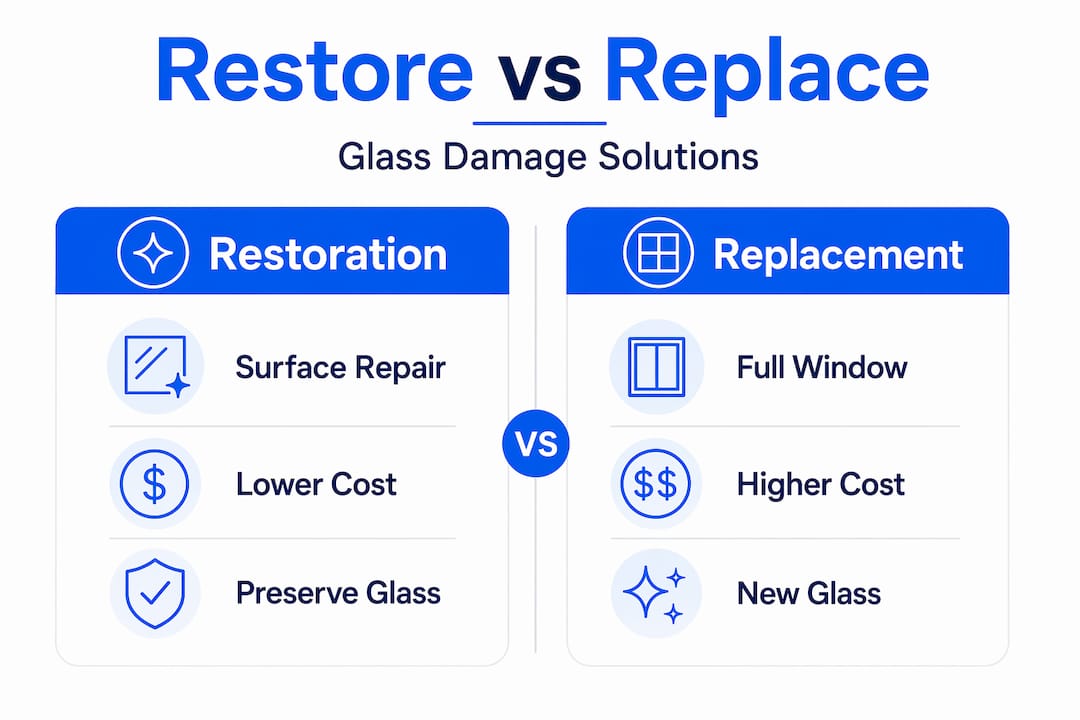
Glass-only repair costs roughly $200 to $500 per standard window and takes 2 to 3 hours, compared to $1,000 to $1,600 and a full day or more for replacement. On a home with ten affected windows, that is the difference between a $2,500 to $5,000 project and a $10,000 to $16,000 one.
| Factor | Glass restoration | Full replacement |
|---|---|---|
| Cost per window | $200 to $500 | $1,000 to $1,600 |
| Time per window | 2 to 3 hours | Full day or more |
| Disruption level | Minimal | Significant |
| Frame work required | No | Often yes |
| Lifespan added | 10 to 20 years | 20 to 30 years |
| Best for | Surface damage, solid frames | Structural failure, old frames |
Restoration wins on speed, cost, and disruption. Replacement wins when the frame is compromised, the glass is cracked, or the seal between double-pane glass has failed. Knowing which situation you are in is the starting point for any decision.
Here is when restoration is clearly the right call:
- Window frames are structurally sound with no rot, warping, or seal failure
- Damage is surface-level: scratches, stains, etching, or oxidation
- You want to avoid the disruption of a multi-day replacement project
- You are planning to stay in the home long term and want to protect your investment
And here is when replacement makes more sense:
- Double-pane seal has failed and you see permanent fogging between panes
- The frame itself is damaged, rotted, or significantly warped
- Glass has cracks, chips through the full thickness, or edge damage
- The window is more than 25 to 30 years old with multiple compounding issues
Pro Tip: Restored glass can also boost curb appeal and property value nearly as much as new glass at a fraction of the investment. Buyers see clean, clear windows. They rarely know or care whether the glass was restored or replaced as long as it looks right.
Window cleaning and curb appeal research consistently shows that exterior appearance is among the top factors buyers notice first. Restored, clear windows signal a well-maintained property without the price tag of new installation.
Evaluating glass restoration quality: inspection standards and homeowner considerations
This is the part most articles skip entirely. Knowing that restoration is possible is useful. Knowing how to verify the quality of the work is how you protect yourself as a homeowner.
The industry uses objective visual inspection standards to judge restoration outcomes. Restored architectural glass is judged using objective standards classifying damage severity and setting acceptance criteria under defined viewing conditions, not subjective impressions. The GlassRenu VIS system, for example, classifies glass damage from CAT-0 (no damage) to CAT-5 (non-repairable) and defines what “acceptable” looks like after restoration at specific viewing distances and lighting angles.
Here is what that means in practical terms:
| Damage category | Description | Restorability |
|---|---|---|
| CAT-0 | No visible damage | N/A |
| CAT-1 | Light surface scratches | Fully repairable |
| CAT-2 | Moderate scratches or staining | Repairable |
| CAT-3 | Heavy scratches or etching | Repairable with skill |
| CAT-4 | Deep scratches or severe etching | Borderline; partial result |
| CAT-5 | Cracks or structural damage | Not repairable |
“The goal of objective inspection standards is to remove disagreement between contractor and client by establishing shared, measurable criteria for what a successful restoration looks like before the work begins.”
Key things to look for when evaluating a restoration contractor:
- Documented pre-job assessment showing damage category before work starts
- Written acceptance criteria specifying what the finished result must meet
- Post-job inspection photos taken at the required distance and angle per the relevant standard
- Lighting-specific inspection where the contractor checks for haze and distortion under both direct and oblique lighting
Preparing windows for professional cleaning and restoration requires surface assessments that reveal problems invisible to the naked eye under normal lighting. A contractor who skips the pre-job inspection is a contractor who is guessing. Post-construction window cleaning situations in particular demand rigorous assessment because construction chemicals produce variable damage depths that require individual treatment.
Applying glass restoration knowledge: tips for Orange County homeowners and property managers
Orange County has specific glass damage patterns that homeowners here see more than anywhere else. Sprinkler overspray from hard-water sources creates calcium and mineral deposits that etch glass over months. Coastal salt air in areas like Huntington Beach, Newport, and Dana Point accelerates surface oxidation. Construction activity throughout the region leaves scratches on glass from contractor tools and debris.
Practical guidance for local homeowners and property managers:
- Inspect annually for early-stage damage. Surface staining caught early is far cheaper to address than etching that has had years to deepen.
- Verify contractor credentials by asking about their inspection process. Any credible professional follows documented standards, not just “I’ll know it when I see it.”
- Maintain restored windows with pH-neutral cleaning solutions and soft cloths. Avoid abrasive pads and ammonia-based products that accelerate re-damage.
- Adjust sprinklers away from window glass. This single step prevents the most common source of hard water etching in Orange County yards.
- Schedule restoration before selling if windows show visible staining or scratches. The return on investment in curb appeal typically exceeds the restoration cost.
Restored glass can last 10 to 20 years if well maintained, with typical warranties lasting five years and longevity depending on installation quality and upkeep. That lifespan makes restoration genuinely competitive with full replacement when you factor in cost per year of service.
Pro Tip: If you manage multiple properties or an HOA in Orange County, schedule a single assessment visit across all units. Catching and addressing consistent damage patterns in bulk is significantly cheaper than handling each unit reactively as complaints arise.
Understanding the causes of window dirt and damage in this specific climate helps you predict where restoration will likely be needed and plan for it before damage advances. Knowing the right window cleaning industry terms also helps you communicate clearly with contractors and avoid being upsold services you do not need.
The overlooked value and expert insights on glass restoration for homes
Here is something worth saying plainly: glass restoration is not a cleaning service. Most homeowners, and frankly some contractors, treat it as an upgraded version of window washing. It is not. It is controlled material removal from one of your home’s most permanent and expensive surfaces. Getting it wrong creates permanent optical distortion that makes the glass look worse than the original damage.
The industry is actively moving toward standardized ASTM techniques that emphasize controlled, technical restoration methods rather than just aesthetic cleaning. That shift matters because it creates accountability. When ASTM standards are referenced in a contract, both contractor and homeowner have a shared definition of acceptable outcomes. Without that, you are relying entirely on the contractor’s judgment and integrity.
The environmental angle also deserves more attention than it typically gets. Each window pane replaced generates glass waste, aluminum or vinyl frame material, and the energy cost of manufacturing and shipping new units. Restoration extends the life of what already exists, which is genuinely the more sustainable choice when it is technically viable. Eco-friendly cleaning insights show that maintenance-first thinking reduces both costs and environmental impact over a property’s lifetime.
The deeper point: the most expensive thing you can do is make a decision based on incomplete information. Homeowners who understand what glass restoration actually involves ask better questions, choose better contractors, and get outcomes that last. The ones who assume every cloudy window needs replacement spend three to eight times more than necessary.
How Bros Window Cleaning OC enhances your glass restoration experience
If you have made it this far, you now know more about glass restoration than most homeowners in Orange County. The next step is finding a service provider who actually applies that knowledge in the field.
Bros Window Cleaning OC is based right here in Orange County and brings over five years of hands-on experience with the specific glass damage patterns this climate creates, from hard water etching in Irvine to salt air oxidation along the coast. Our technicians are trained in advanced window cleaning industry techniques and restoration methods aligned with ASTM and GlassRenu visual inspection standards. We provide detailed pre-job assessments, documented acceptance criteria, and post-job inspection records so you always know exactly what was done and why it meets the standard. Combined with our ongoing window cleaning maintenance programs, we keep your restoration results looking sharp for years. See how our approach directly ties into curb appeal and property value for Orange County homes, and schedule your assessment today.
Frequently asked questions
What types of glass damage can be restored instead of replaced?
Surface damage like scratches, stains, and acid etching can typically be restored, while cracks or edge failures usually require full replacement. Repairable damage includes surface scratches and etching, whereas cracks or structural failures fall outside what restoration can fix.
How long does professional glass restoration take compared to replacement?
Restoration takes roughly 2 to 3 hours per window, while full replacement typically requires a full day or more per window, which means significantly more scheduling disruption for your household.
Will restored glass look different from new glass?
When done correctly, the result is virtually invisible. Properly performed glass resurfacing is virtually indistinguishable from new glass, with no haze or optical distortion when the technician follows proper feathering and multi-angle inspection protocols.
Can acid-etched damage be removed with regular cleaning?
No. Standard cleaning won’t fix acid-etched damage because the glass surface is chemically altered at a molecular level. Restoration must physically remove a controlled layer of material, which no cleaning product or technique can replicate.
How do I know if my windows are good candidates for restoration?
Windows with minor surface damage and solid, undamaged frames are strong candidates. Repair makes the most sense when frames are solid and damage is minor; multiple compounding problems or compromised frames generally point toward replacement instead.