
Walkway pressure washing is defined as the use of high-pressure water streams to remove dirt, algae, mildew, and grime from exterior pathways, restoring both appearance and surface safety. The industry term for this process is exterior surface pressure cleaning, though “walkway pressure washing” is the phrase most homeowners and property managers use when searching for help. Understanding what is walkway pressure washing means knowing it is not just a cosmetic fix. Algae and grime buildup acts as a lubricant on walkway surfaces, increasing slip risk for anyone walking on them. Done correctly, this process protects your property’s value, reduces liability, and keeps pathways looking their best year-round.
What is walkway pressure washing and how does it work?
Walkway pressure washing uses a motorized pump to force water through a narrow nozzle at high velocity, producing a concentrated stream that blasts away surface contaminants. The process strips off biological growth like algae and moss, loosens compacted dirt, and lifts oil stains that regular scrubbing cannot touch. The result is a surface that looks cleaner and grips shoe soles more reliably. For a broader look at how this fits into overall exterior care, the homeowner’s pressure washing guide from Broswindowcleaningoc covers the full picture.
The technique works on most hard exterior surfaces, including concrete, brick, natural stone, and concrete pavers. Each material requires a different pressure setting and nozzle choice, which is why understanding the equipment matters before you start.
What equipment and pressure levels work best for walkways?
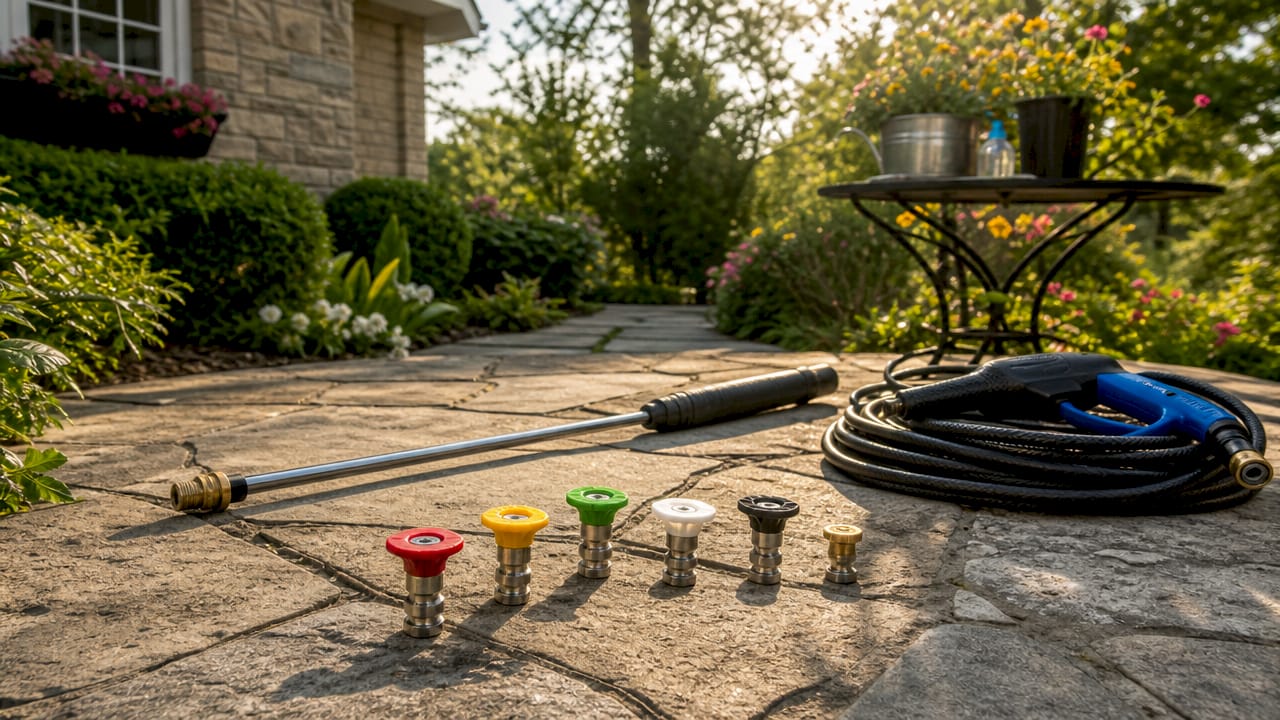
Concrete walkways tolerate 1,500 PSI minimum, and machines producing 2,500–3,000 PSI clean faster without damaging a sound concrete surface. That range gives you enough force to remove embedded grime while staying below the threshold that chips or pits the surface. Brick and porous stone need lower settings, typically in the 1,500–2,000 PSI range, to avoid dislodging mortar or cracking the face of the material.
Gas vs. electric pressure washers
Gas-powered units deliver higher PSI and are better suited for large driveways and heavily soiled concrete. Electric models top out around 2,000 PSI and work well for smaller residential pathways and lighter cleaning jobs. For most homeowners with standard concrete or paver walkways, a mid-range electric unit handles the work cleanly.
Choosing the right nozzle
Nozzle color codes correspond to spray angles. A 25-degree green nozzle is the standard choice for concrete. A 40-degree white nozzle suits brick and softer stone. Never use a 0-degree red nozzle on walkways. It concentrates all pressure into a pinpoint stream that gouges concrete and destroys grout lines.
Key equipment checklist before you start:
- Pressure washer rated for your surface type (1,500–3,000 PSI range)
- Correct nozzle for the material (25-degree for concrete, 40-degree for brick)
- Surface cleaner attachment for large flat areas (produces even, streak-free results)
- pH-neutral or eco-friendly detergent
- Safety goggles and closed-toe shoes
Pro Tip: Test your pressure setting on a small, hidden corner of the walkway before cleaning the full surface. This one step prevents irreversible damage to decorative stone or older concrete.
Which walkway materials can be safely pressure washed?
Adjusting nozzles and spray patterns based on walkway material prevents streaks, chipping, and staining. Not every surface responds the same way to high pressure, so matching your technique to the material is the single most important decision you make before turning on the machine.
| Surface | Safe PSI range | Detergent needed | Key caution |
|---|---|---|---|
| Concrete | 1,500–3,000 PSI | Optional | Avoid 0-degree nozzle |
| Brick | 1,500–2,000 PSI | Yes, pH-neutral | Protect mortar joints |
| Natural stone | 1,200–1,800 PSI | Yes, mild formula | Test first; stone varies |
| Concrete pavers | 1,500–2,500 PSI | Optional | Resand joints after cleaning |
| Stamped concrete | 1,200–1,500 PSI | Yes, gentle formula | High PSI strips sealant |
Soft washing vs. pressure washing for delicate surfaces
Soft washing uses lower pressure (under 500 PSI) combined with a cleaning solution that does the chemical work instead of brute force. It is the right call for older brick, decorative stamped concrete, and natural flagstone. Broswindowcleaningoc’s soft wash cleaning guide explains when to choose this method over standard pressure washing. For most modern concrete and paver walkways, standard pressure washing at the correct PSI is both safe and effective.
Environmental care during cleaning
Eco-friendly or pH-neutral detergents protect nearby plants and prevent chemical runoff from entering storm drains. Direct your rinse water away from garden beds and toward a permeable area or a drain. This practice is becoming a standard expectation in residential maintenance, not just a nice-to-have.
What are the key steps to pressure wash walkways effectively?
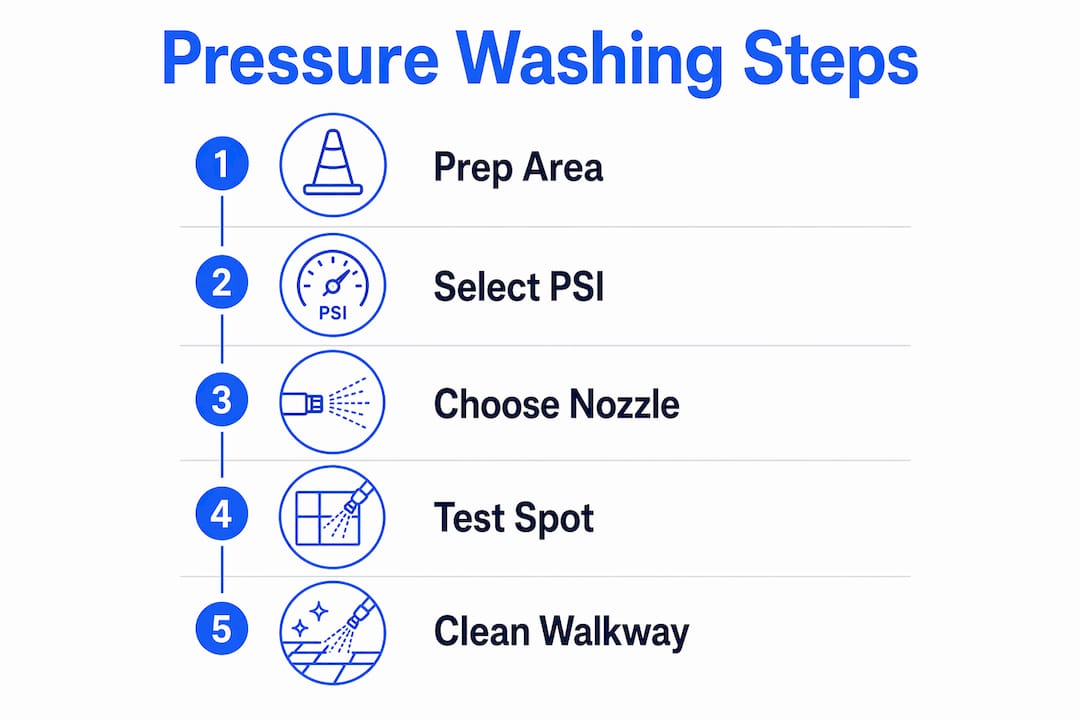
A clean, streak-free result comes from following a consistent process. Skipping steps, especially the prep work, is the most common reason homeowners end up with patchy results or surface damage.
- Clear the surface. Remove furniture, potted plants, doormats, and loose debris. Sweep away leaves and gravel so they do not clog your nozzle or scratch the surface during washing.
- Pre-soak the walkway. A preliminary rinse with plain water loosens surface grime and makes detergent more effective. Wet the surface thoroughly before applying any cleaning solution.
- Apply detergent and allow dwell time. Spray your pH-neutral detergent evenly across the surface. Let it sit for 5–10 minutes so it can break down biological growth and embedded dirt. Do not let it dry on the surface.
- Wash with overlapping strokes. Cleaning with overlapping strokes produces even coverage and prevents streaks or untreated patches. Hold the nozzle 6–12 inches from the surface and move in consistent, parallel passes.
- Rinse completely. Flush all detergent residue off the surface. Leftover soap attracts dirt faster and can leave a slippery film.
- Inspect and repeat if needed. Check for remaining stains or biological growth. A second pass with detergent handles stubborn spots.
- Allow the surface to dry fully. Wet surfaces are still slippery. Give the walkway at least two hours of drying time before foot traffic resumes.
Pro Tip: Use a rotating surface cleaner attachment instead of a wand for large flat areas. It cuts cleaning time in half and produces a more even finish with no visible wand lines.
For a full breakdown of safe technique, Broswindowcleaningoc’s guide on pressure washing safely covers every step in detail.
What are the benefits of regular walkway pressure washing?
Regular maintenance reduces the frequency and cost of repairs by removing biological growth and abrasive dirt before they cause cracks and erosion. That is the financial case for keeping up with pathway cleaning, and it is a strong one. A walkway that looks clean also signals to visitors, tenants, and potential buyers that the property is well cared for.
The benefits break down into two clear categories: safety and property value.
Safety benefits:
- Algae, moss, and mildew removal restores the surface’s natural coefficient of friction, reducing slip accidents in wet or shaded conditions
- Clean pathways reduce liability exposure for property managers and landlords
- Removing debris and biological growth prevents tripping hazards from uneven surface buildup
Property value and maintenance benefits:
- Clean walkways improve curb appeal and first impressions for guests, tenants, and buyers
- Regular cleaning prevents surface degradation that leads to costly resurfacing or replacement
- Removing dirt and organic matter supports the longevity of sealants applied to pavers and stamped concrete
- Consistent maintenance is far cheaper than a full walkway replacement
The property value case for pressure washing is well documented. Clean exteriors, including walkways, directly affect how a property is perceived and priced.
Professional service vs. DIY
DIY pressure washing works well for homeowners with straightforward concrete paths and a mid-range machine. Professional pressure washing services for walkways make more sense when you have delicate materials, large surface areas, or persistent staining that requires commercial-grade equipment. Professionals also carry liability insurance, which matters when high-pressure equipment is involved near windows, siding, or landscaping.
Key Takeaways
Walkway pressure washing is the most direct way to restore surface safety and curb appeal, requiring the right PSI, nozzle, and technique matched to your specific surface material.
| Point | Details |
|---|---|
| Match PSI to surface | Use 1,500–3,000 PSI for concrete; lower settings for brick and natural stone. |
| Pre-soak before detergent | Wetting the surface first improves detergent action and reduces damage risk. |
| Overlapping strokes prevent streaks | Consistent parallel passes produce even coverage and a clean finish. |
| Safety is the primary benefit | Algae and grime removal restores surface friction and reduces slip hazards. |
| Regular cleaning prevents costly repairs | Removing biological growth early stops cracks and erosion from developing. |
What I’ve learned after years of watching homeowners get this wrong
Most homeowners underestimate the safety side of walkway cleaning. They think about how the path looks, not about the invisible film of algae that makes it genuinely dangerous after rain. I have seen properties where a shaded front walkway had not been cleaned in three years. The surface looked only slightly discolored, but it was as slippery as wet tile. That is the risk that does not show up in photos.
The other mistake I see constantly is using too much pressure too close to the surface. Homeowners assume more force equals better results. What it actually produces is pitting on concrete, blown-out mortar joints on brick, and stripped sealant on pavers. The damage is permanent and expensive to fix. The correct approach is always to start at a lower PSI and a greater nozzle distance, then work closer only if the surface needs it.
My honest recommendation is to get a professional evaluation at least once a year, even if you handle routine cleaning yourself. A trained eye catches early signs of surface degradation, biological growth in grout lines, and areas where sealant has failed. Catching those problems early costs far less than addressing them after they have progressed. Eco-friendly detergents and proper runoff management are not optional extras either. They protect your landscaping and keep you on the right side of local environmental guidelines.
— nolan
Broswindowcleaningoc’s walkway cleaning services in Orange County
Broswindowcleaningoc brings over five years of professional exterior cleaning experience to every walkway job in Orange County. The team uses industry-standard equipment calibrated to your specific surface type, whether that is concrete, brick, natural stone, or pavers, paired with eco-friendly detergents that protect your landscaping.

Every job is fully insured, and the team handles everything from prep to post-rinse inspection. For homeowners and property managers who want lasting results without the guesswork of DIY, Broswindowcleaningoc offers a complete pressure washing service built around your property’s needs. You can also explore the full range of exterior cleaning applications the team covers across residential and commercial properties. Contact Broswindowcleaningoc for a free inspection and quote.
FAQ
What PSI is safe for pressure washing concrete walkways?
Concrete walkways safely tolerate 1,500–3,000 PSI. Machines in the 2,500–3,000 PSI range clean faster, but always test on a small area first to avoid surface damage.
Is pressure washing safe for brick and paver walkways?
Brick and pavers are safe to pressure wash at 1,500–2,000 PSI using a 40-degree nozzle and a pH-neutral detergent. Higher pressure risks dislodging mortar joints and cracking the surface face.
How often should walkways be pressure washed?
Most residential walkways benefit from cleaning once or twice per year. Shaded or high-traffic paths may need more frequent attention due to faster algae and moss growth.
Does pressure washing a walkway reduce slip hazards?
Pressure washing restores the surface’s natural coefficient of friction by removing algae and grime, which act as a lubricant on wet or shaded surfaces, directly reducing slip risk.
Should I use detergent when pressure washing a walkway?
Detergent is recommended for surfaces with biological growth, oil stains, or heavy grime. Use a pH-neutral or eco-friendly formula and allow a 5–10 minute dwell time before rinsing to maximize effectiveness.