
Yes, tree sap on building windows comes off, and most small spots respond to a simple rubbing-alcohol method. Baked-on sap, multi-pane jobs, high or hard-to-reach glass, and windows with insulated glass (IG) units or special coatings call for a professional instead. Skip acetone, lacquer thinner, and metal blades. They’re the leading cause of scratched glass and failed window seals.
TL;DR:
- Small, fresh sap spots on easily accessible ground-floor windows can usually be removed with rubbing alcohol and a plastic scraper within minutes.
- Larger, baked-in, or multi-pane sap coatings, especially on high or hard-to-reach windows, require professional tools and expertise to avoid damaging seals or coatings.
- Using acetone, lacquer thinner, or abrasive tools risks degrading glass seals or scratching surfaces, making professional assessment essential for coated or insulated glass.
- Regular pruning of nearby trees, seasonal protective films, and timely cleanings help prevent heavy sap buildup and extend window longevity.
- Cost and time for professional removal depend on window type, access difficulty, and whether additional maintenance services are bundled into the visit.
Table of Contents
- Tree Sap on Windows: DIY or Call a Pro?
- How Do You Remove Tree Sap From Glass Yourself?
- What Does a Professional Sap Removal Service Actually Do?
- What Should You Never Use to Remove Tree Sap?
- How Do You Stop Sap From Building Up Again?
- Does the Window Frame Material Change How You Remove Sap?
- How Do You Keep Windows Clear After Sap Removal?
- A Practitioner’s View on Sap Removal
- Ready to Book a Sap Removal or Full Window Service?
- Sources
- FAQ
Tree Sap on Windows: DIY or Call a Pro?
Whether you grab a rag or the phone depends on three things: how much glass is affected, how baked-in the sap is, and how you’re going to reach it.
A few sap spots on a ground-floor window you can wipe down in ten minutes are fair game for DIY. But certain conditions push the job past what a homeowner or maintenance crew should tackle alone:
- Sap coating multiple panes across a facade, not just spots here and there
- Resin that’s cooked into the glass for weeks or months, often mixed with pollen, dust, and bird droppings into a stubborn film
- Second-story windows, skylights, or anything requiring a ladder over eight feet
- Insulated glass units, tinted panes, or low-e coatings, where the wrong solvent risks the seal or the coating itself
- Commercial storefronts or office buildings where liability and appearance both matter
Properties shaded by heavy tree cover tend to need professional attention more often, simply because organic buildup settles faster and thicker there than on open, sun-exposed glass. A small residential touch-up often wraps in under an hour. Multi-pane or commercial jobs almost always need an on-site walk-through, since pricing hinges on window count, access difficulty (ladders, lifts, or water-fed poles), whether screens and frames need extra work, and whether you’re bundling the visit with pressure washing or gutter cleaning.
How Do You Remove Tree Sap From Glass Yourself?
This method works for small, fresh-to-moderate spots on accessible exterior glass. Skip it if you’re dealing with tinted or coated panes, IG units, or anything more than light residue.
- Pick your moment. Work in the shade, on a cool day if possible. Direct sun bakes sap harder and makes solvents evaporate before they can work.
- Test first. Dab a small amount of solvent on an inconspicuous corner and wait a minute. If the glass looks clear and the frame finish isn’t affected, proceed.
- Scrape the bulk off. Use a plastic scraper held at a low, near-flat angle to lift raised sap. Never use a metal blade or razor on building glass. It’s an easy way to leave permanent micro-scratches.
- Apply the solvent. Isopropyl rubbing alcohol is the go-to choice. It breaks down the resin bonds in sap and evaporates quickly with minimal residue. An approved commercial sap remover works too. Let it sit for about three minutes so it can soften what the scraper couldn’t reach.
- Wipe and degrease. Lift the loosened residue with a clean microfiber cloth, then wash the area with warm soapy water to strip any oily film the solvent left behind, and finish with a dry microfiber buff.
If you don’t have rubbing alcohol on hand, a small amount of vegetable or mineral oil can work in a pinch, though it needs an immediate soap-and-water follow-up to avoid leaving its own greasy film.
Pro Tip: Keep a spray bottle of diluted dish soap and a dedicated glass-only microfiber cloth in your cleaning kit. Tree sap that’s wiped off within a day or two takes a fraction of the effort of sap that’s had a summer to bake in.
If the glass has a tint film, a low-e coating, or you suspect it’s part of an IG unit, stop after the test step. Some coatings react poorly to alcohol, and pushing forward risks voiding a manufacturer warranty. That’s the point to call in a professional.
What Does a Professional Sap Removal Service Actually Do?
Hiring out the job buys you more than convenience. It buys you a process built around not damaging the glass in the first place.
Professional crews typically start the same way a careful homeowner should: with a test patch on an inconspicuous or older pane before committing to full application. Test patches, glass-safe solvents, soft scrapers, and careful squeegee sequencing let a technician remove sap without scratching or clouding the glass, and that testing step matters even more on older panes or specialty coatings where a wrong solvent choice can leave permanent marks.
The equipment list looks different from a home cleaning kit, too:
- Soft, glass-safe scrapers instead of anything abrasive
- Solvents rated safe for the specific glass type, chosen after the test patch
- Squeegees and deionized water for a streak-free finish
- Water-fed pole systems for reaching upper stories without a ladder
- Lifts or rope access for commercial buildings and multi-story homes
A good crew also protects what’s around the glass. Frames, seals, and nearby trim get masked or worked around carefully, and the technician inspects the finished pane for any missed spots or residue before calling the job done. Many companies bundle sap removal with a broader maintenance visit, adding preventive coatings, pressure washing, or gutter cleaning to the same trip so a property gets a full exterior refresh in one appointment.
What Should You Never Use to Remove Tree Sap?
Some of the “obvious” fixes for sap cause more damage than the sap itself. Here’s what to keep away from your windows.
- Acetone or lacquer thinner. These strip sap fast, but if solvent reaches the frame, it can degrade the butyl edge sealant on insulated glass units, leading to seal failure and moisture creeping in between panes down the line.
- Ammonia-based cleaners. Ammonia can react unpredictably with tree resin, sometimes leaving a cloudy film that’s harder to remove than the original sap spot.
- Razor blades, steel wool, or abrasive pads. These tools remove sap, but they also carve micro-scratches into the glass surface that dull the finish permanently and give future dirt and sap somewhere to grip.
- Extreme temperature swings. Blasting a hot spot with cold water, or vice versa, stresses the glass. Combined with pooled solvent sitting at the edge of a pane, it’s a recipe for stress cracks near the frame.
None of these mistakes show up immediately. Butyl seal degradation, in particular, can take months to reveal itself as fogging between IG panes, by which point the fix is a full unit replacement instead of a five-minute cleanup.
How Do You Stop Sap From Building Up Again?
The cheapest sap removal is the one you never have to do. A little seasonal upkeep goes a long way toward keeping windows clear between cleanings.
- Prune before peak sap season. Trim overhanging branches, especially from pines, maples, and other heavy-sap species, before spring and summer sap flow ramps up. For mature trees close to a roofline, an arborist consult is worth the cost.
- Consider protective film or sealant. Temporary window film offers seasonal protection during heavy sap months, and some professional glass sealants or waxes create a slicker surface that sap has a harder time bonding to.
- Match your inspection schedule to your tree cover. Properties under heavy canopy benefit from more frequent checks and a scheduled professional cleaning, since regular pruning paired with routine cleaning cuts down on tough removal jobs and extends the life of both the glass and its seals.
- Handle fresh sap fast. A drop wiped off the day it lands takes seconds. The same drop after a month of sun exposure can take a full solvent treatment.
Does the Window Frame Material Change How You Remove Sap?
Glass gets most of the attention, but the frame around it matters just as much, and it’s easy to overlook.
Vinyl and aluminum frames tolerate isopropyl alcohol reasonably well in small amounts, but they’re more porous than glass at a microscopic level, so any solvent that lingers on the frame surface longer than a minute or two can leave a dull patch or slight discoloration over repeated exposure. Wipe frames down with soapy water immediately after any solvent contact, rather than letting it air dry.
Plastic and acrylic panes, common in skylights, storm windows, and some commercial storefronts, are a different animal entirely. Alcohol-based solvents that are perfectly safe on glass can cloud or craze acrylic, creating a network of fine surface cracks that never buff out. If you’re not certain whether a pane is glass or a plastic composite, treat it as plastic until proven otherwise, and stick to warm soapy water and a soft cloth rather than reaching for alcohol or a commercial remover.
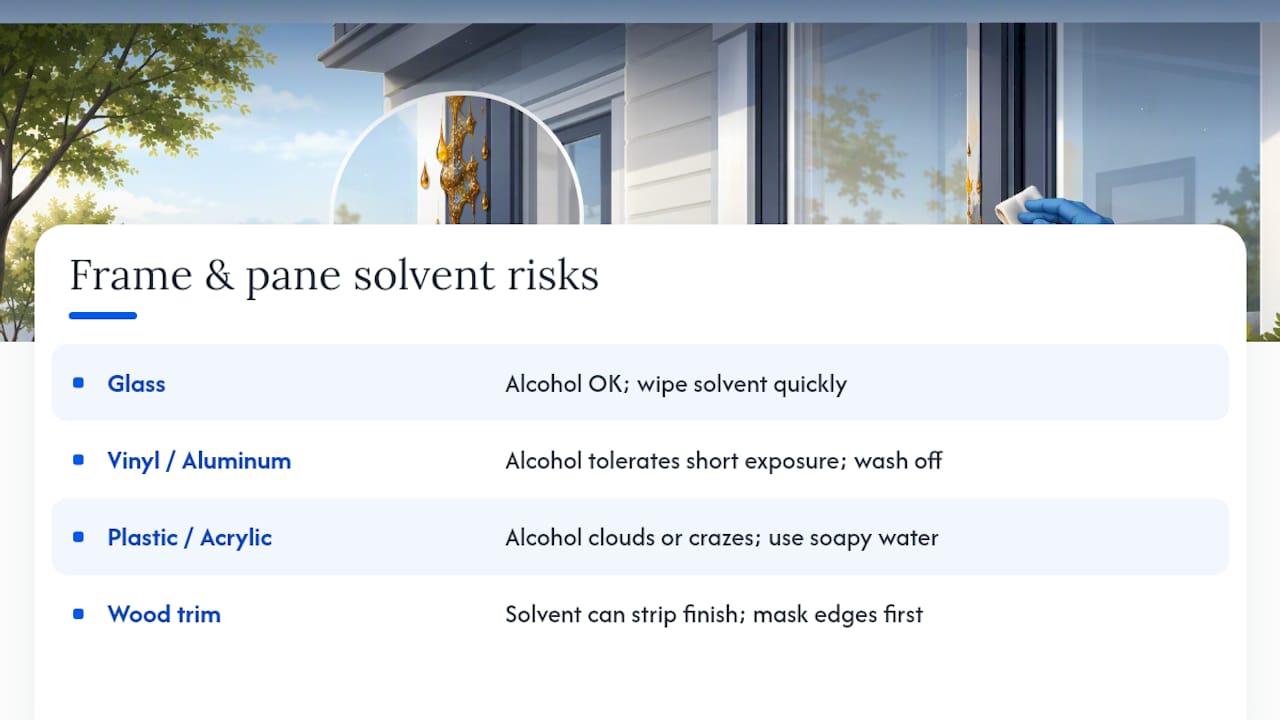
Wood-framed windows bring their own caution: any solvent that drips onto painted or stained wood trim can strip finish or leave a blotchy mark, so masking the frame edge before treating an adjacent pane is worth the extra two minutes. And on any frame material, plastic scrapers stay the rule. A metal blade that’s fine on a car windshield can gouge vinyl, scuff aluminum, or crack acrylic on a building window in a single pass.
How Do You Keep Windows Clear After Sap Removal?
Getting the sap off is only half the job. What you do in the following days determines whether the glass stays clear or starts collecting grime faster than before.
Start with a final rinse and dry pass using clean water and a fresh microfiber towel, even after you’ve already degreased with soap. Any leftover soap film attracts dust just as readily as sap residue does, and it’s a common reason windows look streaky again within a week of cleaning.
Check the frame and seal area for any solvent residue that might have crept toward the edges during the process. A quick wipe with a damp cloth around the perimeter catches anything that could sit against a rubber gasket or butyl seal and cause slow degradation over time. This is also the moment to note if a seal already looks compromised, cloudy patches between IG panes, condensation trapped inside the unit, or a visibly cracked gasket are signs that need a glass professional’s eye, not another round of cleaning.
For ongoing clarity, avoid touching freshly cleaned glass with bare hands until any solvent smell has fully dissipated, and keep sprinklers or irrigation systems from spraying directly onto windows, since mineral deposits in hard water create their own filming problem layered on top of whatever sap residue remains. A streak-free finishing routine applied right after sap removal locks in the clean look longer.
A Practitioner’s View on Sap Removal
Bros Window Cleaning has spent more than five years working Orange County properties where sap, hard water, and coastal grime all compete for the same square foot of glass. That kind of repetition teaches you fast which shortcuts hold up and which ones come back to bite you on a callback.
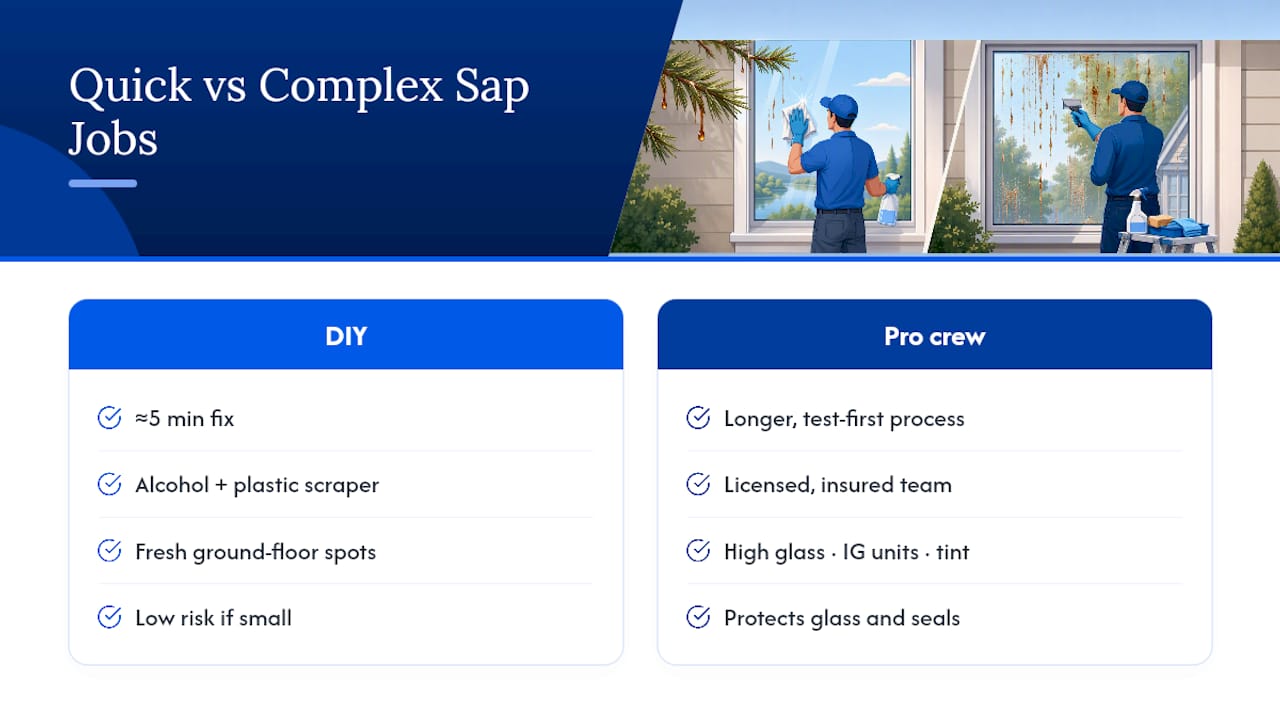
The honest answer is that most sap jobs don’t need a truck to roll out. A fresh spot on a ground-floor window is a five-minute fix for anyone with rubbing alcohol and a plastic scraper. Where the calculation changes is high glass, IG units, tinted coatings, and anything that’s clearly been sitting through a full season of sun. On those, a licensed, insured crew with the right test-first process protects the glass and the seal, which is exactly where a rushed DIY attempt tends to go wrong.
— nolan
Ready to Book a Sap Removal or Full Window Service?
If you’ve read this far and you’re still staring at a second-story window covered in sap you can’t safely reach, that’s the exact situation professional service exists for. Bros Window Cleaning is the alternative to guessing with the wrong solvent or renting a ladder you’re not confident on: a fully insured crew that tests before it treats, so your glass and seals come out intact instead of scratched or cloudy.

Getting a quote is straightforward. Send a few photos of the affected windows, note roughly how many panes need attention, and mention any height or access challenges, like second-story glass, skylights, or a storefront with a lot of foot traffic nearby. On the visit itself, expect an on-site assessment, a test patch on an inconspicuous pane, solvent selection based on what that test shows, full removal, and a final inspection before the crew calls it done. If your property also needs pressure washing, gutter cleaning, or another exterior service, it’s easy to bundle into the same appointment. Head to the Bros Window Cleaning landing page to check availability and get a quote for your property.
Sources
For more on solvent techniques, see the tree sap removal guide from Stain Removal Guides. For seal-failure warning signs, check Cypress Door & Glass’s breakdown of failing window seals. Homes with heavy tree cover and other maintenance needs may also benefit from regular HRV or air exchanger service.
- How to Remove Tree Sap from Glass Safely | Stain Removal Guides
- Signs your window seals are failing — Cypress Door & Glass
- Can window cleaning remove tree sap in Myrtle Beach? — Advanced Power Wash
FAQ
Can You Remove Tree Sap From Windows Without Damaging the Glass?
Yes, most tree sap comes off cleanly when you use a plastic scraper and isopropyl rubbing alcohol rather than metal tools or harsh solvents. Rubbing alcohol softens the resin bonds in sap and evaporates without leaving residue when you follow it with a soap-and-water rinse.
Is Acetone Safe to Use on Window Glass?
Acetone can remove sap, but it’s risky near the edges of insulated glass units. Acetone and lacquer thinner can degrade the butyl sealant that holds IG panes together if the solvent reaches the frame, leading to seal failure over time.
How Long Does Professional Tree Sap Removal Take?
Small residential jobs usually complete relatively quickly, while multi-pane or commercial properties typically require an on-site estimate first since timing depends on window count and access. Professional window cleaning services assess each property individually because factors like ladder access, screen removal, and coating type all affect the timeline.
How Much Does It Cost to Remove Tree Sap From Windows?
Cost depends on the number of windows, how hard they are to reach, and whether the job is bundled with other services like pressure washing or gutter cleaning. Current pricing details are available directly through the Bros Window Cleaning site when you request a quote.
Will Tree Sap Damage My Windows if I Leave It?
Sap that sits for weeks or months bakes into the glass surface, mixes with pollen and dust, and becomes far harder to remove without aggressive scraping. Leaving it long enough increases the risk that any eventual removal attempt, DIY or professional, requires stronger solvents that carry their own risks to seals and coatings.