
Seasonal cleaning is the practice of conducting planned, thorough deep cleaning and maintenance at key intervals throughout the year to protect property value, preserve aesthetics, and safeguard occupant health. Unlike routine tidying, it targets systems and surfaces that accumulate damage over months. Research confirms that deep cleaning reduces respiratory disease transmission risk by up to 80%, making it as much a health strategy as a maintenance one. For homeowners and property managers in Orange County and beyond, understanding the role of seasonal cleaning for properties is the difference between proactive asset protection and expensive reactive repairs.
What are the key benefits of seasonal cleaning for your property and health?
Seasonal deep cleaning delivers three distinct categories of benefit: health protection, financial preservation, and psychological wellbeing. Each one compounds over time, meaning the longer you maintain a consistent schedule, the greater the return on every cleaning session.
Health protection starts with air quality
Indoor air quality improves dramatically when dust, mold spores, and allergens are removed from surfaces, vents, and soft furnishings during a seasonal deep clean. The reduction in airborne particles directly lowers the risk of respiratory infections and allergy flare-ups for everyone in the building. This matters especially in Southern California, where dry seasons concentrate particulate matter indoors.

Consistent decluttering paired with deep cleaning measurably lowers cortisol, the hormone your body releases under stress. A cleaner, more organized space signals safety to your nervous system, which translates to better sleep and sharper focus. Psychologist Dr. Kia-Rai Prewitt notes that the physical motion of cleaning triggers endorphin release, producing a mood boost comparable to light exercise.
Pro Tip: Open windows and run exhaust fans during and after every seasonal cleaning session. Even eco-friendly cleaning products release compounds that build up indoors without adequate ventilation. Thirty minutes of airflow after cleaning cuts residual pollutant levels significantly.
“The act of cleaning is not just about the space around you. It changes how you feel inside it.” — Dr. Kia-Rai Prewitt, Cleveland Clinic
Financial and structural benefits
Properties that receive scheduled seasonal maintenance retain curb appeal and structural integrity far longer than those cleaned reactively. Clean windows boost perceived property value and prevent glass degradation from mineral deposits and oxidation. Gutters cleared each fall prevent water intrusion that leads to foundation damage and mold remediation costs running into the thousands.
How to prioritize seasonal cleaning tasks effectively throughout the year
Not all cleaning tasks carry equal weight. The most practical framework, drawn from hospitality maintenance planning, ranks tasks by the consequence of failing to complete them on time. This approach prevents you from spending energy on aesthetics while a critical system quietly fails.
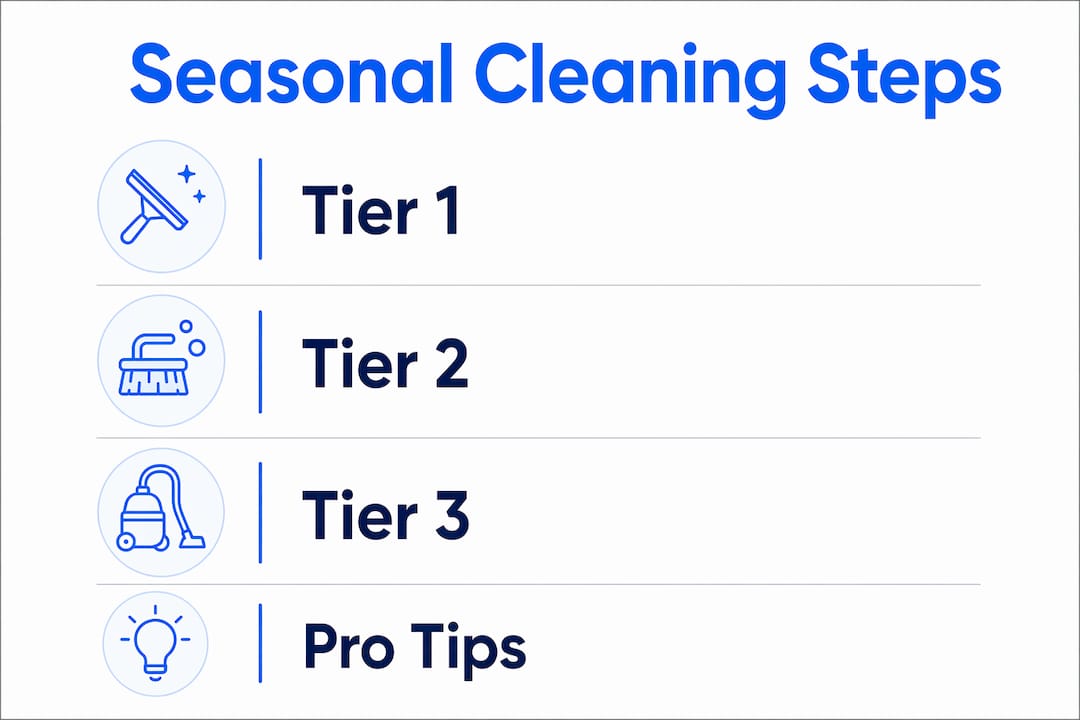
Tier 1: Tasks that prevent irreversible damage. These are non-negotiable and must be scheduled before seasonal weather changes arrive. High-priority tasks include pool winterization, HVAC heating and cooling changeovers, boiler servicing, and roof inspections. A missed HVAC changeover in late summer can result in compressor burnout. A skipped pool winterization in a cold snap can split pipes and crack the shell.
Tier 2: Regulatory and compliance tasks. These include pool chemistry balancing, fire suppression system checks, and any permit-required inspections. Failing these creates legal liability, not just physical damage.
Tier 3: Aesthetic and comfort tasks. Carpet cleaning, exterior window washing, landscaping, and pressure washing fall here. These tasks protect property value and guest or tenant satisfaction, but a short delay rarely causes irreversible harm.
The scheduling logic matters as much as the task list. Planning begins 90 days before occupancy drops or seasonal transitions occur, divided into three phases: assessment and prioritization, procurement and contractor scheduling, and final preparation. This structure is standard in hotel and resort management, and it works equally well for residential properties and rental units.
- Audit all systems and surfaces 90 days before the season change.
- Identify Tier 1 failures from the previous season and schedule repairs first.
- Book contractors for HVAC, gutter, and roof work before peak demand drives up prices.
- Schedule Tier 2 compliance checks with licensed professionals.
- Assign Tier 3 aesthetic tasks to in-house staff or bundle with professional exterior cleaning.
Pro Tip: Use maintenance tracking software like Buildium, AppFolio, or even a shared Google Sheet to log task completion dates and set recurring reminders. Properties that track seasonal tasks complete over 90% of planned work versus the 55 to 65% industry average for unplanned approaches.
DIY vs. professional services: which seasonal tasks need an expert?
The honest answer is that most homeowners underestimate which tasks genuinely require professional equipment and training, and overestimate the savings from doing everything themselves.
Tasks well-suited to DIY include decluttering, light interior cleaning, replacing air filters, wiping down appliances, and basic landscaping. These require no specialized tools and carry low risk if done imperfectly. They are also the tasks where your time investment pays off most directly.
Tasks that belong with professionals include HVAC deep servicing, pressure washing exterior surfaces, gutter cleaning on multi-story homes, roof inspections, and seasonal HVAC maintenance. Pressure washing at the wrong PSI strips paint, damages wood siding, and forces water behind cladding. HVAC servicing without proper tools misses refrigerant issues and coil contamination that reduce efficiency by 20 to 30%.
| Task | DIY Appropriate | Professional Recommended |
|---|---|---|
| Interior decluttering | Yes | No |
| Air filter replacement | Yes | No |
| Light window cleaning | Yes (ground floor) | Yes (upper floors, hard water stains) |
| Gutter cleaning | Yes (single story) | Yes (multi-story, heavy debris) |
| Pressure washing | No | Yes |
| HVAC servicing | No | Yes |
| Roof inspection | No | Yes |
The financial case for professional seasonal cleaning is stronger than most homeowners realize. Scheduling deep cleaning during shoulder seasons like April or October costs less than peak-season booking, allows service bundling, and causes less disruption to daily life or tenant occupancy. Waiting until summer to book a pressure wash and gutter clean means higher rates, longer wait times, and often rushed work. Proactive off-season maintenance reduces reactive work orders by 35% and cuts deferred maintenance backlogs by nearly 50%.
- Bundle exterior window cleaning, pressure washing, and gutter cleaning into a single visit to reduce mobilization costs.
- Ask providers about certifications. Look for OSHA safety training, licensed contractor status, and proof of insurance.
- Request a written scope of work before any professional seasonal service to avoid scope creep or missed tasks.
Practical seasonal cleaning tips and a yearly schedule for homeowners
A workable seasonal schedule does not require perfection. It requires consistency and timing. Here is how the year breaks down for most properties in California’s climate.
Spring (March to May): Service the HVAC system before cooling season begins. Deep clean air vents and replace filters. Declutter storage areas that accumulated items over winter. Schedule exterior window cleaning to remove winter grime and hard water deposits. Check gutters for debris from winter storms. This is the highest-impact season for property cleaning investments because it sets the condition baseline for the entire year.
Summer (June to August): Focus on maintaining hygiene and comfort rather than deep cleaning. Wipe down high-touch surfaces weekly. Monitor pool chemistry if applicable. Check window seals and screens for heat-related wear. Pressure wash patios and driveways if spring cleaning was skipped.
Fall (September to November): Clean gutters after leaves drop. Schedule a heating system check before temperatures fall. Inspect the roof for summer UV damage. Clean solar panels, which lose efficiency from dust accumulation over dry months. This is also the right time to book sewer line maintenance before winter ground saturation creates drainage problems.
Winter (December to February): Monitor rather than deep clean. Check for moisture intrusion around windows and doors. Clear debris from drains after rain events. Schedule spring contractors now to lock in lower rates.
| Season | Priority Task | Secondary Task |
|---|---|---|
| Spring | HVAC service, window cleaning | Declutter, gutter check |
| Summer | Pool and surface hygiene | Patio pressure wash |
| Fall | Gutter cleaning, heating check | Solar panel cleaning, roof inspection |
| Winter | Moisture monitoring, drain clearing | Book spring contractors |
Pro Tip: Layer tasks by location rather than by type. Clean everything on the exterior of the north-facing side of your property in one session: windows, gutters, siding, and landscaping. This cuts travel time between tasks and lets you spot related issues like damaged caulking or pest entry points that you would miss doing one task at a time.
Key takeaways
Seasonal cleaning protects property value, reduces health risks, and prevents costly repairs when tasks are prioritized by consequence of failure and scheduled before seasonal transitions occur.
| Point | Details |
|---|---|
| Prioritize by consequence | Schedule HVAC, gutter, and roof tasks first. Aesthetic tasks can follow without irreversible risk. |
| Schedule in shoulder seasons | April and October bookings cost less, allow bundling, and cause less disruption than peak-season cleaning. |
| Ventilate during cleaning | Open windows and run exhaust fans to reduce indoor pollutant buildup, even with green products. |
| Track completion rates | Properties using maintenance tracking software complete over 90% of planned seasonal tasks. |
| Bundle professional services | Combining window cleaning, pressure washing, and gutter cleaning in one visit reduces total cost. |
Why I stopped treating seasonal cleaning as optional
After years of working with homeowners and property managers across Orange County, the pattern I see most often is this: people treat seasonal cleaning as something they will get to eventually, and then spend three times the money fixing what a scheduled cleaning would have caught.
The most common missed opportunity is the fall exterior clean. Homeowners skip it because summer looked fine, and then spend the following spring dealing with gutter overflow damage, mineral-stained windows that now need professional restoration, and moss on the roof that has started lifting shingles. The cost difference between prevention and restoration is not marginal. It is often a factor of five or ten.
What I find genuinely underappreciated is the health dimension. Most people think of seasonal cleaning as cosmetic. The research says otherwise. A property that gets a proper spring deep clean, with ventilated rooms and serviced air systems, delivers measurably better air quality for months afterward. That matters for families with children, elderly residents, and anyone managing allergies or asthma.
The best advice I can give any homeowner or property manager is to treat your seasonal cleaning schedule the same way you treat your car’s service schedule. You do not wait for the engine light. You follow the calendar. The properties that hold their value, attract better tenants, and cost less to maintain over a decade are almost always the ones where someone made that decision early.
— nolan
How Broswindowcleaningoc supports your seasonal cleaning strategy

Broswindowcleaningoc delivers the exterior cleaning services that form the backbone of any effective seasonal maintenance plan. Their window cleaning services remove hard water stains, mineral deposits, and grime that degrade glass over time and reduce curb appeal. Pressure washing from Broswindowcleaningoc clears driveways, siding, and patios of the buildup that standard cleaning cannot reach. Learn why pressure washing protects your property’s long-term value, and how regular gutter cleaning prevents the water damage that costs homeowners thousands each year. Based in Orange County and fully insured, Broswindowcleaningoc makes it easy to bundle services and lock in shoulder-season rates before demand peaks.
FAQ
What is the role of seasonal cleaning for properties?
Seasonal cleaning is planned deep cleaning and maintenance conducted at key yearly intervals to protect property value, preserve aesthetics, and reduce health risks. It targets systems and surfaces that accumulate damage over months, preventing costly repairs and maintaining occupant wellbeing.
How often should a property receive a deep clean?
Most properties benefit from a thorough deep clean twice a year, typically in spring and fall, with lighter maintenance tasks performed in summer and winter. High-traffic properties or rental units may require quarterly deep cleaning cycles.
What seasonal cleaning tasks should always go to a professional?
HVAC servicing, pressure washing, multi-story gutter cleaning, roof inspections, and solar panel cleaning require professional equipment and training. Attempting these without the right tools risks property damage and personal injury.
When is the best time to schedule professional seasonal cleaning?
Shoulder seasons like April and October offer the best combination of lower rates, contractor availability, and minimal disruption. Waiting until peak summer or winter means higher costs and longer lead times.
Does seasonal cleaning actually improve indoor air quality?
Deep cleaning removes dust, mold spores, and allergens that degrade air quality over time. Combined with proper ventilation during and after cleaning, it can reduce respiratory disease transmission risk by up to 80%.