
Residential cleaning packages are structured service tiers that define exactly which tasks a cleaning crew will perform, how often, and at what price. Explaining residential cleaning packages matters because most homeowners and renters book a service without realizing that “standard clean” and “deep clean” are not interchangeable terms. TIDY and Ace Maid Services, two widely referenced providers in the industry, each use distinct task checklists that can differ by a dozen line items. Choosing the wrong tier means paying for work you don’t need or missing the thorough reset your home actually requires. This guide breaks down every major package type, what’s included, how pricing works, and how to match the right service to your situation.
What are residential cleaning packages and what do they include?
A standard residential cleaning package covers the routine maintenance tasks that keep a home livable week to week. Standard cleaning covers dusting surfaces, vacuuming carpets and rugs, mopping hard floors, wiping down bathroom fixtures, and cleaning kitchen counters and the exterior of appliances. These are the tasks a crew can complete efficiently on a recurring schedule without spending extra time on buildup or neglected areas.
What standard packages do not include is just as important to understand. Interior oven cleaning, refrigerator interiors, laundry, detailed grout scrubbing, and window interiors are typically excluded from the baseline tier. This is not a shortcut by providers. It reflects the reality that those tasks require significantly more time and specialized products, which changes the economics of a recurring visit.
For a three-bedroom home, standard cleaning costs roughly $100 to $300 per visit, with a national average near $180. That range reflects differences in home size, regional labor costs, and whether you hire an independent cleaner or a franchise operation.
- Dusting all accessible surfaces, ceiling fans, and light fixtures
- Vacuuming carpets, area rugs, and upholstered furniture surfaces
- Mopping hard floors throughout the home
- Cleaning bathroom sinks, toilets, tubs, and mirrors
- Wiping kitchen counters, stovetop exterior, and cabinet fronts
- Emptying trash cans and replacing liners
Pro Tip: Ask every provider for their written task checklist before booking. Two companies can both call their service “standard cleaning” while covering completely different items.
How do deep cleaning packages differ from standard cleaning options?
Deep cleaning is the service tier designed to address buildup, neglected areas, and surfaces that routine maintenance misses. Deep cleaning includes all standard tasks plus baseboards, air vents, inside appliances, detailed grout scrubbing, windowsills, and light switch plates. The crew spends significantly more time per room, often scrubbing rather than wiping, and uses stronger cleaning agents for mineral deposits and grease.
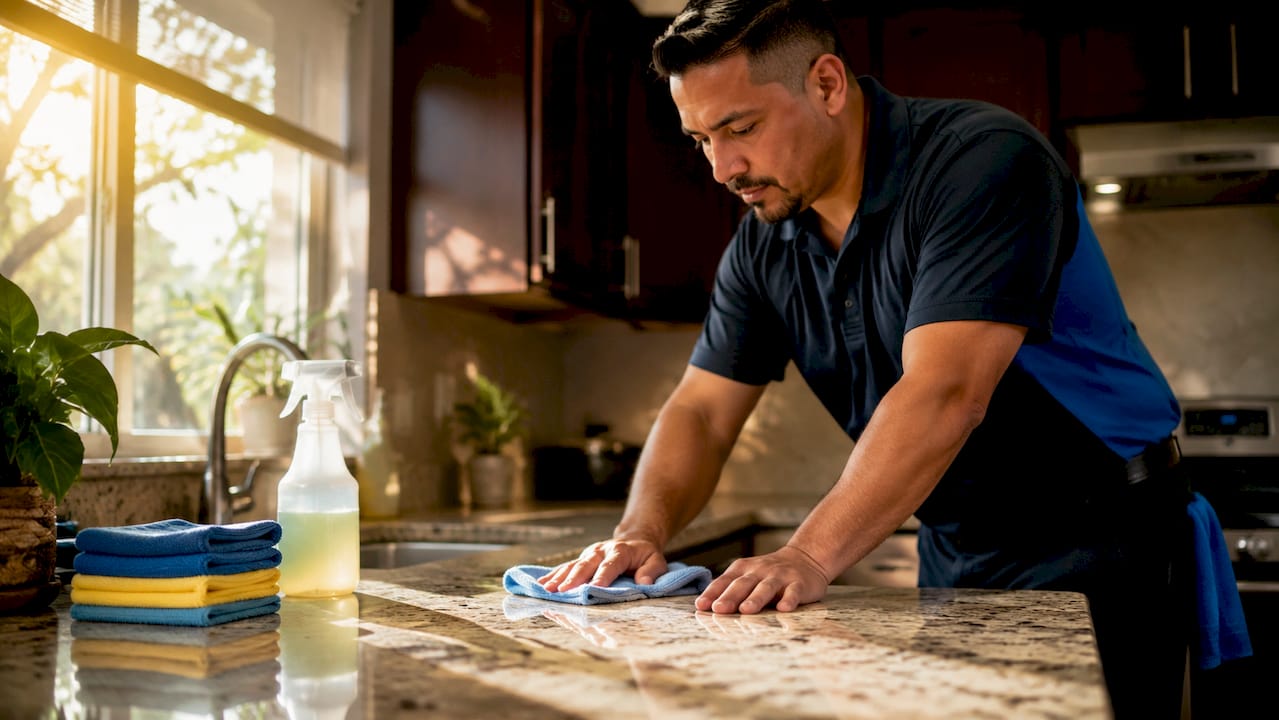
The price reflects that added labor. Deep cleans typically run 1.5 to 2 times the rate of a standard visit, and the session itself takes longer, sometimes twice as long for the same home. For a three-bedroom house that costs $180 for a standard clean, a deep clean from the same provider could run $270 to $360.
Deep cleaning makes the most sense in three specific scenarios. First, as a one-time seasonal refresh, typically spring or fall. Second, as the initial clean before starting a recurring service, since the home needs to reach a baseline before maintenance visits can sustain it. Third, after a period of reduced cleaning frequency, such as following a renovation or a busy stretch of months.
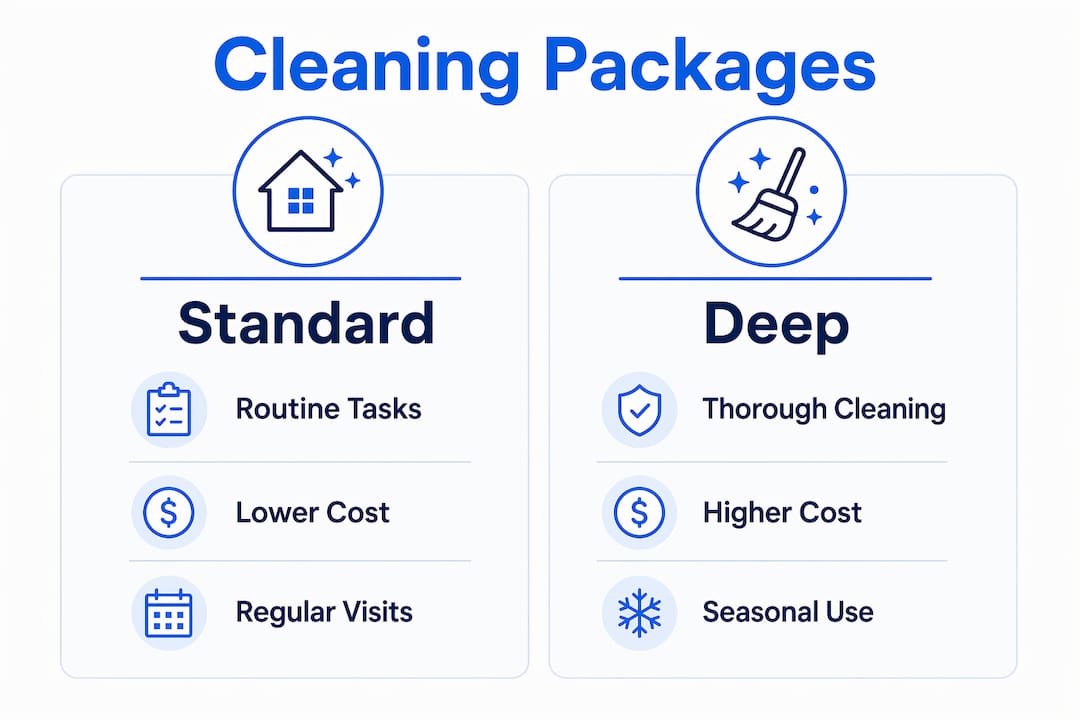
| Feature | Standard cleaning | Deep cleaning |
|---|---|---|
| Baseboards and vents | Not included | Included |
| Inside appliances | Not included | Included |
| Grout scrubbing | Surface wipe only | Detailed scrubbing |
| Typical price multiplier | 1× baseline | 1.5–2× baseline |
| Best use case | Recurring maintenance | Initial or periodic reset |
Pro Tip: If you’re starting a recurring cleaning plan, request a deep clean for the first visit. Providers like Ace Maid Services use this initial baseline clean to set the standard that maintenance visits then sustain.
What are move-in/move-out cleaning packages and why are they distinct?
Move-in and move-out cleaning packages represent the most thorough tier in residential cleaning. Move-out cleans cover everything in a deep clean plus the interior of every cabinet and drawer, appliance interiors, blinds, walls, and baseboards, with the specific goal of meeting a landlord’s inspection checklist. The scope is top to bottom, room by room, with no surface left unaddressed.
The pricing reflects that scope. Move-out cleans typically cost 2 to 2.5 times the standard rate, and sessions can run four to eight hours for a mid-sized home. For renters, this investment directly protects a security deposit. For homeowners selling or preparing a property for new occupants, it creates the kind of first impression that affects perceived value.
The key distinction between a move-out clean and a deep clean is the purpose, not just the task list. Matching the package scope to a landlord’s specific inspection checklist produces better results than ordering a generic deep clean and hoping it covers the right areas. Landlords commonly focus on grout lines, appliance interiors, light fixtures, and the insides of cabinets. A provider who understands that focus will prioritize differently than one following a standard deep clean protocol.
Key areas covered in a move-in/move-out package:
- Interior of all kitchen and bathroom cabinets and drawers
- Inside oven, refrigerator, dishwasher, and microwave
- Blinds, window tracks, and windowsills
- Walls, baseboards, and door frames
- Grout lines in tile floors and shower surrounds
- Light fixtures, ceiling fans, and switch plates
How do pricing models and customization options affect cleaning packages?
Cleaning service pricing follows three main structures, and knowing which one a provider uses changes how you evaluate their quote. Flat-rate pricing charges a fixed amount based on home size and package type, making budgeting predictable. Hourly pricing charges per cleaner per hour, which can work in your favor for small homes but escalate quickly for larger ones. Per-square-foot pricing is common with larger providers and scales directly with home size.
Recurring cleaning discounts reduce the per-visit cost by 10 to 25% compared to one-time bookings. Weekly and biweekly plans offer the deepest discounts because providers can schedule crews more efficiently. That discount compounds over a year, making recurring plans significantly more cost-effective than booking individual visits.
Add-ons are where cleaning packages become genuinely customizable. Common add-on tasks include interior oven cleaning, refrigerator cleaning, interior window washing, laundry folding, and garage sweeping, with prices ranging from $3 to $60 per task depending on the provider and complexity. These are priced separately from the base package, so asking upfront prevents billing surprises.
Factors that affect your final price beyond package tier:
- Home clutter level: cluttered floors and surfaces increase cleaning time and cost
- Number of pets: pet hair and dander require extra vacuuming passes
- Number of bathrooms: each additional bathroom adds time and product use
- Provider type: franchises cost 25 to 45% more than independent cleaners without a consistent quality advantage
Pro Tip: Always request a written scope of work before the first visit. Confirm the pricing model, cancellation policy, and whether the provider offers a satisfaction guarantee or a free re-clean if tasks are missed.
How to evaluate and choose the right residential cleaning package for your home
Choosing the right package requires matching your home’s actual condition and your maintenance goals to the service tier, not just the price. Clear communication and scope alignment between you and the provider determine service quality more than any other factor. A provider who understands your priorities will deliver better results than one following a generic checklist.
Follow these steps to evaluate and select a package:
- Assess your home’s current condition. A home that hasn’t been professionally cleaned in six months or more needs a deep clean first, not a standard package. Starting with the wrong tier means the crew spends their time catching up rather than maintaining.
- List your non-negotiables. Identify the specific tasks that matter most to you, whether that’s grout cleaning, inside appliances, or window interiors. Confirm those tasks are explicitly included in the package you’re considering.
- Ask about the first-visit protocol. Many providers, including those following the Ace Maid Services workflow, treat the initial visit as a deeper baseline clean before shifting to maintenance mode. Clarify whether that first visit costs more and what it covers.
- Compare task checklists, not just prices. Two providers quoting the same price for “standard cleaning” may cover entirely different items. Request written checklists from each and compare line by line.
- Confirm supplies, insurance, and damage policy. Ask whether the crew brings their own products and equipment, whether the company carries liability insurance, and what happens if something is damaged or a task is missed.
- Prepare your home before the first visit. Clearing floors, managing pets, and communicating priorities directly improve cleaning quality and reduce the chance of tasks being skipped due to access issues.
You can also use a homeowner’s cleaning service guide to build a structured comparison framework before you contact any provider.
Key takeaways
Residential cleaning packages fall into three tiers: standard, deep, and move-in/move-out, each defined by scope, price, and purpose. Choosing the right tier from the start saves money and produces better results than upgrading mid-service.
| Point | Details |
|---|---|
| Standard packages cover maintenance tasks | Dusting, vacuuming, mopping, and surface cleaning are included; appliance interiors and grout are not. |
| Deep cleans cost 1.5–2× more for a reason | They address buildup and detail areas that standard visits skip, making them ideal for initial or seasonal cleans. |
| Move-out cleans target landlord inspections | Matching scope to a specific inspection checklist protects deposits better than a generic deep clean. |
| Recurring plans reduce per-visit cost | Weekly or biweekly schedules cut per-visit pricing by 10–25% compared to one-time bookings. |
| Written scope prevents billing surprises | Confirming task checklists, pricing models, and satisfaction guarantees before booking sets clear expectations. |
What I’ve learned from watching homeowners navigate cleaning packages
Most homeowners make the same mistake: they book the cheapest available option for the first visit and then wonder why the result doesn’t match their expectations. The problem isn’t the cleaner. It’s the mismatch between what the package covers and what the home actually needs.
The first clean is always the most important one. It sets the physical baseline that every subsequent visit builds on. If you skip the deep clean and go straight to a standard maintenance package, the crew is spending their time managing existing buildup instead of maintaining a clean home. You end up paying for maintenance-level work on a home that needed a reset.
I’ve also noticed that homeowners who communicate specific priorities consistently get better results. Telling your provider “the kitchen grout and the master bathroom are my top concerns” takes thirty seconds and changes how the crew allocates their time. Providers who use a property cleaning guide framework tend to build this communication into their intake process, which is a good sign.
One more thing worth saying directly: an unusually low quote almost always means something is missing from the scope, the crew is uninsured, or both. Verifying insurance coverage and reading the task checklist before you sign anything costs you nothing and protects you from a lot of frustration.
— nolan
How Broswindowcleaningoc complements your residential cleaning plan
Clean interiors deserve equally clean exteriors. Broswindowcleaningoc serves Orange County homeowners with professional window cleaning services that remove hard water stains, grime, and oxidation from glass surfaces that interior cleaning crews don’t touch. With over five years of experience and fully insured crews, Broswindowcleaningoc handles window cleaning, pressure washing, gutter cleaning, and solar panel cleaning as standalone services or as part of a broader home maintenance plan. If you’ve just completed a deep clean or move-out package and want the exterior to match, scheduling a window cleaning visit is the logical next step. Explore window cleaning terminology to understand exactly what a professional exterior clean covers before you book.
FAQ
What does a standard residential cleaning package include?
A standard package covers dusting, vacuuming, mopping, bathroom fixture cleaning, and kitchen surface wiping. It excludes interior appliances, laundry, and detailed grout scrubbing.
How much does a deep cleaning package cost compared to standard?
Deep cleaning typically costs 1.5 to 2 times the standard rate. For a three-bedroom home averaging $180 for a standard clean, a deep clean runs roughly $270 to $360.
When should I book a move-in/move-out cleaning package?
Book a move-out clean when vacating a rental to protect your security deposit, or when preparing a home for new occupants. These packages cost 2 to 2.5 times the standard rate and cover cabinets, appliance interiors, and walls.
Do recurring cleaning plans actually cost less per visit?
Yes. Weekly and biweekly plans reduce the per-visit cost by 10 to 25% compared to one-time bookings, making them more cost-effective for ongoing home maintenance.
What add-ons are typically available with residential cleaning packages?
Common add-ons include interior oven cleaning, refrigerator cleaning, interior window washing, and laundry folding. Prices range from $3 to $60 per task depending on the provider, so always confirm costs upfront.
Pingback: Customer Satisfaction in Cleaning Services: What Drives Quality