
If your siding looks dull, your gutters overflow after light rain, your walkways feel slick underfoot, or your windows have gone hazy, your home is telling you something. Those are four of the clearest signs you need exterior cleaning, and ignoring them tends to cost more than the wash itself.
Here’s the fast version, so you can check your own house before reading further:
- Dull, gritty, or stained siding, brick, or driveway surfaces
- Green haze or black streaks on siding, fences, or roof shingles
- Moss in gutters, sagging gutters, or water overflowing during rain
- Hazy windows or dusty, low-output solar panels
- Slippery patios, walkways, or driveways, especially in shaded spots
- Peeling paint, splinters, or soft, spongy wood siding
Fast fact: most home exteriors need a wash once or twice a year, but homes near the coast, under heavy tree cover, or in high-pollen zones often need it every 6 to 9 months. If you spot two or more signs from that list, it’s time to schedule an inspection or a wash, not wait for spring.
Key Takeaways
Most exterior damage starts as a cleaning problem before it becomes a repair problem, and catching the signs early is what keeps it that way.
| Point | Details |
|---|---|
| Two signs mean act now | If you spot two or more warning signs, schedule an inspection or wash rather than waiting. |
| Biological growth carries health risk | Mold and algae near vents and windows can affect indoor air quality once spores move inside. |
| Slippery surfaces are a safety issue | Algae biofilm on shaded walkways creates a real fall hazard, not just a cosmetic one. |
| Some damage needs a contractor, not a cleaner | Soft wood, paint chalking, and siding gaps signal rot that a wash alone won’t fix. |
| Match the crew to the job | Broswindowcleaningoc handles softwashing, roof cleaning, gutter clearing, window washing, and solar panel rinses with insured, trained technicians. |
Table of Contents
- 1. Visible Dirt, Grime, Stains, and Pollen Film
- 2. Mold, Mildew, and Algae Streaks
- 3. Roof and Gutter Warning Signs
- 4. Hazy Windows and Underperforming Solar Panels
- 5. Slippery Walkways, Patios, and Driveways
- 6. Faded Paint, Peeling Siding, and Signs of Rot
- When to Hire a Pro vs. Attempt DIY
- What a Professional Exterior Cleaning Should Include
- Get a Local, Insured Team on the Signs You Already Spotted
- Frequently Asked Questions
- Sources
1. Visible Dirt, Grime, Stains, and Pollen Film
A dusty, dull finish on siding is normal. A film that survives a garden hose rinse is not. That’s bonded grime, and it behaves differently than surface dust: it holds moisture against paint, feeds oxidation, and accelerates chalking on painted surfaces. Oil and tire marks on concrete driveways work the same way, sinking into pores rather than sitting on top.
Trade professionals list dull, chalky paint and visible siding grime among the primary signs a home needs cleaning before the buildup does real damage. A quick way to check:
- Hose-rinse a small section and see if the dullness lifts.
- Compare a photo from a year ago to your siding today.
- Check driveway stains after rain. If they darken instead of fading, they’re set in.
Pro Tip: Take the hose test before booking anything. If a plain rinse clears the haze, you’re looking at a cosmetic wash. If it doesn’t budge, you’re dealing with bonded grime that needs a proper cleaning method, not just water pressure. Left alone, this kind of grime can shave years off your paint job and make exterior grime a real property value issue.
2. Mold, Mildew, and Algae Streaks
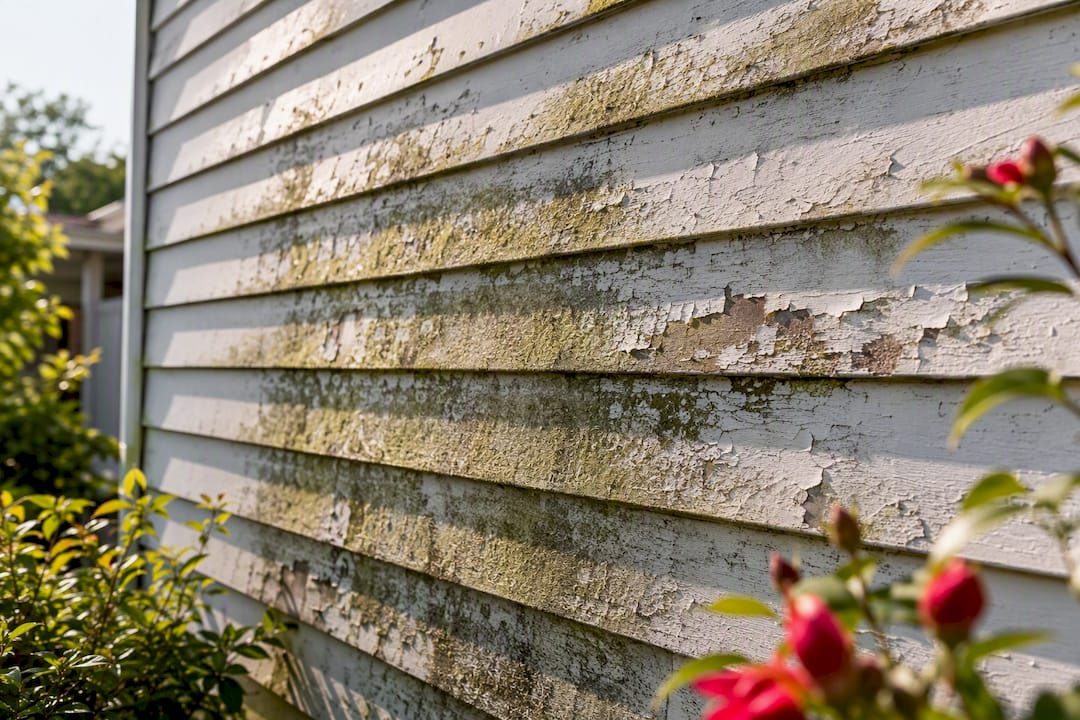
Green haze on north-facing siding, black vertical streaks below roof edges, or dark spotting near downspouts almost always points to biological growth, not dirt. These patches thrive in shaded, damp corners near eaves, gutters, and anywhere sprinklers hit the wall repeatedly.
This isn’t purely cosmetic. Growth clustered near doors, windows, and vents can work its way indoors, and the EPA notes that exterior mold spores can affect indoor air quality once they migrate inside. Households with allergies or asthma tend to notice it first.
Mold near entry points and ventilation isn’t just an eyesore. It’s a pathway for spores to reach the air inside your home, which is exactly why the EPA flags outdoor growth as a household air quality concern.
Document what you see before calling anyone:
- Note the color (green usually means algae, black usually means mold or mildew).
- Photograph the location relative to gutters, downspouts, and shaded walls.
- Avoid scrubbing it yourself with bleach or a pressure washer nozzle. Wrong chemicals or pressure can spread spores rather than remove them.
3. Roof and Gutter Warning Signs
Standing on the ground, look up before you look anywhere else. Black streaks running down shingles, green moss clumps near the ridge, sagging gutter sections, or “tiger stripes” staining the siding below your gutters are all signs the roof and drainage system are overdue for attention.
- Walk the perimeter and note any spot where water overflows a gutter during rain instead of draining through the downspout.
- Photograph moss patches and streaks from a safe distance. Zoom in with your phone rather than climbing a ladder.
- Check for debris visibly packed into gutter troughs or spilling over the edge.
- If you see sagging, pulling-away brackets, or water marks on fascia boards, that’s a sign for a professional inspection, not a weekend project.
Moss holds moisture against shingles and shortens roof life, and clogged gutters can signal bigger drainage problems than they first appear to be.
Pro Tip: Never assess your roof from the roof itself unless you’re trained for it. Binoculars from the yard tell you almost everything you need to know, and they keep you off a ladder.
4. Hazy Windows and Underperforming Solar Panels
Windows that look streaked no matter how many times you wipe them usually have mineral deposits, salt spray, or grime baked into the glass rather than a dirty cloth problem. Dirty tracks and screens compound the issue by trapping grit that scratches glass over time.
Solar panels show the same pattern in a different way. Dust, pollen, and bird droppings dull the surface, and that buildup measurably cuts energy output rather than just looking bad. Losses vary by climate and buildup level, but the pattern is consistent enough that solar installers recommend routine cleaning in sunny, dusty regions to protect output.
- Hazy or streaky glass that resists a normal wipe-down
- Visible dust or dulling on solar panel surfaces
- A drop in your solar output you can see on your monitoring app
A proper cleaning restores clarity to glass and lets panels capture full sunlight again, which is worth checking against your panel cleaning schedule if you haven’t looked at output in a while.
5. Slippery Walkways, Patios, and Driveways
This is the sign homeowners notice too late, usually after someone slips. A thin layer of algae or biofilm on shaded concrete doesn’t always look wet or dirty. It just feels slick the moment you step on it, especially after rain or morning dew.
Check shaded walkways under trees or along the north side of the house, where surfaces stay damp longest. Green or dark discoloration in these spots is your visual warning before the physical one.
- Walk shaded sections carefully after rain to test for slickness.
- Look for green or blackish film in corners that rarely see direct sun.
- Avoid DIY bleach treatments on large areas. It’s a short term fix that doesn’t remove the biofilm layer causing the hazard.
Pro Tip: If a walkway feels slippery in one spot but not others, that’s usually shade and moisture at work, not just age. Mark it and keep foot traffic light until it’s professionally treated. Full biofilm removal usually needs a proper sanitizing wash, not a mop and bucket.
6. Faded Paint, Peeling Siding, and Signs of Rot
Sometimes what looks like a dirty house is actually a damaged one. Chalking paint that rubs off on your hand, flaking sections, soft or spongy wood when you press it, and visible gaps in siding seams are signs that go past a cleaning job.
- Press gently on suspect wood trim or siding. If it gives like a sponge, that’s rot, not dirt.
- Run a hand along paint. Chalky residue means the finish has broken down, not just gotten dirty.
- Check siding seams and corners for gaps or separation.
- Photograph anything soft, cracked, or separated and set it aside from your general cleaning notes.
Pro Tip: If you find rot or soft wood, call a contractor before a cleaner. Pressure washing damaged wood can force water deeper into the structure and turn a repair job into a bigger one.
When to Hire a Pro vs. Attempt DIY
Some jobs are safe weekend projects. Others aren’t, and the line usually comes down to height, surface material, and how much biological growth you’re dealing with.
Call a professional when:
- The job involves second-story windows, roofs, or anything requiring a ladder beyond a few feet.
- You’re working with vinyl, older wood siding, or stucco, all of which can be damaged by high pressure.
- Mold or algae coverage is widespread rather than a small patch.
- Walkways are slippery enough to be a fall risk for kids or older family members.
- You’re prepping a surface for paint or sealant, where leftover grime prevents proper bonding.
Cost and timing vary with house size, the severity of buildup, and how much access the crew has, but most single-family homes fall into a wash that takes a few hours to most of a day. Bigger or heavily grimed properties, or ones needing roof and gutter work on top of siding, run longer.
DIY risk is real, and it’s often invisible until it isn’t:
- High pressure on vinyl or older wood can force water behind the siding, causing hidden rot professionals recommend against attempting yourself.
- Wrong chemical dilution can strip paint or discolor surfaces permanently.
- Ladder work on wet, algae-covered surfaces is a leading cause of homeowner falls during DIY exterior cleaning.
If your checklist above has three or more marks, that’s less a maintenance decision and more a safety one.
What a Professional Exterior Cleaning Should Include
A reputable crew doesn’t just show up with a pressure washer and start blasting. They match the method to the surface: softwashing for painted siding and roofs, higher-pressure rinses for concrete, and a separate gentle process for windows and solar panels since surface type changes both the schedule and the technique.
Before you hire anyone, ask these questions:
- Are you insured, and can you provide proof?
- What cleaning method and chemicals do you use on siding, roofs, and glass?
- Do you inspect for existing damage before starting, and how do you document it?
- What’s included: gutters, solar panels, screens, tracks?
Pro Tip: A trustworthy company will walk your property with you first, point out problem areas, and give you a written estimate before touching a hose. If a quote comes with no inspection and no photos, that’s a red flag.
A Technician’s Take on What Homeowners Miss Most
The signs people miss most are the ones at eye level near shaded corners, moss creeping along a north-facing fence, a gutter that’s just started to sag. Photograph problem spots right after a hard rain. That’s when gutter overflow and slippery patches show up clearest, and it gives us exactly what we need to quote you accurately the first time.
Get a Local, Insured Team on the Signs You Already Spotted
If you checked off two or more signs above, the next move is booking a wash before the damage compounds, not researching DIY equipment for a one-time job. Broswindowcleaningoc is the alternative to renting gear and guessing at pressure settings: a fully insured Orange County crew that already matches method to surface, softwash for siding, dedicated rinses for solar panels, and safe gutter clearing, so you never risk forcing water behind your vinyl or falling off a ladder over a gutter you can’t quite see into.

Our services line up directly with the checklist you just read through: pressure washing for driveways and stained hardscapes, gutter clearing before overflow becomes a roof problem, window washing for the haze you can’t wipe away, and solar panel rinses to recover lost output. If you spotted algae on a walkway, moss in a gutter, or a dull driveway while reading this, get a free quote on your exterior cleaning and find out what it actually takes to fix it.
Frequently Asked Questions
How often should I clean my house exterior?
Most homes need a wash once or twice a year. Coastal, tree-covered, or high-pollen properties often need it every 6 to 9 months.
What are the most common signs of dirty siding?
Dull or chalky paint, a film that survives a hose rinse, green algae haze, and black streaks near rooflines are the most reliable indicators of dirty siding.
Is it safe to pressure wash my own siding?
High pressure on vinyl or older wood siding can force water behind panels and cause hidden rot, which is why professionals recommend softwashing for painted or delicate surfaces instead.
Can dirty solar panels really lower energy output?
Yes. Dust, pollen, and bird droppings block sunlight from reaching the cells, and cleaning restores capture ability, particularly in dusty or high-sun regions.
When should I call a professional instead of doing it myself?
Call a pro for roof access, extensive mold or algae, slippery walkways, or any surface where high pressure could cause damage, like vinyl siding or aging wood trim.
Sources
- Can mold cause health problems? | US EPA
- House exterior cleaning: signs and expert tips | Redfin
- How often should you clean the exterior of your house? | Homes & Gardens
- How Often Should You Clean Your Home’s Exterior? – Delta Softwash