
How clean windows contribute to energy savings
Windows are one of the most overlooked drivers of your monthly utility bill. According to the U.S. Department of Energy, heat gains and losses through windows account for 25–30% of a home’s yearly HVAC energy use. That single figure reframes window cleaning from a cosmetic chore into a genuine maintenance priority.
Here is how clean windows directly reduce energy costs:
- Maximize natural light. Clear glass lets sunlight penetrate fully, cutting your reliance on artificial lighting during daylight hours.
- Preserve Low-E coatings. Grime buildup interferes with Low-E coating performance, reducing the glass’s ability to reflect heat and regulate indoor temperature.
- Protect seals and weatherstripping. Debris in window tracks degrades the airtight seal, creating drafts that force your HVAC system to compensate.
- Reduce summer cooling demand. Dirty glass absorbs solar radiation and radiates that heat indoors, pushing air conditioners to work harder.
- Support passive solar heating in winter. Clean glass allows solar radiation to warm interior surfaces naturally, lowering heating system demand.
Pro Tip: Think of your windows as part of your home’s thermal envelope, not just a view. Keeping them clean is one of the lowest-cost ways to protect that envelope.
Energy efficiency benefits of clean windows
Dirty windows create a compounding problem. The grime layer absorbs heat in summer, radiating it indoors and raising cooling demand. In winter, the same layer blocks the passive solar gain that would otherwise offset your heating load. Clean glass eliminates both problems simultaneously.
Low-E coatings are particularly sensitive to contamination. These thin metallic layers work by reflecting infrared heat back toward its source, keeping warmth inside during cold months and outside during hot ones. When dirt particles build up on the glass, the coating cannot perform as designed, and your heating efficiency drops.
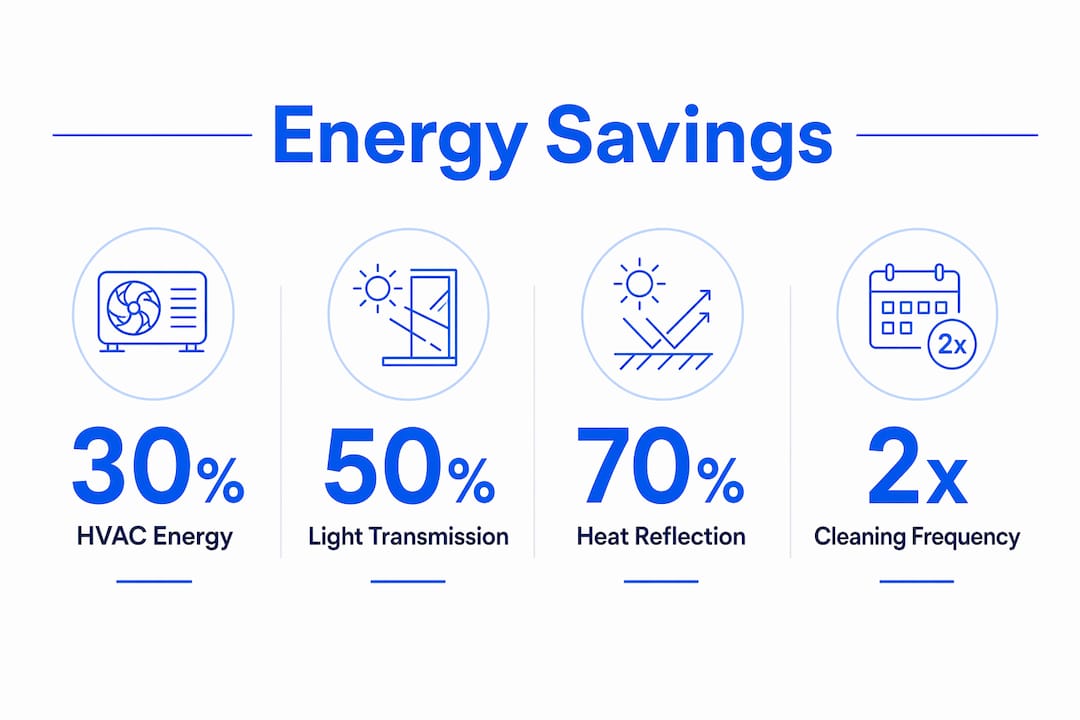
| Condition | Effect on Energy Use |
|---|---|
| Clean windows, intact Low-E coating | Maximum solar heat gain in winter; heat reflection in summer |
| Dirty glass, partial grime layer | Reduced solar gain; increased heat absorption and indoor radiation |
| Dirty glass, degraded seals | Air leaks add to HVAC load year-round |
| Clean glass, damaged seal | Light transmission restored; air leakage still present |
Rich Ward, co-owner of a nationwide window cleaning operation, put it plainly in an interview with CooperatorNews: “The sun bakes debris into the window, and people don’t realize a window is like a living, breathing kind of thing. It soaks up moisture and collects debris, and that obstructs natural light and affects the energy efficiency of the building.”
How clean windows enhance natural light and indoor comfort
A grime layer does not just look bad. It physically diffuses and absorbs light waves before they reach your interior, lowering what window scientists call visible light transmittance (VLT). Less VLT means dimmer rooms, which means lights switched on earlier in the day and left on longer.

Salt spray, smoke film, and organic matter are the worst offenders. Coastal properties accumulate salt deposits quickly, and homes near busy roads collect exhaust residue that bonds to glass. Professional cleaning effectively restores light transmission without scratching or degrading Low-E coatings, something household cleaners and paper towels often fail to do.
| Light Benefit | Mechanism | Energy Impact |
|---|---|---|
| Higher VLT | Clean glass passes more usable sunlight | Fewer hours of artificial lighting needed |
| Passive solar gain | Solar radiation warms interior surfaces | Reduced heating system runtime |
| Glare reduction | Clear glass allows precise shade/blind control | Better temperature regulation |
Research published in Buildings synthesizing 304 peer-reviewed studies confirms that natural light access through windows supports circadian health, cognitive performance, and psychological restoration. Occupants in well-lit spaces report better sleep and mood, which is a benefit that sits alongside the energy savings.
Pro Tip: After a professional cleaning, take note of how much brighter your rooms feel. That brightness is not just aesthetic. It is measurable light that was previously blocked by grime.
Maintaining window efficiency: coatings, seals, and cleaning frequency
Low-E coatings and window seals work together. The coating manages heat transfer through the glass; the seal manages air transfer around the frame. Neglect either one and your energy performance suffers.
Debris accumulation in window tracks is a specific risk. Dirt and organic matter compress against weatherstripping over time, creating micro-gaps that allow conditioned air to escape. Routine track and seal cleaning prevents this degradation before it becomes an air leak you can feel on a cold morning.
- Residential properties: Clean windows at least once or twice per year as a baseline.
- Coastal or high-pollution areas: Clean every two to three months to prevent salt and soot bonding.
- Commercial buildings: More frequent cleaning due to higher foot traffic, pollution exposure, and larger glass surface areas.
- Post-storm or post-wildfire: Clean immediately, since ash and debris accelerate seal degradation.
- Inspect seals annually: Check weatherstripping and glazing putty for cracks each fall before heating season.
| Property Type | Recommended Frequency | Priority Season |
|---|---|---|
| Suburban residential | Once or twice per year | Spring and fall |
| Coastal residential | Every 2–3 months | Year-round |
| Urban commercial | Monthly to quarterly | Year-round |
| High-pollution industrial area | Monthly | Year-round |
Scheduling a professional inspection alongside your cleaning catches seal damage early. A cracked glazing bead or compressed weatherstrip costs far less to repair than the energy it wastes over a full heating season. For homeowners interested in how cleaning schedules affect HVAC costs, the connection is direct and measurable.
Additional tips to boost energy efficiency through window care
Cleaning the glass is the foundation, but a few additional steps extend the energy savings considerably.
- Inspect frames and seals every fall. Cracked caulk around the frame is one of the most common sources of air leakage in older homes.
- Use window treatments strategically. Insulated curtains or cellular shades add a layer of thermal resistance, particularly on north-facing windows that receive little solar gain.
- Consider Low-E glass upgrades. If your windows predate the mid-1990s, they likely lack Low-E coatings entirely. Upgrading pays back in reduced heating and cooling costs over time. Energy-efficient window services can help you evaluate whether replacement or coating film makes more sense for your budget.
- Address smoke film and salt deposits promptly. These residues bond chemically to glass and require professional-grade solutions to remove without scratching the surface.
- Clean window coverings too. Blinds and shades accumulate dust that reduces their insulating value and reintroduces particulates onto the glass.
Pro Tip: Combine your twice-yearly professional window cleaning with a seal inspection. The cleaner can flag damaged weatherstripping while on-site, saving you a separate service call.
What the numbers say about energy savings from clean windows
The 25–30% HVAC energy share attributed to windows by the U.S. Department of Energy is the most cited figure in this space, and it holds up across residential and commercial contexts. Even a partial improvement in window performance, through cleaning alone, can shift that number meaningfully.
Ward’s observation in CooperatorNews frames it practically: dirty windows make HVAC units work harder, which increases energy consumption and results in higher utility bills for residents. The inverse is equally true. When glass is clean and coatings function as designed, the heating and cooling system runs fewer cycles to maintain the same indoor temperature. Fewer cycles mean less wear on the equipment and a longer service life, a secondary saving that does not show up on the utility bill but shows up when the HVAC unit does not need replacing ahead of schedule.
For property managers overseeing multiple units, the aggregate effect across a building’s window area is worth calculating. A building with dozens of windows, each operating below its designed light transmittance, carries a measurable lighting and thermal penalty every single day.
How dirty windows increase your HVAC system’s workload
Dirty glass forces your HVAC system into a reactive position. In summer, the grime layer absorbs solar radiation and re-radiates it as heat into the room, raising the indoor temperature and triggering more frequent cooling cycles. In winter, the same layer blocks the passive solar gain that would have offset the heating load, so the furnace or heat pump runs longer to compensate.
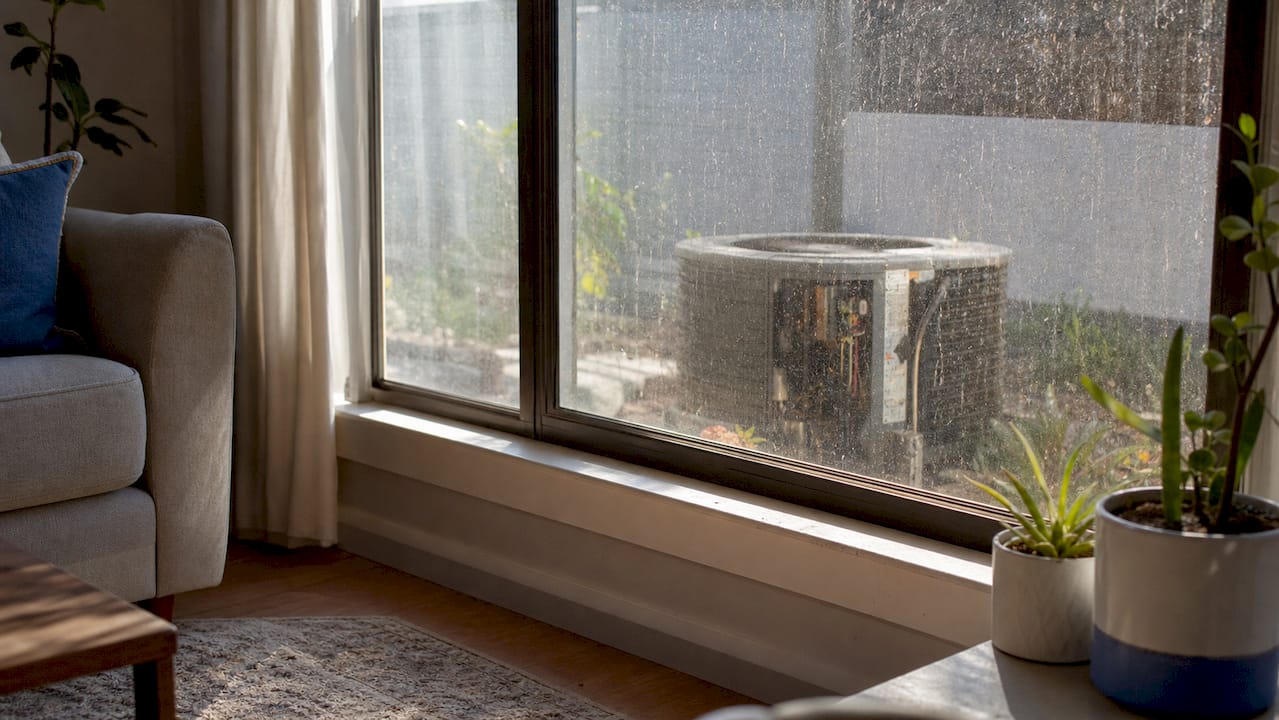
The seal side of the equation compounds this. When debris degrades weatherstripping, conditioned air escapes and unconditioned air infiltrates. Your system then works against the outdoor temperature rather than simply maintaining the indoor set point. Over a full heating or cooling season, that added runtime translates directly into higher energy bills and accelerated equipment wear.
Clean windows remove both stressors at once. The glass transmits light and solar heat as designed, and properly maintained seals keep conditioned air where it belongs.
How energy savings from clean windows shift by season
The benefit of clean windows is not uniform across the year. It shifts with the sun’s angle, outdoor temperature, and the type of energy your home uses most.
Winter is when passive solar gain matters most. Clean glass allows low-angle winter sunlight to penetrate deep into a room, warming floors and walls. That stored heat reduces how long your heating system runs each day. Coastal and high-pollution areas lose this benefit fastest because salt and soot accumulate quickly on exterior glass.
Summer flips the equation. Here, the goal is to minimize heat gain, not maximize it. Clean glass, combined with Low-E coatings, reflects infrared radiation back outdoors more effectively than dirty glass does. Dirty windows absorb that radiation and radiate it inward, raising the cooling load. Pairing clean glass with window insulation strategies and well-positioned shades gives you control over heat gain in both directions.
Spring and fall are transition seasons where natural light savings dominate. Days are long enough to light most rooms without artificial lighting, but only if the glass is clean enough to pass that light efficiently.
Key Takeaways
Clean windows reduce energy costs by preserving Low-E coating performance, maximizing natural light, and protecting seals that prevent HVAC-straining air leaks.
| Point | Details |
|---|---|
| Windows drive 25–30% of HVAC energy use | U.S. Department of Energy data makes window maintenance a direct energy cost lever. |
| Dirty glass degrades Low-E coatings | Grime prevents heat-reflective coatings from working, raising heating and cooling demand. |
| Clean twice yearly at minimum | Residential properties need at least one to two cleanings per year; coastal homes need more. |
| Seal integrity matters as much as glass clarity | Debris in tracks compresses weatherstripping, creating air leaks that run up energy bills. |
| Seasonal benefit shifts | Winter gains come from passive solar heat; summer gains come from better heat reflection. |
Ready to lower your energy bills with cleaner windows?

Broswindowcleaningoc serves homeowners and property managers across Orange County with professional window cleaning that goes beyond the glass. The team inspects seals and frames while cleaning, catching the small issues that quietly raise your utility bills before they become expensive repairs. Fully insured, punctual, and built around your schedule.
Before you book, it is worth reading through common window cleaning myths that lead homeowners to underestimate how much a clean window actually does for their home’s energy performance. The difference between a wiped pane and a properly cleaned one, with tracks cleared and seals checked, is where the real savings live.