
Pressure washing a pool deck is safe for most concrete, paver, and natural stone surfaces when you match pressure and nozzle to the material, but it’s the wrong tool for vinyl or fiberglass pool interiors and risky for delicate tile without testing first. The core rule: identify your surface before you pull the trigger, start with a wide nozzle at conservative pressure, run a test pass on a hidden spot, and keep spray directed away from the water and coping.
TL;DR:
- Pressure washing is safe for most concrete, pavers, and natural stone when using appropriate pressure levels and nozzles, but it can damage delicate surfaces like tile and soft stone.
- The ideal PSI range is 1,200 to 2,500, and a surface-cleaner attachment prevents uneven cleaning patterns on large flat areas.
- Always test a small, hidden area before full cleaning to avoid etching, discoloration, or grout damage, especially on stamped concrete and tile.
- Use containment barriers like plywood or a pool cover to prevent runoff and chemicals from entering the pool, and avoid pressure washing pool interiors entirely.
- Hire professionals for large, delicate, or heavily stained decks, as they provide surface-specific equipment, containment, and insured expertise.
Table of Contents
- What Pool Deck Material Do You Have, and How Does That Change Your Approach?
- What Tools and Settings Do You Need for Pool Deck Pressure Washing?
- How Do You Pressure Wash a Pool Deck Step by Step?
- How Do You Keep Runoff and Chemicals Out of the Pool?
- When Should You Hire a Pro Instead of Doing It Yourself?
- How Often Should You Pressure Wash a Pool Deck, and What Does It Cost?
- What’s the One Rule That Actually Matters Here?
- Get Your Pool Deck Professionally Pressure Washed in Orange County
- Sources
- FAQ
What Pool Deck Material Do You Have, and How Does That Change Your Approach?
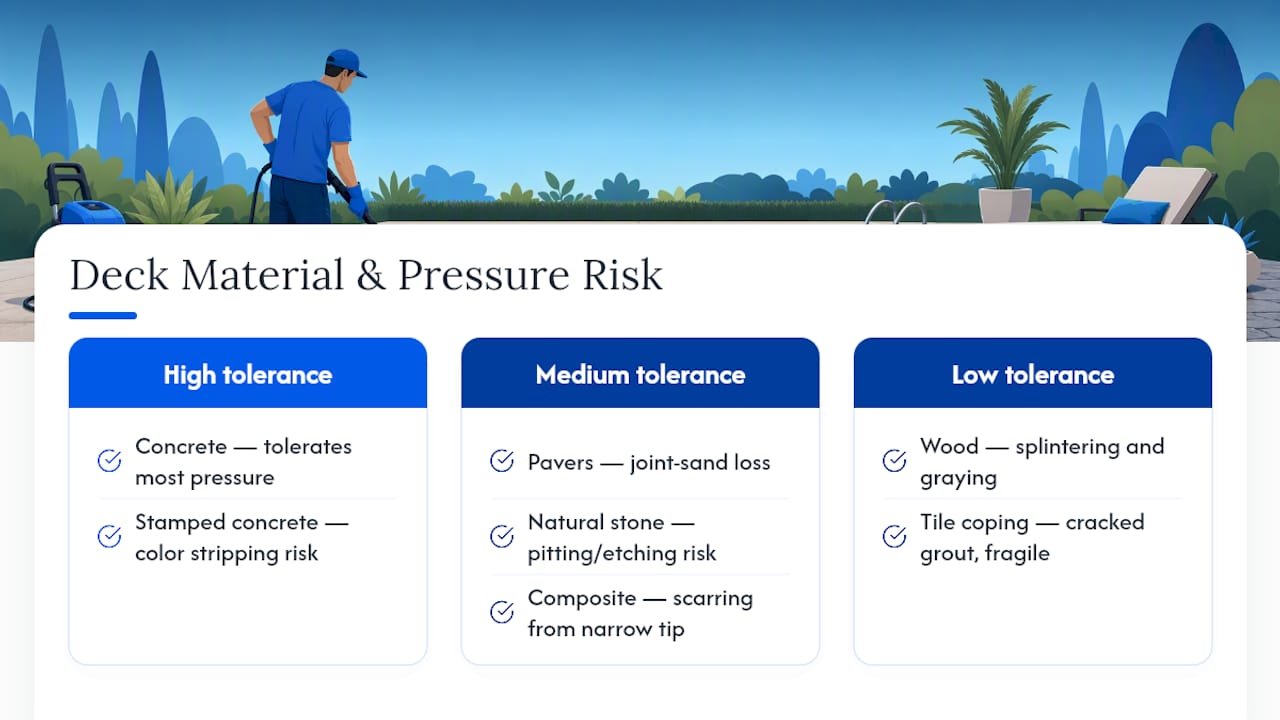
Concrete, pavers, natural stone, wood, composite, and tile coping each react differently to high pressure, so the first real step is walking your deck and identifying what you’re actually working with.
Broom-finished or exposed-aggregate concrete tolerates the most pressure and rarely shows damage from a moderate wash. Stamped or colored concrete is another story. The color layer and sealant sit on the surface, and aggressive pressure strips it, leaving pale, blotchy patches that no amount of rinsing fixes.
Pavers hide sand between the joints, and blasting straight down at high pressure hollows that sand out fast, leading to shifting and settling within a season. Natural stone like travertine or flagstone can pit or etch if you use too narrow a nozzle too close to the surface, especially on softer limestone-based stones.
Wood decking splinters and grays when pressure washed at settings meant for concrete. Composite resists rot but scars easily under a zero-degree tip. Tile and coping around the pool edge are usually the most fragile element on the whole deck. Cracked grout, hairline fractures, or loose tiles are signs to back way off or skip pressure washing there entirely.
Whatever the surface, a low-pressure test pass in an inconspicuous corner tells you more in thirty seconds than any guide can. If you’re unsure about a stamped finish, composite deck cleaning guidance covers surface-specific settings in more depth, and if pavers are your concern, there’s a dedicated breakdown on avoiding joint sand loss.
What Tools and Settings Do You Need for Pool Deck Pressure Washing?
A gas-powered washer generates more sustained pressure for large concrete decks, while an electric unit is quieter, lighter, and plenty capable for smaller patios and paver walkways. What matters more than fuel type is having a machine with adjustable pressure and interchangeable nozzles, since one setting will never work across an entire pool deck.
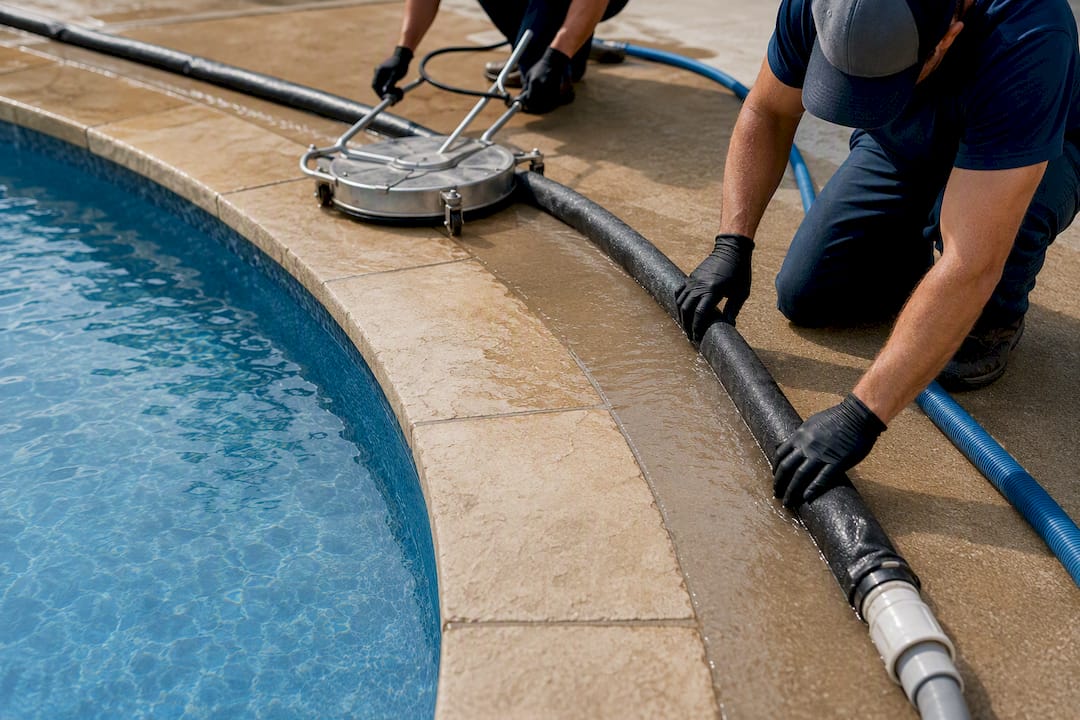
A surface-cleaner attachment, the round spinning head you see on gas units at rental counters, is worth adding to your cart. It distributes pressure evenly across concrete and pavers, preventing the zebra-stripe patterns that show up when you drag a wand nozzle unevenly across a wide slab.
Before you start, gather:
- A pressure washer with adjustable PSI and interchangeable nozzles
- A 25° and 40° nozzle tip, plus a surface-cleaner attachment for large flat areas
- Safety glasses, closed-toe non-slip shoes, and gloves
- Plywood sheets or a pool skimmer cover, sandbags, and a tarp for containment
- A biodegradable, phosphate-free deck cleaner (avoid straight bleach near landscaping and pool equipment)
This range tracks with the general guidance most pool professionals cite, roughly 1,200 to 2,500 PSI depending on material, and it’s a ceiling to work down from, not a target to hit immediately.
How Do You Pressure Wash a Pool Deck Step by Step?
Once you’ve matched settings to your material, the actual washing follows a predictable sequence.
- Clear and prep the area. Move furniture, planters, and grills off the deck. Sweep loose debris, cover pool skimmers and equipment, and pre-wet nearby plants so overspray and runoff don’t scorch them.
- Pre-treat algae and mildew. Apply a deck cleaner or a properly diluted sodium hypochlorite solution to green or black algae patches and let it sit for the dwell time on the label, usually 10 to 15 minutes. Stubborn black algae often needs a stiff-bristle brush before you ever turn on the machine.
- Wash in overlapping passes. Start at the point farthest from the pool, typically near the house, and work toward the water. Keep the nozzle roughly 12 to 18 inches from the surface, overlap each pass by a few inches, and switch to your wide fan tip near any tile or coping.
- Rinse and redirect. Rinse from the same direction you washed, pushing water and debris away from the pool, not into it.
- Inspect while wet. Look for etching, color loss, or lifted grout before the surface dries, since damage is easier to spot then and easier to address early.
Pro Tip: Run your test patch with the pool cover or skimmer basket already in place. If overspray drifts that direction during the test, you’ll know before you commit to the whole deck.
How Do You Keep Runoff and Chemicals Out of the Pool?
Water and cleaning solution running downhill toward your pool is the single biggest risk in this whole project, and it’s entirely preventable with a little setup.
- Angle your spray pattern so runoff flows toward the lawn or a drain, never toward the water’s edge.
- Use plywood sheets, a pool cover, or sandbags along the coping line as a physical barrier during washing.
- Skip pressure washing pool interiors altogether. Vinyl liners, fiberglass shells, and plaster finishes were never engineered for direct high-pressure contact, and manufacturers generally recommend gentler cleaning methods or professional service for those surfaces instead. Draining the pool to “get at” the interior usually creates more problems, from liner shrinkage to structural shifting, than it solves.
- Choose a biodegradable, phosphate-free detergent rather than straight bleach, both to protect surrounding landscaping and to limit disruption to your pool’s chemical balance if any spray drifts.
- If you see calcium scale, deep-set stains, or entrenched black algae that a wash doesn’t touch, that’s usually a chemistry problem, not a pressure problem. More PSI won’t fix it, and a stronger acid wash or professional treatment will.
When Should You Hire a Pro Instead of Doing It Yourself?
Certain jobs call for a professional, full stop. Cracked or loose tile, extensive black algae that’s colonized deep into porous stone, decks larger than a typical residential patio, or tight access around water features are all situations where a DIY mistake gets expensive fast.
Professionals bring surface-cleaner attachments sized for the job, containment gear to keep runoff and chemicals away from the water, and enough hands-on experience to read a surface before committing to a pressure setting. A trained crew also carries insurance, which matters if something does go wrong near an in-ground structure.
Bros Window Cleaning’s pressure washing guide and safe pressure-washing steps walk through the same material-first approach outlined here, applied by a crew that does it daily.
How Often Should You Pressure Wash a Pool Deck, and What Does It Cost?
Most decks need a wash once a year, twice if you’re in a shaded, humid yard where algae grows fast. Cost scales with square footage, surface type, stain severity, and how much containment the job needs; expect stamped concrete or extensive coping work to run higher than a simple paver rinse. DIY saves labor cost but shifts all the risk of etching or joint damage onto you.
What’s the One Rule That Actually Matters Here?
Every pool deck failure I’ve seen traced back to the same mistake: someone skipped the test patch and went straight to the highest setting their machine offered. Preservation beats speed every time. If your surface has any tile, loose grout, or a finish you can’t identify with confidence, that’s the moment to call a professional rather than find out the hard way.
— nolan
Get Your Pool Deck Professionally Pressure Washed in Orange County
Professional pressure washing services bring surface-cleaner attachments, containment gear, and material-specific techniques, so you don’t have to buy equipment for a job you’ll do once a year. That matters most on stamped concrete, tile coping, and paver joints, exactly the surfaces where a DIY mistake gets permanent fast.

Fully insured technicians handle pressure washing alongside related exterior cleaning services for homes and businesses, treating pool decks with the same containment and runoff protection covered above. If your deck has stubborn algae, coping you’re nervous about, or simply more square footage than you want to spend a Saturday on, request a quote through the Bros Window Cleaning site and get a punctual, insured crew on the schedule.
FAQ
Can You Pressure Wash a Pool Deck?
Yes, for concrete, pavers, and most natural stone, pressure washing is one of the most effective cleaning methods available when you match PSI and nozzle to the material. Skip it on the pool’s vinyl or fiberglass interior and go easy or skip entirely on cracked tile and grout.
What Is the Average Cost to Pressure Wash a Pool Deck?
Cost depends heavily on square footage, surface type, and how stained or algae covered the deck is, with stamped concrete and extensive coping work typically costing more than a straightforward paver rinse. Current pricing for professional pressure washing is available directly through Bros Window Cleaning.
What Is the Best Way to Clean a Pool Deck?
Test an inconspicuous spot first, then pre-treat algae or mildew with a deck cleaner and let it sit before rinsing. Wash in overlapping passes from the house toward the pool, keeping the nozzle about 12 to 18 inches from the surface, and use a surface-cleaner attachment on large flat areas for the most even result.
Is It a Good Idea to Pressure Wash a Deck?
It’s a good idea for durable hardscape like broom-finish concrete, pavers, and most stone, since pressure washing removes surface algae, grime, and mildew efficiently. It’s a poor idea on delicate stamped finishes, loose tile, or wood without dialing pressure down well below the settings you’d use on plain concrete.