
The single most important step you can take right now: install an ASTM F2090-compliant window guard or restrictor on any operable window where a fall risk exists, and schedule a professional risk assessment. CPSC guidance is clear that guards must include a quick-release mechanism so adults can exit in an emergency. OSHA sets fall-protection triggers for open windows based on work type and height. Broswindowcleaningoc provides documented safety inspections alongside exterior cleaning, so property owners get both hazard identification and a clean building in one visit.
Immediate office window safety tips at a glance:
- Lock or limit every operable window to a maximum 4-inch opening using a restrictor or window stop
- Move all furniture, shelving, and equipment away from window sills to eliminate climbing hazards
- Post visible warnings before any overhead or exterior window-cleaning work begins
- Replace any non-releasable security bar with an adult-operable quick-release guard
- Call a professional for any window above 4 ft from the floor that shows loose frames, cracked glazing, or corroded hardware
Pro Tip: Never install a fixed security bar as a fall-prevention guard. Any guard must be adult-operable from the inside without a key or tool, per ASTM F2090 and CPSC guidance. A bar that cannot be released from inside is a fire-egress violation.
Table of Contents
- What office window safety tips should you act on today?
- Why window screens are not a safety barrier
- How do you choose and vet a professional window safety inspector?
- How does regular cleaning reduce window safety risks?
- How do you balance fall protection with emergency egress?
- Key Takeaways
- What a window-cleaning pro actually sees on commercial jobs
- Broswindowcleaningoc keeps your office windows safe and documented
What office window safety tips should you act on today?
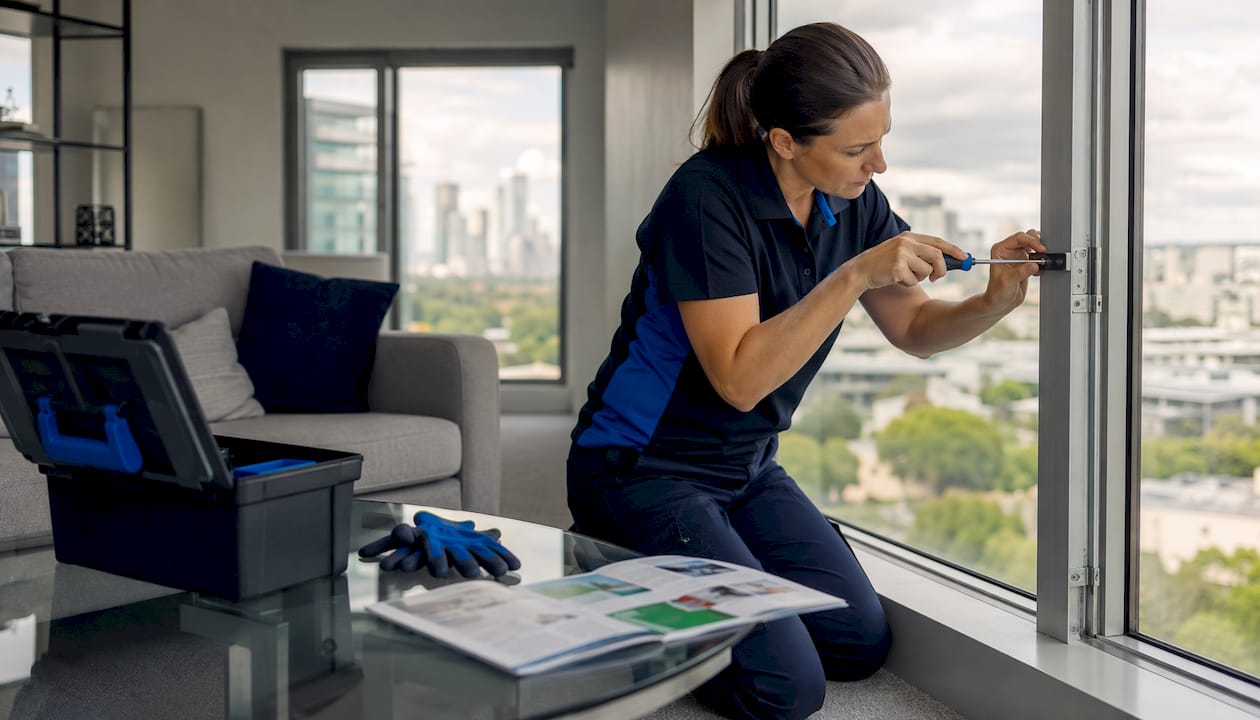
Loose frames, low sills with fall potential, and broken locks are the three highest-risk items in any office. Start there. The table below lets you triage fast.
| Issue | Immediate action | Risk level | When to hire a pro |
|---|---|---|---|
| Broken or missing window lock | Secure sash with a removable restraint; do not leave unattended | High | If the frame is damaged or the lock cannot be replaced by staff |
| Low sill near workstations | Move furniture away; install a restrictor limiting opening to 4 inches | High | If the sill shows structural cracks or the frame is loose |
| Cracked or loose glazing | Tape as a temporary measure; restrict access to the area | Critical | Immediately — cracked glazing is a falling-debris hazard |
| Corroded or stiff hardware | Lubricate with a dry silicone spray | Medium | If hardware does not operate freely after lubrication |
| No window guard on upper floors | Install a compliant restrictor this week | High | If the building is above two stories or anchor points are unclear |
Staged timeline:
- Do now: Lock all operable windows; move climbable furniture away from sills
- This week: Install window opening limiters or restrictors on high-risk openings
- Within 30 days: Schedule a professional inspection if you see structural wear, glazing damage, or corroded anchors
A competent-person risk assessment is a legal or best-practice requirement in most workplace regulatory frameworks. DIY fixes are appropriate for minor hardware issues. Anything involving structural degradation, glazing replacement, or work above OSHA thresholds requires a qualified professional.
Statistic callout: Studies show that a significant share of fall injuries involve window falls, and most of these can be prevented with basic precautions like furniture placement and opening restrictors.
Why window screens are not a safety barrier
Window screens are designed for one job: keeping insects out. They are not fall-protection devices, and treating them as one is the most dangerous misconception in office and residential window safety.
The NSC confirms that screens can pop out when pushed, giving occupants a false sense of security. A screen offers no meaningful resistance under load. When someone leans or pushes against a screened opening, the screen frame releases from the window track and the person follows it.
Key facts about screens and fall risk:
- Screens are not rated for any load-bearing or fall-prevention purpose
- They can dislodge under pressure as low as a light lean
- CPSC guidance explicitly states screens should not substitute for window guards
- The four-inch rule applies regardless of whether a screen is present: windows above the first floor should open only a small distance to reduce fall risk without a compliant guard
The correct alternative is a guard or restrictor that meets ASTM F2090, paired with an adult-operable quick-release mechanism. Permanent guards without egress release can violate fire-safety codes. Non-releasable security bars are a different product category entirely and are not appropriate for occupied office spaces.
How do you choose and vet a professional window safety inspector?
Hire a professional for any work that exposes staff or contractors to a drop of 4 ft or more (general industry, per 29 CFR 1910.28) or 6 ft in construction contexts. Visible structural deterioration, unclear anchorage, or glazing damage also trigger the need for a pro regardless of height.
Documents to request before hiring:
- Proof of general liability insurance and workers’ compensation coverage
- A written risk assessment covering the specific windows and access method
- Anchor inspection certificates if rope access or suspended scaffolding is used
- References for comparable commercial jobs at similar building heights
A solid inspection report covers hazard findings, recommended controls (guardrails, restrictors, or certified personal fall-arrest systems), an estimated timeline for remediation, and confirmation that ASTM F2090, IBC, and OSHA references were checked. If a vendor cannot produce that documentation, move on.
“The biggest thing is supervision and layers of protection. Keep furniture away from the window. Use locks. Remember the four-inch rule.” — Amy Frias, Safe Kids Orange County coordinator
Pro Tip: Ask any installer to confirm the specific release mechanism on any guard they propose and to show written proof of ASTM F2090 or equivalent compliance. If they cannot, the product is likely a non-releasable security bar, not a compliant guard.
Scheduling is straightforward for most commercial properties. A basic inspection of a single-story or two-story office typically takes a few hours. Minor repairs or restrictor installations on standard windows can often be completed the same day. Guard installations on upper floors or complex glazing systems may require a separate contractor visit after the inspection report is delivered.
How does regular cleaning reduce window safety risks?
Professional cleaning is not just cosmetic. When a trained technician works across your exterior glass, they are in a position to spot mechanical wear, seal failure, and loose glazing that a facilities manager walking the interior will miss entirely.
Building authorities recommend routine inspections to catch frame and anchorage degradation before it becomes a falling-debris or fall hazard. Scheduling cleaning and inspection together is the most cost-effective way to stay ahead of those failures.
What a professional should check or perform during a service visit:
- Sash and track lubrication to keep hardware operating freely
- Frame anchorage checks for movement or corrosion
- Seal and glazing inspection for cracks, delamination, or moisture ingress
- Hardware and lock function tests
- Anchor point inspection if rope access or a suspended platform is used
Ask for written records after every visit. Documented inspection notes protect facility managers from liability and create a repair timeline that is easy to hand off to a contractor. Broswindowcleaningoc notes and reports loose frames, failed seals, or corroded anchors during exterior glass cleaning visits, which means you get a safety snapshot every time the windows are cleaned.
For glazing installed more than 4 meters above grade, building standards require that cleaning access does not expose workers to fall risk. That means load-bearing platforms, designed-in safe reach, or a professional with certified fall-arrest equipment. This is not a task for a ladder and a squeegee.
How do you balance fall protection with emergency egress?
Any safety device on a window must do two things: prevent falls and allow emergency exit. These requirements are not in conflict, but they do demand the right product.
OSHA thresholds set the baseline: 4 ft for general industry, 6 ft for construction. At or above those heights, guardrails, fall-arrest systems, or compliant restrictors are required for any work near open window openings. Below those thresholds, restrictors and opening limiters are still best practice.
For installed guards, the rule is simple: the release must be operable by an adult from the inside without a key or tool. ASTM F2090-compliant devices meet this standard. Non-releasable bars do not, and they can block emergency egress in a fire. Check with your local Authority Having Jurisdiction (AHJ) for any additional IBC requirements that apply to your building type and occupancy.
Never use an insect screen as a substitute for any of these controls. The CPSC is explicit: screens are not fall-prevention devices. Guardrails, certified restrictors, or personal fall-arrest systems are the only compliant options.
Key Takeaways
Effective office window safety requires immediate physical controls, a professional risk assessment, and scheduled maintenance to catch deterioration before it becomes a hazard.
| Point | Details |
|---|---|
| Screens are not safety devices | Window screens can pop out under load; use ASTM F2090-compliant guards with quick-release instead. |
| OSHA thresholds trigger pro controls | Fall protection is required at 4 ft (general industry) or 6 ft (construction) near open window openings. |
| Furniture placement matters | Moving climbable furniture away from sills is a free, immediate risk reduction that requires no tools. |
| Document every inspection | Written inspection records protect facility managers from liability and create a clear repair timeline. |
| Broswindowcleaningoc for inspections | Broswindowcleaningoc combines documented safety observations with professional exterior cleaning for commercial properties in Orange County. |
What a window-cleaning pro actually sees on commercial jobs
The most overlooked hazard on commercial office windows is not a broken lock. It is corroded sash hardware that still appears to function until it does not. A window that opens and closes smoothly in January can have a failed latch mechanism by summer, and nobody notices until someone leans on the frame.
Two other patterns show up repeatedly on commercial jobs. First, office furniture creep: desks, filing cabinets, and storage units migrate toward windows over time as space gets reorganized. Nobody flags it as a safety issue because it happens gradually. Second, anchor points on upper-floor windows that were certified at installation but never re-inspected. Hardware degrades. A rope-access anchor that passed inspection five years ago may not pass today.
The practical fix for both is the same: pair your exterior cleaning schedule with a documented walk-through. When a technician is already working the glass from the outside, they have a direct line of sight to frame condition, glazing integrity, and hardware function that an interior inspection simply cannot replicate. Small problems found during a routine clean cost a fraction of what they cost after a failure. For commercial property owners thinking about office layout and interior arrangement near windows, the principle is the same: distance from the glass is the simplest protection.
Broswindowcleaningoc keeps your office windows safe and documented
Broswindowcleaningoc delivers more than clean glass. Every commercial service visit in Orange County includes a documented safety observation, so property owners and facility managers leave with written notes on frame condition, glazing integrity, hardware function, and any anchor concerns spotted during access. That report is yours to keep, share with a repair contractor, or file for liability purposes.
The company is fully insured, has over five years of commercial experience, and handles everything from standard office windows to complex curtain wall systems. Scheduling is straightforward: most Orange County commercial properties can be booked within the week. Before you hire anyone for window safety work, read through what quality window cleaners should actually provide so you know exactly what to ask for. Ready to schedule a safety-focused exterior clean? Contact Broswindowcleaningoc at broswindowcleaningoc.com to request a quote.
Authoritative sources and further reading
These are the primary regulatory and industry sources cited in this article. Facility managers can use them to verify rules, prepare for an inspection, or dig into specific standards.
Regulatory sources (CPSC / OSHA / building codes):
- CPSC — Preventing Window Falls — CPSC guidance on window fall prevention and ASTM F2090 compliance
- CPSC — Window Safety — General CPSC window safety resource
- CPSC — National Window Safety Week release — Quick-release and ASTM F2090 requirements
- OSHA fall protection thresholds — WorkSafe GEAR summary — 29 CFR 1910.28 and 29 CFR 1926.501 explained
- Ontario Regulation 859 — ontario.ca — Suspended scaffold, fall arrest, and employer duties for window cleaning (Canadian regulation, cited for comparative best-practice reference)
Practical industry guidance:
- NSC — Window Safety — Screens are not fall-protection devices
- BCA — Periodic Building Inspections: Windows Safety — Routine inspection guidance for glazing and frame deterioration
- Jackloc — Office Window Regulations — Competent-person risk assessment requirements
- Broswindowcleaningoc — Exterior Glass Cleaning for Offices — Practical guide for commercial office glass cleaning and safety observations