
Gutter guards cut down on debris but do not eliminate cleaning. The right first move is a quick visual check followed by a hose test: run water from the roofline down to the downspout and watch where it backs up. Most guarded systems still need attention twice a year, more often under pine trees or heavy roof grit.
TL;DR:
- Most gutter guard systems still require cleaning twice a year, especially under pine trees or when roof grit accumulates.
- Use a visual inspection and hose test to identify clogs or displaced panels rather than relying solely on physical cleaning.
- Avoid pressure washers and metal scrapers, as they can damage mesh or thin guard panels, with the safest tools being soft brushes and gentle rinses.
- Different guard types need specific cleaning methods: micro-mesh guards require gentle brushing and rinsing; reverse-curve guards often need professional removal.
- Professional inspection and cleaning can catch structural issues, seal leaks, and clear hidden sediment, often preventing more costly water damage.
Table of Contents
- How Do You Clean Gutters With Guards Installed?
- What Tools Work Best on Guarded Gutters?
- How Do You Clean Different Types of Gutter Guards?
- How Often Should You Clean Gutters With Guards?
- Why Are Your Guarded Gutters Still Overflowing?
- What Do Professional Cleaners Check That Homeowners Miss?
- Get Your Gutters Professionally Inspected and Cleaned
- Sources
How Do You Clean Gutters With Guards Installed?
Cleaning a guarded gutter starts with a five-minute inspection, not a ladder climb. Walk the perimeter of the house and look for water marks below the fascia, sagging panels, or debris piled on top of the guard surface instead of falling off it. Check where each downspout discharges. A weak trickle or no flow at all usually means something is blocked below the guard, not on top of it.
Pre-clean checklist:
- Look for overflow stains on siding or fascia boards
- Scan for visible debris sitting on top of the guard mesh or screen
- Check for displaced, warped, or lifted guard panels
- Confirm water exits cleanly at each downspout outlet
Safety essentials before you touch a ladder:
- Use a ladder stabilizer that hooks over the gutter edge, not just the roofline
- Never work alone; have a spotter hold the base and hand up tools
- Wear cut-resistant gloves and eye protection for debris and grit
- Choose an extension-pole tool or ground-level attachment whenever the job allows it
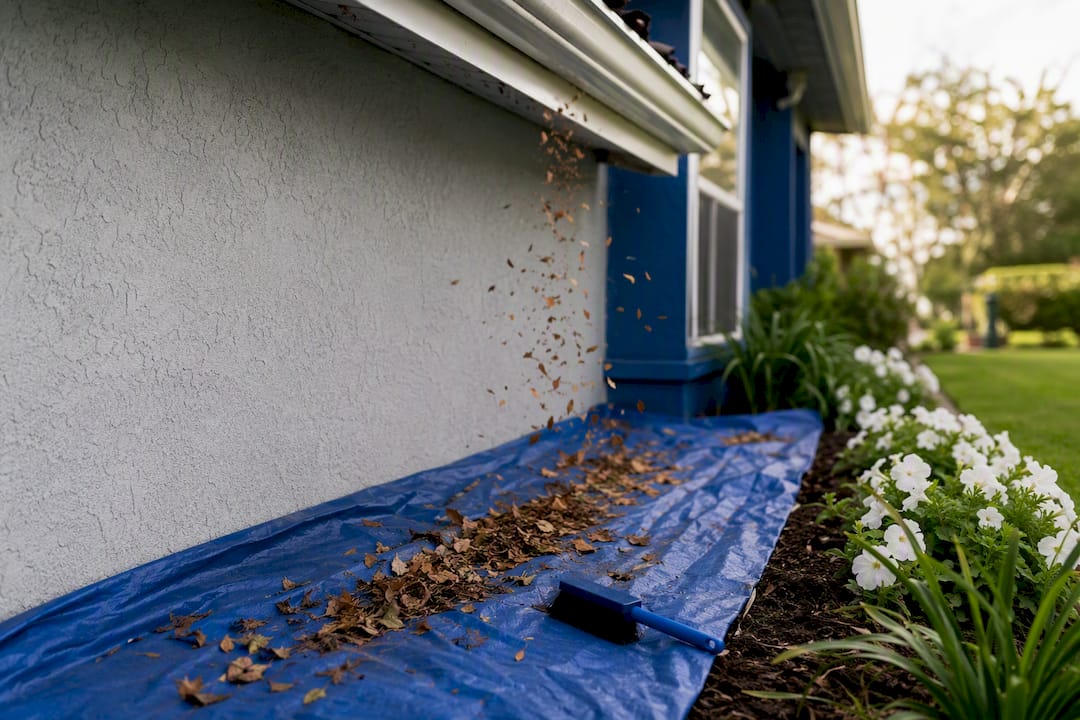
Supplies to gather first: work gloves, a tarp for debris, a bucket, a garden hose with a nozzle, a soft-bristle brush, and a small plastic gutter scoop for pockets of trapped material.
Pro Tip: Lay the tarp along the base of the house before you start. Catching debris as it falls saves you a second cleanup pass through the flower beds later.
What Tools Work Best on Guarded Gutters?
The tool that works depends entirely on what your guard is made of, and using the wrong one is how homeowners crack mesh or dent thin metal panels.
- Soft-bristle brush: safe for micro-mesh and screen guards; clears surface film and light grit without tearing the mesh
- Garden hose with a spray nozzle: flushes sediment through mesh pores and confirms flow into the downspout
- Plastic gutter scoop: pulls out clumped leaves or needles from screen and reverse-curve systems where debris collects at the lip
- Extension-pole brush: lets you clean most guard types from the ground, which is the safer route on two-story homes
- Low-powered leaf blower: useful for dry debris sitting loose on brush or foam inserts
Avoid pressure washers on mesh or thin slotted guards. The force can tear fine mesh or warp lightweight panels, and metal scrapers do the same damage in a different way by gouging the guard surface. Skip both, even if they seem faster.
How Do You Clean Different Types of Gutter Guards?
Every guard style behaves a little differently once debris starts building up, so the cleaning method has to match the design.
-
Micro-mesh guards. Brush the surface gently to loosen grit, then rinse with a low-pressure hose stream. Micro-mesh performs best against fine debris but sediment can settle underneath over time, so lift a section if your model allows it and check for buildup once a year.
-
Screen or slotted guards. Sweep loose debris off the top or use a leaf blower on dry days. If the panels are removable, pull a few sections during your fall cleaning to clear anything trapped between the screen and the gutter channel.
-
Reverse-curve guards. Clear the entry lip where water is meant to curl into the channel. These systems mount along the roofline and often sit higher than a standard extension ladder can safely reach. If yours is mounted above a second story, that is a job worth handing to a professional.
-
Brush and foam inserts. Pull the insert out, shake or rinse it clean, and let it dry before reinserting. Brush and foam typically need three to four cleanings a year because they trap fine particles and moisture more than rigid guard styles do.
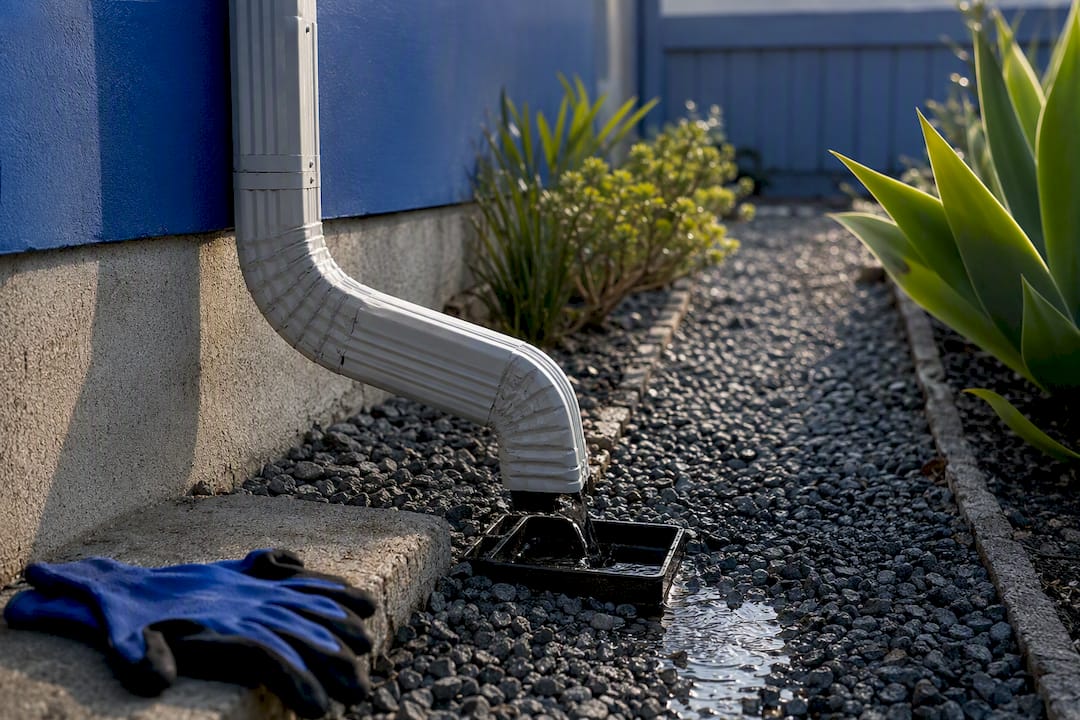
Flushing the downspout: once the gutter channel itself is clear, run the hose at full flow into the downspout opening. Watch the outlet at the bottom. If water backs up or trickles out slowly, feed a plumber’s snake down from the top to break up the clog, then flush again to confirm a clean, steady discharge.
Pro Tip: A downspout that gurgles or drains slowly even after a full flush often has a bend or offset holding standing water. Note it now; it’s a five-minute fix for a pro but a recurring headache if you leave it.
How Often Should You Clean Gutters With Guards?
A twice-yearly rhythm covers most homes: once in spring after pollen and seed pods drop, and once in fall after leaves come down. That baseline holds up well for 43% of guard owners who report they rarely have to clean their gutters at all once guards are properly installed.
- Standard homes: inspect and clean spring and fall
- Heavy tree cover or pine needles: move to a quarterly check, since needles slip through gaps that catch broader leaves
- After major storms: do a quick check regardless of season; wind-driven debris piles up fast
- Pre-winter: clear everything before the first freeze to cut down on ice-dam risk
- Post-winter: inspect for panels shifted by snow load or ice buildup before spring growth starts
Why Are Your Guarded Gutters Still Overflowing?
Overflow with guards installed almost always points to one of three things: a clog that formed before the water reached the guard, a panel that has shifted out of position, or a downspout blockage further down the line. Moss or dark staining on the fascia usually means water has been sitting somewhere it shouldn’t.
- Water spilling over the front edge: check for debris piled on top of the guard rather than inside the channel
- Slow or no flow at the downspout: flush again and snake if the clog persists
- Visible gaps between the guard and the gutter lip: reposition or refasten the panel
- Moss, algae, or dark streaks on siding: signals standing water; inspect gutter pitch, not just clogs
Call a professional when clogs keep coming back within weeks, when you spot structural sagging or separated seams, when the job requires second-story or steep-roof access, or when guard removal risks voiding a manufacturer warranty. A professional inspection can also catch pitch and hanger problems that no amount of cleaning will fix.
What Do Professional Cleaners Check That Homeowners Miss?
After years of climbing ladders across Orange County rooftops, the pattern is consistent: most “clogged gutter” calls turn out to be pitch, hanger, or seam problems, not debris. Guards get blamed for water damage that a loose hanger or a sunken section actually caused.
A pro-level check goes past the surface. We look at hanger spacing, confirm the gutter still slopes correctly toward the downspout, and check that end caps and seams are sealed tight. On guarded systems specifically, we check what’s happening underneath the guard, since sediment and grit build up there quietly for years before anyone notices. A scheduled service catches that early and keeps a warranty intact, which matters more with mesh systems than most homeowners realize.
— nolan
Get Your Gutters Professionally Inspected and Cleaned
Broswindowcleaningoc gives Orange County homeowners a faster, safer alternative to wrestling with a ladder every fall: a fully insured crew that already knows the difference between a micro-mesh clog and a downspout clog before they climb up.

Every visit includes a full inspection, guard cleaning matched to your guard type, a downspout flush, and a check for the pitch and hanger issues that cause repeat overflow. Punctual scheduling and safety-first work mean you’re not the one balancing on a ladder over a flower bed. If your gutters are backing up despite the guards, or it’s just been longer than six months since the last check, request a quote through our gutter cleaning service page and we’ll walk you through what a visit covers before you book.
Sources
- Long-Term Maintenance for Gutter Guards: A Complete Guide — This Old House
- How to clean gutter guards — Home Essentials Guide
- How to clean gutters with guards — LeafFilter blog
- How to unclog and clean downspouts — Today’s Homeowner