
Choosing the right commercial cleaning services in Orange County is harder than it looks. With dozens of service types, pricing models, and vendor promises competing for your attention, it’s easy to either overpay for things you don’t need or cut corners that cost you later. Your property’s appearance directly affects tenant satisfaction, foot traffic, and long-term asset value. This guide walks you through the main service types, how their methods differ, what drives cost, and exactly how to vet a cleaning partner you can trust for the long haul.
Table of Contents
- Core types of commercial cleaning services
- Comparing specialized cleaning services: Uses and methods
- What impacts the cost and value of cleaning services?
- How to choose the best commercial cleaning partner
- Why combining services and choosing quality wins every time
- Get reliable commercial cleaning in Orange County
- Frequently asked questions
Key Takeaways
| Point | Details |
|---|---|
| Know your options | Understanding the full menu of cleaning service types ensures you get the right solutions for your property. |
| Compare by specialty | Different spaces, surfaces, and industries require distinct methods and expertise for best results. |
| Price reflects value | Rates vary by service and provider quality—reliable vendors invest in staff and oversight, not just low bids. |
| Choose for reliability | Low staff turnover, real SOPs, and detailed proposals signify a cleaning partner you can trust. |
| Bundled services win | Combining service types and prioritizing integrated vendors simplifies management and boosts overall cleanliness. |
Core types of commercial cleaning services
Not all commercial cleaning is the same. A retail showroom has completely different needs than a medical clinic, and a restaurant kitchen demands a different approach than an office lobby. Understanding service categories helps you build a cleaning program that actually fits your property instead of settling for a generic one-size package that misses critical areas.
The benefits of professional cleaning teams go well beyond appearances. Regular, specialized cleaning protects surfaces, extends the life of flooring and fixtures, and reduces liability from slip hazards or sanitation failures. When you mix and match the right service types, you cover every square foot with the right technique.
Common types of commercial cleaning services include:
- Office cleaning: Daily or weekly vacuuming, surface wiping, restroom sanitation, and trash removal for professional work environments
- Industrial facility cleaning: Heavy-duty cleaning for warehouses, manufacturing plants, and logistics centers with equipment-specific protocols
- Retail and showroom cleaning: High-visibility surface care that keeps product displays and customer-facing areas pristine
- Restaurant and hospitality cleaning: Grease removal, hood cleaning, food-safe sanitizing, and compliance with health codes
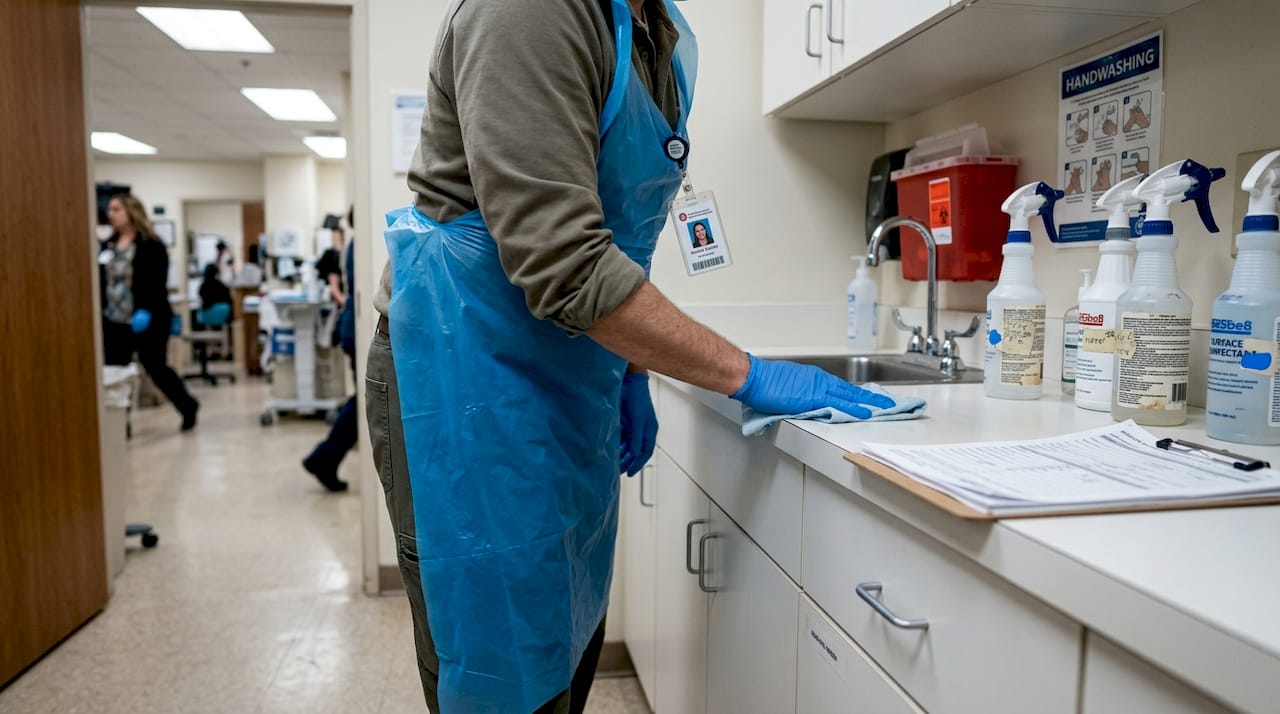
- Medical facility cleaning: Strict infection-control protocols, EPA-registered disinfectants, and color-coded microfiber systems
- Post-construction cleanup: Debris removal, dust clearance, and surface preparation after renovations or new builds
- Deep cleaning: Periodic intensive sessions that restore heavily soiled spaces to a baseline clean
- Floor cleaning: Sweeping, mopping, buffing, and extraction for all floor types
- Window and glass cleaning: Interior and exterior glass maintenance for window cleaning curb appeal
- Disinfection and sanitizing: Targeted pathogen reduction using approved chemical agents and electrostatic sprayers
- Move-in and move-out cleaning: Detailed top-to-bottom cleaning between occupancies to reset a space
- Day porter services: On-site staff who handle spills, restrooms, trash, and common areas throughout the business day
Day porter services are one of the most overlooked options for busy retail centers and multi-tenant office buildings. Having someone on-site to address issues in real time prevents small messes from becoming big problems.
Pro Tip: Instead of signing one broad contract, build a tiered program that combines a recurring base service (like office cleaning) with scheduled specialty services (like quarterly window or floor work). This layered approach gives you full coverage without paying for daily services where weekly is sufficient.
Comparing specialized cleaning services: Uses and methods
Now that we’ve listed the main services, here’s how their uses and specialized methods compare.
Office cleaning centers on consistent, low-disruption maintenance. Teams typically work after hours and follow a room-by-room checklist covering desks, floors, restrooms, and kitchens. The goal is a polished baseline every morning.
Floor cleaning is its own specialty with multiple methods. Floor cleaning methodologies involve daily sweeping, mopping, and vacuuming alongside periodic buffing, burnishing, deep carpet extraction, and grout scrubbing, with equipment ranging from walk-behind scrubbers to carpet extractors and industrial sweepers. High-traffic lobbies may need daily scrubbing while warehouse floors need quarterly deep work.
Window and glass cleaning requires equipment matched to building height and glass type. Ground-level window and glass cleaning uses water-fed poles and squeegees, while multi-story work may need lifts or rope access. Clean glass directly improves natural light and first impressions for any client-facing property.
Medical and food-service cleaning operate by stricter rules than standard commercial work. Healthcare and food environments use microfiber to prevent cross-contamination instead of traditional mop-and-bucket systems, enzymatic cleaners over bleach for certain soils, and green methods like electrically activated water that eliminate detergents entirely. These environments also require documented protocols and trained staff who understand dwell time requirements for disinfectants.
| Service type | Typical applications | Methods and equipment | Special considerations |
|---|---|---|---|
| Office cleaning | Corporate, coworking spaces | Microfiber cloths, backpack vacuums | After-hours scheduling |
| Floor cleaning | Warehouses, retail, hospitals | Scrubbers, extractors, burnishers | Floor coating compatibility |
| Window/glass cleaning | Storefronts, office towers | Water-fed poles, squeegees, lifts | Height and access requirements |
| Medical cleaning | Clinics, dental, labs | EPA disinfectants, color-coded tools | Infection control compliance |
| Post-construction | New builds, renovated spaces | HEPA vacuums, detail dusting | Debris and fine-dust removal |
Key method differences to know:
- Manual vs. mechanical: Manual cleaning reaches tight corners and delicate surfaces; mechanical methods cover large areas faster
- Green chemistry: Enzymatic cleaners and activated water reduce chemical load without sacrificing kill rates
- Disinfection technique: Electrostatic sprayers coat all surfaces evenly, outperforming manual wiping in high-touch areas
- Concrete care: Sealing and densifying concrete floors prevents dusting and oil absorption, extending surface life significantly
For exterior surfaces, commercial pressure washing pairs well with window cleaning to deliver a complete building-exterior refresh in one visit.
What impacts the cost and value of cleaning services?
Beyond service types and methods, cost and value drive your decision. Let’s dig into the numbers.
Commercial cleaning is usually priced per square foot per visit. West Coast office cleaning runs $0.12 to $0.22 per square foot in California and Orange County, while national averages for offices range from $0.09 to $0.17 and medical facilities run $0.14 to $0.29 per square foot.
| Service type | Typical rate per sq ft | Common facility types |
|---|---|---|
| Office cleaning | $0.09 to $0.17 | Corporate, small business |
| Medical cleaning | $0.14 to $0.29 | Clinics, dental, labs |
| Retail/showroom | $0.10 to $0.20 | Storefronts, malls |
| Industrial | $0.07 to $0.18 | Warehouses, manufacturing |
| Orange County offices | $0.12 to $0.22 | All commercial types |
Those numbers shift based on several real factors. ISSA 612 production benchmarks show that vacuuming covers 3,000 to 5,000 square feet per hour in open offices, damp mopping covers 3,000 to 4,000 square feet per hour, and each restroom fixture takes 3 to 5 minutes. These benchmarks determine how long a job takes, which directly affects what vendors charge.
Factors that impact your final cost:
- Cleaning frequency: Daily services cost less per visit than one-time or monthly deep cleans due to the smaller soil load each time
- Specialty requirements: Medical and food-safe protocols require certified staff, premium chemicals, and documentation, raising the rate
- Facility size and layout: Larger open-plan spaces clean faster per square foot than smaller, segmented ones with more fixtures and doors
- Turnover and access scheduling: High staff turnover at the vendor level raises retraining costs that often get passed to clients through inconsistent service
- Add-on specialty work: Floor buffing, window cleaning, and disinfection spraying carry separate rates beyond base janitorial fees
Investing in well-trained cleaning teams typically costs slightly more upfront but reduces complaints, call-backs, and property damage from improper chemical use.
Pro Tip: Ask vendors for their average employee tenure before signing. High staff turnover in cleaning companies directly translates to inconsistent results at your facility. A team that knows your building delivers noticeably better work than a rotating roster of unfamiliar workers.
How to choose the best commercial cleaning partner
Once you understand pricing, here’s how to pick the best partner for long-term value.
Choosing the wrong vendor wastes money and creates headaches. SOP best practices include facility-specific cleaning plans, proper chemical dilution and PPE use, top-to-bottom room sequencing, and quality inspections. Common failures are wrong chemical dilution, cleaning bottom-to-top (which recontaminates surfaces), and skipping disinfectant dwell time. A vendor who can’t explain their SOPs clearly is a red flag.
Here’s a five-step framework for vetting vendors:
- Verify facility-specific experience: A great office cleaner is not automatically qualified for medical or restaurant work. Ask for client references from the same facility type as yours.
- Review their SOPs and checklists: Ask to see a sample scope of work for a similar property. Vague or missing documentation signals poor quality control.
- Confirm insurance and licensing: Fully insured vendors protect you from liability when accidents happen on your property.
- Assess workforce practices: Ask about background checks, training programs, and average employee tenure. Low turnover is a performance predictor.
- Request a quality assurance plan: Real quality control includes in-person inspections, GPS check-in verification, and a clear escalation process for complaints.
Must-ask questions at the proposal stage:
- What’s your process for handling missed tasks or complaints?
- Do your staff receive ongoing training or just initial onboarding?
- Which cleaning chemicals do you use, and can you provide safety data sheets?
- How do you handle specialty surfaces like natural stone, coated concrete, or tinted glass?
A trusted window cleaning team should be able to answer all these questions without hesitation. If a vendor dodges specifics or leads with rock-bottom pricing as their only selling point, walk away.
Warning signs include ultra-low bids with no written scope, no checklist system, and inability to name the chemicals used in their process.
Why combining services and choosing quality wins every time
Here’s an industry-insider perspective on how to truly optimize your cleaning investment.
The commercial cleaning industry generates over $90 billion annually, yet it suffers from staff turnover rates of 100 to 200 percent per year. That means most cleaning companies replace their entire workforce once or twice a year. Think about what that does to consistency at your property. The cleaner who knows your building’s quirks, your preferred schedule, and your standards is gone within months, replaced by someone learning on the job at your expense.
Winning property managers in Orange County don’t just find the cheapest bid. They find vendors who invest in retention, use GPS check-ins, run background checks, and provide quality audits. They also maximize their property’s value by bundling window, floor, disinfection, and porter services under one accountable vendor rather than managing five separate contractors.
Combining services creates accountability. When one vendor owns everything, there are no gaps and no finger-pointing when something goes wrong. It also simplifies invoicing, scheduling, and compliance documentation for your team.
Pro Tip: Require GPS-verified check-ins and monthly quality audits in your contract. These two requirements alone separate serious vendors from those who coast on low bids.
Get reliable commercial cleaning in Orange County
Ready to take action? Here’s where Orange County property pros turn for trusted commercial cleaning.
Bros Window Cleaning serves commercial property managers and business owners throughout Orange County with professional exterior and specialty cleaning services built around reliability and quality results.
From commercial window cleaning services that restore curb appeal to commercial pressure washing solutions that remove years of grime from building exteriors, every service is backed by over five years of local experience and full insurance coverage. Explore the full list of Orange County cleaning services and get a quote tailored to your property type, square footage, and schedule. Your building deserves a cleaner that shows up, performs consistently, and treats your property as a priority.
Frequently asked questions
What is the average cost of commercial cleaning in Orange County?
Most offices pay $0.12 to $0.22 per square foot per visit in Orange County, depending on service type and frequency.
What’s the difference between routine and deep cleaning services?
Routine cleaning covers visible surfaces and regular upkeep, while deep cleaning reaches embedded soils and restores environments to a fresher condition. Green cleaning methods like chemical-free options reduce environmental impact but require compatible equipment to match traditional results.
How can I tell if a cleaning company is reliable?
Check for low staff turnover, background checks, GPS tracking, and regularly scheduled in-person inspections. The commercial cleaning industry sees turnover of 100 to 200 percent annually, so workforce stability is your clearest reliability signal.
What facility types need specialized cleaning services?
Medical, food service, industrial, and post-construction sites all need specific cleaning supplies, techniques, and safety protocols. Common service categories span everything from day porter work to post-construction cleanup, each with its own required expertise.
Do green cleaning methods work as well as traditional ones?
Yes, when matched with compatible equipment. Electrically activated water eliminates the need for detergents entirely and delivers strong cleaning results with a significantly lower environmental footprint.