
A mild soap wash combined with fabric-specific spot treatment removes most awning mildew without damaging color or coating. On solution-dyed acrylic like Sunbrella, a diluted bleach mix can be used on certain fabrics to handle stubborn spots; on vinyl or printed fabrics, skip bleach entirely and stick with soap and water. The one rule that matters most: rinse until the water runs clear, then air-dry completely before rolling or retracting the fabric. Skip that step and mildew comes right back.
Quick triage before you start:
- Clean it yourself now: dark speckled spots, a musty smell, or general grime buildup.
- Call a pro: staining that survives two honest cleaning attempts, mildew inside seams or the backing, or a large/high awning you can’t safely reach.
Key Takeaways
Removing awning mildew safely comes down to identifying the fabric first, cleaning soap first, and always drying fully before storage.
| Point | Details |
|---|---|
| Identify fabric before cleaning | Solution-dyed acrylic tolerates diluted bleach; vinyl and printed fabrics do not. |
| Soap first, bleach only when approved | Use mild dish soap for routine cleaning and reserve bleach mixes for manufacturer-approved fabrics. |
| Dry fully before retracting | Trapped moisture in a damp, rolled-up awning is the leading cause of mildew returning. |
| Test a hidden patch | Check for color change or coating damage before treating the whole panel. |
| Call Broswindowcleaningoc for stubborn cases | Bros Window Cleaning handles deep mildew, seam inspection, and drying when DIY treatment stalls after two attempts. |
Table of Contents
- What Causes Mildew to Grow on Awning Fabric?
- How Do You Identify Your Awning Fabric Before Cleaning?
- What Supplies Do You Need for Awning Mildew Removal?
- What’s the Step-by-Step Method for Cleaning Awning Mildew?
- How Do You Treat Mildew Differently by Fabric Type?
- How Do You Rinse, Dry, and Store an Awning to Prevent Mildew?
- What Safety and Warranty Mistakes Should You Avoid?
- When Should You Call a Professional Instead of Cleaning It Yourself?
- A Practitioner’s Note on Awning Mildew
- Let Bros Window Cleaning Handle the Stubborn Cases
- Sources
What Causes Mildew to Grow on Awning Fabric?
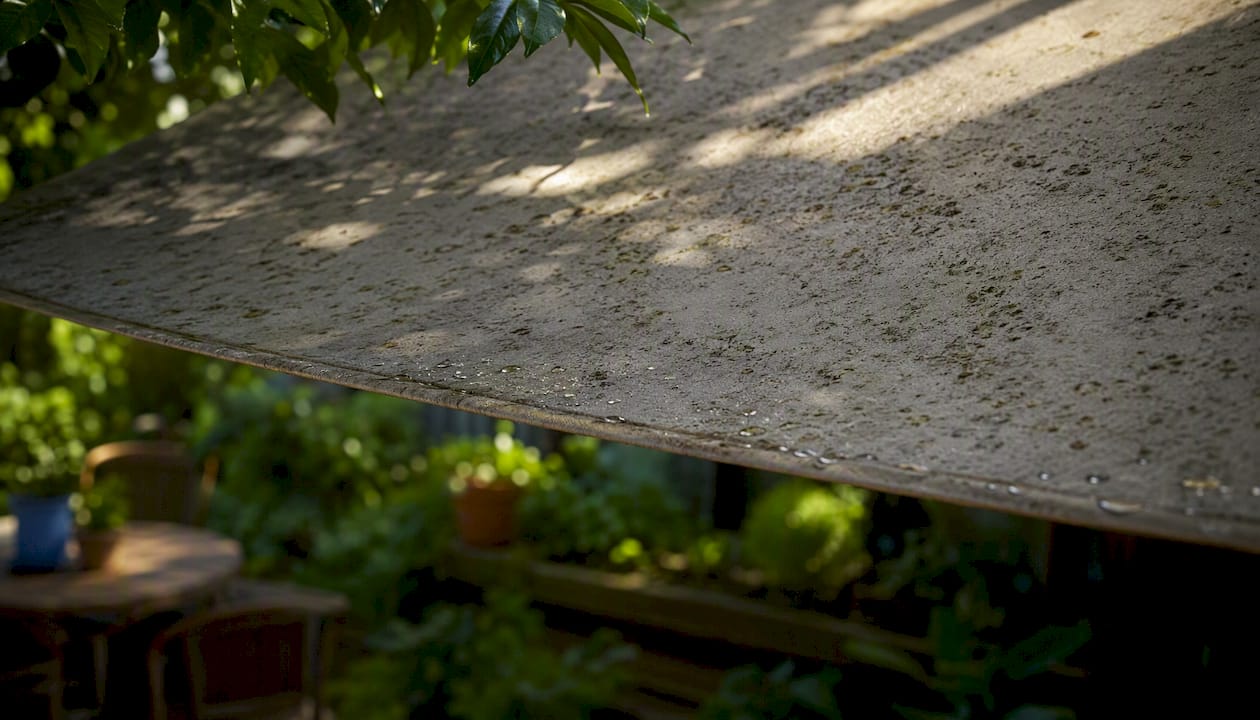
Mildew doesn’t feed on the acrylic or vinyl fiber itself. It feeds on the dirt, pollen, and oils that settle on the fabric in damp, shaded spots. That’s good news: you’re usually fighting surface grime, not a structural fabric problem.
The usual triggers are trapped moisture in a rolled-up awning, heavy shade with little airflow, sprinkler overspray, and tree debris that sits and holds water.
Pro Tip: A bone-dry awning stored properly beats a chemical-heavy cleaning routine every time. If you only fix one habit, make it drying fully before you retract.
How Do You Identify Your Awning Fabric Before Cleaning?
The cleaner that saves one fabric can ruin another, so identify the material before you touch a bottle of bleach.
- Solution-dyed acrylic (Sunbrella and similar): color runs through the entire fiber, so it resists fading from diluted bleach. Feels slightly textured, almost like canvas.
- Vinyl-coated polyester: smooth, slightly glossy surface with a rubbery feel on the underside. Bleach can degrade the coating over time.
- Printed polyester or canvas: color sits on the surface as a printed layer, not woven through, so it fades and streaks easily under harsh chemicals.
Check the valance or a hidden hem for a manufacturer label. Sunbrella’s own care guidance permits a diluted bleach mix specifically because the color is locked into the fiber, which is why that guidance doesn’t extend to vinyl or printed fabrics.
Pro Tip: Always test any cleaner, even mild soap, on a hidden patch first. Wait 10 minutes and check for color change before treating the whole awning.
What Supplies Do You Need for Awning Mildew Removal?
Gather everything before you start so you’re not running back and forth up a ladder.
- Basic kit: garden hose with a gentle spray nozzle, soft bristle brush or sponge, bucket, measuring cup, rubber gloves, eye protection, and a stable ladder.
- Routine cleaning: a few drops of Dawn dish soap or Woolite in lukewarm water, applied with a soft brush.
- Stronger spot treatment: a manufacturer-approved diluted bleach mix for solution-dyed acrylic, or a commercial product like IOSSO Mold and Mildew Stain Remover or 30 SECONDS Outdoor Cleaner for tougher, set-in stains on fabrics that tolerate it.
Never mix bleach with ammonia or other cleaners; the fumes are dangerous. Skip abrasive pads and pressure washers regardless of fabric.
Pro Tip: Dawn handles most routine grime on its own. Save the stronger products for spots that survive a first soap wash.
What’s the Step-by-Step Method for Cleaning Awning Mildew?
Work through this sequence in order rather than jumping straight to bleach.
- Inspect and dry-brush. Knock off loose leaves, bird droppings, and cobwebs before adding any water.
- Rinse first. Hose the awning down with a gentle spray. Skip the pressure washer, which can force water into seams and strip protective coatings.
- Wash with mild soap. Mix a mild amount of dish soap into a bucket of water and scrub gently with a soft brush.
- Use the roll-up soak for retractable or RV awnings. Apply the soap solution, roll the awning partway to let it soak in for a few minutes, then re-extend and rinse.
- Spot-treat remaining mildew. Apply a fabric-appropriate cleaner, let it sit up to 10 to 15 minutes, scrub gently, then rinse until the water runs completely clear.
- Air-dry fully before retracting. Reassess once dry; only repeat treatment if spots remain.
Pro Tip: The roll-up soak trick saves real time on retractable awnings. It lets the cleaner work while you do something else instead of scrubbing wet fabric the whole time.
How Do You Treat Mildew Differently by Fabric Type?
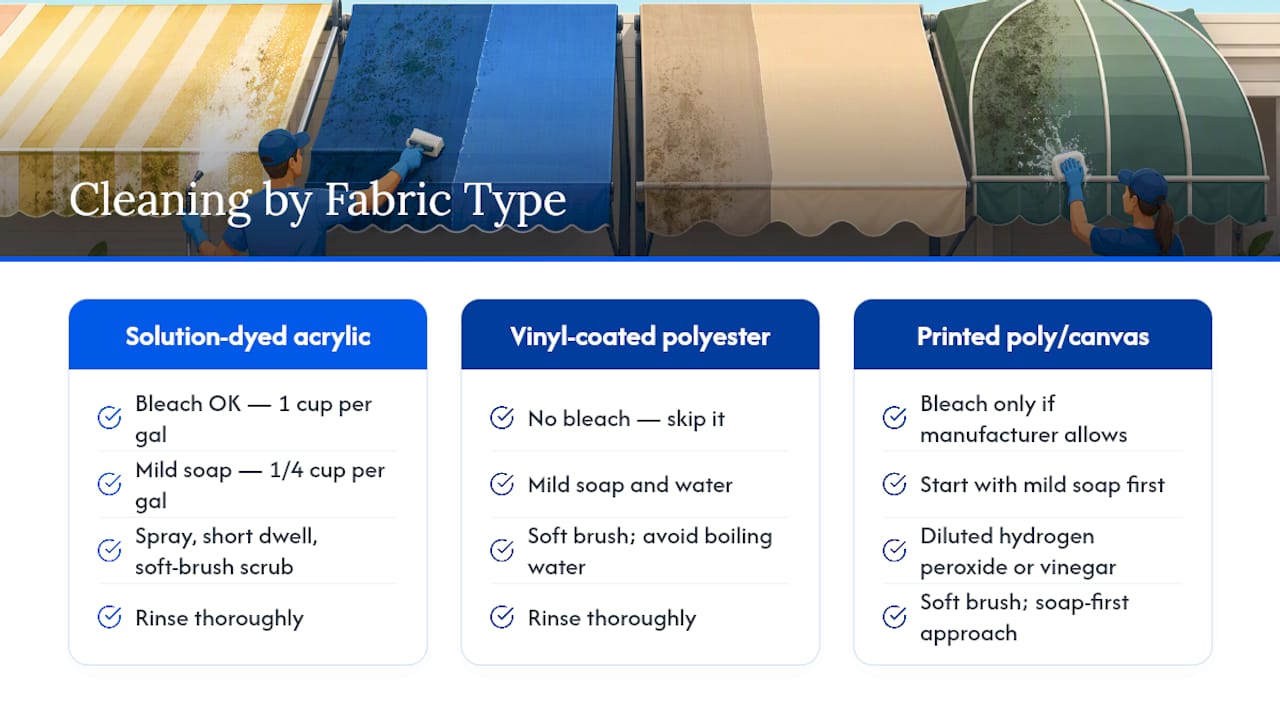
Solution-dyed acrylic (Sunbrella): the manufacturer-tested mix is 1 cup household bleach plus 1/4 cup mild soap per gallon of water. Spray it on, let it sit for a short period, scrub with a soft brush, then rinse thoroughly. Avoid heavy scrubbing on the coated underside if the fabric has a protective backing, since abrasion there can wear through the coating faster than the sun ever will.
Vinyl-coated polyester: skip bleach. The coating already contains a mildew-resistant biocide, but in humid climates spots can still appear. Mild soap and water with a soft brush is the safer route, and you should avoid boiling water or harsh detergents that break down the coating.
Printed polyester or canvas: start soap-first, always. Bleach strips printed color fast, so reserve it only if the manufacturer explicitly says the fabric tolerates it. For lighter staining, diluted hydrogen peroxide or plain white vinegar is a lower-risk alternative to try before reaching for bleach.
Across every fabric: test a hidden patch first, and never use pressure washers, solvents, undiluted bleach, or abrasive pads.
How Do You Rinse, Dry, and Store an Awning to Prevent Mildew?
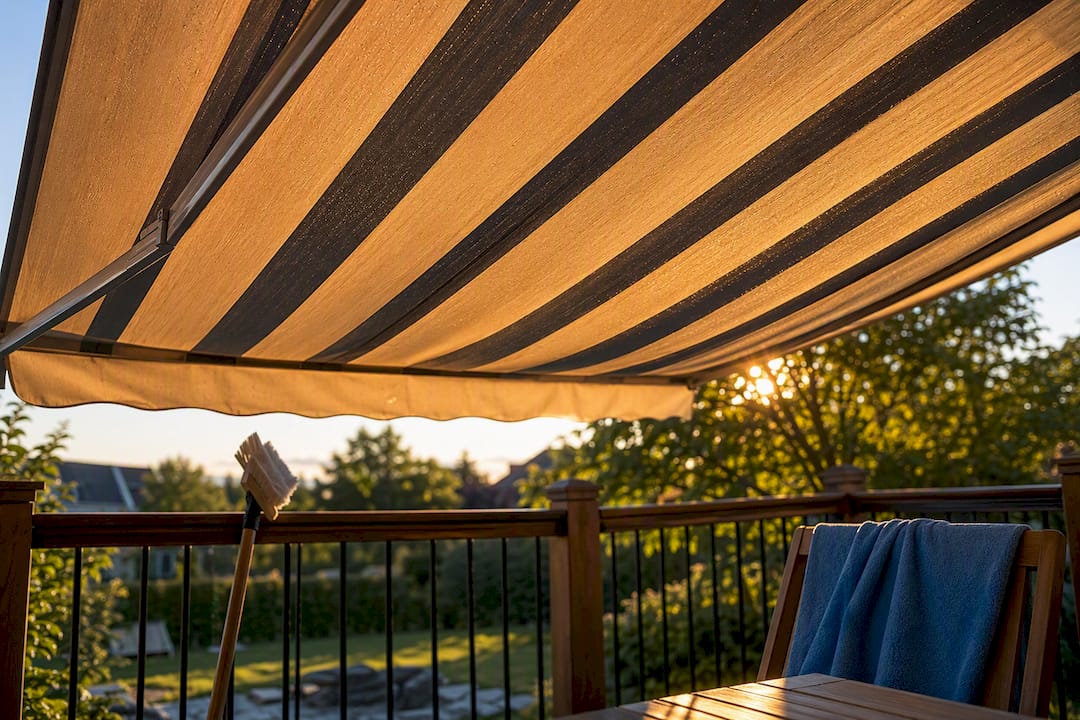
Rinse until the water runs completely clear. Leftover soap or bleach residue actually attracts more dirt, which feeds the next round of mildew.
Air-dry in direct sunlight when you can. Never roll up or retract an awning that still feels damp to the touch. Trapped moisture is the single biggest cause of mildew returning after a proper cleaning.
- Light rinse: every few months, more often near trees or sprinklers.
- Deeper clean: once or twice a year; twice for humid or heavily shaded properties.
- Positioning fixes: adjust the pitch so water drains instead of pooling, keep sprinkler heads and AC discharge pointed away from the fabric, and give retracted awnings some airflow instead of sealing them tight against the wall.
What Safety and Warranty Mistakes Should You Avoid?
A few habits cause more damage than the mildew itself.
- Harsh detergents, ammonia, solvents, and abrasive scrubbing can void a fabric warranty and break down protective coatings.
- Pressure washers force water into seams and stitching, which invites mildew to grow where you can’t see or scrub it.
- Always test a hidden patch and check the manufacturer’s care guide before reaching for bleach or a specialty cleaner.
- Wear gloves and eye protection any time you’re working with bleach, and avoid breathing concentrated cleaner fumes.
- Stabilize your ladder and bring a helper for larger or higher awning installs.
When Should You Call a Professional Instead of Cleaning It Yourself?
Some mildew problems aren’t a cleaning problem anymore. Watch for these signals:
- Dark staining that persists after two careful, proper cleaning attempts.
- Mildew growing inside seams, stitching, or the fabric backing where a brush can’t reach.
- Torn, UV-brittle, or structurally weak fabric that could rip during scrubbing.
- Any awning large, high, or awkwardly positioned enough to make ladder work risky.
Professionals bring controlled use of stronger cleaners, mechanical airflow for faster and more even drying, and a trained eye for hardware and seam damage that homeowners tend to miss until it’s expensive.
Pro Tip: If a stain survives two honest cleaning rounds, more scrubbing usually just wears down the fabric. That’s the point where replacement or professional treatment makes more sense than another bottle of cleaner.
A Practitioner’s Note on Awning Mildew
Conservative wins here. Reach for soap before bleach, test a patch before treating the whole panel, and never skip the drying step to save ten minutes. Most mildew “failures” I’d flag aren’t a cleaning failure at all. They’re an awning rolled up damp, again, until the fabric can’t recover. When staining survives real effort and the fabric is aging out anyway, replacement is the honest answer, not another round of chemicals.
Let Bros Window Cleaning Handle the Stubborn Cases
Bros Window Cleaning gives Orange County property owners a warranty-safe alternative when mildew won’t quit or the awning sits too high to clean safely yourself. We handle onsite cleaning, fabric-appropriate mildew treatment, thorough drying, and a seam and hardware inspection so you know whether the fabric needs replacing before it becomes a bigger repair.
Harsh chemicals and pressure washers cause more warranty voids than mildew ever does, and that’s exactly the mistake a trained crew avoids. We’re local, insured, and punctual, and we treat your awning the same careful way we treat glass and coatings elsewhere on your property. Explore our exterior cleaning services and schedule an inspection or cleaning whenever your awning needs more than a garden hose can give it.
Sources
- Sunbrella fabric care (Scandesign page)
- How to Clean Your RV Awning the Easy Way | Lippert
- How to Maintain a Retractable Awning | Lafferty
- Awning maintenance & cleaning (AwningTown)