
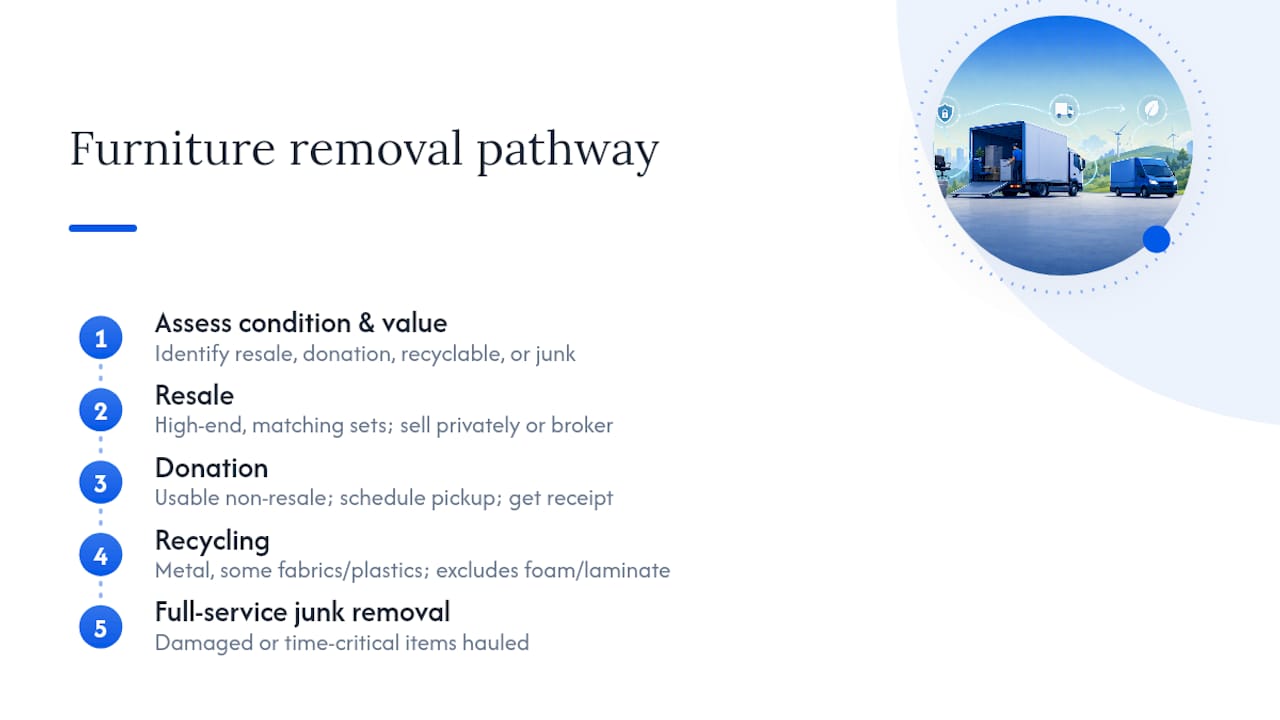
Inventory everything first, then work the disposition ladder in order: resell what has value, donate what a charity can use, recycle what materials allow, and haul the rest. If any of it includes electronics or data-bearing devices, route those to a certified ITAD vendor before anything leaves the building, since data liability doesn’t disappear just because the desk does; for redesigning and reconfiguring your space during this process, consider how to redefine your open space to create a private office without losing the open feel.
TL;DR:
- Resale is most profitable for high-end office furniture in good condition, but requires early listing to meet move-out deadlines.
- Donations are suitable for usable but lower-grade furniture, provided organizations can schedule pickups and you obtain tax receipts.
- Recycling handles non-resaleable materials like metal frames, plastics, and some fabrics, but foam and laminate often cannot be processed.
- Costs vary based on volume, disassembly, and building access, with disassembly and e-waste handling significantly increasing prices.
- Thorough documentation of disposal, donation, and recycling proves compliance and protects against liabilities, making paperwork essential for a smooth cleanout.
Table of Contents
- What Are Your Office Furniture Removal Options?
- How Much Does Office Furniture Removal Cost?
- How Do You Choose a Removal Provider?
- What Is a Step-by-Step Office Furniture Removal Checklist?
- How Bros Window Cleaning Approaches Removal Projects
- Why Documentation Matters More Than Speed
- Get an Honest Quote for Office Cleanout and Removal
- Sources
- FAQ
What Are Your Office Furniture Removal Options?
Most cleanouts fail for one reason: someone calls a hauler before checking what the furniture is actually worth. A proper sequence catches resale and donation value before it gets crushed in a dumpster.
Resale works best for higher-end brands (Herman Miller, Steelcase, Knoll), matching cubicle sets, and conference tables in good condition. Liquidation brokers move volume quickly but take a cut; listing pieces directly gets more money but takes longer. Either way, private sale tends to bring the highest return while brokers move inventory faster, so the right channel depends on whether you’re optimizing for dollars or dates. Plan to list well in advance if you want resale to actually clear before move-out.
Donation fits furniture that’s usable but not resale-grade. Furniture banks, Habitat for Humanity ReStores, and similar organizations regularly accept commercial donations, though pickup availability depends on volume and condition and larger loads may need advance scheduling. Ask for a receipt at drop-off. It’s the paperwork that turns a donation into a tax deduction instead of just a good deed.
Recycling handles what’s left of the metal frames, some fabrics, and certain plastics. Municipal recycling programs typically list which materials qualify and where refurbishers or donation centers accept them, though most facilities can’t process foam padding, laminate, or mixed-material chairs. That’s when a haul crew earns its fee.
Full-service junk removal is the right call when furniture is damaged, time is short, or nothing else moved fast enough. A capable crew disassembles cubicles, loads trucks, and hauls debris in a single visit.
How Much Does Office Furniture Removal Cost?
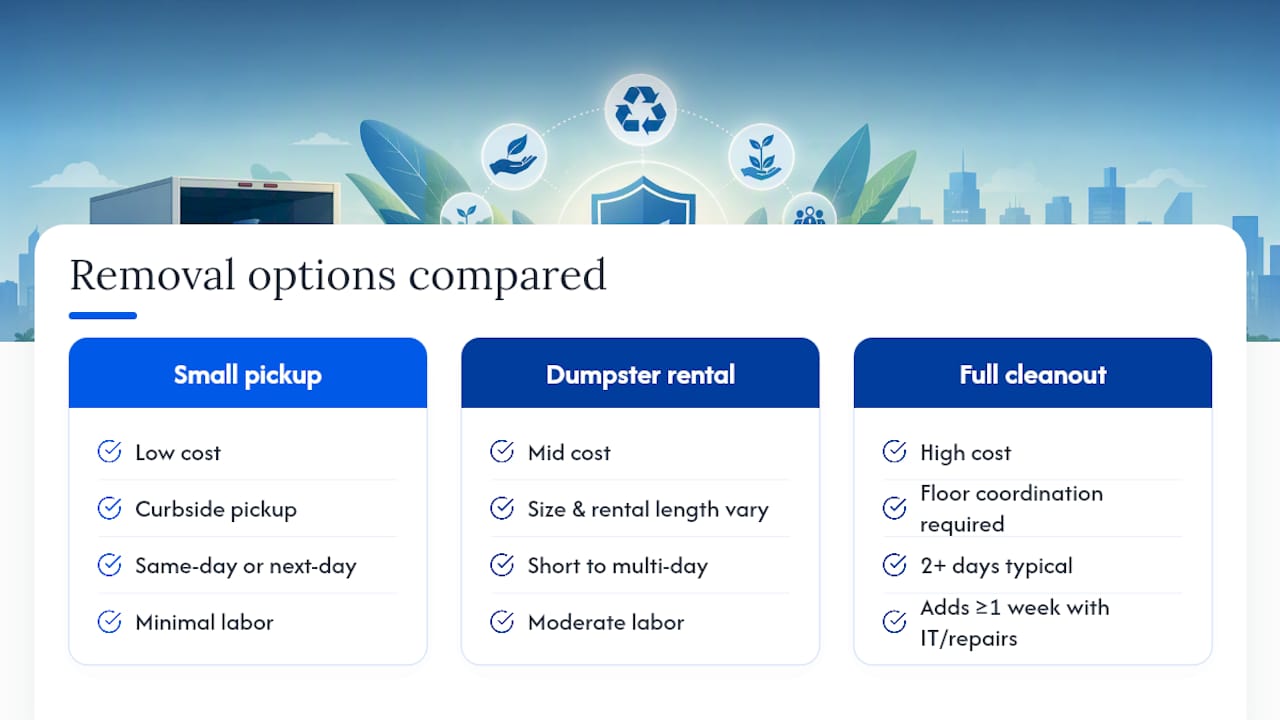
Pricing scales with volume and complexity, not just item count. A single desk or a couple of chairs picked up curbside runs far less than a coordinated floor cleanout, and dumpster rental for ongoing disposal sits somewhere in between depending on size and rental length.
Three factors push costs higher: cubicle disassembly (labor-intensive and slow compared to moving loose furniture), limited elevator or loading dock access in multi-tenant buildings, and certified e-waste handling for anything with a hard drive or circuit board.
Timing matters as much as price. A full commercial cleanout can often be completed in a couple of days with an experienced team., but that number assumes furniture only. Add IT decommissioning or lease-restoration work like patching walls and repainting, and the vendor coordination alone can stretch the timeline by a week or more. Book removal and ITAD vendors as soon as a move-out date is confirmed, not after.
How Do You Choose a Removal Provider?
Vetting a vendor for a commercial job takes more scrutiny than hiring someone to haul a couch. Ask these questions before signing anything:
- Can you provide a certificate of insurance and references from other commercial removals?
- Do you report recycling or donation diversion rates, and can I get that documentation in writing?
- How do you handle data-bearing devices, chain-of-custody records, and certificates of destruction?
- Is wiping or destruction done onsite or offsite, and who verifies it?
- Have you disassembled modular cubicle systems before, and what’s your crew size for a job this scale?
- How do you handle building access, freight elevators, and scheduling around business hours?
Pro Tip: Never accept a vague “we’ll recycle it responsibly” answer. Ask for the name of the recycling facility or donation partner and confirm they actually take commercial furniture.
Red flags are easy to spot once you know what to look for: no proof of insurance, cash-only pricing, no weight tickets, no donation receipts, or any hesitation about explaining where the furniture actually ends up. A legitimate provider hands you paperwork without being asked twice.
What Is a Step-by-Step Office Furniture Removal Checklist?
Treat this like a decommissioning project with a schedule, not a same-week favor.
- 90 days out: Walk the space and build a full inventory. Tag each item with a disposition code (resell, donate, recycle, dispose) and flag anything with a hard drive or storage media.
- 60 days out: List resale candidates with a broker or direct buyer. Starting inventory and classification this early is standard ITAD practice because sorting resale value from data risk gets harder under deadline pressure.
- 30 days out: Confirm donation pickups and get commitments in writing.
- 14 days out: Book your removal crew, reserve the freight elevator, and confirm truck parking or loading dock access.
- 7 days out: Notify staff of the schedule and finalize any remaining disposition decisions before the crew arrives, since locking in keep/sell/donate/recycle calls before booking day avoids costly last-minute changes.
On removal day, photograph everything before it leaves, collect weight tickets, gather donation receipts, and confirm the certificate of insurance is on file. That paperwork trail is what protects you if anyone ever asks where the furniture went.
How Bros Window Cleaning Approaches Removal Projects
A professional window cleaning and exterior service company in Orange County also offers junk removal as part of its services for commercial clients handling office turnovers. The team is insured, which matters when crews are moving heavy furniture through occupied buildings.
Customers can request a certificate of insurance, ask how donation drop-offs are documented, and confirm basic disposal reporting before booking. Coordinating a cleanout alongside other property services, like a pre-move-in pressure wash or window cleaning for the new space, keeps a turnover project on one schedule instead of three separate vendor calls.
Why Documentation Matters More Than Speed
Most facility managers default to whichever option clears the floor fastest, and sometimes that’s the right call. A lease deadline doesn’t care about your recycling goals.
But the managers who come out ahead are the ones who spend an extra day sorting before they call anyone. Resale and donation take more coordination than a straight haul, and they pay you back in tax paperwork, lower disposal costs, and less landfill weight tied to your company’s name. Save every receipt and weight ticket regardless of which path you choose. When someone asks where three floors of furniture went, “we have the paperwork” is the only acceptable answer.
— nolan
Get an Honest Quote for Office Cleanout and Removal
A local service provider offers an insured crew handling junk removal alongside exterior cleaning work for office turnovers, allowing clients to avoid coordinating separate vendors for furniture hauling, window cleaning, and pressure washing.

When you request a quote, ask directly for a certificate of insurance and how donation or data-handling documentation gets passed along. If you’re prepping a space for new tenants or closing out a lease, pair the cleanout with a pressure washing visit or a window cleaning appointment to have the property move-in ready on one schedule. Visit the Bros Window Cleaning site to request an estimate or schedule a site visit.
Sources
For deeper procedural detail, review the ITAD checklist for office moves, a sustainable decommissioning model prioritizing resale and donation, and your city’s furniture recycling and donation listings for local drop-off options.
- The Step-By-Step ITAD Checklist for Moving or Closing an Office – ITAD Daily
- Dispose of Office Furniture and Equipment Right | CuyahogaRecycles
- Office Closing? 10 Steps to a Complete Commercial Office Cleanout in 2026 – Take Care Junk Hauling
FAQ
Who Picks Up Office Furniture for Free?
Some charities and furniture banks pick up commercial donations at no cost, though availability depends on volume, condition, and scheduling. Larger loads or mixed-condition furniture often need a paid hauler instead, since most free pickup programs are selective about what they’ll take.
How Much Does It Cost to Remove Office Furniture?
Cost depends on volume, disassembly needs, and access. A small pickup costs far less than a full-floor cleanout, and cubicle disassembly or e-waste certification adds to the price. Bros Window Cleaning offers junk removal for Orange County properties, with pricing available through a direct quote.
What Is the Cheapest Way to Get Rid of Old Office Furniture?
Donation is typically the cheapest route since many charities accept usable furniture at no cost and may issue a tax receipt in return. Recycling comes next for damaged pieces, while paid hauling is usually the priciest option but the fastest when time is short.
How Do You Get Rid of Old Office Chairs?
Office chairs in good condition are common donation items for furniture banks and resale brokers alike. Chairs with worn fabric or broken frames usually need to go through a recycling facility or a junk removal service, since most donation centers won’t take damaged seating.