
Wait until ashfall stops and local air quality readings improve before you touch anything outside. The EPA, USGS, and AirNow all agree on the same starting point: gear up with an N95 or P100 respirator, then work top-down with a light mist and gentle sweeping or a HEPA vacuum. Skip the leaf blower and the dry broom entirely. Professional cleaning crews follow this same sequence on every ash-covered property they service.
TL;DR:
- Only start outdoor cleanup once air quality measurements improve and ash is no longer actively falling, to prevent recontamination.
- Wear a properly fitted N95 or P100 respirator, sealed goggles, waterproof gloves, and long clothing, especially if you have respiratory or health issues.
- Follow a top-down sequence: clean roofs first, then gutters, upper walls and windows, ground surfaces, and finally plants and lawns to avoid spreading ash.
- Avoid high-pressure washing, dry sweeping, and runoff into storm drains; always control runoff and bag debris securely to protect waterways.
- Hire professional crews for heavy contamination, structural hazards, or if roof access is unsafe, ensuring they use insurance and HEPA-filtered equipment.
Table of Contents
- When Should You Start Wildfire Ash Cleanup Outside?
- What PPE Do You Need for Ash Removal?
- What’s the Right Order to Clean Ash Off a Property?
- How Do You Clean Different Exterior Surfaces Safely?
- Where Should Ash Runoff and Wash Water Go?
- When Should You Hire a Professional Cleanup Crew?
- Quick Checklist: The Do’s and Don’ts of Ash Cleanup
- When Hiring a Pro Beats DIY Ash Cleanup
- Get Your Exterior Back to Normal After Ashfall
- Where to Verify This Guidance Yourself
- Sources
- FAQ
When Should You Start Wildfire Ash Cleanup Outside?
Check AirNow or your local air district before you plan a cleanup day. If particulate readings are still elevated or ash is actively falling, cleaning outside just kicks more of it back into the air you’re breathing.
Once conditions clear, prioritize the areas your household touches most: front entries, mailboxes, walkways, and anywhere kids or pets pass through daily. Save the far corners of the yard for later.
Some people shouldn’t be doing this job at all, regardless of timing:
- Anyone with asthma, COPD, or heart disease, per guidance from Utah State University Extension.
- Pregnant individuals and older adults, who face higher risk from fine particulate exposure.
- Young children, who should stay indoors while adults handle exterior work.
If cleanup falls on someone in one of those groups, arrange for a neighbor, family member, or a cleaning crew to handle it instead.
What PPE Do You Need for Ash Removal?
Treat wildfire ash like the irritant it is. It’s not just soot. It carries fine mineral particles that scratch airways and lungs on contact.
Gear up with:
- A NIOSH-certified N95 or P100 respirator, fitted snugly with no gaps at the nose or cheeks.
- Sealed goggles, not open safety glasses.
- Waterproof gloves and long sleeves and pants, even in warm weather.
- Closed-toe shoes you don’t mind getting dirty.
If you have heart or lung disease, talk to your doctor before wearing a respirator for physical outdoor work, since breathing resistance itself can strain a compromised heart or lungs. PPE only does half the job. The other half is technique: keeping ash damp and grounded so it never becomes airborne in the first place.
Pro Tip: Mist your PPE checklist area first. A fine spray from a garden hose settles surface ash before you even start sweeping, cutting down what you’d otherwise breathe in.
What’s the Right Order to Clean Ash Off a Property?
Cleaning bottom-up just pushes ash back onto surfaces you already cleared. The USGS recommends a strict top-down sequence, and it’s the same order Bros Window Cleaning follows on every job:
- Roof first. Loosen bulk ash with a soft broom, never a leaf blower, and let it fall to the ground rather than blowing off the edge onto neighbors or landscaping.
- Gutters next. Scoop out heavy deposits by hand or use a HEPA vacuum for fine residue, then bag the debris immediately.
- Upper walls and windows. Mist first, then wipe down before ash has a chance to dry and bond to the surface.
- Ground level last. Driveways, patios, and walkways get the wet-sweep treatment once everything above them is clear.
- Plants and lawn. A light rinse finishes the job without stressing vegetation.
Roof work is where most DIY cleanups go wrong. Steep pitches, wet tile, and ash-slicked shingles are a fall risk even for someone who’s comfortable on a ladder. If your roof pitch exceeds a gentle slope, or you’re not confident on a ladder past the second rung, that’s the moment to call a professional roof crew instead of pushing through it yourself.
How Do You Clean Different Exterior Surfaces Safely?
Every surface has a different failure point, and the wrong technique can cause more damage than the ash itself.
- Roofs and gutters: Remove loose material dry with a soft broom, bag it, then rinse with low pressure only if residue remains. Skip the pressure washer’s high setting entirely.
- Windows and siding: A light mist followed by a soft cloth and mild detergent lifts most residue. Aggressive scrubbing on painted siding just grinds ash into the finish.
- Concrete and pavers: Wet the surface first to keep dust down, sweep gently, then rinse. High-pressure washing on dry ash drives particles deep into porous concrete, and once that happens, it’s often permanent staining.
- Vehicles: Skip the DIY pressure wash. A commercial car wash handles ash without scratching clear coat, which a garden hose and rag often can’t avoid.
- Plants and lawns: A light rinse is usually all they need. Skip harsh chemicals. Most vegetation tolerates a dusting of ash better than people assume, and over-washing can stress already-stressed plants further.
For anyone with a full pressure-washing project on their hands after a bad ashfall, knowing the pressure limits before you start saves siding, pavers, and paint jobs alike.
Where Should Ash Runoff and Wash Water Go?
Rinse water carrying ash should never head toward a storm drain. Cover nearby drains with a tarp or divert runoff toward landscaping, where soil filters it naturally rather than sending it straight into local waterways.
- Direct hose runoff onto grass or garden beds instead of pavement whenever the slope allows it.
- Use filter fabric or a gravel bag over any drain you can’t avoid working near.
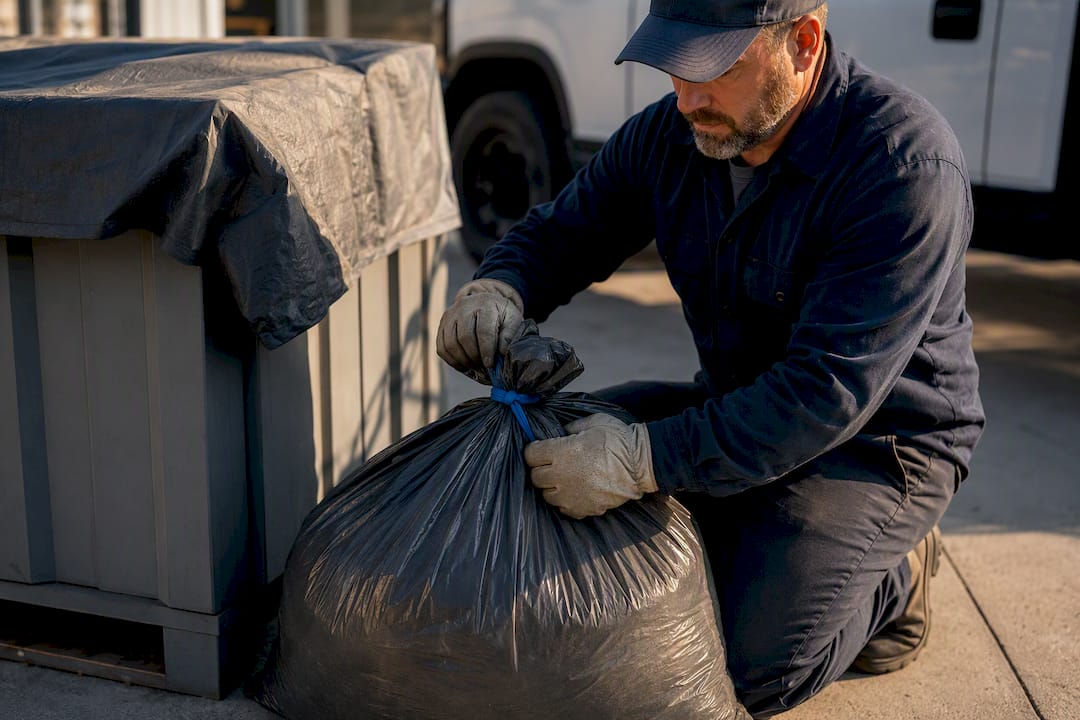
- Scoop wet ash into heavy-duty plastic bags, seal them tight, and set them out with regular trash.
- Watch for local hazardous-waste collection events after major fires. Some jurisdictions run special ash-collection programs for heavy contamination, and they’re worth using if your property qualifies.
When Should You Hire a Professional Cleanup Crew?
Some situations move past DIY territory fast. Watch for:
- Heavy interior ash infiltration alongside exterior contamination.
- Any debris that might have come from a burned structure nearby, which can carry hazardous residue.
- Ash inside HVAC intakes. Wetting ash near air handlers can cement it into fins and electrical components, and a vacuum-only approach usually needs professional equipment.
- Roof access that feels unsafe, or any visible structural or electrical damage.
Before hiring anyone, ask for proof of insurance, confirmation they use HEPA-filtered equipment, and a plain answer about their experience with ash specifically, not just general debris.
Pro Tip: Ask a prospective crew how they handle gutter debris disposal. A crew that bags and hauls it off site is following the same protocol restoration professionals use. A crew that just hoses it into the yard isn’t.
Quick Checklist: The Do’s and Don’ts of Ash Cleanup
The whole process boils down to one sequence: wait for air quality to clear, put on PPE, work top-down, mist and sweep or HEPA vacuum, bag and seal everything, and keep runoff off pavement and out of drains.
Three rules override everything else:
- Never use a leaf blower on ash.
- Never dry-sweep it.
- Never let rinse water run toward a storm drain.
Print that list and tape it to the garage door. It covers most common mistakes in a rushed cleanup.
When Hiring a Pro Beats DIY Ash Cleanup
Ladder work on a wet, ash-covered roof is where good intentions turn into a hospital visit. When height, HVAC intakes, or heavy contamination are in play, a trained crew protects both your health and your roofline. Professional cleaners approach every ash job with the same top-down sequence and low-pressure caution outlined here. Before hiring anyone for this kind of work, confirm they carry insurance and run HEPA-capable equipment.
— nolan
Get Your Exterior Back to Normal After Ashfall
Using a professional cleaning service is a practical alternative to spending a weekend on a ladder with a garden hose. These services handle roof and gutter debris removal, low-pressure exterior washing calibrated to avoid embedding ash into concrete or siding, and solar panel rinsing, all with a top-down, safety-first approach.

If your gutters are packed with ash and debris after a bad fire season, our gutter cleaning tools and process guide walks through what a proper job looks like, but you don’t have to do it yourself. Request an assessment through our pressure washing guide and we’ll tell you honestly whether your property needs a full service or just a targeted rinse. Book a visit with a professional cleaning service to get your roof, gutters, and windows cleaned without risking a fall or damage to your property.
Where to Verify This Guidance Yourself
These are the primary sources behind every safety recommendation in this article:
- EPA: Protect Yourself from Ash covers PPE and health precautions.
- USGS: Cleaning Up Outside details the top-down cleanup sequence.
- Oregon State University Extension covers yard and garden-specific ash removal.
Sources
- Protect Yourself from Ash
- Cleaning up outside (USGS volcanic ash guidance)
- What should I do about the wildfire ash covering my yard and garden? (OSU Extension)
FAQ
How Do You Clean Up Ash From a Wildfire?
Wait until ashfall stops and air quality improves, then work top-down with an N95 respirator, misting the ash lightly before sweeping or using a HEPA vacuum, and bag the residue rather than hosing it into storm drains.
Does Wildfire Ash Stain Permanently?
It can, mainly on porous surfaces like concrete and light-colored siding, and the risk goes up significantly if you pressure-wash dry ash instead of removing bulk material first with a gentle wet-sweep.
What Is the 30/30/30 Rule for Wildfire Risk?
That rule refers to fire-behavior conditions and does not apply to exterior ash removal steps.
How Long Do Toxins Stay in the Air After a Fire?
It varies widely depending on fire size, wind, and local air quality, which is why checking a resource like AirNow before starting outdoor cleanup matters more than guessing a fixed timeline.
Can Bros Window Cleaning Handle Ash Removal From Roofs and Gutters?
Yes. Bros Window Cleaning services roofs, gutters, and exterior surfaces in Orange County using the same top-down, low-pressure approach recommended by the USGS and EPA for wildfire ash cleanup.
Pingback: 24–72 Hour Smoke Odor Removal Plan For Homeowners, Start With HVAC