
Soft washing is the safe method for most asphalt shingle roofs, and fall protection is non-negotiable the moment you are above ground level. OSHA’s fall-protection standards and ARMA’s soft-wash recommendation both point the same direction: low-pressure chemical cleaning, not a pressure washer wand. If you can’t rig proper anchors, harnesses, and inspected ladders, or the roof shows soft spots or heavy granule loss, call a licensed contractor like Broswindowcleaningoc instead of climbing up yourself.
TL;DR:
- Homeowners should always wear PPE, including gloves, eye protection, and a respirator, and check safety gear thoroughly before starting roof cleaning.
- Soft washing with low-pressure sprayers using diluted sodium hypochlorite is recommended over pressure washing, which can accelerate shingle wear and void warranties.
- Use proper fall protection, such as harnesses and anchored ladders, especially on steep or multi-story roofs, and avoid working in bad weather conditions.
- Pre-inspect the roof and landscape, cover sensitive plants, and control runoff to prevent chemical damage and protect the environment.
- When in doubt, hiring an insured professional with experience in soft washing and proper safety practices ensures a safer and more effective roof cleaning process.
Table of Contents
- Roof Cleaning Safety Equipment: What You Actually Need on Your Body
- Soft Washing vs. Pressure Washing: Picking the Safest Method for Your Roof
- Ladder and Fall-Protection Rules Every Homeowner Must Follow
- Protecting Your Landscaping and Controlling Chemical Runoff
- The Safe Roof Cleaning Process, Step by Step
- When to Hire a Licensed Roof Cleaning Contractor
- Your Three-Step Safety Checklist Before Any Roof Cleaning Job
- Why Homeowners Underestimate the Risk on Their Own Roof
- Get a Safe, Insured Roof Inspection From a Local Crew
- Sources
Roof Cleaning Safety Equipment: What You Actually Need on Your Body
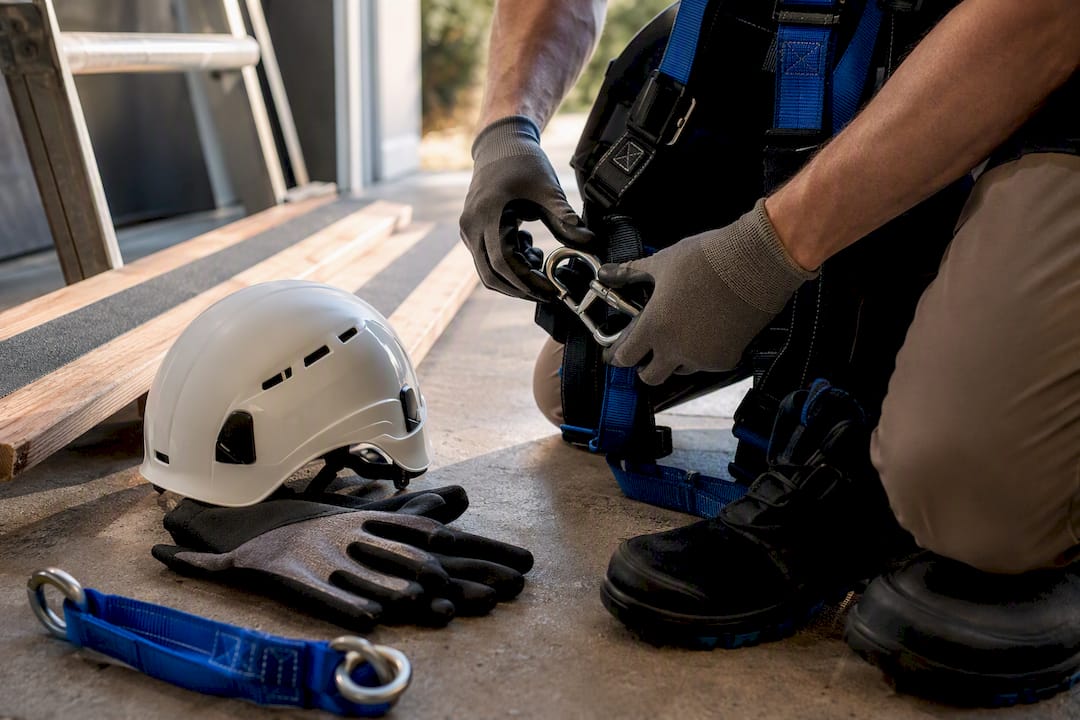
Skipping PPE is the single most common mistake homeowners make before they’ve even reached the ladder. OSHA’s personal protective equipment guidelines call for chemical-resistant gloves, eye protection, and a respirator any time you’re mixing or applying cleaning solutions, because sodium hypochlorite splashes and fumes irritate skin, eyes, and lungs fast.
Here’s the minimum kit for roof cleaning:
- Slip-resistant boots with good tread, not sneakers
- Chemical-resistant gloves rated for bleach-based solutions
- Goggles or a full face shield, not just sunglasses
- A respirator or N95 mask for chemical fumes
- Long sleeves and pants to block splashback
- A harness, rope grab, and roof anchor rated for your body weight
Inspect every ladder rung, rope, and buckle before use. A frayed harness strap or a bent ladder foot is where an accident starts.
Pro Tip: A chemically treated roof is dramatically more slippery than a dry one. Professionals avoid walking on wet, treated shingles whenever possible and work from ladders or walkboards instead.
Soft Washing vs. Pressure Washing: Picking the Safest Method for Your Roof
Soft washing uses a low-pressure sprayer to apply a diluted cleaning solution, typically a sodium hypochlorite blend with surfactants, that kills algae, moss, and lichen at the root rather than blasting it off the surface. ARMA and most industry guides recommend this method for asphalt shingles specifically because it doesn’t disturb the granules that protect shingles from UV damage.
Pressure washing does the opposite. Even a moderate-PSI pressure washer can strip mineral granules right off asphalt shingles, and that granule loss accelerates aging and can void a manufacturer’s warranty outright. Tile and metal roofs tolerate pressure better, but only within a safe, material-specific PSI range, and even then a wide fan tip beats a narrow jet nozzle every time. Our own breakdown of pressure washing a roof covers which surfaces can handle it.
A few things to know before you mix anything:
- Professional-grade soft-wash solutions run roughly 3 to 6 percent sodium hypochlorite for heavy moss or algae, calibrated by concentration and dwell time.
- Household bleach is weaker and often contains additives that can harm shingles and nearby plants, so it’s not a direct substitute.
- Soft-wash results tend to hold for multiple years because the solution kills organism roots, while pressure washing removes surface growth but leaves spores behind, so regrowth comes back faster.
Ladder and Fall-Protection Rules Every Homeowner Must Follow
Fall protection is where roof cleaning safety either holds up or falls apart, literally. OSHA’s fall-protection guidance for roofing operations exists because falls from height are one of the most common causes of serious injury in this line of work.
- Set your ladder at a 4:1 angle (one foot out for every four feet of height) and extend it at least three feet above the roofline.
- Keep three points of contact at all times and never carry equipment in both hands while climbing.
- Check that the ground under the ladder is level and firm before you start, not after you’re already up.
- If the roof pitch is steeper than roughly 6/12, treat that as your cutoff for DIY work and use a harness anchored per OSHA standard 1926.501, or hire a pro.
- Cancel the job if it’s windy, the roof is wet from dew or rain, or there are power lines anywhere near your ladder or work zone.
Pro Tip: Check the weather forecast for the full workday, not just the morning. A calm 9 a.m. can turn into a gusty 1 p.m., and that’s a bad time to be holding a sprayer thirty feet up.
Protecting Your Landscaping and Controlling Chemical Runoff
Before any chemical touches the roof, walk the perimeter and document what’s already there. Note any soft spots, missing or curling shingles, damaged flashing, and how full the gutters are with granules or debris. This pre-inspection protects you if something looks different afterward, and it tells you whether the roof is even a candidate for DIY cleaning.
Runoff control matters just as much as what happens on the roof itself. Sodium hypochlorite solution that drips onto grass, flower beds, or an air conditioning unit can cause real damage if it’s not diluted.
- Pre-wet all nearby plants, shrubs, and grass with plain water before starting.
- Cover sensitive landscaping and outdoor furniture with plastic tarps.
- Divert or plug downspouts temporarily so runoff doesn’t dump straight onto flower beds.
- Perform a landscape rinse-down with clean water immediately after cleaning to dilute any chemical that reached the ground.
- Move or cover pool equipment, patio furniture, and anything metal that could corrode from splash exposure.
The Safe Roof Cleaning Process, Step by Step
Whether you’re doing this yourself or vetting a contractor’s process, this is the sequence that separates a safe job from a damaging one.
- Document and inspect first. Photograph the roof, note existing damage, and check gutters for granule accumulation, which is an easy sign of an aging roof surface.
- Test a small, inconspicuous patch with your cleaning solution before treating the whole roof.
- Mix chemicals while wearing full PPE, away from open flames or direct sun, following the concentration guidance for your level of moss or algae growth.
- Apply from the ridge downward using a low-pressure sprayer, letting the solution dwell so it can kill roots rather than just knock off surface growth.
- Rinse with low pressure and a wide fan nozzle, working top to bottom if rinsing is even necessary. Soft-wash jobs often need minimal rinsing.
- Stop immediately if you notice granule loss in the runoff, soft or spongy spots underfoot, or runoff that looks discolored or excessive.
- Check gutters again after the job for granules, which signals the shingles took more wear than expected. Our guide on gutter cleaning covers what normal debris looks like versus a warning sign.
- Re-inspect the roof deck a few days later once everything has dried, and schedule a professional follow-up if anything seems off.
When to Hire a Licensed Roof Cleaning Contractor
Some situations simply aren’t DIY territory, no matter how good your ladder is. Hire a professional when you’re dealing with:
- A roof pitch steeper than 6/12 or a two-story home where fall protection is hard to rig safely
- Structural concerns like soft decking, sagging areas, or visible water damage
- Heavy moss, lichen, or biological growth that requires stronger, precisely calibrated chemical mixes
- Any situation where you genuinely cannot set up OSHA-compliant fall protection
Before hiring anyone, ask direct questions: Do they use soft washing on shingle roofs, or default to pressure washing? Are they insured, and can they show proof? Will they give you a written plan for protecting landscaping and diverting runoff? Can they explain how their process avoids voiding your shingle warranty? A contractor who answers all four clearly, especially one with proper insurance and thorough pre-inspections, is the kind of pro worth hiring.
Your Three-Step Safety Checklist Before Any Roof Cleaning Job
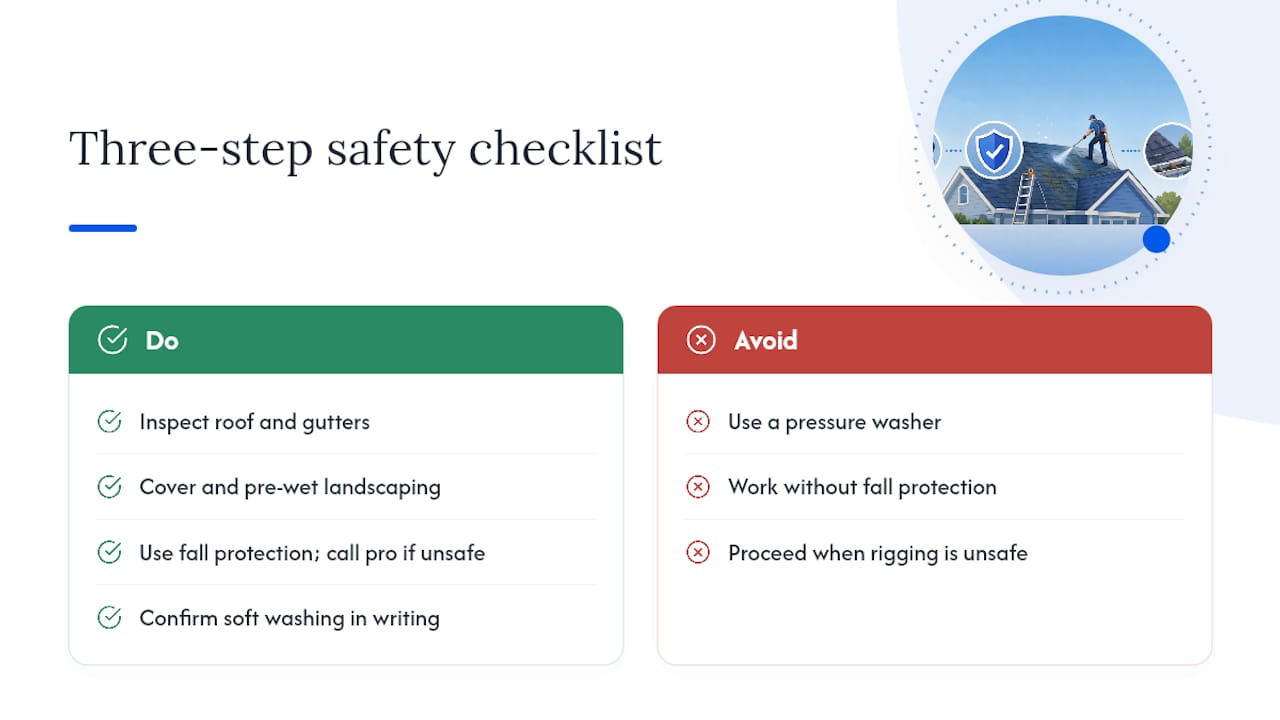
Soft wash your asphalt shingles, gear up with real fall protection, and call a pro the moment the job exceeds what you can safely rig. Right now: inspect your roof and gutters, cover and pre-wet your landscaping, and confirm in writing that whoever touches your roof, including you, is using soft washing and not a pressure washer.
Why Homeowners Underestimate the Risk on Their Own Roof
Most people treat roof cleaning like an extension of yard work. It isn’t. Yard work doesn’t involve a 30-degree slope, a chemical that can blind you if it splashes wrong, or a fall distance that turns a stumble into an emergency room visit.
The part that catches homeowners off guard isn’t the height itself. It’s the moment right after the chemical solution goes down, when a dry, grippy roof surface turns into something closer to wet ice. That’s the window where confident DIYers get hurt, because they climbed up safely and assume coming down will be just as easy. It rarely is.
There’s also a warranty trap hiding in plain sight. Homeowners rent a pressure washer thinking they’re saving money, then strip enough granules to shave years off the shingle’s life and quietly void the manufacturer’s warranty in the process. Soft washing costs a little more upfront in chemical knowledge and technique, but it protects the asset you’re actually trying to preserve.
My honest read: the safety conversation and the materials conversation are the same conversation. You can’t separate “how do I not fall off my roof” from “how do I not destroy my roof while I’m up there.” Treat them as one decision, not two, and you’ll make better calls on both.
— nolan
Get a Safe, Insured Roof Inspection From a Local Crew
You’ve seen what real roof cleaning safety demands: the right method, the right gear, and the judgment to know when a job is too risky to do yourself. Some professional crews handle exactly that gap for Orange County homeowners and property managers, sending an insured team that soft washes asphalt shingles instead of reaching for a pressure washer, and documents the roof’s condition before a single drop of solution goes down.
That means no guessing about granule loss, no scrambling to protect your landscaping mid-job, and no wondering whether your warranty just got voided. If your roof has visible moss, a steep pitch, or you simply don’t want to be the one on the ladder, request a roof cleaning inspection or quote and get a straight answer on the safest way to handle it.
Sources
- OSHA: Personal protective equipment overview
- How to soft wash a roof: full process from a 25-year veteran
Pingback: Pro Checklist: Wildfire Ash Cleanup to Stop Stains on Home Exteriors