
Those dark, wavy streaks running down your shingles are almost certainly roof algae, a colony of the cyanobacterium Gloeocapsa magma, not dirt, mold, or a defect in your roof. The right fix is a soft wash: a chemical solution that kills the algae, followed by a gentle low-pressure rinse. Never pressure-wash asphalt shingles. Left alone, the streaks stay mostly cosmetic for a while, but on a steep, old, or heavily colonized roof, call a professional rather than climbing up yourself.
TL;DR:
- Using a soft wash with a chemical solution is the safest and most effective method to remove algae streaks from asphalt shingles.
- Applying zinc or copper ridge strips significantly prolongs the interval before algae regrows, often extending the time between cleaning to three to six years.
- Professional roof cleaning typically costs between $300 and $900, depending on roof size and severity of algae growth, with proper method and insurance being key factors.
- Preventative measures like trimming overhanging branches and keeping gutters clear help reduce moisture retention and limit algae recurrence.
- DIY cleaning poses safety risks and can damage shingles, so hiring insured professionals for steep or aged roofs is recommended to avoid costly mistakes.
Table of Contents
- How to Tell Black Algae Apart From Moss, Lichen, and Dirt
- What Actually Causes Those Black Streaks
- How to Safely Remove Black Streaks From a Roof
- What Does Professional Roof Cleaning Cost?
- Preventing Black Streaks From Coming Back
- Protecting Your Yard and Yourself During Cleanup
- How Often Should You Check Your Roof for Algae Regrowth?
- Why Most Homeowners Wait Too Long to Deal With Algae
- Get Your Roof Professionally Soft-Washed in Orange County
- Sources
How to Tell Black Algae Apart From Moss, Lichen, and Dirt
Not every dark patch on a roof is the same problem, and treating the wrong one wastes money. Algae shows up as vertical streaking that runs from the ridge down toward the eaves, almost like the roof cried mascara. It clusters on shaded, north-facing slopes and near roof valleys or overhanging trees, exactly where moisture lingers longest.
A few ground-level checks separate the culprits:
- Algae: thin, dark streaks, often greenish-black, running downward from the ridge.
- Moss: raised, fuzzy, cushion-like clumps, usually along edges or in valleys.
- Lichen: crusty, scaly patches that feel rough and don’t wash off easily.
- Granule loss: faded, dull, uniformly worn areas rather than streaks.
If you’re not sure which one you’re looking at, understanding why moss removal protects your roof is a good next step before you pick a treatment. When patches are widespread or you can’t tell from the ground, get a closer inspection rather than guessing from a photo.
What Actually Causes Those Black Streaks
Gloeocapsa magma feeds on the limestone filler baked into asphalt shingles, and as it grows, it produces a dark, UV-protective pigment that shows up as those streaks. That pigment is a survival mechanism for the organism, not a byproduct you can wipe away without killing the colony underneath.
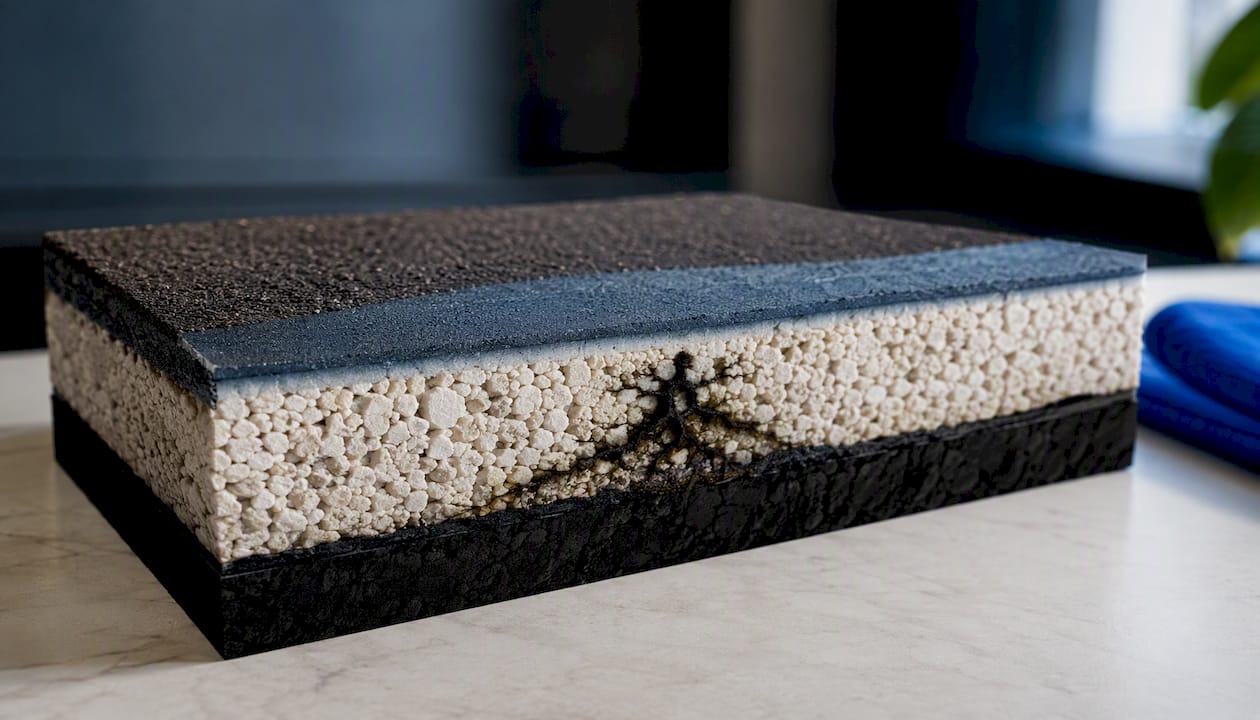
The spores travel by air, which is why algae often spreads roof to roof across an entire neighborhood in the same season. Humid climates and heavily shaded roofs accelerate colonization dramatically.
The damage timeline matters for how urgently you act:
- Early stage: cosmetic only, no measurable impact on shingle performance.
- Ongoing growth: holds moisture against the shingle surface, which can accelerate granule loss over time.
- Long-term: reduced granule coverage lowers UV reflectivity and can shorten the roof’s usable life.
Cleaning early is almost always cheaper than replacing a roof that aged prematurely under years of algae buildup.
How to Safely Remove Black Streaks From a Roof
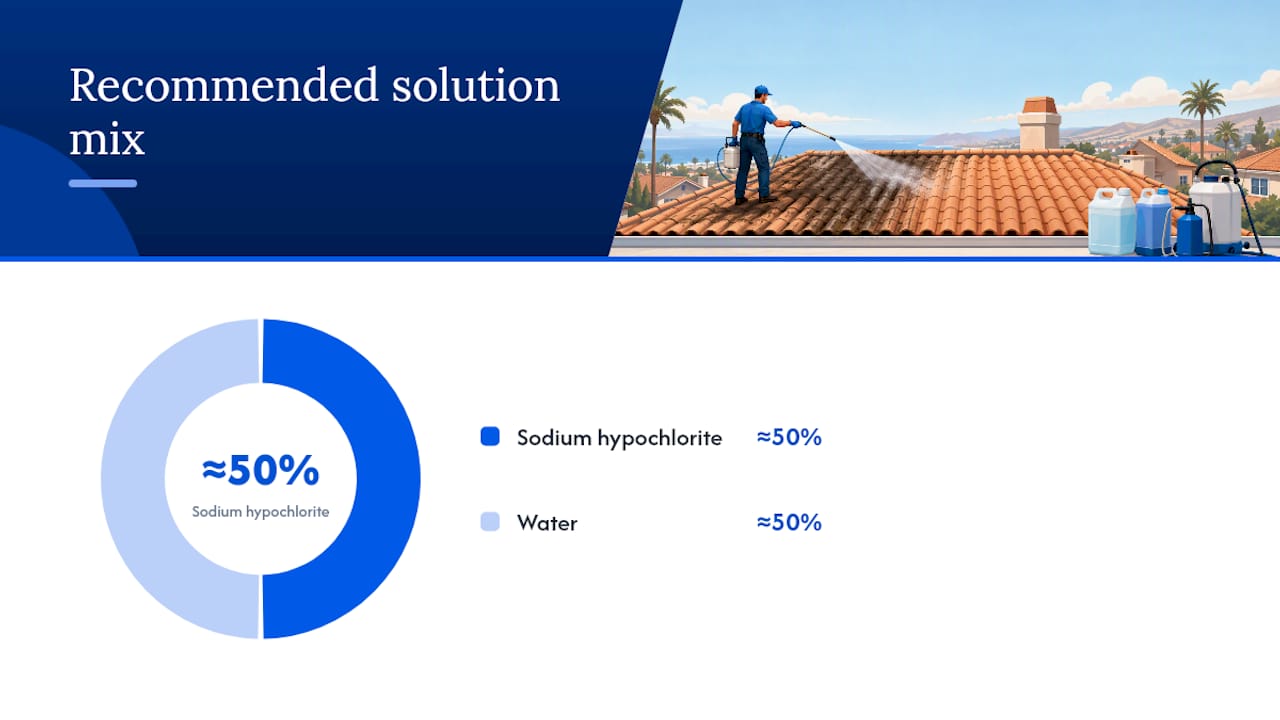
Soft washing is the method every credible source agrees on, and it works because it kills the organism chemically instead of blasting it off mechanically. The Asphalt Roofing Manufacturers Association recommends a roughly 50:50 mix of laundry-strength sodium hypochlorite and water, applied with a pump sprayer or dedicated soft-wash rig. If you’re worried about plant damage, sodium percarbonate (oxygen bleach) is a gentler option, though it often needs a longer dwell time or a repeat treatment to match bleach’s results.
Here’s the sequence that works:
- Clear loose debris, leaves, and branches off the roof surface first.
- Apply the cleaning solution starting at the ridge and working down.
- Let it sit 15 to 20 minutes. Don’t let it dry on the shingles.
- Rinse gently from ridge to eave using a garden hose, never a pressure washer.
- Inspect once dry and spot-treat any streaks that survived the first pass.
Wear gloves and eye protection, and soak nearby plants before and after to dilute any runoff. If your shingles are 15 years or older, cut the bleach concentration and dwell time to avoid stripping granules, and test a small hidden section first.
Pro Tip: Skip pressure washing entirely, even on the lowest setting. It strips protective granules and can void your shingle warranty, and This Old House’s guidance treats low-pressure soft washing as the only acceptable method for asphalt roofs.
For a broader look at the difference between the two techniques, our soft wash guide breaks down equipment and chemistry in more depth, and our roof pressure washing breakdown explains exactly what goes wrong when homeowners reach for the wrong tool.
Hire a professional if your roof is steep, aging, heavily colonized with moss or lichen, hard to access safely, or if you don’t have real ladder and fall-protection experience. This isn’t a task where “I’ll figure it out” pays off.
What Does Professional Roof Cleaning Cost?
Most single-family homes run $300 to $900 for a full soft-wash roof cleaning, with many landing near $675 for a typical 1,500-square-foot house. Price depends on roof size, pitch, and how severe the algae growth has gotten. A roof that’s been streaked for five years costs more to treat than one caught in its first season.
Professional soft-wash services usually bundle more than a chemical spray. Reputable contractors manage runoff to protect your landscaping, apply low-pressure rinsing rather than mechanical force, carry insurance, and often offer optional zinc or copper strip installation as part of the same visit.
Before you sign anything, ask:
- What chemical mix are you using, and at what concentration?
- What’s your maximum rinse pressure, and what equipment enforces that limit?
- How do you protect my plants, gutters, and siding from runoff?
- Can I see proof of insurance and a written guarantee?
- Do you have references from jobs similar to mine?
Red flags are easy to spot once you know what to look for: a contractor who insists pressure washing is “just as good,” can’t produce proof of insurance, or won’t put their chemical mix and method in writing. Walk away from any of those.
Preventing Black Streaks From Coming Back
Cleaning solves today’s problem. Prevention decides how many years pass before you’re back on a ladder doing it again. In humid climates, untreated roofs often see algae regrowth within 12 to 36 months. Prevention measures can stretch that interval considerably.
- Install zinc or copper ridge strips. Rain washes metal ions down the roof slope, and those ions inhibit algae from re-establishing. Leave 1 to 2 inches of strip exposed above the shingles, and add a second strip partway down slopes longer than 20 feet for full coverage.
- Choose algae-resistant (AR) shingles at your next replacement. They cost more upfront but make the most sense as a long-term fix rather than a retrofit on an existing roof.
- Trim overhanging branches to cut shade and let the roof dry faster after rain.
- Clear debris and gutters regularly so organic matter doesn’t feed new growth.
- Check attic and roof ventilation. Better airflow reduces the trapped moisture algae depends on.
Combine a soft wash with zinc strips and you can often push the clean interval from a couple of years out to three to six years or more.
Protecting Your Yard and Yourself During Cleanup
Chemical runoff is the part DIY cleaners forget until it’s too late. Soak grass, shrubs, and flower beds near the downspouts before you start, and rinse them again afterward to dilute anything that drips off the roof. Covering sensitive plants with plastic sheeting during application adds a second layer of protection.
- Water landscaping thoroughly before and after treatment to dilute runoff.
- Cover delicate plants and outdoor furniture near drip lines.
- Never climb onto a wet roof; algae and cleaning solution both make shingles dangerously slick.
- Use fall protection or hire a pro if the roof pitch is steep.
- Check local rules on chemical runoff and disposal, and always follow the product label’s directions.
If any of this gives you pause, that hesitation is worth listening to. A missed step on a wet, sloped roof is a far bigger problem than a few more months of black streaks.
How Often Should You Check Your Roof for Algae Regrowth?
A simple visual check twice a year, once in spring and once in fall, catches algae before it spreads into a full streak pattern. Walk your yard’s perimeter and look at the north-facing and shaded slopes first, since that’s where regrowth appears earliest.
Keep a rough log of when you last cleaned and what method was used. Roofs treated with soft-wash chemicals alone tend to need attention again within one to three years in humid regions. Roofs with zinc or copper strips installed usually don’t need a full retreatment for three to six years, though a light rinse in between can knock back early growth before it takes hold.
Watch for these signals that it’s time to act again:
- Faint gray-green discoloration reappearing on shaded slopes.
- Streaking creeping past the halfway point down a slope.
- Moss or lichen appearing alongside algae, which usually signals prolonged moisture retention.
Pair your visual checks with routine gutter clearing and debris removal, since clogged gutters keep water sitting against the roofline and speed up regrowth. Clearing debris off your roof does double duty: it protects the shingles directly and removes the organic material algae spores use to establish new colonies. If your ridge strips are more than five or six years old, check that they’re still exposed above any accumulated grime. Buried strips stop releasing the metal ions that keep algae from coming back.
Why Most Homeowners Wait Too Long to Deal With Algae
The conventional wisdom treats black streaks as a purely cosmetic annoyance, something to deal with “eventually.” That’s backwards. The organism itself doesn’t damage shingles quickly, but the moisture it traps does, and that clock starts the day the first streak appears, not the day you finally notice it from the driveway.
What gets underestimated is how much cheaper prevention is compared to correction. A set of zinc strips installed during a routine roof-cleaning visit costs a fraction of what a second full soft-wash treatment runs two years later, and it buys you years instead of months. Homeowners who treat algae as a one-time chore end up paying for the same problem repeatedly instead of once.
The other misconception is assuming DIY is always the cheaper, safer route. It’s cheaper on paper. It’s not safer on a steep roof with wet shingles underfoot, and a botched high-concentration bleach mix can strip granules just as fast as a pressure washer would. Bros Window Cleaning has spent years handling soft-wash roof cleaning, gutter clearing, and pressure-washing calls across Orange County, and the pattern is consistent: the roofs that stay clean longest are the ones where prevention got addressed at the same time as removal, not as an afterthought six months later.
If your roof is steep, aging, or you’re just not confident on a ladder, requesting an on-site quote costs you nothing and tells you exactly what you’re dealing with.
— nolan
Get Your Roof Professionally Soft-Washed in Orange County
Bros Window Cleaning treats black streaks the way ARMA and This Old House recommend: soft-wash chemistry and a gentle rinse, never a pressure washer that strips granules and shortens shingle life. That’s the real advantage for Orange County homeowners weighing a DIY bleach mix against hiring it out: you get insured, trained technicians who protect your landscaping and know how to dial back concentration on older shingles, without the trial-and-error risk of doing it yourself on a ladder.
Beyond roof cleaning, the team handles gutter clearing, solar panel cleaning, and exterior pressure washing, so the same visit that knocks out your algae streaks can also clear the debris that feeds regrowth in the first place. If you’ve read this far and you’re still not sure whether your roof needs a soft wash or a full inspection, that’s exactly the question a quick site visit answers. Check out the roof cleaning services page to see what’s included, and request a quote to get a firm price before anything touches your roof.
Sources
- Algae & Moss Prevention and Cleaning for Asphalt Roofing Systems – Asphalt Roofing Manufacturers Association (ARMA)
- How to Get Algae and Moss Off the Roof – This Old House
- Algae on Roofs: How to Remove It and Stop It Coming Back | RoofScour
- Algae streaks on a roof: Cause, clean, prevent | The Roofing Brief