
If your appliance still runs, try donation, resale, or a retailer/utility take-back program first since those routes are usually free and better for the environment. If it contains refrigerant, skip the curb entirely and use a certified recycler or a professional hauler who can document proper recovery. If you’re on a deadline or dealing with stairs and heavy lifting, hire full-service removal.
TL;DR:
- Appliances with refrigerant must be handled by certified professionals who provide documentation to comply with EPA recovery laws.
- Donation or retailer haul-away are usually free, but refrigerant appliances require certified recovery, and heavy or upstairs units generally need professional removal.
- Preparing appliances properly—unplugging, defrosting, securing doors, and measuring doorways—reduces rejection risk and damage during removal.
- Certified recycling centers or professional haulers are the only legal options for refrigerant-containing units due to hazardous materials regulations.
- Removing working appliances for donation or resale benefits the environment by delaying manufacturing impacts, whereas improper disposal releases harmful refrigerants.
Table of Contents
- Appliance Removal Options: Comparing Your Main Routes
- Refrigerant Appliances: What the EPA Actually Requires
- Getting Your Appliance Ready for Pickup or Drop-off
- What Appliance Removal Costs and How Long It Takes
- Donating or Reselling: Getting a Working Appliance Out Fast
- Using Municipal and Retailer Programs Without Getting Rejected
- When a Professional Removal Service Is the Right Call
- Handling Hazardous Materials Safely
- Legal Rules You Need to Know Before Disposal
- Why Proper Appliance Removal Matters Environmentally
- Maximizing Value When You Resell or Donate
- Choosing the Right Route When Time Is Tight
- Book Full-Service Appliance and Property Cleanout in Orange County
- Sources
Appliance Removal Options: Comparing Your Main Routes
Six routes cover almost every situation you’ll run into, and the right one depends on whether the appliance still works, how fast you need it gone, and whether you can physically move it yourself.
- Donation: Charities pick up working appliances for free in many areas, and you get a tax receipt in return. Best for units in good shape with no rush.
- Retailer haul-away: Many stores remove your old unit when they deliver the new one. Convenient, but confirm the fee and timing before you check out.
- Municipal bulk pickup: Cities often collect large items curbside on scheduled days, sometimes free, sometimes for a small fee. Slowest option, but low cost if you can wait.
- Certified recycling centers: Drop-off facilities that properly recover refrigerants and separate metals. Requires you to transport the unit yourself.
- Paid curb or full-service hauling: A company hauls it away, often same day, for a flat fee. Fastest option when the appliance is heavy or you’re short on time.
- Scrap yards: Some yards pay small amounts for metal appliances, mostly non-refrigerant units like washers, dryers, and stoves.
Working appliances almost always do best in donation or retailer channels since they extend the appliance’s life instead of shredding it prematurely. Broken units with refrigerant need certified handling no matter what, and anything stuck in a basement or up a flight of stairs usually settles the question in favor of a professional hauler regardless of condition.
Refrigerant Appliances: What the EPA Actually Requires
Fridges, freezers, and window AC units aren’t like other appliances because they hold refrigerant, and federal law treats that refrigerant as hazardous if it’s released into the atmosphere.
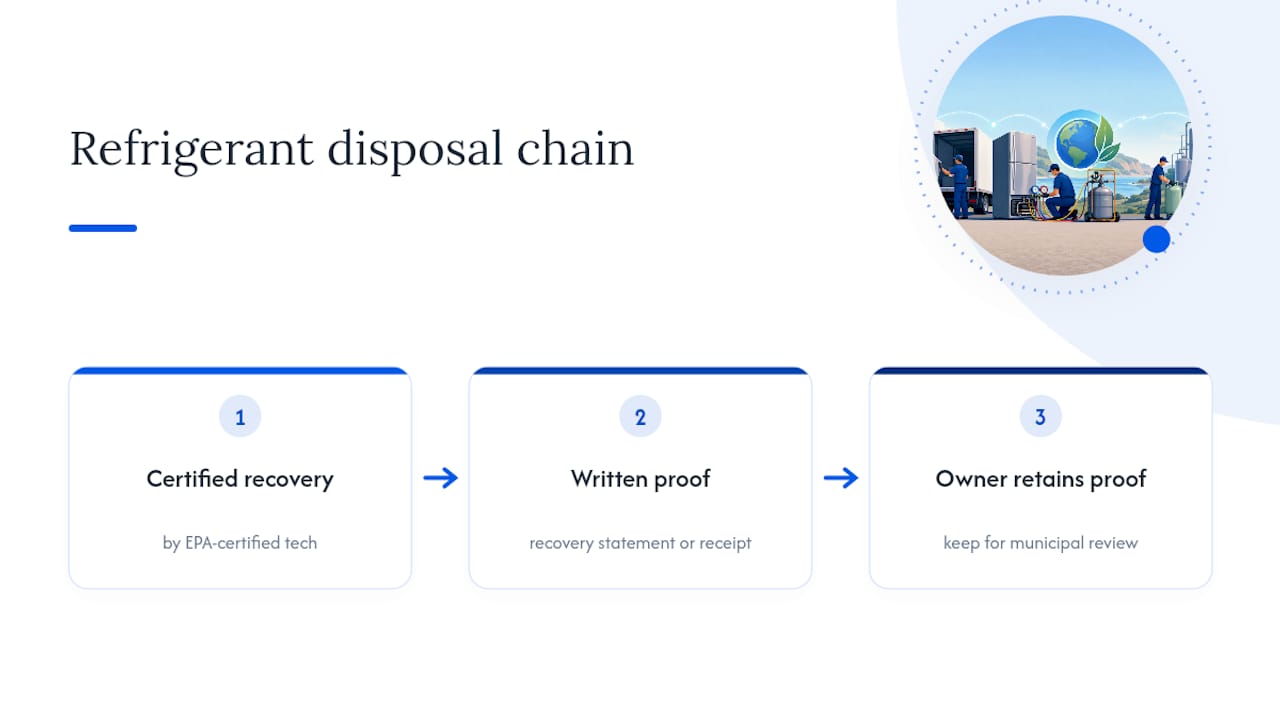
Pro Tip: Under EPA Section 608, refrigerant must be recovered from any appliance with a compressor before that appliance is disposed of, and the recovery has to be done by a certified technician or a certified recycler.
This rule eliminates certain options outright. You can’t legally set a working refrigerant unit on the curb for regular trash pickup, and most municipal bulk programs will reject it without proof of recovery. Certified recyclers, appliance retailers with take-back programs, and professional haulers who carry EPA certification are the routes that can legally take these units. The EPA also notes that foam insulation in older refrigerators often contains blowing agents that aren’t captured during standard shredding, which is one more reason certified facilities produce a cleaner environmental outcome than an uncertified scrap operation.
Ask for a written recovery statement or a recycler receipt before you hand over the unit. That paper trail matters if a municipal program later questions how the appliance was handled, and it’s the only real proof the refrigerant didn’t just vent into the air during transport.
Getting Your Appliance Ready for Pickup or Drop-off
A little prep prevents the two most common problems: a rejected pickup and a damaged appliance halfway out your door; see what appliance cleaning includes during moveout for key preparation steps What appliance cleaning includes during moveout.
- Unplug the appliance at least a day before pickup, and if it’s a refrigerator or freezer, defrost it roughly 24 hours ahead so no water leaks during transport.
- Empty all food, ice, and loose items, then remove shelves, bins, and racks that could shift and crack during the move.
- Tape or secure doors shut so they don’t swing open on stairs or in a truck bed.
- Leave gas line disconnection and refrigerant capping to a qualified technician. Never attempt this yourself.
- Measure doorways, hallways, and stairwells ahead of time so you know whether the unit will clear the path or need a door removed.
Professionals expect the unit unplugged, emptied, and accessible. They’ll handle the lifting, strapping, and hauling. Hold onto every piece of paperwork from the job, including pickup receipts and any rebate documentation, in case a utility program or tax filing asks for proof later. U-Haul’s prep guidance covers these same defrosting and clearing steps for anyone moving an appliance out of a home.
What Appliance Removal Costs and How Long It Takes
Price and speed move in opposite directions here. Free options take weeks; fast options cost money.
- Donation or retailer haul-away: Usually free, though retailer haul-away sometimes carries a small fee bundled into delivery.
- Municipal bulk pickup: Free to low-cost, but scheduled windows commonly run 2 to 9 weeks out depending on your city’s calendar.
- Certified recycling drop-off: Often free or low-cost, limited by your own ability to transport the unit.
- Paid curb or full-service removal: Typically ranges from free to $250 or more, with refrigerant recovery, in-home carry, and stairs adding to the total.
Same-day paid curb services tend to run cheaper than full in-home pickup precisely because you move the appliance to the curb yourself. If you need someone inside your house carrying it down two flights, expect a higher quote. Get an accurate estimate by sending clear photos, the exact model number, and a note about stairs, tight doorways, or long carry distances. Vague descriptions are the number one reason quoted prices change on pickup day.
Donating or Reselling: Getting a Working Appliance Out Fast
A functioning appliance is worth money or a tax deduction, not a curb spot. Several charities regularly pick up working units, though availability varies by city and by how full their donation calendar is that week, so call ahead rather than assuming next-day pickup.
- Check charity websites directly for appliance donation eligibility before you schedule anything.
- On marketplaces, post clear photos from multiple angles, describe the condition honestly (working, minor cosmetic wear, etc.), and specify “free curb pickup” or “pickup by appointment” so buyers know what to expect.
- Respond quickly to interested buyers. Appliances move fast when priced right, but interest also cools fast if you’re slow to reply.
- Save your donation receipt. It should list the appliance type and the organization’s name, which you’ll need if you plan to claim it as a deduction.
Using Municipal and Retailer Programs Without Getting Rejected
City bulk pickup and retailer take-back are two of the most common free-or-cheap routes, and they’re also where most mistakes happen.
- Look up your city’s bulky-item pickup page or call your local transfer station before setting anything curbside. Frontier Waste’s guidance notes that many programs require an appointment, and appliances left out without one often get skipped or flagged.
- Confirm whether ID or a scheduled window is required, since some transfer stations only accept appliances during specific hours.
- When buying a new appliance, ask the retailer whether haul-away is included with delivery or billed separately. Store haul-away policies vary widely, and some retailers only remove the old unit if it’s the same appliance type being replaced.
- Search ENERGY STAR’s recycling locator for utility rebate or turn-in programs. Many utilities pay a rebate or bill credit for a working refrigerator or freezer, making this one of the best economic options if your unit still runs.
When a Professional Removal Service Is the Right Call
Certain situations make hiring a pro the obvious move rather than the fallback. Inside pickups, basements, second-floor units, and refrigerant appliances all tilt heavily toward professional service.
- The appliance is inside the home, in a basement, or on an upper floor with narrow stairs.
- It contains refrigerant and needs certified recovery paperwork you can present later.
- You’re on a tight deadline, such as a move-out date or a renovation schedule.
- You physically can’t lift or maneuver the unit alone.
Pro Tip: Ask upfront whether a carry fee applies for basement or upstairs pickups. Professionals use appliance dollies and straps, and most won’t remove a door frame to squeeze a unit through, so measuring your doorways in advance saves everyone a wasted trip.
A full-service crew typically handles the in-home carry, transport, and disposal paperwork, and prioritizes certified recycling over landfill dumping wherever the appliance qualifies. Broswindowcleaningoc offers junk removal alongside its exterior cleaning services for Orange County properties, which makes it a practical option if you’re already clearing out a home or coordinating multiple cleanup tasks in one visit. If you’re deciding between a DIY hauling company and a local team you can evaluate for scope and reliability, start by matching the service to what your appliance and your stairs actually demand.
Handling Hazardous Materials Safely
Appliances aren’t just metal and plastic. Older units in particular can carry components that require careful handling, not casual curbside tossing.
Refrigerators and freezers built before the mid-1990s may contain mercury switches or PCB-laden capacitors in addition to refrigerant. Older air conditioners and some dehumidifiers carry similar risks. None of these belong in a regular trash bag, and none should be smashed open to “make disposal easier,” a habit that release hazardous residue directly into your yard or garage.
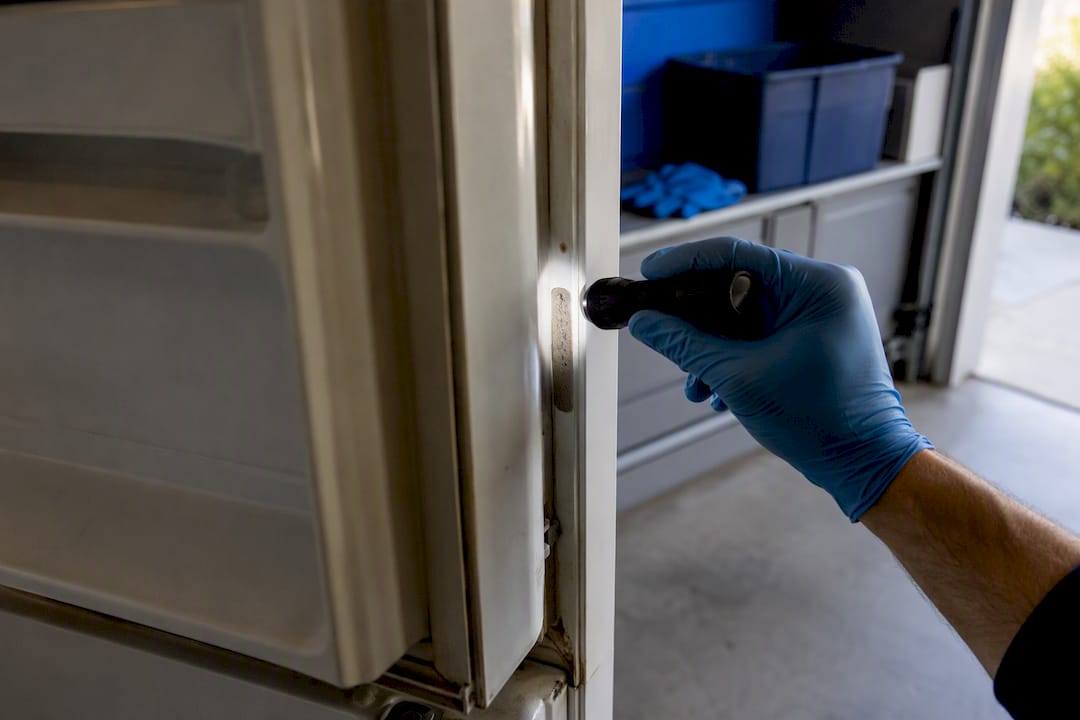
The safest approach is to treat any appliance manufactured before the 1990s as a candidate for professional or certified handling rather than assuming it’s safe to break down yourself. Certified recyclers separate these materials using dedicated processes, capturing mercury switches and PCB capacitors before the rest of the unit gets shredded for metal recovery. If you’re unsure of an appliance’s age or components, check the manufacturer’s plate, usually located on the back or inside the door frame, for a manufacture date. Anything unclear is worth a phone call to a certified recycler before you move it anywhere.
Store any suspect appliance in a garage or covered area away from kids and pets until pickup, rather than leaving it exposed to weather or foot traffic in a driveway. Cracked casings or corroded wiring are signs to call a certified hauler immediately rather than attempting to move the unit yourself.
Legal Rules You Need to Know Before Disposal
Appliance disposal isn’t a free-for-all, and skipping the rules can cost you more than the removal itself would have.
Federal law under EPA Section 608 governs refrigerant recovery nationwide, but many states and cities layer on their own requirements, including permit rules for bulk transport or specific recycling mandates for electronics-adjacent appliances. Illegal dumping, meaning leaving an appliance on public land or someone else’s property without authorization, typically carries fines that vary by jurisdiction and can run into hundreds of dollars per violation, and some areas escalate for repeat offenses.
Municipal bulk pickup programs commonly reject refrigerant appliances that arrive without documentation showing the refrigerant was recovered, and some jurisdictions fine residents who set units curbside outside scheduled windows or without required tags. Before you assume a program will take your appliance, confirm the specific rules for your address rather than going by what worked for a neighbor or a different city.
If you’re managing a rental property or commercial space, check whether your local jurisdiction requires proof of proper disposal for compliance records, particularly for units removed during renovations or tenant turnovers. Keeping recycler receipts and pickup confirmations protects you if a dispute or inspection ever comes up.
Why Proper Appliance Removal Matters Environmentally
Every refrigerant appliance disposed of incorrectly is a small but real source of atmospheric harm, since the refrigerants and blowing agents involved are potent greenhouse gases when released untreated.
Certified recycling doesn’t just keep hazardous substances out of landfills. It also recovers metals like steel, copper, and aluminum that would otherwise be mined new, and it captures oils and refrigerants that would otherwise vent into the air during improper scrapping. The EPA has noted that foam insulation blowing agents in particular often escape untreated during standard shredding processes unless a facility runs a dedicated recovery step, which is one reason not all recycling operations produce equal environmental results.
Choosing donation or resale for a working appliance adds an environmental benefit beyond disposal entirely: it delays the need for a new appliance to be manufactured, shipped, and eventually disposed of itself. A refrigerator that gets a second life in someone else’s kitchen for five more years is five years of manufacturing impact avoided. That’s a bigger lever than most people realize when they’re just trying to clear space in a garage.
The takeaway for property owners is simple. The route you choose changes the actual environmental outcome, not just your personal convenience. A landfill-bound appliance with unrecovered refrigerant does measurable harm; the same appliance handled through a certified recycler or a working donation does not.
Maximizing Value When You Resell or Donate
A little effort before listing an appliance usually pays off in a faster sale or a smoother donation, and it costs you almost nothing beyond ten extra minutes.
Clean the appliance before photographing it. A wiped-down exterior and an odor-free interior photograph far better than a dusty, cluttered one, and buyers notice immediately. Take photos in good lighting from multiple angles, including the inside, the model/serial plate, and any wear spots you’re disclosing. Honesty about condition, minor dents, a slow ice maker, a squeaky door, actually speeds up transactions because buyers trust listings that don’t oversell.
Price competitively by checking what similar working models are listed for locally rather than guessing. If you’re donating instead of selling, ask the charity for an itemized receipt listing the appliance type, brand, and estimated condition, since a vague receipt is harder to defend if your tax preparer or the IRS ever asks for support on a deduction.
Timing matters too. Appliances tend to move faster in spring and early summer when people are renovating or moving, so if you have flexibility on timing, list then rather than in the dead of winter when demand for secondhand kitchen appliances typically slows.
Choosing the Right Route When Time Is Tight
Three scenarios cover most real decisions. If time isn’t a constraint and the appliance still works, donation or a utility rebate program almost always beats every other option on both cost and environmental outcome. If the unit contains refrigerant, certified recovery paperwork isn’t optional, so a certified recycler or a professional hauler who documents recovery is the only responsible path. And if you’re facing a deadline or a heavy-lift problem like stairs or a basement, paying for professional removal usually costs less in the long run than a damaged appliance or a missed moving date.
— nolan
Book Full-Service Appliance and Property Cleanout in Orange County
Broswindowcleaningoc is the practical alternative to juggling separate donation calls, retailer scheduling, and municipal pickup windows. One booked visit covers full-service appliance removal alongside the exterior cleaning work Orange County property owners already call for, including window cleaning, pressure washing, and gutter service, so you’re not coordinating three different companies for one property cleanout.
Before requesting a quote, have the appliance type, its location in the home (ground floor, basement, upstairs), and any stairs or tight doorways noted. That’s the information that determines pricing and scheduling, and having it ready gets you an accurate number on the first call instead of a revised estimate on pickup day. Check current window cleaning and property service options to see the full scope of what a single visit can include, and book a time that works around your move or renovation deadline.
Sources
- Appliance Disposal | US EPA
- How to get rid of old appliances | Dropcurb
- How to Get Rid of Old Appliances Before You Move | U-Haul
- How to Dispose of Old Appliances: Eco-Friendly Options for Responsible Removal | Frontier Waste