
Inspecting gutters before the rainy season is the single most effective step a homeowner can take to prevent water damage to their foundation, fascia, and basement. Gutters are a drainage system, and like any system, they fail silently until a storm exposes every weak point. Industry standards recommend gutter inspections at least twice yearly, with late spring and late autumn as the target windows. Knowing why inspect gutters before rainy season matters gives you the power to act before a downpour turns a $50 fix into a $5,000 repair.
Why inspect gutters before rainy season: the core case
Gutters do one job: move rainwater away from your home’s structure. When they fail, water pools against your foundation, saturates the soil, and creates cracks that worsen every season. Properly functioning gutters discharge water at least 4 to 6 feet from the foundation to prevent soil saturation and costly structural damage. That distance is not a suggestion. It is the minimum standard separating a dry basement from an expensive one.
Most homeowners think a gutter inspection means looking for leaves. The real inspection covers slope, joint integrity, fascia condition, and downspout discharge position. Hidden damage like fascia rot and failing roof flashing is invisible from the ground and only surfaces during a hands-on check. Catching these issues before rain arrives costs a fraction of what repairs cost after water has already entered the structure.
How to perform an effective gutter inspection
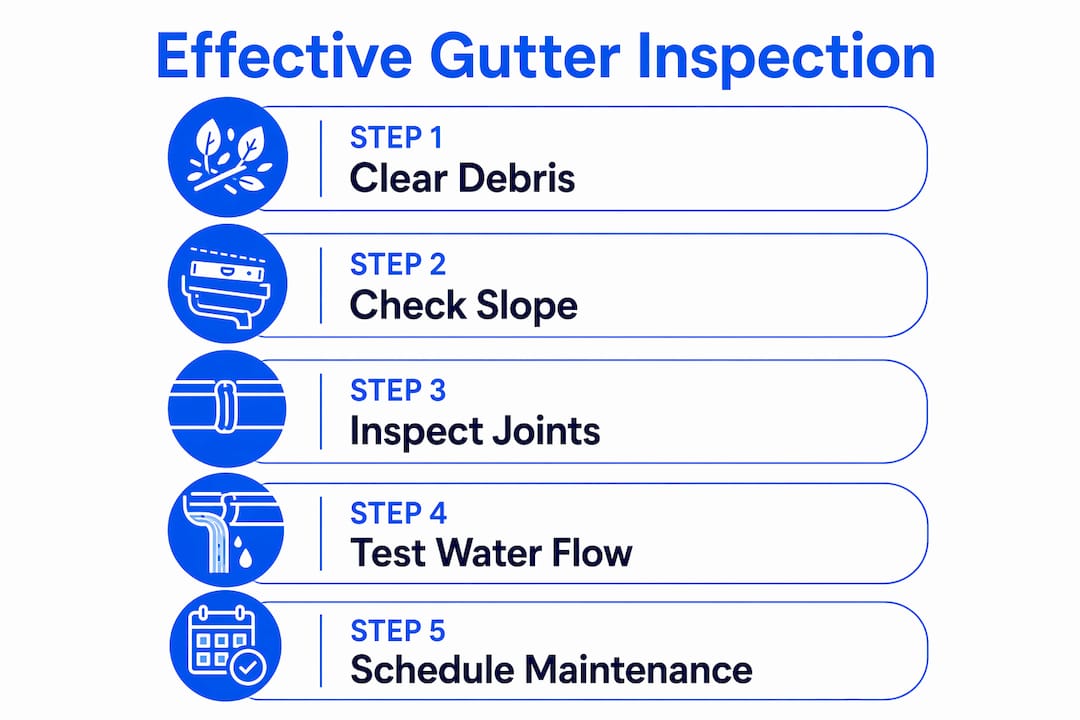
A thorough gutter inspection follows a clear sequence. Skipping steps is how problems get missed.
- Clear visible debris first. Remove leaves, twigs, and compacted material by hand or with a plastic scoop. Metal tools scratch protective coatings and accelerate rust, so use plastic scoops for DIY cleaning.
- Flush out the muck layer. Fine organic sediment and pollen pack hard at the bottom of gutters and block water flow even when the channel looks clean. Run a garden hose from the far end toward the downspout to flush this layer out completely.
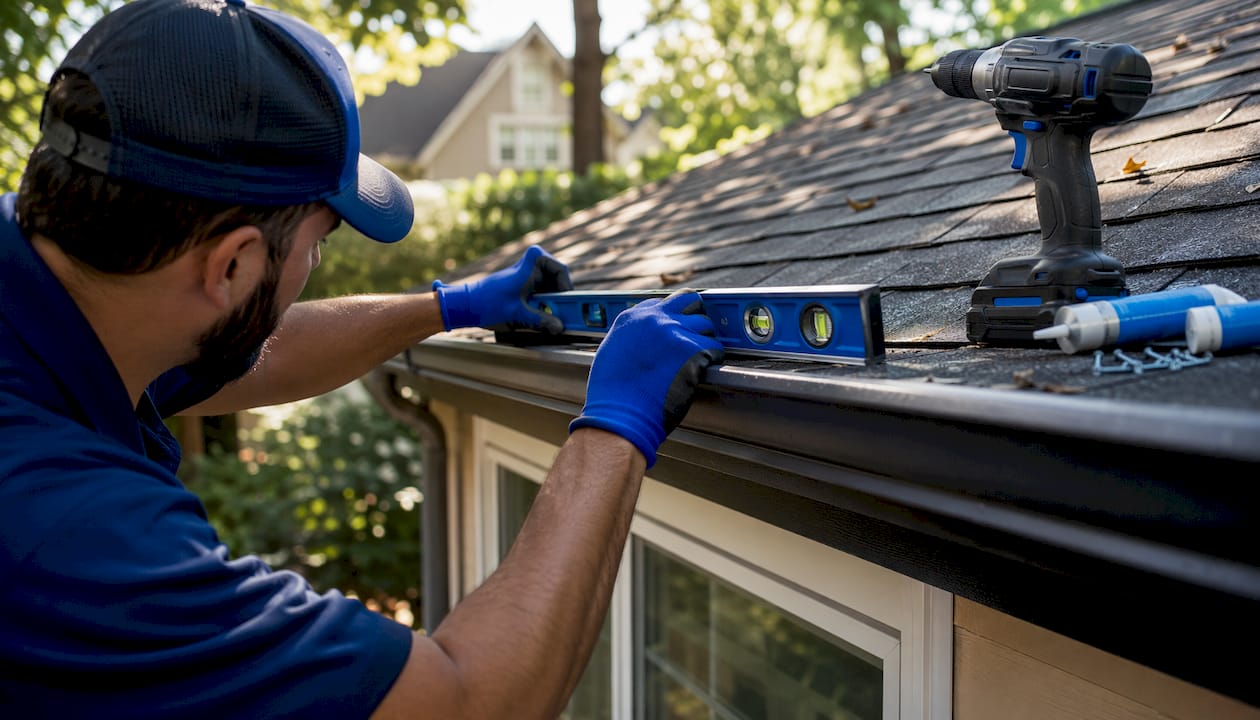
- Check the slope. Gutters require a pitch of approximately 1/4 inch drop per 10 feet toward each downspout. Standing water remaining more than 24 hours after rain signals a slope problem that needs correction.
- Inspect joints, seams, and brackets. Hidden cracks and loose brackets cause most gutter failures, not visible debris. Press along seams and check that every bracket holds the gutter firmly against the fascia.
- Examine the fascia and roof flashing. Soft or discolored wood behind the gutter indicates water has already been seeping. Damaged roof flashing at the gutter line lets water under shingles.
- Confirm downspout discharge distance. Extend downspout extenders if water exits less than 4 feet from the foundation wall.
Pro Tip: Run your garden hose at full pressure from the roof end of the gutter while a second person watches the downspout at ground level. Slow discharge or backflow at joints tells you exactly where the blockage or leak sits.
Use safe ladder practices throughout. Set the ladder on firm, level ground, never lean it against the gutter itself, and always have a spotter present. The warning signs your gutters need attention are often visible from the ladder before you even touch the gutter.
Why dry weather is the right time for gutter checks
Inspecting gutters during or after heavy rain is both ineffective and dangerous. Water rushing through the system hides blockages, and wet roofs and ladders create serious fall risks. Dry weather gives you clear visibility into the gutter channel, stable footing, and the ability to test drainage on your own terms.
- Schedule after seasonal debris settles. The best inspection window is after leaves have fully dropped in autumn and after spring pollen season ends. Inspecting too early means debris is still falling and will re-clog the system within days.
- Test drainage with controlled water. Use a garden hose to simulate rain. This lets you observe flow rate, joint leaks, and downspout performance without the chaos of an actual storm.
- Prepare for freezing weather. Disconnecting downspouts and rain barrels before the first freeze prevents pipe splits and water backups that damage the entire system. Frozen debris in a connected rain barrel can crack both the barrel and the downspout.
- Address ice dam risk proactively. Gutters and roofs function as an integrated system, and clogged gutters in cold climates allow ice dams to form. Ice dams force water under shingles, causing interior leaks that appear far from the original gutter problem.
Pro Tip: If you live in a climate with freezing winters, do your most thorough inspection in late autumn, before the first hard freeze. This single inspection prevents the majority of winter water damage.
The importance of gutter upkeep during dry periods cannot be overstated. Waiting until rain arrives to discover a problem means the damage is already in progress.
Common gutter problems found during inspections
Pre-season inspections consistently surface the same set of problems. Each one carries a specific consequence if left unaddressed.
- Clogs causing overflow. Blocked gutters force water over the edge and directly against the foundation. Repeated saturation creates soil movement and foundation cracks that cost thousands to repair.
- Fascia board rot. Water seeping behind a clogged or sagging gutter soaks the fascia board. Rot spreads quickly and can compromise the structural attachment of the entire gutter run.
- Standing water breeding mosquitoes. Water sitting in a low-pitched or blocked gutter section creates a breeding ground for mosquitoes within 48 to 72 hours. It also accelerates rust in metal gutters.
- Sagging sections causing detachment. Gutters loaded with wet debris or standing water pull away from the fascia. A detached gutter section during a storm becomes a falling hazard and leaves the roofline unprotected.
- Ice dam formation. In colder regions, water trapped in gutters freezes and backs up under shingles. The resulting interior leaks often appear as ceiling stains far from the gutter line, making the source difficult to trace.
Understanding gutter debris types and their effects helps you recognize which problems are developing before they become structural. Early detection consistently reduces repair costs compared to waiting for visible damage that requires full replacement.
How often should you schedule gutter inspections?
The frequency of gutter inspections depends on your property’s tree coverage and local climate. A single annual inspection is rarely enough.
| Property type | Recommended inspections per year | Best timing |
|---|---|---|
| Low tree coverage | 2 | Late spring, late autumn |
| Moderate tree coverage | 2–3 | Spring, mid-autumn, post-storm |
| Heavy tree coverage | 3–4 | Spring, summer, autumn, post-storm |
| Cold climate (ice dam risk) | 3+ | Spring, late autumn, mid-winter check |
Homes with heavy tree coverage require 3 to 4 cleanings annually to avoid water damage from accumulated debris. That frequency is not excessive. It reflects the actual rate at which organic material accumulates and compacts.
Beyond scheduled inspections, check gutters after any major storm. High winds deposit large debris volumes quickly, and a single storm can clog a system that was clean the week before. A post-storm visual check from the ground takes five minutes and can prevent weeks of water intrusion damage.
Spring cleaning removes pollen and seed debris that packs into the muck layer. Autumn cleaning clears leaves before the first freeze locks debris in place. Both windows are non-negotiable for effective home drainage protection.
Key Takeaways
Pre-season gutter inspection is the most cost-effective home maintenance task a homeowner can perform, because it prevents foundation damage, fascia rot, and ice dams before a single drop of rain falls.
| Point | Details |
|---|---|
| Inspect at least twice yearly | Schedule in late spring and late autumn; add checks after major storms. |
| Check slope and joints, not just debris | A 1/4 inch drop per 10 feet is required; loose brackets and cracked seams cause most failures. |
| Flush the muck layer | Fine sediment blocks flow even when gutters look clean; use a garden hose to confirm drainage. |
| Disconnect downspouts before freezing | Prevents pipe splits, backups, and ice dam formation that damage roofs and interiors. |
| Heavy tree coverage needs more frequent care | Properties with significant tree canopy require 3 to 4 inspections per year to stay protected. |
What years of gutter inspections actually taught me
Most homeowners treat gutters as a set-it-and-forget-it system. That mindset is exactly why water damage is one of the most common and expensive home repair categories year after year.
The detail that surprises people most is the muck layer. You can look into a gutter, see no leaves, and assume it is clean. But that compacted layer of fine sediment and pollen at the bottom is blocking flow just as effectively as a pile of leaves. The only way to know the gutter is truly clear is to run water through it and watch what comes out the downspout.
The second thing most homeowners miss is slope. Gutters are not supposed to be level. A perfectly level gutter holds standing water, breeds rust, and eventually sags under its own weight. The 1/4 inch per 10 feet pitch rule is simple, but almost nobody checks it without a level in hand.
My honest recommendation is to do one careful inspection yourself in late autumn, before the rains arrive. Walk the perimeter, get on the ladder, flush the system, and look at every bracket. If something feels wrong, call a professional before the season starts. The cost of a professional inspection is a fraction of what fascia replacement or foundation repair costs. Proactive gutter care is not a luxury. It is the cheapest insurance your home has.
— nolan
Broswindowcleaningoc’s pre-rain gutter service for Orange County homeowners
Broswindowcleaningoc serves Orange County homeowners who want their gutters ready before the rains arrive, not after the damage is done.

Professional gutter cleaning from Broswindowcleaningoc goes beyond debris removal. Technicians verify slope, inspect joints and seams, check fascia condition, and confirm downspout discharge distance. These are the checks that DIY inspections most often miss. If you want a full picture of what a professional service covers, the gutter cleaning homeowner’s guide walks through every step. Broswindowcleaningoc is fully insured, locally based, and available for seasonal scheduling before the first major storm of the year. Book your pre-rain inspection before the calendar fills up.
FAQ
Why should I inspect gutters before the rainy season?
Gutters direct rainwater away from your foundation, and a blocked or damaged system causes overflow that leads to foundation cracks, fascia rot, and basement flooding. Inspecting before rain arrives lets you fix problems while conditions are safe and costs are low.
How do I check if my gutters have the right slope?
Use a level and measure for a drop of approximately 1/4 inch per 10 feet toward the downspout. Standing water remaining more than 24 hours after rain is the clearest sign the slope needs adjustment.
What is the muck layer and why does it matter?
The muck layer is compacted fine sediment and pollen that settles at the bottom of gutters. It blocks water flow even when no visible debris is present, so flushing with a garden hose is the only reliable way to confirm the gutter channel is clear.
How often should gutters be inspected and cleaned?
Biannual inspections in late spring and late autumn are the industry standard for most homes. Properties with heavy tree coverage need 3 to 4 cleanings per year, plus a check after any major storm.
Can clogged gutters really damage my roof?
Yes. Clogged gutters allow ice dams to form in cold climates, which force water under shingles and cause interior leaks. Gutters and roofs work as an integrated system, and neglecting one directly shortens the lifespan of the other.