
Window cleaning is a direct contributor to LEED certification points, specifically under the Green Cleaning and Indoor Environmental Quality credit categories. Property managers who treat window washing as a purely cosmetic task miss a real opportunity to earn 2–3 LEED points through documented, certified cleaning programs. Under LEED EBOM v4 and v4.1, Green Seal-certified cleaning services and products can account for up to 5% of the 40 points required for minimum LEED certification. The role of window cleaning in LEED certification extends beyond appearances. Clean glazing supports daylight autonomy metrics, reduces artificial lighting loads, and directly improves occupant health and productivity.
What does LEED certification require for window cleaning programs?
LEED certification does not treat window cleaning as optional maintenance. Under LEED EBOM v4 and v4.1, green cleaning programs must cover all building surfaces, including glazing, and must meet specific documentation and product standards to qualify for credits.
The credit structure works in layers:
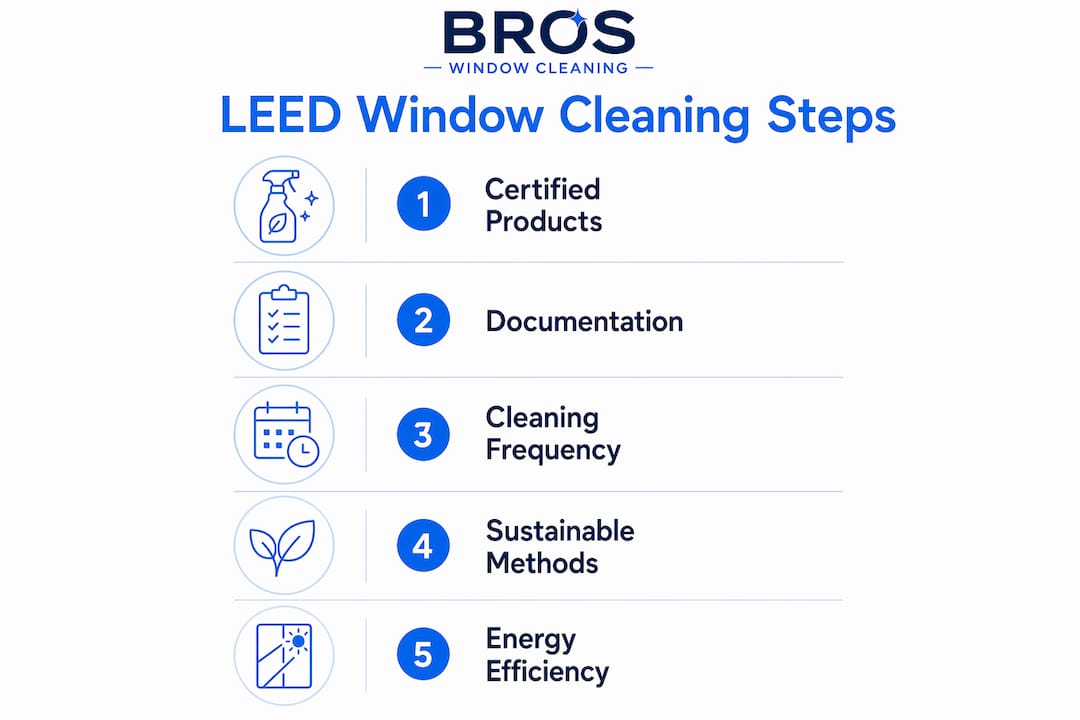
- Use Green Seal-certified products. Cleaning products applied to windows must carry Green Seal certification. Using a Green Seal-certified service with certified products directly contributes to the Green Cleaning credit.
- Document cleaning frequency. LEED auditors require written records of how often windows are cleaned, not just proof that cleaning happened. Schedules must appear in formal Standard Operating Procedures.
- Train cleaning staff. Staff must receive documented training on LEED-compliant procedures, including proper chemical handling and application methods.
- Maintain inspection records. Auditors review inspection logs alongside cleaning schedules. A gap in records can cost you the credit even if the cleaning was done correctly.
- Integrate window cleaning into the broader green cleaning plan. Window washing cannot stand alone. It must be part of a structured green cleaning program that covers products, procedures, and training across the entire building.
Property managers can earn 2–3 LEED points by integrating window cleaning into high-frequency, documented green cleaning programs under LEED EBOM v4 and v4.1. Those points represent real progress toward certification thresholds that require a minimum of 40 points.
Pro Tip: Request a sample Standard Operating Procedure from your cleaning provider before signing a contract. If they cannot produce one, they are not LEED-audit ready.
How does window cleanliness affect energy efficiency and daylight performance?
Clean glazing is a technical requirement for meeting daylight autonomy metrics under LEED v4.1 and BOMA BEST certification credits. Dirty windows block and scatter natural light, reducing the measurable daylight that reaches interior spaces. When daylight levels fall below LEED thresholds, buildings compensate with artificial lighting, which raises energy consumption and undermines the energy performance credits you are trying to protect.
The connection between clean windows and building performance shows up in several ways:
- Daylight autonomy scores drop when glazing is coated with grime, mineral deposits, or film. LEED v4.1 requires buildings to demonstrate that occupied spaces receive adequate natural light for a defined percentage of annual hours.
- Occupant productivity and mental health improve with consistent natural light exposure. High-frequency professional window cleaning is a documented health and wellness strategy, not just a building maintenance task.
- Energy costs decrease when clean windows reduce reliance on electric lighting during daylight hours. This supports both LEED energy credits and ESG reporting metrics.
- Sustainability reporting becomes more defensible when window cleaning frequency is logged and tied to measurable daylight performance outcomes.
The importance of window upkeep in LEED goes beyond the cleaning itself. It creates a chain of benefits: more natural light, lower energy use, healthier occupants, and stronger certification scores.
What sustainable window cleaning practices align with LEED and ESG goals?
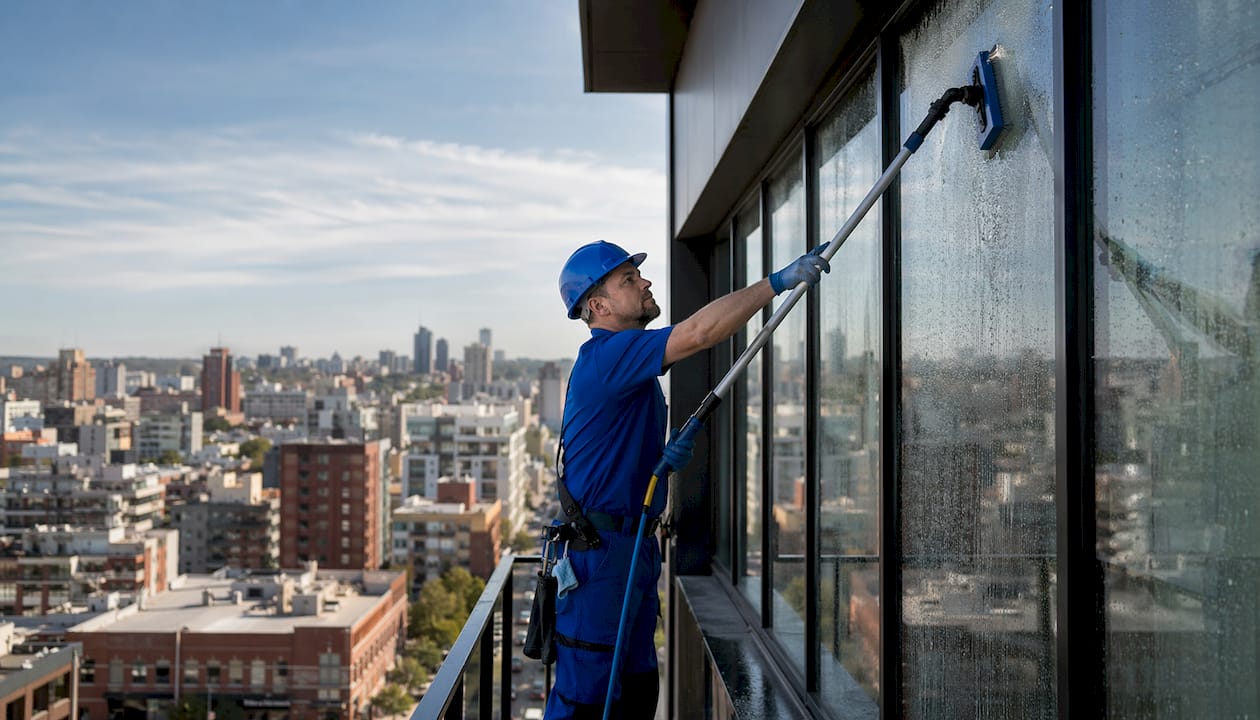
Sustainable window cleaning is defined by the products used, the methods applied, and the documentation that supports both. LEED and ESG frameworks reward cleaning programs that minimize chemical runoff, reduce energy consumption, and produce verifiable records.
Choosing the right products and methods
Pure water window cleaning systems use deionized water with no added detergents. This eliminates chemical runoff entirely, which directly supports ESG goals and satisfies LEED’s requirement to avoid harsh cleaning agents near building exteriors and drainage systems. Green Seal-certified products must be used when detergents are necessary. These products meet strict environmental and health standards that LEED auditors recognize.
For eco-friendly window cleaning on high-rise buildings, the method of access also matters. Abseiling uses no powered equipment beyond basic rigging, while mechanical lifts consume electricity and generate emissions. Using abseiling instead of mechanical lifts reduces operational carbon footprints, which strengthens sustainability reporting under both LEED and corporate ESG frameworks.
Documentation as a sustainability practice
A cleaning schedule written into a formal SOP is worth more to a LEED auditor than a stack of receipts. Documenting window washing schedules in SOPs with inspection records is often more critical for audit readiness than the cleaning frequency itself. Your documentation should include the product name and Green Seal certification number, the date and scope of each cleaning, the name of the trained staff member who performed the work, and any inspection findings.
Pro Tip: Store all cleaning SOPs and inspection logs in a single digital folder organized by quarter. LEED auditors work faster when records are easy to retrieve, and faster audits reduce your administrative costs.
How can property managers integrate window cleaning into LEED efforts?
Building a LEED-compliant window cleaning program requires four concrete steps. Each one is manageable on its own, but they only produce certification results when implemented together.
- Develop a documented cleaning schedule. Set window cleaning frequency based on your building type, local climate, and LEED credit targets. A commercial building in a high-pollution area may need monthly exterior cleaning. Document the schedule in your green cleaning SOP before the first cleaning takes place.
- Select certified providers and products. Verify that your cleaning provider uses Green Seal-certified products and can supply documentation on request. Ask for their product list and certification numbers upfront. Providers who understand LEED certification cleaning requirements will have this information ready.
- Train all cleaning staff on LEED procedures. Training must be documented. Each staff member should sign a training record that specifies what procedures they learned, which products they are authorized to use, and when the training occurred. LEED auditors check training records as part of the Green Cleaning credit review.
- Monitor compliance and maintain records for audits. Schedule quarterly reviews of your cleaning logs. Compare actual cleaning dates against your SOP schedule. Flag any gaps and document how they were resolved. Consistent compliance records are what convert a good cleaning program into a LEED credit.
The shift in LEED v5 from mandatory prerequisites to optional credits means property managers must pursue green cleaning credits proactively rather than assuming compliance is automatic. Buildings that already have documented window cleaning programs will adapt to LEED v5 requirements with far less effort than those starting from scratch.
Key Takeaways
Window cleaning earns LEED points only when it is certified, documented, and integrated into a formal green cleaning program with trained staff and audit-ready records.
| Point | Details |
|---|---|
| Certified products are required | Green Seal-certified cleaning products must be used and documented to qualify for LEED Green Cleaning credits. |
| Documentation outweighs frequency | Written SOPs and inspection logs matter more to LEED auditors than how often windows are cleaned. |
| Clean glazing supports energy credits | Dirty windows reduce daylight autonomy scores, which raises energy use and weakens LEED energy performance credits. |
| Pure water systems reduce runoff | Deionized water cleaning eliminates chemical runoff, supporting both LEED and ESG environmental goals. |
| LEED v5 requires proactive management | The shift to optional credits in LEED v5 means property managers must actively pursue green cleaning compliance rather than rely on prerequisites. |
What I’ve learned from watching property managers overlook window cleaning
Most property managers I talk to think about LEED credits in terms of HVAC upgrades, solar panels, and water-efficient fixtures. Window cleaning rarely comes up until they are already in the middle of a certification audit and realize their cleaning program has no documentation. That gap costs them points they could have earned with almost no additional spending.
The real oversight is not the cleaning itself. It is the failure to treat window cleaning as a building performance activity rather than a janitorial task. When you connect clean glazing to daylight autonomy scores, you start to see it differently. A dirty window is not just an aesthetic problem. It is a measurable drag on your building’s energy performance and occupant wellness metrics.
My advice to property managers is to select providers who can speak the language of LEED. Ask them directly: “Can you provide a Green Seal product list and a sample SOP?” If they hesitate, keep looking. The right window cleaning provider treats documentation as part of the service, not an afterthought.
The coming shift in LEED v5 will make this even more consequential. Buildings that have already built clean, documented window cleaning programs will have a clear advantage as the credit landscape evolves. Those that have not will scramble to catch up.
— nolan
Broswindowcleaningoc: window cleaning built for sustainable buildings
Property managers pursuing LEED certification need a cleaning partner who understands the difference between washing windows and earning credits.
Broswindowcleaningoc serves commercial and residential properties across Orange County with documented cleaning programs, Green Seal-aligned products, and pure water systems that eliminate chemical runoff. Every service includes the scheduling records and product documentation your LEED auditor will ask for. Whether you are working toward initial certification or maintaining an existing rating, Broswindowcleaningoc delivers the window cleaning compliance your green building program requires. Get a quote today and build a cleaning program that works as hard as your sustainability goals.
FAQ
What LEED credits does window cleaning contribute to?
Window cleaning contributes primarily to the Green Cleaning credit under LEED EBOM v4 and v4.1, earning 2–3 points when integrated into a documented, certified cleaning program. It also supports Indoor Environmental Quality credits by maintaining daylight autonomy metrics.
Do cleaning products need to be certified for LEED compliance?
Green Seal-certified products are required for LEED Green Cleaning credits. Using uncertified products, even with a documented schedule, disqualifies the cleaning program from earning those points.
How does window cleaning frequency affect LEED scores?
Frequency matters, but documentation matters more. LEED auditors require written records of cleaning schedules and inspections. A well-documented monthly cleaning program outperforms an undocumented weekly one in a LEED audit.
What is the difference between LEED v4.1 and LEED v5 for cleaning requirements?
LEED v4.1 includes mandatory green cleaning prerequisites, while LEED v5 shifts cleaning to optional credits. Property managers must actively pursue compliance under LEED v5 rather than assuming it is covered by default.
Can pure water window cleaning systems help with LEED certification?
Pure water systems use deionized water with no detergents, eliminating chemical runoff entirely. This directly supports LEED environmental quality goals and ESG reporting, making them the preferred method for LEED-aligned window cleaning programs.