
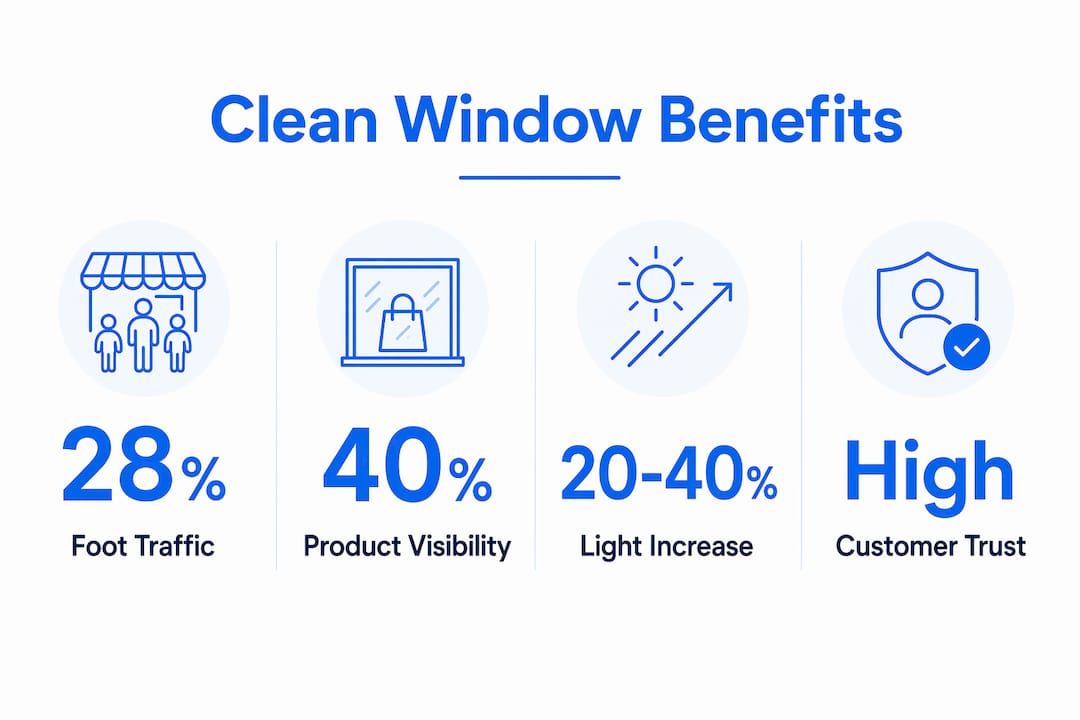
Clean windows are defined as the primary visual interface between your products and every potential customer walking past your storefront. The role of clean windows in product visibility is direct and measurable. Retail studies show that clean windows can improve product visibility by approximately 40% and increase foot traffic by up to 28%. Customers form their first impression within seven seconds. That means your windows are doing sales work before a single person walks through your door. Treating window cleanliness as a strategic asset, not a chore, is the mindset shift that separates high-performing retail storefronts from forgettable ones.
How clean windows improve product visibility and attract customers
Grime, pollen, hard water deposits, and exhaust buildup all reduce glass transparency. Each layer of environmental residue distorts the product display behind the glass, making colors look dull and shapes harder to read. A passerby who cannot clearly see what you are selling has no reason to stop.
Clear glass does more than remove a barrier. It actively extends how long people pause in front of your store. Window-shopping dwell time increases by an average of 12 seconds when windows are clean. Twelve seconds sounds minor, but in retail psychology, it is enough time for a browser to become a walk-in.

Dirty windows also trigger a behavioral response called loss aversion. When visibility is poor, customers subconsciously avoid engagement because the effort of investigating feels greater than the potential reward. They move on. Clean windows remove that friction entirely, making engagement feel effortless.
The impact of window cleanliness compounds over time. A store that consistently maintains clear glass trains the neighborhood to expect quality. Irregular cleaning creates inconsistency in how your brand reads from the street.
- Grime layers scatter light and distort product colors from the outside
- Hard water stains create permanent-looking haze that no display design can overcome
- Pollen and exhaust film accumulate faster in high-traffic urban areas, requiring more frequent cleaning cycles
- Clear windows signal that the store is open, active, and worth entering
Pro Tip: Set a fixed cleaning schedule tied to your highest-traffic days. If Saturday is your busiest day, schedule professional cleaning for Friday morning so your windows are at peak clarity when foot traffic peaks.
Does window cleanliness affect brand image and customer trust?
73% of customers judge a business by its exterior cleanliness, and over 90% say a store’s appearance influences their decision to enter. Those numbers make window cleanliness one of the highest-leverage brand signals available to any retail owner.
The mechanism behind this is the halo effect. When customers see a clean, well-maintained exterior, they subconsciously assume the interior meets the same standard. That assumption extends to product quality, staff professionalism, and even pricing fairness. A dirty window does the opposite. It plants doubt before the customer has seen a single product.
“Clean windows act as a silent marketer, influencing brand perception and customer trust more than many business owners realize. Window transparency fosters familiarity and openness, creating a connection between customers and your products before they ever step inside.”
Window transparency also communicates honesty. A store you can see into feels safer and more welcoming than one obscured by grime. That sense of openness is a trust signal that no amount of interior signage can replicate from the street.
- Clean exteriors signal that the business is well managed
- Visible products build anticipation and desire before entry
- Transparent glass creates a psychological sense of accessibility
- Consistent cleanliness builds neighborhood reputation over time
Pro Tip: Pair your window cleaning schedule with other exterior maintenance tasks like pressure washing the entrance and cleaning signage. A clean window next to a stained sidewalk still sends a mixed message.
What do clean windows do for natural light and product display?
Removing environmental buildup from glass increases natural light transmission by 20–40%. That is not a cosmetic improvement. It is a measurable change in how your products look and how your store feels to anyone inside.
Natural light renders product colors more accurately than artificial lighting. A jacket that looks navy under fluorescent light reads as a rich, deep blue in natural daylight. Customers trust what they see in natural light because it matches how products look in the real world. Dirty windows act as light diffusers, scattering incoming light and dulling the visual impact of every display inside.
Storefronts with better natural lighting see higher sales and customer satisfaction. The effect is partly psychological. Bright, naturally lit spaces feel more inviting and less clinical. Customers spend more time in them.
| Condition | Natural light transmission | Effect on product display | Customer experience |
|---|---|---|---|
| Clean windows | 100% of available light | Colors accurate, displays vivid | Warm, inviting, high dwell time |
| Lightly soiled windows | 70–80% of available light | Slight color muting, minor haze | Neutral, no strong reaction |
| Heavily soiled windows | 60% or less of available light | Colors dull, displays obscured | Uninviting, reduced engagement |
The table above shows why window cleanliness is a lighting strategy, not just a hygiene task. Retailers who invest in artificial lighting to compensate for dirty windows are spending money to solve a problem that a cleaning schedule would prevent.
Practical steps for maintaining clean windows as a sales strategy
Professional window cleaning is a strategic sales tool, not a cosmetic expense. The distinction matters because it changes how you budget and prioritize it. A store that treats window cleaning as optional will always deprioritize it. A store that treats it as part of the sales floor maintenance will protect it.
Regular professional cleaning also catches problems early. Routine maintenance helps detect early-stage seal failures and moisture issues before they become costly repairs. A professional cleaner notices a failing seal or a developing crack. A staff member with a squeegee does not.
Freeing your staff from window cleaning also has a direct operational benefit. Professional cleaning shifts staff focus away from low-value manual tasks toward customer service and sales. Every hour a team member spends cleaning windows is an hour not spent on the floor helping customers.
When choosing a window cleaning service for your retail location, look for providers with commercial experience, flexible scheduling, and full insurance coverage. The features of quality window cleaners include consistent technique, appropriate equipment for your glass type, and reliability across repeat visits.
- Audit your current window condition. Note areas with hard water stains, streaks, or visible buildup that standard cleaning has not resolved.
- Set a cleaning frequency based on your location. High-traffic urban storefronts may need weekly cleaning. Suburban locations may manage with bi-weekly or monthly schedules.
- Hire a professional service with commercial retail experience. Verify insurance and ask for references from similar businesses.
- Integrate window cleaning into your broader exterior maintenance calendar alongside pressure washing and signage cleaning.
- Track the results. Monitor foot traffic and sales data in the weeks following a cleaning cycle to quantify the business impact.
Pro Tip: Ask your window cleaning provider to flag any glass damage, seal failures, or frame issues during each visit. You get a free inspection with every cleaning, and early detection prevents expensive repairs.
Key Takeaways
Clean windows are the single most cost-effective storefront improvement a retail owner can make, directly increasing product visibility, foot traffic, and customer trust.
| Point | Details |
|---|---|
| Visibility drives foot traffic | Clean windows improve product visibility by approximately 40% and increase foot traffic by up to 28%. |
| First impressions happen fast | Customers form impressions within seven seconds, making window clarity a primary trust signal. |
| Natural light boosts sales | Removing buildup increases light transmission by 20–40%, improving product color accuracy and customer experience. |
| Dirty windows trigger avoidance | Loss aversion causes customers to skip stores with poor window visibility, reducing walk-ins without any conscious decision. |
| Cleaning is a sales investment | Professional window cleaning frees staff for customer service and catches costly maintenance issues early. |
What I’ve learned from watching clean storefronts outperform dirty ones
I’ve spent years watching retail businesses invest heavily in interior displays, signage, and promotions while completely ignoring the glass between those displays and the street. The pattern is consistent. The stores with the cleanest windows tend to have the busiest floors, and the correlation is not coincidental.
What surprises most owners is how fast the impact shows up. A single professional cleaning on a previously neglected storefront can visibly change foot traffic within days. The products did not change. The displays did not change. The only variable was the glass.
The deeper insight is about brand management. Clean windows are not just about visibility. They are a daily statement about how much you care about your business. Customers read that statement before they read your signage. The curb appeal and property value research backs this up. Exterior cleanliness shapes perception at a level that most interior marketing cannot reach.
My honest recommendation is to stop treating window cleaning as a task that happens when someone notices the windows are dirty. Schedule it. Budget for it. Measure it. The businesses that do this consistently are the ones that stop wondering why foot traffic is inconsistent.
— nolan
How Broswindowcleaningoc helps retail businesses stay visible
Retail storefronts in Orange County face a specific challenge: coastal air, traffic exhaust, and seasonal pollen create buildup that accumulates faster than most owners expect. Broswindowcleaningoc provides professional commercial window cleaning designed to keep your glass at peak clarity year-round.
With over five years of experience serving Orange County businesses, Broswindowcleaningoc offers fully insured, scheduled cleaning plans built around your operating hours. Services cover exterior and interior glass, with attention to hard water stains and environmental buildup that standard cleaning misses. Stay current with the latest window cleaning trends in 2026 and schedule a consultation to build a maintenance plan that works for your storefront and your sales goals.
FAQ
How much can clean windows increase retail foot traffic?
Clean windows increase retail foot traffic by 15–28% and improve product visibility by approximately 40%. The effect is strongest in high-pedestrian areas where window displays are the primary customer touchpoint.
How often should a retail storefront get professional window cleaning?
High-traffic urban storefronts benefit from weekly or bi-weekly professional cleaning. Suburban locations with lower environmental exposure can typically maintain clarity with monthly service.
Do dirty windows actually reduce sales?
Yes. Dirty windows trigger a loss aversion response that causes customers to avoid engagement with the store entirely. The subconscious calculation is that the effort of investigating is not worth the uncertain reward.
What is the halo effect in retail window cleanliness?
The halo effect means customers assume internal quality matches exterior cleanliness. A spotless storefront window signals professional standards, quality products, and a well-run operation before any customer steps inside.
Can clean windows replace artificial lighting investments?
Clean windows reduce the need for supplemental artificial lighting by increasing natural light transmission by 20–40%. They do not replace a full lighting strategy, but they make every existing light source more effective at no additional energy cost.