
Entrance glass cleaning is the process of removing dirt, smudges, mineral deposits, and residue from glass surfaces at building entryways to maintain visibility and curb appeal. The industry term for this work is entryway glass maintenance, and it covers far more than wiping down a pane. It includes cleaning frames, tracks, seals, and door hardware as part of a single integrated routine. Whether you manage a retail storefront in Orange County or maintain a residential front door, the right technique separates a streak-free result from a cloudy, damaged surface.
What is entrance glass cleaning, and how does it differ from standard window cleaning?
Entrance glass cleaning differs from general window cleaning because it treats glass and hardware as one connected system. Glass doors experience daily mechanical stress from opening, closing, and foot traffic that standard windows never face. That stress affects seals, frames, and alignment, so a proper cleaning routine addresses all of those components together.
Standard window cleaning focuses on the glass surface alone. Entrance glass maintenance, by contrast, requires inspecting door hardware, lubricating hinges, and checking seal integrity during every cleaning visit. Skipping those steps turns a cosmetic task into a missed opportunity to catch mechanical wear before it becomes a costly repair.
A streak-free entrance also functions as a nonverbal quality signal. Customers read a clean, clear entry as evidence that a business is well run. That perception directly affects foot traffic and trust, making entrance glass maintenance a business asset, not just a chore.
What are the best professional techniques for cleaning entrance glass?
Professional entrance glass cleaning follows a two-step process. The first step is dry: dust frames, sills, and tracks with a soft natural hair brush or a vacuum before any liquid touches the glass. The second step is wet: clean with distilled water and a mild, ammonia-free solution to avoid damaging coatings and seals.
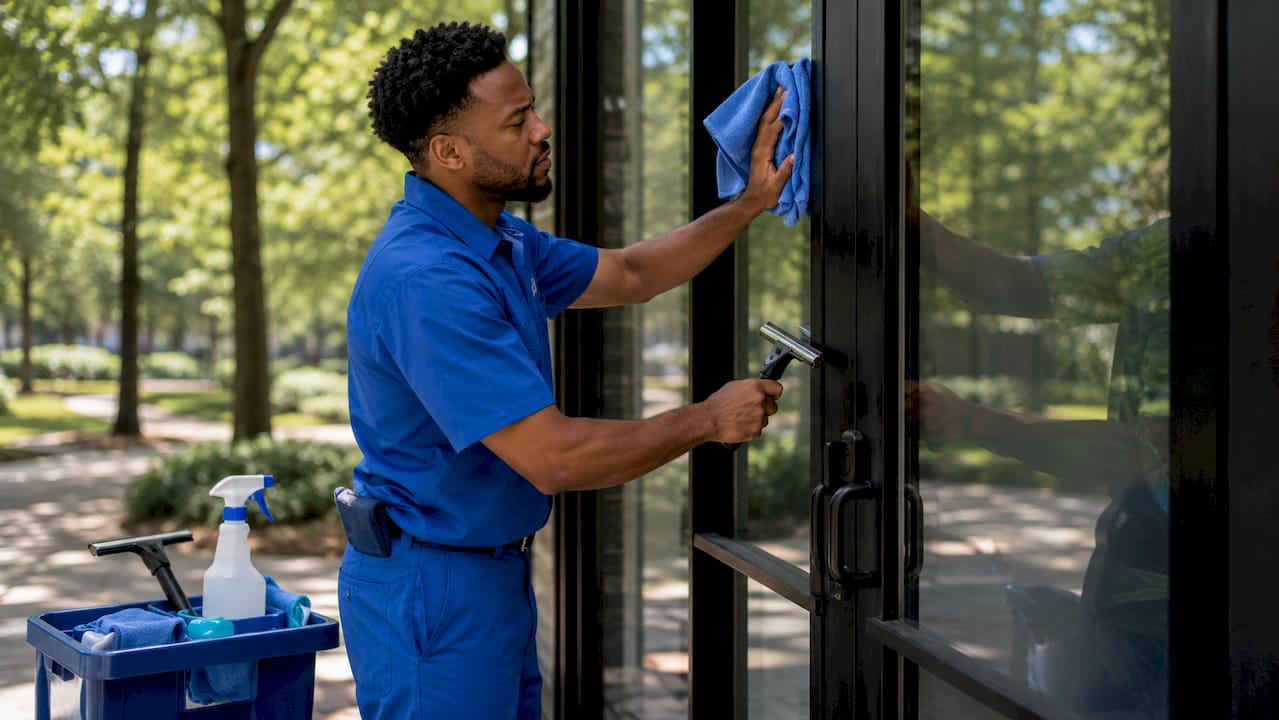
The sequence matters. Wet cleaning over dry dust creates muddy streaks that are harder to remove than the original dirt. Starting dry removes abrasive particles that would otherwise scratch the glass during the wet pass.
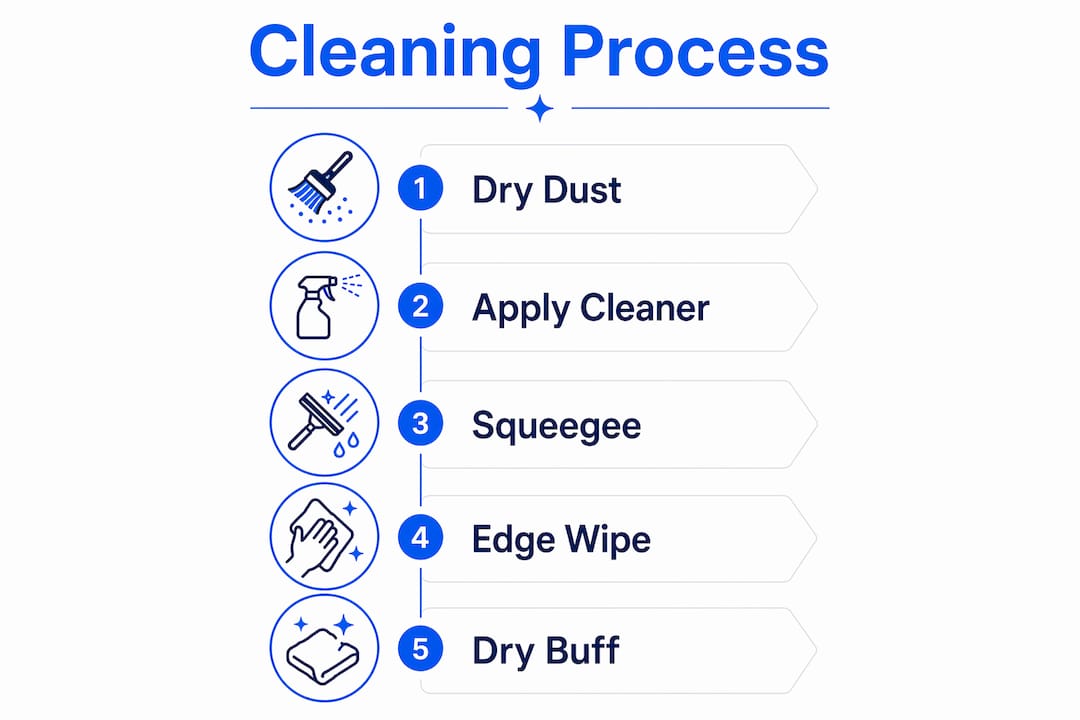
Here is the full professional technique in order:
- Dry dust frames and tracks using a soft natural hair brush or a low-suction vacuum attachment.
- Mix your solution with distilled water and a minimal amount of mild dish soap. Professionals use roughly a nickel-sized drop of dish soap per gallon of water to avoid residue that attracts more dirt.
- Apply the solution with a clean microfiber cloth or a scrubber sleeve, working from top to bottom.
- Squeegee with correct blade angle. Lead the upper blade edge slightly ahead of the lower edge on each pass. Wipe the blade with a lint-free cloth after every stroke.
- Detail the edges with a dry microfiber cloth to catch any drips along the frame.
- Inspect hardware for alignment issues, worn seals, or signs of corrosion before finishing.
Pro Tip: Never clean entrance glass in direct sunlight. The solution evaporates too quickly in heat and leaves mineral residue behind. Schedule cleaning for early morning or overcast days for the best results.
Microfiber cloths require special care. Avoid paper towels and fabric softener entirely. Paper towels leave lint. Fabric softener coats microfiber fibers and destroys their ability to absorb. Wash microfiber cloths with water only to preserve their cleaning performance.
How often should entrance glass be cleaned?
Cleaning frequency depends on location, traffic volume, and environmental exposure. The right schedule prevents mineral etching and clouding that become permanent if left too long.
Key frequency guidelines:
- Commercial entrances in high-traffic or construction-heavy areas require weekly cleaning to prevent permanent mineral damage from pollution and fingerprints.
- Residential glass doors need cleaning every 4–6 weeks to maintain their finish and clarity.
- Coastal or dusty environments call for more frequent spot cleaning between full sessions. Salt air deposits mineral residue faster than inland locations.
- High-humidity climates accelerate water spotting on exterior glass, especially on north-facing doors that stay damp longer.
- Regular hardware inspections should accompany every cleaning. Check for doors dragging, rubbing, or showing signs of seal deterioration.
Consistent scheduling prevents the kind of mineral etching that requires glass restoration rather than simple cleaning. Once minerals etch into the surface, no amount of standard cleaning removes them. Prevention through routine maintenance is always cheaper than remediation.
What mistakes cause streaks, scratches, and damage on entrance glass?
Most entrance glass damage comes from the wrong tools and the wrong timing, not from neglect alone. Knowing what to avoid is as useful as knowing the correct technique.
Pro Tip: If you notice a hazy film after cleaning, the culprit is almost always residue from harsh chemicals or too much soap. Switch to a pH-neutral solution with distilled water and the film disappears.
Common mistakes to eliminate from your routine:
- Using paper towels. They leave lint fibers on the glass that are visible in direct light and attract dust faster than a clean surface.
- Using ammonia or alcohol-based cleaners. These chemicals degrade protective coatings and dry out rubber seals, leading to air and water infiltration over time.
- Cleaning in direct sunlight. The solution dries before you can squeegee it off, leaving mineral rings and streaks baked onto the surface.
- Ignoring door hardware. Skipping hardware checks during cleaning leads to alignment failures and costly glass door repairs that could have been caught early.
- Using standard tap water. Tap water contains minerals that deposit on glass as it dries. Distilled or deionized water prevents spotting far better than any spray cleanser.
- Relying on janitorial staff without specialized equipment. Standard janitorial tools lack the pure water systems needed to remove mineral deposits from exterior glass surfaces.
The pattern behind most of these mistakes is the same: using household shortcuts on a surface that requires purpose-built tools. Entrance glass, especially on commercial properties, takes more abuse than any other glass surface on a building. It deserves a purpose-built approach.
How to build a maintenance plan for entrance glass
A maintenance plan works when it accounts for your specific location, traffic level, and budget. Generic schedules fail because a beachfront restaurant in Orange County and a suburban home face completely different conditions.
Follow these steps to build a plan that holds up:
- Assess your environment. Identify your exposure factors: coastal salt air, construction dust, heavy foot traffic, or direct sun. Each factor shortens the interval between full cleanings.
- Set your cleaning intervals. Use weekly for commercial high-traffic entrances and every 4–6 weeks for residential doors. Add spot cleaning between full sessions for dusty or coastal locations.
- Assemble the right tools. A high-quality squeegee, microfiber cloths, a soft natural hair brush, and distilled or purified water are the foundation. Streak-free results depend on tool quality as much as technique.
- Include frames, tracks, and hardware in every session. Glass cleaning without frame and hardware care is incomplete. Regular hardware maintenance, including lubricating hinges and checking seals, prevents mechanical failures.
- Schedule a professional deep clean quarterly. Professional cleaners bring pure water systems and specialized equipment that remove mineral buildup beyond what standard tools reach. That quarterly reset extends the life of your glass and hardware significantly.
Partnering with a professional service for at least part of your maintenance schedule pays off in reduced repair costs and preserved curb appeal. The ROI of clean windows for commercial properties is measurable in customer perception and foot traffic, not just aesthetics.
Key Takeaways
Entrance glass cleaning is a system-based maintenance process that protects glass clarity, hardware function, and business perception when done correctly and consistently.
| Point | Details |
|---|---|
| Two-step cleaning process | Always dry dust frames and tracks before applying any wet solution to prevent muddy streaks. |
| Cleaning frequency matters | Commercial entrances need weekly cleaning; residential doors need cleaning every 4–6 weeks. |
| Tool choice determines results | Use microfiber cloths, a quality squeegee, and distilled water to avoid streaks and mineral deposits. |
| Hardware is part of the job | Inspect and maintain door alignment, seals, and hinges during every cleaning session. |
| Avoid sunlight and harsh chemicals | Clean in shade or on overcast days and use only pH-neutral, ammonia-free solutions. |
Why entrance glass cleaning is about more than appearances
The conventional wisdom treats entrance glass cleaning as a cosmetic task. That framing undersells what is actually happening every time a door opens and closes. Glass entrance doors are mechanical systems. They carry weight, absorb impact, and cycle through thousands of open-close movements per year. Every one of those cycles puts stress on seals, frames, and hardware. Cleaning that ignores those components is maintenance theater.
What I have seen consistently is that businesses that treat entrance cleaning as a full system task, glass plus hardware plus seals, spend far less on repairs over a three-year period than those that only wipe the glass. The savings are not marginal. A failed door seal or a misaligned frame can mean a full door replacement. A squeegee and a hardware check cost almost nothing by comparison.
The other thing most guides miss is the timing detail. Cleaning in direct sunlight is not just a minor inconvenience. It is the single most common reason professional-looking tools produce amateur results. The solution dries in seconds on a hot glass surface, and no amount of squeegee skill fixes that. Shade and timing are free. Use them.
For homeowners, the practical takeaway is simple: treat your front door glass the way you treat your car. You would not wash your car in direct sun with dish soap and paper towels. The same logic applies here. The right tools and the right timing cost almost nothing extra and produce results that last weeks longer than shortcuts.
— nolan
Professional entrance glass cleaning in Orange County

Broswindowcleaningoc has delivered professional window and entrance glass cleaning across Orange County for over five years. The team uses pure water systems, professional-grade squeegees, and ammonia-free solutions that protect coatings and hardware finishes on both residential and commercial properties. Every visit includes frame, track, and hardware inspection so nothing gets missed.
If you are ready to move beyond DIY results, review the key features of quality window cleaners to understand what separates a professional service from a basic wipe-down. Broswindowcleaningoc offers flexible scheduling for one-time deep cleans and recurring maintenance plans tailored to your property type and location.
FAQ
What does entrance glass cleaning include?
Entrance glass cleaning includes removing dirt, smudges, and mineral deposits from glass surfaces, frames, tracks, and seals at building entryways. A complete service also inspects door hardware for alignment and wear.
What products are safe for cleaning glass doors?
The safest products are distilled water combined with a small amount of mild, pH-neutral dish soap. Avoid ammonia-based and alcohol-based cleaners, as they damage protective coatings and dry out rubber seals.
How do I avoid streaks when cleaning entrance glass?
Use a quality squeegee with the upper blade edge leading slightly ahead of the lower edge, and clean only in shade or on overcast days. Microfiber cloths washed without fabric softener also prevent lint-based streaking.
How often should commercial entrance glass be cleaned?
Commercial entrance glass in high-traffic or construction-heavy areas should be cleaned weekly to prevent permanent mineral etching and maintain a professional appearance.
Can I clean entrance glass myself or do I need a professional?
You can handle routine cleaning with the right tools and technique, but professional services bring pure water systems and specialized equipment that remove mineral buildup beyond what standard household tools can reach.