
An insured cleaning company is defined as a professional cleaning service that carries active general liability insurance, workers’ compensation, and bonding to transfer financial risk away from the property owner and onto the cleaning contractor. The role of insured cleaning companies goes far beyond scrubbing windows or pressure washing driveways. For property owners and managers in Orange County and across the country, hiring an insured cleaning service is a contract requirement, a liability shield, and a standard of operational professionalism. Understanding what that insurance actually covers, and how to verify it, separates smart property management from costly exposure.
What types of insurance do cleaning companies carry?
Insured cleaning services operate under a layered coverage structure. Each policy type addresses a different category of risk, and understanding them helps you ask the right questions before signing any service agreement.
General liability insurance is the foundation. It covers third-party claims for bodily injury and property damage arising from cleaning operations. If a cleaner cracks a window pane, floods a bathroom, or causes a slip-and-fall, general liability covers those claims. Most states do not legally require it for cleaning companies, but clients routinely demand it in contracts. This means the market, not the law, enforces the standard.
Workers’ compensation covers medical costs and lost wages when a cleaning employee is injured on the job. The critical detail here: independent contractors are not covered by workers’ comp. If a cleaning company staffs its crews with 1099 contractors and one gets hurt on your property, you could face a claim directly. Always ask whether the company’s workers are W-2 employees or independent contractors before accepting a certificate of insurance.
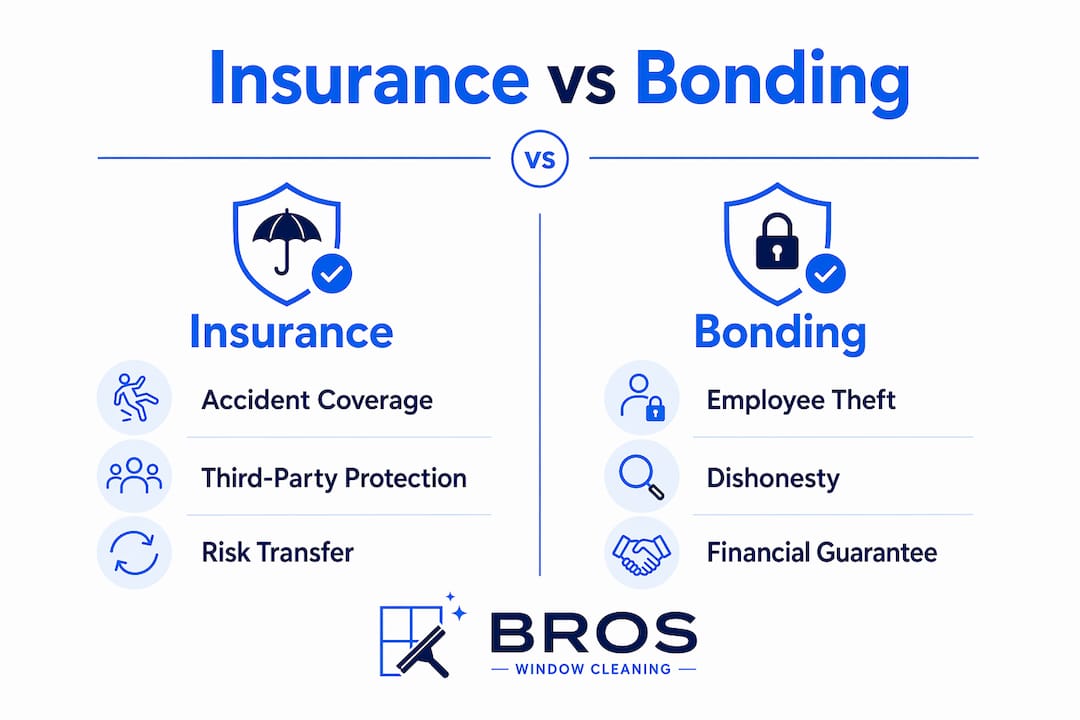
Bonding protects you against employee theft or dishonesty. It is not the same as insurance, and the distinction matters. Bond amounts typically range from $50,000 to $500,000 per occurrence, providing a financial backstop if a cleaning employee steals from your property.
Umbrella liability provides excess coverage above the general liability limit. Umbrella premiums range from $5,000 to $30,000 annually for $1 million to $5 million in additional coverage. Enterprise property managers often require umbrella coverage in contracts because a single catastrophic incident can exceed standard policy limits.
Here is a quick summary of what each coverage type addresses:
- General liability: Third-party bodily injury and property damage claims
- Workers’ compensation: On-the-job injuries to cleaning employees
- Janitorial bond: Employee theft or dishonesty on your premises
- Umbrella liability: Catastrophic claims exceeding standard policy limits
- Endorsements: Additional insured status and waiver of subrogation for contract compliance
Pro Tip: Ask for a certificate of insurance that names you as an additional insured. This gives you direct rights under the cleaning company’s policy, not just an indirect benefit.
How does hiring an insured cleaning company protect you?
The practical protections are concrete and worth spelling out. When you hire an insured cleaning service, you transfer the financial consequences of cleaning-related incidents from your balance sheet to the contractor’s insurance program.
- Bodily injury coverage. If a cleaning crew member or a third party is injured during a cleaning visit, the cleaning company’s general liability policy responds first. Without this, the injured party may pursue a claim against you as the property owner.
- Property damage coverage. Cleaning operations carry real damage risk. Pressure washing can crack masonry. Window cleaning solutions can streak or stain. A properly insured company’s policy covers repair or replacement costs.
- Contract compliance. Commercial cleaning contracts often require proof of liability insurance with specific endorsements naming the property owner as additional insured. Hiring an uninsured vendor puts you in breach of your own property management agreements.
- Claims handling. When an incident occurs, an insured company’s carrier manages the claim, including legal defense costs. This removes you from the administrative burden of dispute resolution.
- Operational credibility. Insurance signals that a cleaning company operates at a professional standard. It reflects screening practices, safety training, and financial accountability that uninsured operators typically lack.
A court case illustrates why proper coverage structure matters beyond just having a policy. Courts have upheld an insurer’s duty to defend additional insureds even when indemnity provisions were contested, demonstrating that being named on a policy creates independent legal protections. Relying on a vendor’s verbal assurance or a generic indemnity clause in a contract is not the same as being listed as an additional insured on an active policy.
Understanding these protections is why choosing a cleaning service based on insurance credentials is as important as evaluating price or scheduling flexibility.
Insured vs. bonded cleaning services: what is the difference?
Property owners frequently conflate “insured” and “bonded,” treating them as interchangeable. They are not. Each addresses a fundamentally different type of risk.
| Coverage Type | What It Covers | Who It Protects Against |
|---|---|---|
| General liability insurance | Accidental bodily injury and property damage | Third-party claims from accidents |
| Workers’ compensation | Employee injuries during cleaning operations | Employee claims against the employer |
| Janitorial bond | Employee theft or dishonest acts | Client financial loss from theft |
| Umbrella liability | Claims exceeding standard policy limits | Catastrophic incident exposure |
Insurance covers accidents. Bonding covers intentional wrongdoing by employees. A cleaning company can be fully insured but unbonded, leaving you exposed to theft risk. Conversely, a bonded but uninsured company offers no protection against accidental property damage. Janitorial bonds typically cost $500 to $5,000 annually, making them an affordable addition to any professional cleaning operation.
For property managers overseeing multi-tenant buildings or high-value commercial spaces, requiring both insurance and bonding from every cleaning vendor is the baseline standard, not an optional upgrade. When evaluating cleaning vendors, the presence of both signals a company that takes client protection seriously.
What should you verify when hiring insured cleaning companies?
Accepting a certificate of insurance at face value is one of the most common mistakes property owners make. A COI confirms a policy existed on the date it was issued. It does not guarantee the policy is still active, that it covers your specific premises, or that it includes the endorsements your contract requires.
Here is what to verify before any cleaning company sets foot on your property:
- Active policy dates. Confirm the policy is current and will remain active through the duration of your service agreement.
- Coverage limits. Match the limits on the COI to what your contract or property management agreement requires. A $300,000 general liability limit may not satisfy a contract that demands $1 million per occurrence.
- Additional insured endorsement. Your name or company must appear on the policy, not just the COI. Specific endorsements and wording beyond standard policies are often required to meet contract demands.
- Waiver of subrogation. This prevents the cleaning company’s insurer from pursuing you for reimbursement after paying a claim. Without it, you could face a lawsuit from the insurer even after the incident is resolved.
- Workers’ comp verification. Confirm whether the cleaning crew are employees or contractors. Workers’ comp requirements vary by state and do not extend to independent contractors, which creates a coverage gap that lands on your property.
- Exclusions review. Policies may exclude specific damage types, such as water intrusion or chemical damage, without endorsements. Read the exclusions section or ask the cleaning company’s broker directly.
Pro Tip: Request that the cleaning company’s insurance broker send the COI directly to you, not through the cleaning company. This eliminates the risk of receiving a modified or outdated document.
Aligning the insurance policy with your contract demands is the single most effective risk management step you can take as a property owner. Reviewing COI details and endorsements before work begins is not bureaucratic caution. It is the difference between being covered and being exposed.
How insured cleaning companies fit into property management operations
Insurance is not just a post-incident safety net. It functions as a procurement filter. Vendors without proper coverage are excluded from enterprise bids before any other evaluation takes place. This means the role of insured cleaning services in property management starts at the vendor selection stage, not after an incident occurs.
For property managers running multiple sites, the operational benefit is consistency. An insured cleaning company carries the administrative infrastructure to produce COIs quickly, add endorsements on request, and maintain coverage through policy renewals. Uninsured or underinsured vendors create contract gaps that expose the entire property management portfolio.
“Insurance is not just post-incident protection but also a procurement requirement reflecting operational standards in enterprise cleaning.” — Hotaling Insurance Services
Enterprise cleaning programs are structured to meet the most demanding client contracts, reducing coverage surprises and claims disputes. This means property managers who specify insurance requirements upfront attract better-qualified vendors and reduce claims disruption over the life of the contract. The operational and safety benefits of working with insured vendors compound over time, particularly for properties with high foot traffic or complex exterior systems.
Key takeaways
The role of insured cleaning companies is to transfer financial risk from property owners to the cleaning contractor through structured insurance coverage that meets contract requirements and protects against accidents, injuries, and theft.
| Point | Details |
|---|---|
| Insurance as risk transfer | General liability moves accident costs from your property to the cleaning company’s carrier. |
| Bonding covers theft | Janitorial bonds protect against employee dishonesty, which insurance does not cover. |
| COI verification is mandatory | Always confirm active policy dates, coverage limits, and required endorsements before work begins. |
| Workers’ comp depends on staffing | Contractor-based crews may not be covered, leaving property owners exposed to injury claims. |
| Insurance is a procurement filter | Enterprise property managers use insurance compliance to qualify vendors before any other evaluation. |
Why I stopped treating insurance as a checkbox
After years of writing about property services and watching how claims actually play out, the single most consistent mistake I see property owners make is treating insurance verification as a one-time formality. They collect a COI at contract signing and never look at it again. Then a pressure washer cracks a tile, or a cleaning employee slips on a wet roof, and the property owner discovers the policy lapsed three months earlier.
The advantages of hiring insured cleaners are real, but only if the coverage is structured correctly. A policy that excludes water damage, or one that lists only the cleaning company as insured without naming the property owner, offers almost no practical protection. I have seen property managers assume that “bonded and insured” on a company’s website translates directly into contract-compliant coverage. It rarely does without verification.
My honest advice: treat the COI review the same way you treat a lease agreement. Read it, match it to your contract requirements, and ask questions before signing. The cost of a 20-minute review is nothing compared to the cost of an uncovered claim. The benefits of certified cleaning professionals extend well beyond the quality of the work itself. The insurance program behind the crew is what separates a professional vendor from a liability.
— nolan
Protect your property with a fully insured cleaning team
Broswindowcleaningoc carries active general liability insurance, workers’ compensation, and bonding on every job in Orange County. Property owners and managers can request proof of insurance before scheduling, and the team adds additional insured endorsements to meet contract requirements. Whether you need window cleaning, pressure washing, gutter cleaning, or solar panel cleaning, every service comes backed by full coverage and five-plus years of professional experience. Visit Broswindowcleaningoc to review service options and request your certificate of insurance today. You can also review window cleaning terms to understand the coverage and service language before you book.
FAQ
What is an insured cleaning service?
An insured cleaning service is a cleaning company that carries active general liability insurance, workers’ compensation, and often a janitorial bond to protect clients from financial losses caused by accidents, injuries, or employee theft during cleaning operations.
Why hire insured cleaners over uninsured ones?
Insured cleaners transfer liability for accidents and property damage to their own insurance carrier, protecting you from out-of-pocket costs and legal exposure. Uninsured vendors leave property owners directly responsible for any claims that arise.
What is the difference between bonded and insured cleaning companies?
Insurance covers accidental bodily injury and property damage, while bonding covers intentional acts like employee theft. Both protections serve different risks, and professional cleaning companies carry both.
What should I check on a cleaning company’s certificate of insurance?
Verify that the policy is active, that coverage limits meet your contract requirements, and that your name appears as an additional insured. Also confirm the presence of a waiver of subrogation endorsement.
Do independent contractor cleaning crews affect my liability?
Yes. Workers’ compensation does not cover independent contractors, so if a contractor-based cleaning crew member is injured on your property, you may face a direct claim. Always confirm whether a cleaning company’s workers are W-2 employees before hiring.