
Exterior grime removal is defined as the systematic cleaning of dirt, biological growth, pollutants, and organic buildup from outdoor surfaces to preserve both appearance and structural integrity. Every property owner in Orange County faces this challenge, whether it’s algae creeping up a stucco facade or road grime coating a commercial storefront. The reason to remove exterior grime goes far beyond aesthetics. Routine exterior cleaning prevents structural damage, maintains property value, and extends the lifespan of materials that cost thousands of dollars to replace. Treating this as asset protection rather than a cosmetic chore changes how you prioritize it.
Why remove exterior grime before it becomes a costly problem
Exterior grime is not a single substance. It is a category that includes at least five distinct types, each with its own damage mechanism and removal requirement.
Biological growth is the most destructive category. Algae, mold, mildew, moss, and cyanobacteria colonize shaded and damp surfaces within weeks of a wet season. Gloeocapsa magma, a cyanobacterium common on asphalt shingles, degrades roofing materials by consuming the limestone filler that protects granules, shortening roof lifespan by years. This is not a surface stain. It is active material consumption.
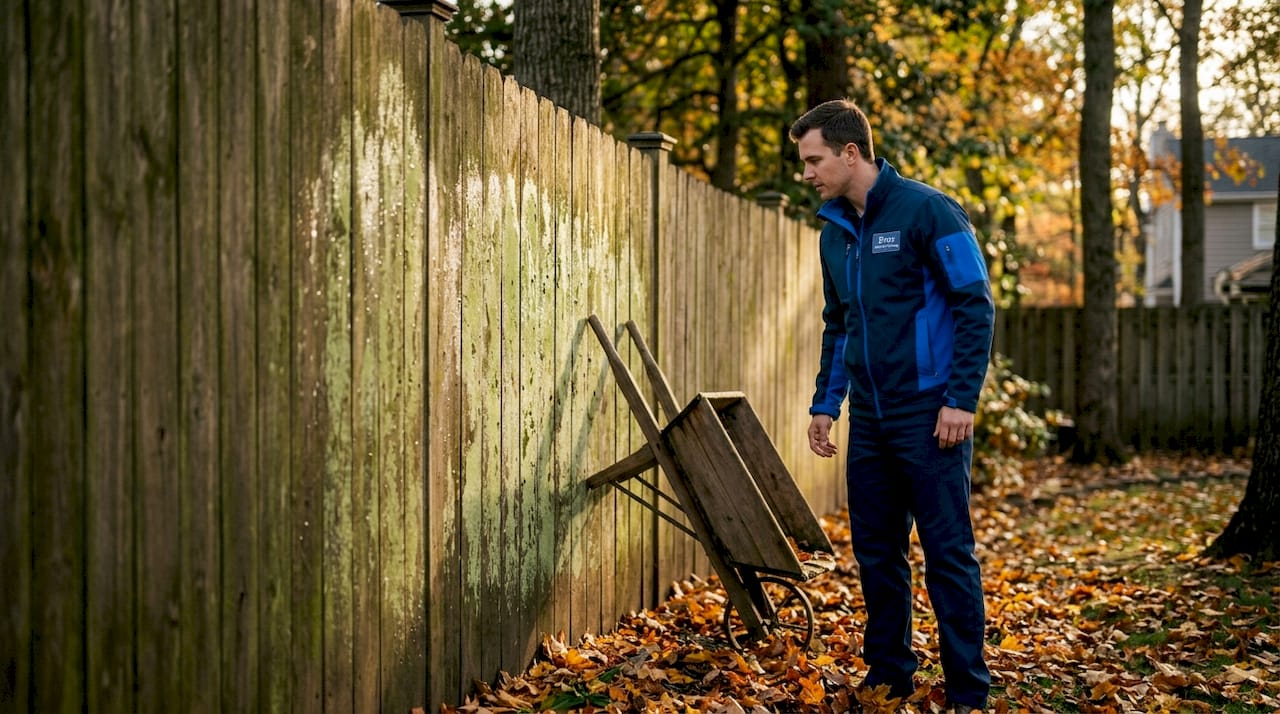
Particulate grime covers dust, road residue, vehicle emissions, and industrial fallout. In urban and suburban areas near freeways, this layer builds continuously and bonds with surface moisture to form a hardened film. Pollen adds to this mix seasonally, and in Southern California, it accumulates fast.
Organic debris includes bird droppings, tree sap, and decomposing leaves. Bird droppings are acidic enough to etch paint and sealants within days of contact. Sap from overhanging trees traps additional particulates and creates a sticky base for mold colonization.
Moisture-trapping grime is the category that ties all others together. Any buildup that holds water against a surface creates a pathway for rot in wood, corrosion in metal, and spalling in masonry. Algae and moss on hard surfaces also create slip hazards on walkways, patios, and driveways, adding a liability dimension that commercial property owners cannot ignore.
Understanding these categories matters because the importance of grime removal is directly tied to what type of grime you are dealing with. A mild detergent rinse handles particulate buildup. Biological growth requires a biocidal approach.
How grime damages building materials over time
Moisture is the central mechanism behind almost every form of grime-related structural damage. When grime accumulates on siding, masonry, or roofing, it acts as a sponge, holding water against the surface far longer than a clean surface would. That sustained moisture contact accelerates rot in wood siding, corrodes metal fasteners, and causes freeze-thaw cracking in masonry in climates with temperature swings.
Microbial biofilms take this further. Biofilm and microbial growth contribute significantly to the biodeterioration of building materials, with root-like fungal hyphae physically penetrating paint layers, wood grain, and even stone surfaces. Once a biofilm establishes itself, it chemically bonds with the substrate and becomes far harder to remove than surface-level dirt.
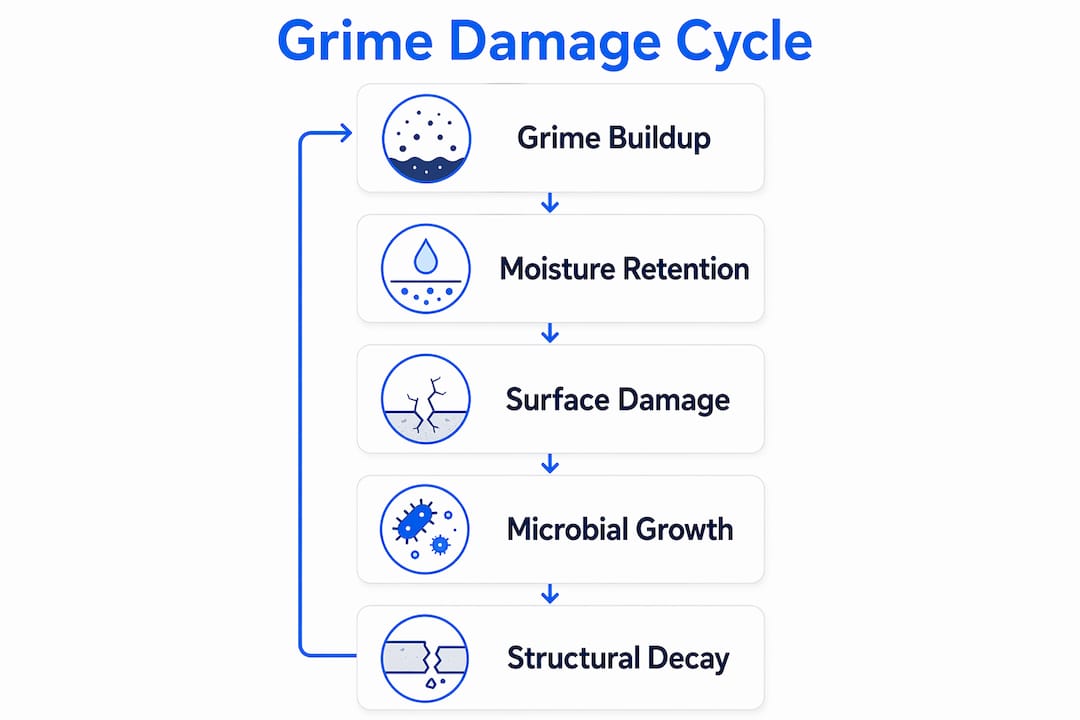
Roof shingles face a specific threat from Gloeocapsa magma and similar organisms. These microbes consume the limestone filler in asphalt shingles, causing granule loss that exposes the underlying mat to UV radiation. The result is accelerated aging that can cut a 25-year shingle’s effective lifespan down significantly. Neglecting exterior cleaning allows these organisms to establish deep colonies that require professional intervention to address.
Gutters deserve specific attention here. When gutters clog with organic debris and grime, water overflows and saturates the fascia board, soffit, and foundation perimeter. That water intrusion is one of the most common causes of interior moisture damage in residential properties. Keeping gutters clear and functional is as much a part of grime management as washing siding.
Pro Tip: Inspect your gutters and downspouts every fall and spring. Blocked drainage is the single fastest way to turn a surface cleaning problem into a structural repair bill.
“Pressure washing without moisture management can worsen damp problems and lead to return growths; cleaning must be paired with drainage and shade control.” — RHS Advice on Algae and Moss
How to clean outdoor surfaces safely and effectively
Effective exterior cleaning starts with material identification. The wrong method on the wrong surface causes damage that costs more to fix than the grime ever would have. Identifying your siding and roof materials before selecting a cleaning approach is the single most important step in the process.
Here is a practical sequence for most residential and light commercial properties:
- Identify the surface material. Wood, vinyl, stucco, brick, and composite each respond differently to water pressure and chemical cleaners. Soft materials like cedar or painted wood require low-pressure methods. Concrete and brick can handle more aggressive approaches.
- Choose soft washing for biological growth. Soft washing uses low water pressure combined with a diluted bleach or surfactant solution to kill algae, mold, and mildew at the root. It does not blast the surface, so it preserves coatings and sealants. Soft washing preserves coatings better than pressure washing on sensitive surfaces.
- Use pressure washing for hard, non-porous surfaces. Concrete driveways, brick retaining walls, and stone patios respond well to pressure washing. Keep the nozzle at least 12 inches from the surface and use a fan tip rather than a zero-degree tip to avoid etching.
- Apply a mild bleach solution for algae and mold. A mixture of one part household bleach to three parts water, applied with a garden sprayer and rinsed after 15 minutes, removes most biological growth from siding and masonry. Always test on a small area first.
- Address drainage and shade after cleaning. Trimming overhanging branches reduces the shade and moisture that allow algae to return. Tree trimming for curb appeal also removes a primary source of organic debris and sap.
- Follow a cleaning schedule. Homes in Orange County benefit from exterior cleaning every 12 to 18 months, with more frequent attention to north-facing surfaces and areas under tree canopy where biological growth accelerates.
Pro Tip: Never apply a bleach solution on a hot, sunny day. Heat causes rapid evaporation that leaves chemical residue on the surface and reduces effectiveness. Clean in the early morning or on overcast days.
Grime removal techniques that skip the drainage and shade step are only half-solutions. Pressure washing without moisture management can worsen damp problems and guarantee that algae and moss return within a single season.
DIY vs. professional exterior cleaning: which approach fits your property?
Most homeowners can handle light particulate cleaning and minor biological growth on accessible surfaces. A garden hose, a long-handled brush, and a mild cleaning solution cover a lot of ground for single-story properties with vinyl or painted siding. The real limits of DIY appear quickly when working at height, dealing with established biofilm, or cleaning delicate materials like cedar shake or aged masonry.
Here is a direct comparison:
| Factor | DIY approach | Professional service |
|---|---|---|
| Cost upfront | Low (equipment and supplies) | Higher per visit |
| Safety at height | Significant ladder risk | Trained technicians with proper equipment |
| Biofilm removal | Surface-level results | Deep treatment with commercial-grade solutions |
| Material risk | Higher without expertise | Minimized through material-specific methods |
| Documentation | None | Inspection records support asset protection programs |
| Long-term value | Inconsistent results | Consistent maintenance extends material lifespan |
Commercial property owners gain a specific advantage from professional services beyond the cleaning itself. Consistent cleaning documentation allows portfolio managers to treat exterior maintenance as scheduled asset preservation, with inspection records that support insurance claims and property valuations. That paper trail has real financial value.
The benefits of cleaning exterior surfaces professionally also include access to equipment like truck-mounted pressure washers and commercial soft-wash systems that produce results no consumer-grade tool can match. For roofs in particular, the roof cleaning benefits of professional treatment extend well beyond appearance, directly protecting the shingle warranty and preventing premature replacement.
The honest answer on DIY versus professional: do the accessible, low-risk surfaces yourself on a regular schedule, and bring in professionals for roofs, gutters, multi-story facades, and any surface showing established biological growth.
Key takeaways
Exterior grime removal is asset protection, not cosmetic maintenance. Properties that skip regular cleaning face compounding material damage that costs far more to repair than a consistent cleaning schedule ever would.
| Point | Details |
|---|---|
| Grime types vary by damage mechanism | Biological growth, particulates, and organic debris each require different removal methods. |
| Moisture is the core threat | Grime that traps water against surfaces accelerates rot, corrosion, and material decay. |
| Material identification comes first | Selecting the wrong cleaning method can damage surfaces more than the grime itself. |
| Cleaning alone is not enough | Drainage improvement and shade reduction prevent biological regrowth after cleaning. |
| Professional cleaning builds documentation | Inspection records from professional services support property valuations and insurance. |
What 5 years of exterior cleaning taught me about deferred maintenance
I have seen the same pattern repeat across hundreds of properties in Orange County. A homeowner skips one cleaning cycle because the house “looks fine from the street.” Then they skip another. By year three, the north-facing wall has a green tinge that turns out to be an established algae colony with root-like hyphae penetrating the paint layer. What would have cost a few hundred dollars to prevent now costs over a thousand to remediate properly.
The properties that hold their value best are not the ones with the most expensive materials. They are the ones with owners who treat cleaning as a scheduled line item, not a reaction to visible deterioration. Commercial clients who document their cleaning cycles consistently get better outcomes during property appraisals and insurance renewals. That is not a coincidence.
My honest advice: stop thinking of exterior cleaning as something you do when the property looks dirty. Think of it the way you think of an oil change. You do not wait for the engine to knock. You follow a schedule because prevention is always cheaper than repair. The exterior cleaning services that deliver the most value are the ones performed before damage becomes visible, not after.
The one mistake I see even motivated property owners make is cleaning without addressing the conditions that caused the grime. Trim the trees. Fix the drainage. Seal the surfaces after cleaning. Without those steps, you are on a treadmill.
— nolan
Keep your property protected with Broswindowcleaningoc

Broswindowcleaningoc has served residential and commercial properties across Orange County for over five years, delivering pressure washing, soft washing, roof cleaning, gutter cleaning, and window cleaning that protect your investment at every level. Every service is fully insured, scheduled around your availability, and performed by technicians who identify your surface materials before selecting a method. If you are ready to stop deferring maintenance and start treating your exterior as the asset it is, explore the reasons to pressure wash your property and see what a professional cleaning program looks like for your specific situation. Broswindowcleaningoc makes it easy to get started.
FAQ
What is exterior grime and why does it matter?
Exterior grime is the accumulation of dirt, biological growth, pollutants, and organic debris on outdoor surfaces. It matters because it traps moisture against building materials, accelerating rot, corrosion, and structural decay over time.
How often should you clean the exterior of a house?
Most homes benefit from exterior cleaning every 12 to 18 months, though north-facing surfaces and areas under tree canopy may need attention more frequently due to faster biological growth.
What is the difference between soft washing and pressure washing?
Soft washing uses low water pressure combined with a cleaning solution to kill biological growth without damaging surface coatings. Pressure washing uses high-force water and works best on hard, non-porous surfaces like concrete and brick.
Can exterior grime actually damage your roof?
Yes. Organisms like Gloeocapsa magma consume the limestone filler in asphalt shingles, causing granule loss and accelerated aging that can significantly shorten a roof’s effective lifespan.
When should you hire a professional instead of cleaning yourself?
Hire a professional for multi-story facades, roofs, established biological growth, and any surface where material damage is a risk. DIY methods work for accessible, low-risk surfaces with light particulate buildup.
Pingback: What Is Facade Cleaning? Methods, Frequency, and Tips
Pingback: 10 Signs You Need Exterior Cleaning Now