
Most homeowners only think about their gutters when something is visibly broken. By then, the damage is often already done. Recognizing the signs your gutters need cleaning, what professionals call “gutter failure indicators,” before water finds its way into your walls, foundation, or attic is what separates proactive maintenance from expensive repairs. This article breaks down nine specific, observable warning signs that your gutters are overdue for a cleaning, ordered by how easy they are to spot and how fast they can escalate into real property damage.
Table of Contents
- Key takeaways
- 1. Signs your gutters need cleaning: water overflowing the edges
- 2. Standing water lingering after rain
- 3. Water pooling near your foundation
- 4. Sagging gutters or gutters pulling away from the fascia
- 5. Plants or weeds growing out of the gutter
- 6. Birds, insects, or rodents near the gutters
- 7. Water stains or streaks on your siding
- 8. Mold or mildew growth near the roofline
- 9. You cannot remember the last time you cleaned them
- Signs ranked by urgency and recommended action
- My honest take on gutter maintenance timing
- Keep your gutters and property in top shape
- FAQ
Key takeaways
| Point | Details |
|---|---|
| Overflow is the clearest warning | Water spilling over gutter edges during rain means a clog is already blocking flow. |
| Structural sag signals weight damage | Sagging or pulling gutters mean debris and standing water have stressed the mounts. |
| Pests confirm organic buildup | Birds or insects nesting in gutters are a reliable indicator of heavy debris accumulation. |
| Staining means it has been happening a while | Water streaks and mildew on siding show the overflow is not a one-time event. |
| Urgency varies by sign | Some indicators need same-week action; others are a “schedule it soon” situation. |
1. Signs your gutters need cleaning: water overflowing the edges
This is the most visible and most urgent warning on the list. When you see water spilling over gutter edges during a rainstorm instead of flowing down the downspout, the gutter is blocked. Period.
Overflowing gutters do not just look bad. That sheet of water falls directly against your siding, soaks into wood fascia boards, and, over time, works its way toward your foundation. You will see it happening in real time if you step outside during the next decent rain and watch the roofline.
Pro Tip: Walk the perimeter of your home during a moderate rainstorm at least once per season. Observing the gutters while water is actively flowing is the fastest way to catch a clog you would otherwise miss from the ground.
2. Standing water lingering after rain
If the rain stopped hours ago and you can still see water sitting inside the gutter channel, the drainage system is not working. A healthy gutter empties itself completely. Standing water means something is blocking the downspout or a section of the gutter is pitched incorrectly because of debris weight.
The problem compounds quickly. Standing water in gutters adds weight to the mounts, promotes rust in metal gutters, and becomes a breeding pool for mosquitoes within days. You can check this without climbing a ladder by shining a flashlight up toward the downspout opening from below after rain.
3. Water pooling near your foundation
Step back and look at the ground, not just the gutters. If you notice wet soil, puddles, or muddy streaks concentrated near the base of your exterior walls after rain, your gutters are failing at their one job: directing water away from your home.
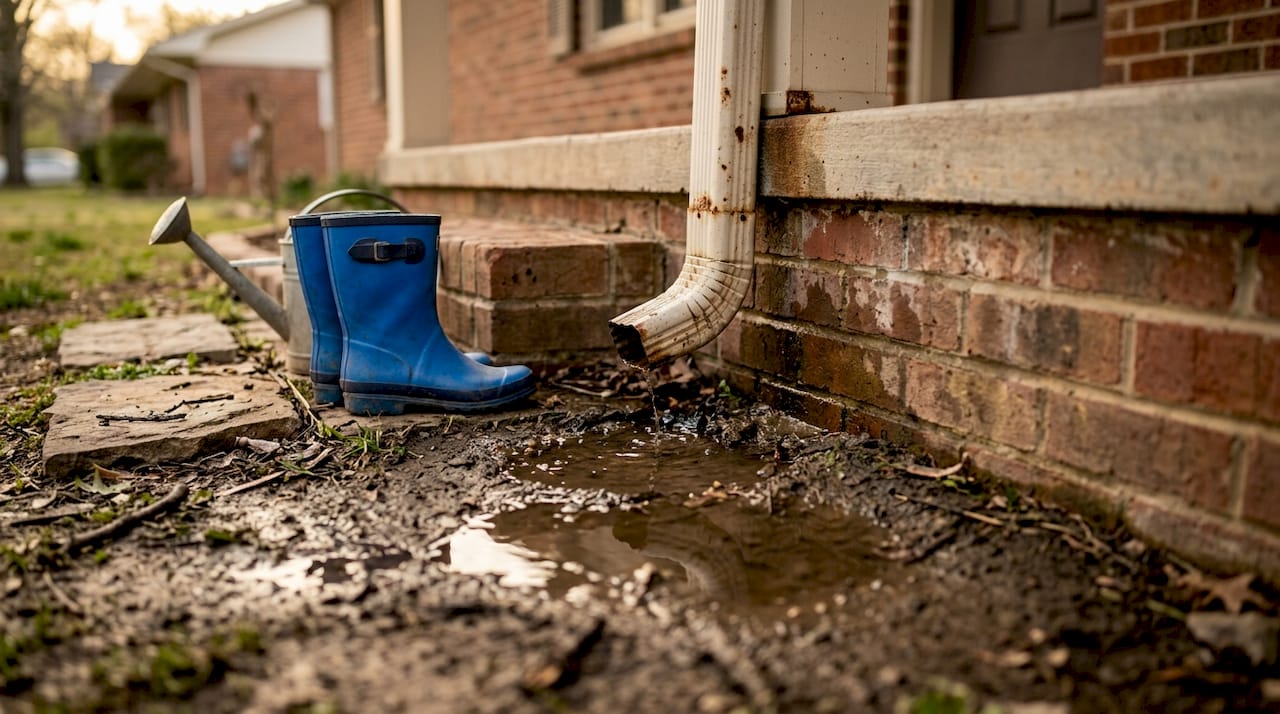
Foundation pooling from clogged gutters is one of the most costly consequences of delayed cleaning. Over time, that water saturates the soil against your foundation, creating hydrostatic pressure that can crack concrete, flood basements, and rot crawl spaces. This is the sign that moves gutter cleaning from a routine task to an urgent one.
4. Sagging gutters or gutters pulling away from the fascia
Look at your gutters from across the yard. They should form a straight, continuous line. If a section dips noticeably in the middle or you can see daylight between the gutter and the fascia board, the mounting hardware is under stress it was not designed to handle.
Heavy debris and stagnant water apply concentrated weight on gutter hangers, pulling them loose over time. The sad reality is that clogged gutters with saturated debris get heavier with each rain event until something gives. A pulled-away gutter does not just stop working. It can tear the fascia board off the roofline with it.
Pro Tip: Inspect the gutter attachment points, where hangers meet the fascia, at least twice a year. Press lightly on a section of gutter. If it wobbles or feels loose, the weight of debris is likely the cause.
- Gutter sagging at midpoints between hangers signals too much debris weight
- Gaps between the gutter back and the fascia board suggest hanger failure
- Visible rust streaks beneath hanger screws mean water has been sitting there for a long time
5. Plants or weeds growing out of the gutter
If you spot green growth poking out of your gutters, you have a self-sustaining ecosystem up there. Seeds carried by wind or birds land in accumulated debris, find moisture, and sprout. It sounds almost funny until you realize those roots are working into joints and seams.
You can identify gutter debris buildup by walking the perimeter and looking up. Even small tufts of grass or a sprouting weed mean the organic layer inside is thick enough to support plant life. That is months of leaf and seed accumulation, at minimum.
6. Birds, insects, or rodents near the gutters
You might notice this sign before you notice any water issues. When birds flock to gutters or you see wasps and mud daubers building near the gutter channel, they are telling you something. Organic debris is the raw material for nests, and standing water is the draw for insects.
Clogged gutters attract pests because they offer exactly what critters need: shelter, moisture, and building materials. Rodents that access gutters can also work their way into roof eaves and attic spaces, turning a cleaning problem into a pest control problem. Spot-check your gutters for nesting materials, mud tubes, or an unusual concentration of birds perched along the roofline.
- Wasps and hornets building nests in or near gutters
- Mud dauber tubes plastered along the gutter interior
- Squirrels or rodents repeatedly climbing the downspout
This sign alone should put gutter cleaning on the calendar within the week.
7. Water stains or streaks on your siding
Look at the exterior walls directly below your gutters. Dark vertical streaks or discoloration running down the siding are a textbook symptom of dirty gutters. The water stains and mildew on siding you see are secondary evidence that overflow has been happening repeatedly, not just once.
These stains are more than cosmetic. They indicate that water is regularly coming into contact with your siding, which accelerates paint failure, wood rot, and mold growth behind the surface. Exterior cleaning services like pressure washing can remove the staining, but unless the gutters are cleaned first, the streaks will be back after the next rainstorm.
8. Mold or mildew growth near the roofline
Mold on the exterior of your home near the gutter line, or visible moisture damage on the soffit boards above the gutters, is one of the more serious symptoms of dirty gutters. It tells you that water has been sitting and splashing against those surfaces long enough to support fungal growth.
This is also a sign worth paying attention to from a roof health standpoint. Signs your roof needs cleaning often parallel gutter problems because both systems work together. Moisture trapped at the roofline by overflowing gutters can lead to moss growth on shingles and premature shingle breakdown. For Orange County homeowners, it is worth reviewing roof and gutter maintenance as a combined strategy, not two separate tasks.
9. You cannot remember the last time you cleaned them
This one does not require you to look at your gutters at all. If you genuinely cannot recall the last time your gutters were cleaned, that is a warning sign in itself. The general recommendation is twice a year, but homes near trees or in heavy rainfall areas may need cleaning every three months due to rapid debris accumulation.
A simple visual inspection checklist covering overflow, sagging, staining, standing water, and critters can help you build a habit around early detection. Checking gutters after major storms and during seasonal transitions is a low-effort routine that prevents most of the problems described above. Consider building it into your seasonal home maintenance schedule so it does not fall through the cracks.
Signs ranked by urgency and recommended action
Use this table to assess how quickly you need to act based on what you observe.
| Warning sign | Urgency level | Potential damage | Recommended action |
|---|---|---|---|
| Water overflowing during rain | High | Siding, fascia, foundation | Clean gutters this week |
| Foundation pooling after rain | High | Foundation, basement flooding | Clean gutters immediately |
| Gutters sagging or pulling away | High | Fascia board, structural mounts | Clean and inspect hardware |
| Standing water after rain | Medium | Rust, mosquito breeding, weight stress | Schedule cleaning soon |
| Plants growing in gutters | Medium | Joint damage, added weight | Schedule cleaning soon |
| Pests nesting near gutters | Medium | Roof eave and attic access risk | Clean within two weeks |
| Water stains on siding | Low to medium | Paint failure, wood rot | Clean gutters, then pressure wash |
| Mold near roofline | Low to medium | Shingle damage, moisture intrusion | Clean gutters and inspect roof |
| No memory of last cleaning | Low (for now) | Escalates to above risks | Schedule a cleaning this season |
Combining multiple signs from the same row category is the clearest signal that professional cleaning should be your next call, not a future plan.
My honest take on gutter maintenance timing
I have talked to a lot of homeowners over the years who say they wait until something “looks bad” before they check the gutters. That approach works fine right up until it really does not.
The signs I see most often missed are the quiet ones. Staining on siding that people chalk up to weathering. Water that pools near the foundation and gets blamed on sprinklers. Sagging that is dismissed as a cosmetic issue because the gutter has not fallen off yet. None of those are cosmetic. They are all early-stage failure that gets more expensive with every rain event that passes.
What I have found actually works is treating the gutters like a smoke detector: check it on a schedule, not just when you smell smoke. In my experience, downspout flow after cleaning is a step most DIYers skip entirely. They scoop out debris, call it done, and miss a blockage further down the pipe that backs up the next time it rains. A proper clean includes flushing the downspout and confirming water exits at the base.
If your property has significant tree cover, cleaning based on debris cycles and not just the calendar is the right approach. Twice a year is a floor, not a ceiling. And if you are climbing a ladder on a two-story home, the risk profile of DIY gutter maintenance deserves a hard look.
— nolan
Keep your gutters and property in top shape

If you spotted more than two or three of these warning signs while reading, your gutters are telling you something. Broswindowcleaningoc offers professional gutter cleaning for residential and commercial properties throughout Orange County, CA, with the experience and equipment to do the job thoroughly, including downspout flushing and full debris removal. Beyond gutters, the team handles window cleaning, pressure washing, roof cleaning, and more, making it easy to address signs your property needs cleaning in one visit. Scheduling is straightforward, service is fully insured, and results are the kind that hold up through the next rainstorm. Check out regular gutter maintenance options to find a plan that fits your property.
FAQ
What are the clearest signs your gutters need cleaning?
Water overflowing the gutter edges during rain, water pooling near the foundation, and visible sagging are the three most urgent indicators. Any one of them means cleaning should happen within the week.
How often should I clean my gutters?
Most homes need gutter cleaning twice a year, typically in late spring and late fall. Properties near heavy tree cover or in high-rainfall areas may need cleaning every three months to prevent rapid clog buildup.
Can clogged gutters cause foundation damage?
Yes. When gutters fail to direct water away from the home, pooling near the foundation increases hydrostatic pressure against the concrete, which can lead to cracking, basement flooding, and long-term structural issues.
Why are pests a warning sign of gutter problems?
Clogged gutters create standing water and dense organic debris, both of which attract insects, birds, and rodents. Animal activity around your gutters is a reliable indicator that debris has built up enough to support nesting.
Do I need to clean the downspouts too?
Absolutely. Flushing downspouts after clearing the gutter channel is the step that confirms whether clogs further down the pipe have been cleared. Skipping it can mask a blockage that causes backups in the next rainstorm.
Pingback: Clean Gutters and Home Inspection: What Buyers Must Know
Pingback: Why Inspect Gutters Before Rainy Season Starts
Pingback: Stop Gutter Seam Leaks for Years: Prep First, Use Gutter Grade Sealant