
Absorb a fresh oil spill immediately with clay cat litter or baking soda, then hit it with a concrete-safe degreaser, scrub, and rinse. Old, set-in garage oil stains need a stronger sequence: an alkaline or citrus degreaser first, then a poultice left covered for 24 to 48 hours, repeated if needed. If the stain barely fades after two rounds, it’s time for grinding, resurfacing, or a professional call.
TL;DR:
- Immediate absorption with clay litter or baking soda is most effective within the first 24 hours, before the oil polymerizes deeper into the concrete.
- Old stains require chemical extraction methods like alkaline or citrus degreasers and possibly poultices, with repeated treatments for stubborn spots.
- Mechanical grinding or resurfacing are necessary only if chemical methods fail after multiple poultice cycles, especially on deeply set-in stains.
- Proper disposal of contaminated waste and rinse water is essential, adhering to hazardous waste regulations to avoid environmental harm.
- When DIY methods prove ineffective after two cycles or the stain is decades old, hiring professionals with industrial tools ensures thorough cleaning without damaging surfaces.
Table of Contents
- What to Do in the First 24 Hours After an Oil Spill
- How Do You Remove Old, Set-In Oil Stains From Concrete?
- Tools and Materials Worth Keeping on Hand
- Is It Safe to Dispose of Oil-Stained Cleanup Materials Yourself?
- When DIY Handles It and When You Should Call a Pro
- Let Bros Window Cleaning Handle the Stains You Can’t Beat
- Sources
What to Do in the First 24 Hours After an Oil Spill
Fresh oil hasn’t had time to polymerize into the concrete yet, which is exactly why speed matters here. The longer it sits, the deeper it wicks into the pores of the slab, and a stain that would’ve taken ten minutes to lift on day one can take a full weekend by day thirty.
Work through this sequence as soon as you spot the spill:
- Contain it. Lay down cardboard, rags, or a barrier around the puddle so it doesn’t spread to nearby storage, tires, or a workbench leg.
- Absorb, don’t scrub. Pour clay cat litter or baking soda directly over the oil and let it sit for a short period. Scrubbing before absorbing just pushes oil deeper into the slab, which is the opposite of what you want.
- Sweep and bag it. Once the absorbent has soaked up what it can, sweep it into a bag and seal it. It’s now contaminated waste, not regular trash.
- Degrease and rinse. Apply an enzyme or mild degreaser to the residual stain, agitate with a stiff brush, and rinse toward a spot where runoff won’t reach a storm drain.
A few things affect how well this works:
- Warmer garage temperatures thin oil out, so it absorbs faster but also spreads faster.
- Concrete with an epoxy or polyaspartic coating handles absorbents fine, but skip harsh degreasers until you know the coating’s chemical tolerance.
- Old motor oil behaves differently than fresh oil from a leaking gasket. Older drips have often already started to set, so treat anything more than a few hours old as borderline “old stain” territory.
How Do You Remove Old, Set-In Oil Stains From Concrete?
Fresh spills and old stains aren’t the same problem, and treating them identically wastes time and product. A surface film wipes away with detergent. A stain that’s soaked in and polymerized needs extraction chemistry that pulls oil back out of the pores rather than just washing the top layer. Successful removal depends on zoning by stain depth, matching the method to how far the oil has actually traveled into the slab.
Alkaline degreasers break down petroleum-based grease chemically and work well on bare, uncoated concrete. Mix per the label, let it sit for the recommended dwell time (usually 10 to 15 minutes, never let it dry on the surface), then scrub and rinse. Match cleaner strength to the floor surface: a high-alkaline product that’s perfectly safe on bare concrete can dull an epoxy or polyaspartic coating. If your floor is coated, switch to an enzyme or pH-neutral cleaner and test a small hidden area first.
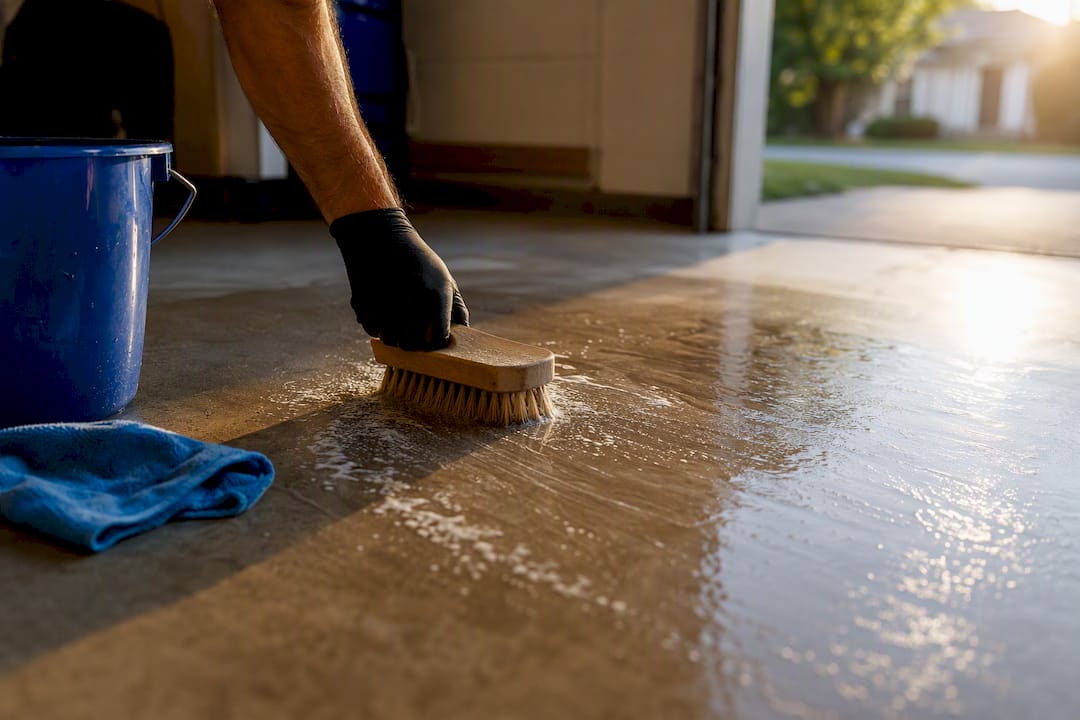
Citrus and solvent degreasers cut through heavier, aged grease and tend to smell far better than harsh alkaline blends. They also demand real ventilation. Open the garage door, run a fan, and wear gloves and eye protection while working.
For a stain that laughs off both of those, build a poultice. Mix an absorbent (diatomaceous earth, powdered clay, or even flour) with a solvent or degreaser into a thick paste. Spread it over the stain about a quarter inch thick, cover it completely with plastic sheeting, and tape the edges down.
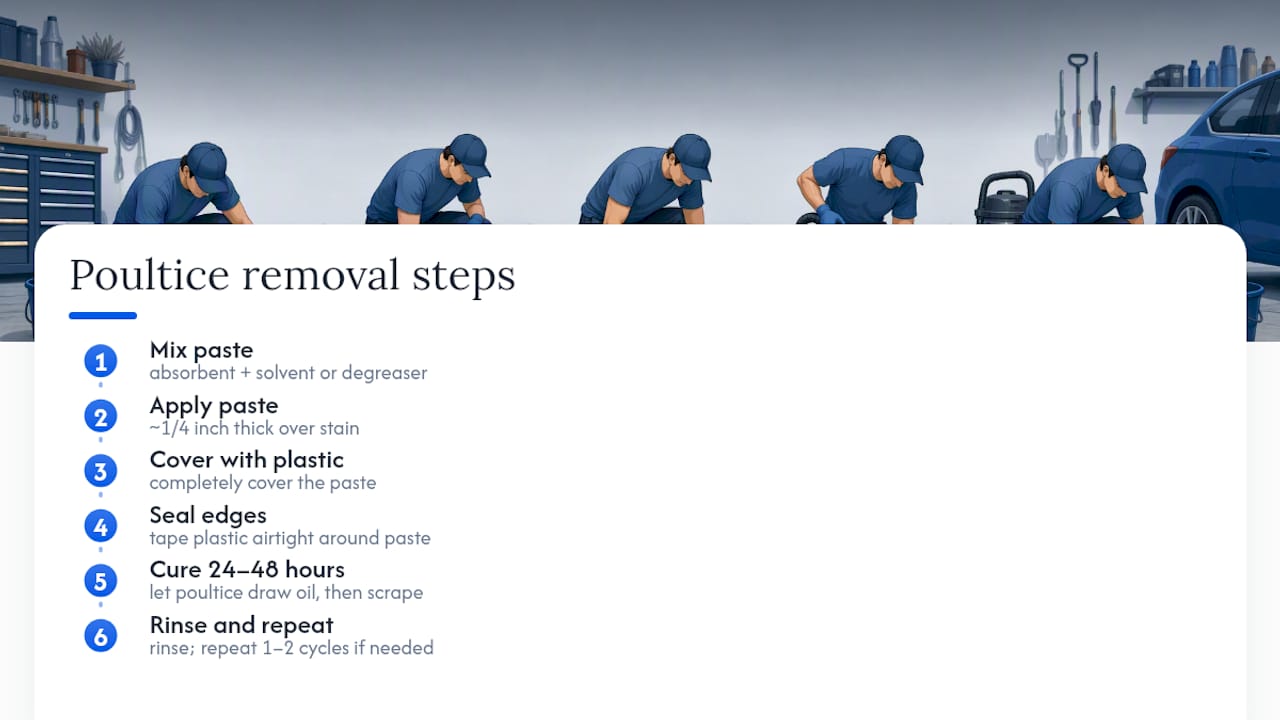
Pro Tip: Don’t skip the plastic cover. Letting the poultice dry slowly under an airtight seal is what pulls oil out of the concrete as the paste cures; an uncovered poultice just dries on the surface and does almost nothing.
Leave it about one or two days, scrape it off, and rinse. Repeat once or twice on stubborn spots. If the stain is unchanged after two full poultice cycles, or if it’s decades old and deeply set, mechanical grinding or resurfacing is usually the next real option, and that’s a job better handed to a professional with the right equipment.
Tools and Materials Worth Keeping on Hand
- Absorbents: plain clay cat litter, commercial oil-dry, sawdust, or baking soda
- Cleaners: an enzyme degreaser for coated floors, a heavy-duty alkaline degreaser for bare concrete, and a citrus solvent for aged grease
- Accessories: stiff-bristled push broom, hand scrub brush, plastic sheeting, nitrile gloves, eye protection, and a couple of buckets
- Optional rentals: a pressure washer for rinsing loosened residue, or a diamond grinder for stains that won’t budge chemically
If you don’t already own a pressure washer, renting one for a single weekend project usually beats buying, especially since pressure washing rinses loosened oil but can’t extract oil soaked below the surface on its own.
Is It Safe to Dispose of Oil-Stained Cleanup Materials Yourself?
Yes, but only if you handle the waste correctly, and this is the step most DIYers skip. Gloves and eye protection are non-negotiable once you’re mixing degreasers or solvents, and any enclosed garage needs the door open and a fan running while chemicals are in use.
The bigger issue is what happens after you’re done cleaning:
- Oil-soaked cat litter, rags, or poultice material counts as contaminated waste in many places, not ordinary household trash.
- Local hazardous-waste rules govern how these materials should be bagged and dropped off. Assuming the regular garbage can is fine is a common and avoidable mistake.
- Rinse water from degreasing should never run into a storm drain. Storm drains typically flow straight to local waterways untreated. Direct it to a sanitary sewer connection where your municipality allows it, or collect it for hazardous-waste disposal.
A quick gut check before you rinse anything toward the driveway: if it smells like degreaser or shows an oily sheen, it doesn’t belong in the storm drain.
When DIY Handles It and When You Should Call a Pro
Most fresh spills and light stains respond fine to absorbent, degreaser, and elbow grease. Where DIY attempts usually fail is dwell time. People rinse too soon, use the wrong chemistry on a coated floor, or dump oily rinse water somewhere it shouldn’t go.
Call a pro when the stain is large, decades old, or sits near a storm drain where runoff control matters. It’s also the smarter move before applying a sealer or epoxy coating, since any oil left behind will bleed through and ruin the finish. A professional crew brings containment, commercial-grade extraction chemistry, proper disposal, and mechanical removal options if the chemistry alone won’t cut it.
— nolan
Let Bros Window Cleaning Handle the Stains You Can’t Beat
If you’ve already run through the degreaser and poultice cycle twice and the stain is still staring back at you, it’s not a sign you did something wrong. Some oil has simply been baking into that slab for years. Broswindowcleaningoc brings commercial pressure-washing equipment, surface-safe degreasing chemistry, and proper disposal practices that skip the guesswork of matching cleaner strength to your specific floor coating.

Every crew arrives insured, with the right pressure settings dialed in for bare concrete versus epoxy-coated floors, so you don’t risk dulling a finish you paid to protect. Beyond garage floors, the same pressure-washing service handles driveways, walkways, and exterior surfaces that collect their own grime over an Orange County summer. If your stains have outlasted two DIY attempts, request a quote and get a firm answer on what it’ll take to clear that slab for good.
Sources
For disposal rules on oil-soaked absorbents and rags, the EPA’s hazardous-waste guidance covers what counts as contaminated waste. For chemistry specifics, PROSOCO’s concrete stain removal guide and Lowe’s garage floor cleaning guide both go deeper on degreaser selection. For poultice technique on hardscape surfaces, Pave-N-Turf’s oil stain removal guide offers a useful supplemental read.
- PROSOCO — How to remove oil stains from concrete
- Pro Garage Gear — How to clean a garage floor (2026)
- Lowe’s — How to clean and seal garage floors