
Blot fresh oil immediately, then scrub with a grease-cutting detergent. That handles most spots caught early. For stains that have soaked in or sat for weeks, step up to a commercial degreaser or a poultice, and if the mark is old, widespread, or the concrete is sealed, call a pressure-washing pro before you risk the surface finish.
TL;DR:
- Fresh oil stains should be blotted with absorbents and treated immediately, ideally within the first hour, to prevent deep soaking.
- Use dish soap, baking soda or cornstarch, and a stiff brush for most fresh spots; avoid high-pressure water early on, which can worsen the stain.
- For older or deep-set stains, a poultice with an absorbent carrier and solvent pulls the oil out from below the surface, often requiring multiple applications.
- Commercial degreasers and enzyme cleaners are effective depending on stain depth, but overconcentrating or rushing the process can damage the surface.
- Pressure washing is only suitable with proper heat and dwell time; avoid cold water rentals on set-in stains, and consider professional help for difficult or large stains.
Table of Contents
- How Do You Remove Fresh Oil Stains From a Driveway?
- When Should You Use a Commercial Degreaser or Enzyme Cleaner?
- What Is the Poultice Method for Set-In Oil Stains?
- Is It Safe to Pressure Wash Oil Stains, and When Should You Hire a Pro?
- How Do You Prevent Oil Stains From Coming Back?
- What Bros Window Cleaning Has Learned From Oil Stains in Orange County
- The Real Problem With Most Driveway Stain Advice
- Get a Driveway That Looks Cleaned by a Pro, Not Just Scrubbed
- Sources
How Do You Remove Fresh Oil Stains From a Driveway?
Speed matters more than product choice in the first hour. Oil that hasn’t penetrated the concrete pores yet comes up far easier than a spot that’s had a week to soak in.
Start by blotting, not wiping. Wiping spreads the oil across a wider area and pushes it deeper into the surface. Lay down paper towels or rags and press until they stop absorbing.
- Cover the stain with a fine absorbent such as cornstarch, baking soda, or cat litter. Finer powders like cornstarch or baking soda work well because they reach into more of the concrete’s micro-pores. Grind the absorbent in gently with a shoe or brush.
- Let it sit for a short time, then sweep it up.
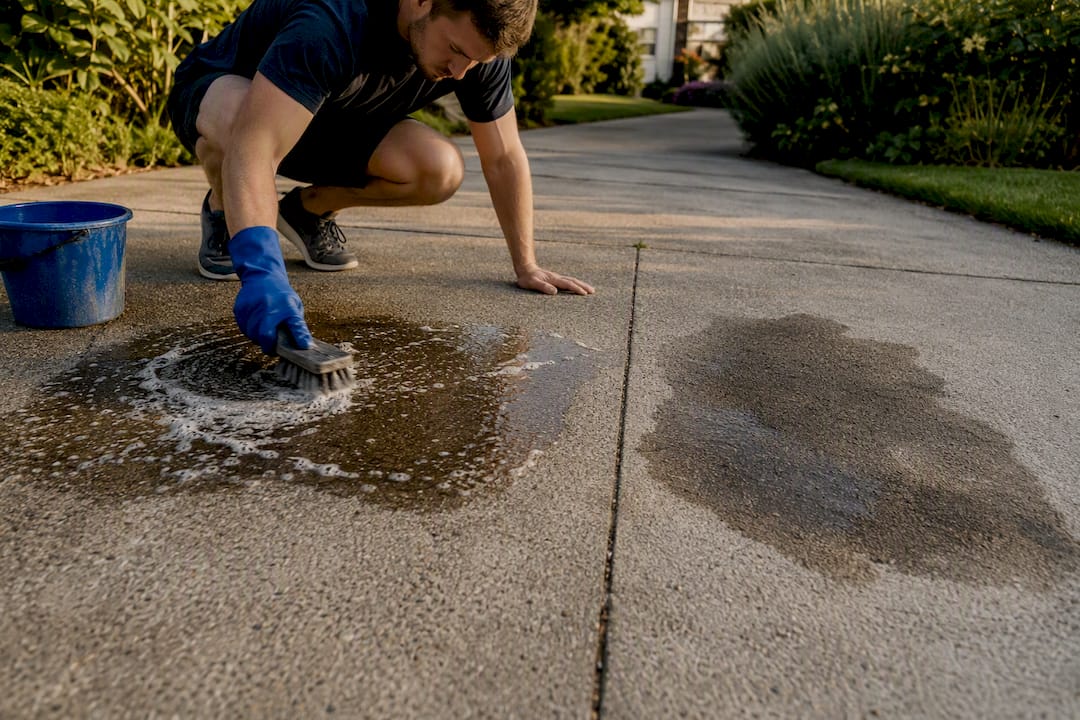
- Make a paste with dish soap or laundry detergent and a splash of hot water. Spread the paste over the stain, scrub with a stiff bristle brush, and rinse with hot water.
- For stubborn spots, spray WD-40 directly on the stain, let it sit briefly, agitate with the brush, then repeat the detergent rinse as described in DIY stain-removal techniques for household surfaces. WD-40 is a solvent that loosens oil’s grip on concrete. It doesn’t dissolve the stain on its own.
Pro Tip: Skip the garden hose blast at this stage. High pressure on a fresh stain just drives oil deeper into the pores, which is exactly what turns a two-day job into a two-week one.
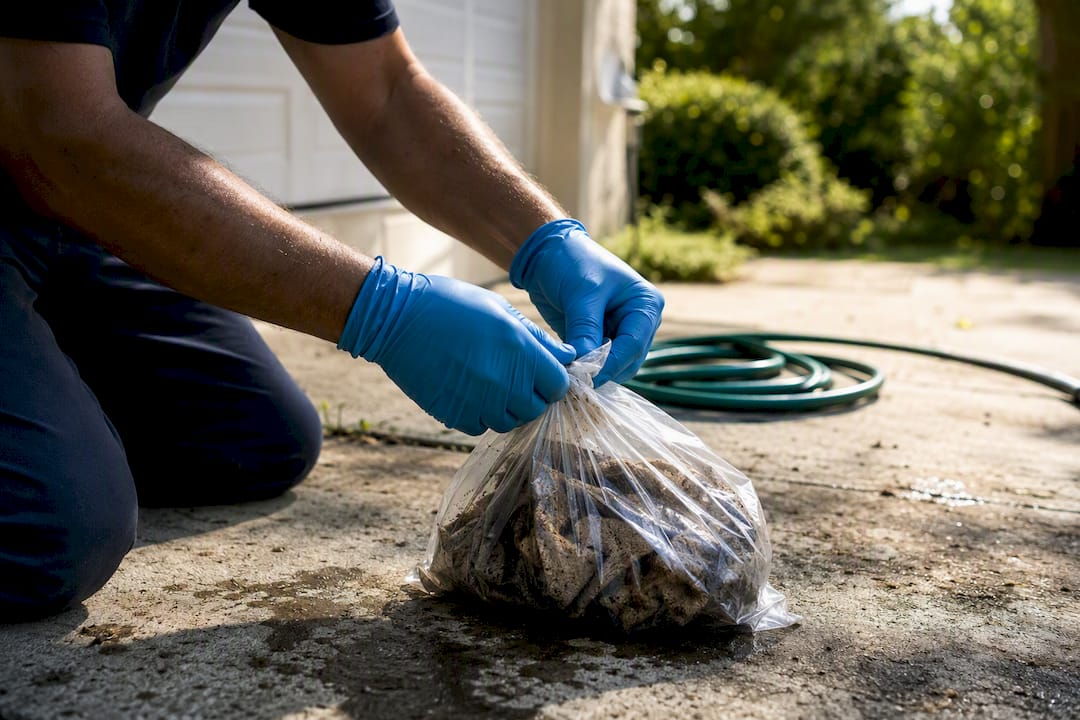
Once you’ve rinsed, don’t dump oily wastewater into the storm drain. Sweep up used absorbent and bag it with household trash, since most municipalities treat oil-soaked litter as regular waste in small quantities.
When Should You Use a Commercial Degreaser or Enzyme Cleaner?
Household items handle stains under a few days old. Past that, you’re usually looking at a degreaser or an enzyme cleaner, and picking the right one depends on how deep the oil has traveled.
- Enzyme cleaners work best on stains under a quarter inch deep. They break down petroleum biologically rather than chemically, so they’re gentler on colored or textured concrete.
- Alkaline degreasers cut through heavier, older grease faster but need more careful rinsing to avoid leaving residue.
- Always mix to the label’s dilution ratio. Overconcentrating doesn’t speed things up. It just increases the odds of discoloration.
- Give the product its full dwell time (usually 10 to 15 minutes) before agitating with a brush, then rinse thoroughly and neutralize if the label calls for it.
Side-by-side testing on driveway oil stains found that while dish soap can lighten a stain, purpose-built degreasers and driveway cleaners consistently pulled more oil out on set-in spots. Patch-test any product on a hidden corner first, especially on sealed or colored concrete, and wear gloves and eye protection. If the stain lightens but doesn’t disappear after one treatment, repeat rather than doubling the concentration.
What Is the Poultice Method for Set-In Oil Stains?
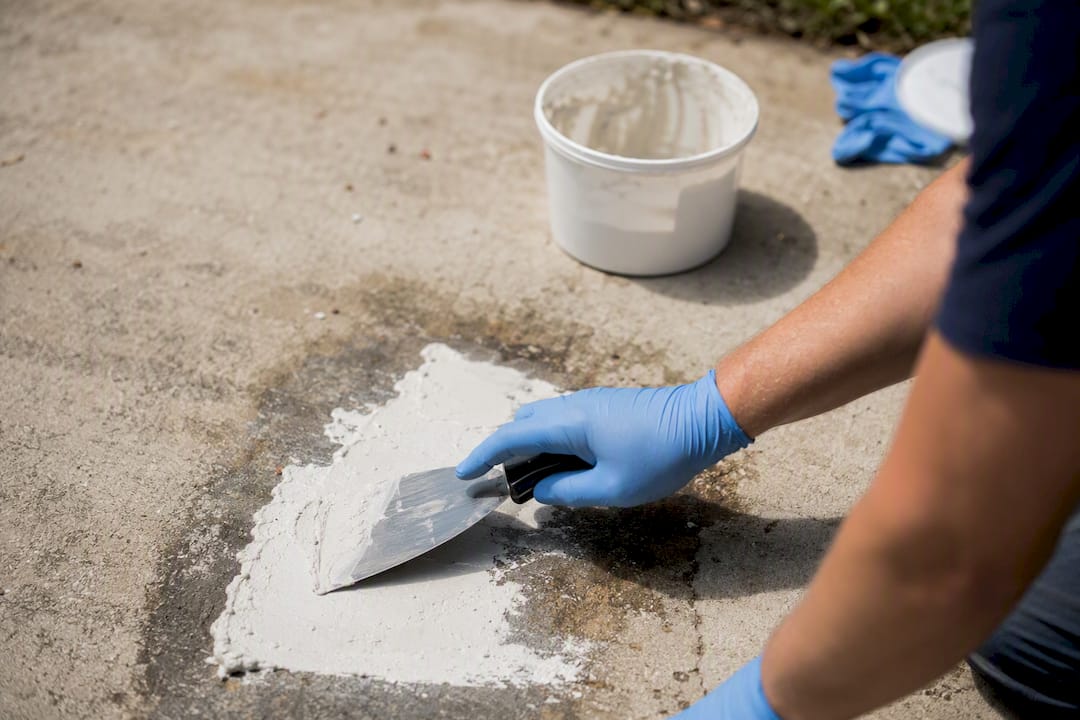
When a stain has soaked deep into the concrete, scrubbing the surface won’t reach it. A poultice pulls the oil out from below instead.
A poultice mixes an absorbent carrier, diatomaceous earth or powdered clay, with a solvent or degreaser to form a thick paste.
- Mix the powder with your chosen solvent until it forms a peanut-butter consistency.
- Spread it a quarter inch thick over the stain, extending an inch past the visible edges.
- Cover with plastic wrap, tape the edges down, and let it sit 24 to 48 hours.
- Remove the dried poultice and rinse the area.
Don’t be alarmed if the spot looks darker right after removal. That’s usually a sign the poultice actually drew contamination out of the pores, and it often fades further as the surface dries. Deep stains may need two or three rounds. If grinding is on the table, know that light abrasion removes a thin layer of concrete along with the stain, which changes the surface texture permanently. Once you’re renting equipment or spending a weekend on repeat poultice cycles with no improvement, that’s your signal to call in a professional crew.
Is It Safe to Pressure Wash Oil Stains, and When Should You Hire a Pro?
Pressure washing can help, but the wrong setup makes oil stains worse before it makes them better.
- Stick to moderate pressure on a wide fan nozzle (25 to 40 degrees), held a safe distance from the surface, to avoid etching the concrete.
- Cold-water rental units struggle with set-in oil because professionals lean on heat and dwell time, and hot water pulls petroleum out of the pores far more effectively than cold pressure alone.
- Call a pro if the stain predates your ownership of the property, covers a large section of the driveway, or sits on decorative or sealed concrete where a mistake is costly to fix.
- A typical professional pressure-washing visit runs an hour or two depending on driveway size, using hot-water extraction and alkaline degreasers matched to the stain, with pricing driven by square footage and stain severity rather than a flat rate.
How Do You Prevent Oil Stains From Coming Back?
Sealing the driveway after cleaning is the difference between a one-time fix and a recurring chore.
- Penetrating sealers soak into the concrete and block oil from reaching the pores in the first place, making them the better pick for driveways with regular car traffic.
- Film-forming sealers sit on top and look glossier but wear faster under tires.
- Reseal every two to three years, and always clean and fully dry the surface first. Sealer applied over grime just traps it.
- Keep a cheap drip pan under any vehicle with a known leak, and wipe fresh spots the same day they appear.
What Bros Window Cleaning Has Learned From Oil Stains in Orange County
We handle exterior surfaces daily across Orange County, and the pattern holds: homeowners who catch a stain within 48 hours usually solve it with dish soap and elbow grease. Past that window, degreasers or a poultice do the real work. Our crews carry proper PPE, contain runoff, and dispose of oily residue correctly on every job. If a driveway needs professional pressure washing, we bring hot-water gear that DIY rentals can’t match.
The Real Problem With Most Driveway Stain Advice
Most guides treat oil stain removal as a single recipe, as if the same steps that work on a week-old drip will work on a decade-old patch. They won’t. The stain’s age and depth should decide your method, not whichever product happened to be under the sink.
The bigger mistake I see repeated online is people jumping straight to pressure washing because it feels thorough. Cold water under high pressure on an unsealed, deeply stained driveway can force oil further into the pores, turning a fixable spot into one that needs a poultice down the line. Chemistry and dwell time do more work than force ever will on a stain that’s already set.
If there’s one thing worth prioritizing first, it’s the patch test. A five-minute test in a hidden corner saves you from etching a sealed driveway with an acid-based cleaner or bleaching a colored surface with a degreaser that’s too strong. Skip that step and you’re gambling with a finish that took years to build up. The escalation ladder, absorbents, then detergent, then degreaser or poultice, then a professional, exists because each rung genuinely earns the jump to the next.
— nolan
Get a Driveway That Looks Cleaned by a Pro, Not Just Scrubbed
If you’ve worked through the degreaser and poultice steps and the stain is still stubborn, or you’d rather skip the weekend project entirely, that’s exactly where Broswindowcleaningoc steps in. We bring hot-water pressure washing equipment and the right degreasers matched to your driveway’s stain, age, and finish, the same combination that outperforms cold rental units on set-in oil.

A typical visit covers your driveway, walkways, and any adjacent concrete showing rust or algae buildup, since the same hot-water process that lifts oil also handles algae on walkways and rust discoloration in one trip. Before we arrive, clear vehicles and loose items off the driveway and note any spots you’re most concerned about. Request a quote through our pressure washing services page and get a straightforward estimate for your property, fully insured, with no long commitment attached.
Sources
For deeper technical detail, see Amfam’s guide to removing driveway oil stains, Hagerty’s tested comparison of driveway cleaners, the GSA’s poulticing procedures, and ConcreteNetwork’s rust stain removal guide. Always patch-test and follow product label instructions before treating a full stain.
- Removing oil stains from a driveway
- Tested: 3 ways to remove driveway oil stains
- Driveway oil stain removal: DIY & pro methods for 2026