
For large piles, storm damage, or anything your municipal program won’t accept, a professional yard waste hauling service is usually the fastest and least stressful route. Municipal crews work on fixed schedules and reject anything outside their rules. A hauler shows up on your timeline and takes what the city won’t.
Three things to do right now:
- Book an estimate (most yard waste hauling companies offer online quotes or same-day windows).
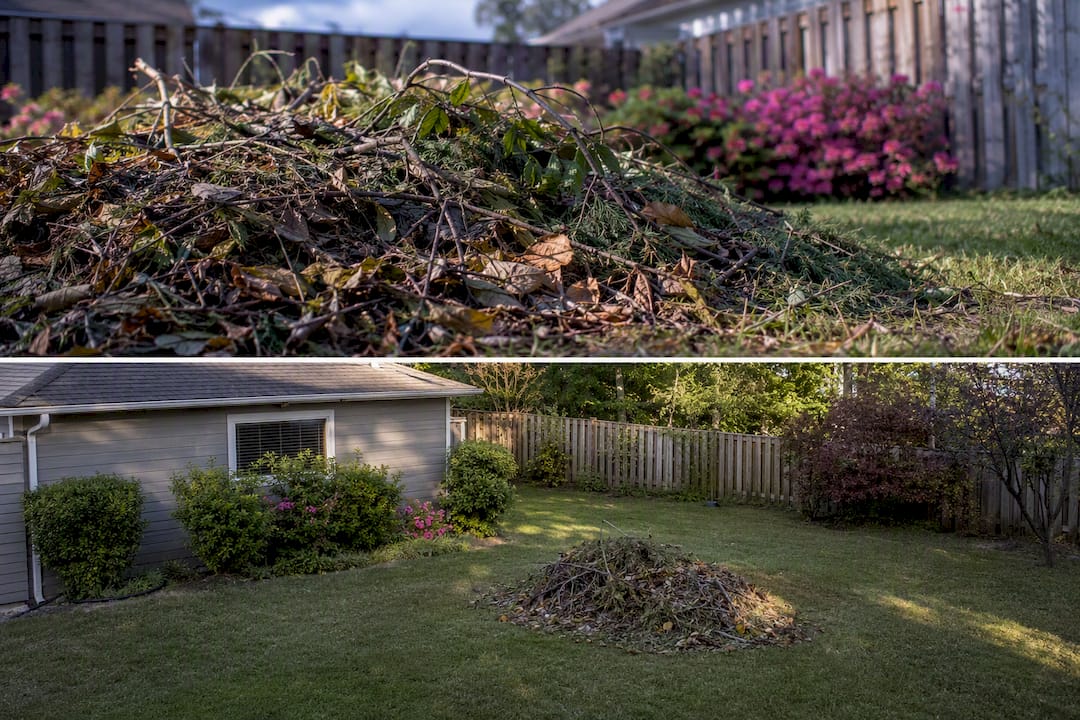
- Take a photo of the pile so you get an accurate volume quote before anyone arrives.
- Set aside anything treated, painted, or chemically contaminated. That goes in a separate conversation with your hauler, not the main pile.
Key Takeaways
Professional yard waste hauling clears large, off-season, or contaminated piles that municipal programs reject, on a schedule you control rather than one the city sets.
| Point | Details |
|---|---|
| Hire pros for volume and timing | Storms, renovations, and off-season debris almost always beat the wait for the next municipal window. |
| Know what haulers actually take | Branches, leaves, sod, soil, and small stumps are standard; treated wood and hazardous material are not. |
| Price by truck space, not bags | Volume-based pricing beats per-bag disposal once you’re past four or five bags of debris. |
| Prep reduces cost and delays | Bundle branches to size limits, bag leaves in paper for municipal pickup, and flag hidden hazards before the crew arrives. |
| Vet before you book | Confirm insurance, get pricing in writing, and ask for disposal receipts if you need documentation. |
| Bros Window Cleaning offers a bookable option | Insured Orange County crews handle debris haul-away alongside pressure washing, gutter cleaning, and roof services with upfront quotes. |
Table of Contents
- What Does a Yard Waste Hauling Service Actually Take?
- How Much Does Yard Waste Hauling Cost?
- Why Does the City’s Yard Waste Pickup Have So Many Rules?
- How Do You Prep Yard Waste So Nothing Gets Rejected?
- Where Does Your Yard Waste Actually Go?
- When Do You Actually Need a Professional Hauler?
- How Do You Vet a Yard Waste Hauling Company?
- What Homeowners Get Wrong About Yard Waste
- Ready to Clear That Pile? Here’s the Faster Way
- Sources
What Does a Yard Waste Hauling Service Actually Take?
Professional crews take far more than your curbside program does. Branches, leaves, grass clippings, hedge trimmings, shrubs, sod, topsoil, and small stumps are all standard inventory for garden waste removal crews. Most municipal programs draw the line well before that list ends, especially on soil, sod, and stumps, which weigh far more per cubic foot than leaves or branches. Treated lumber and hazardous waste sit outside what any composting-based hauler can legally take, since those materials fall under separate EPA hazardous waste rules.
Booking typically works one of three ways:
- Fill out an online form with a photo of the pile for an instant or same-day estimate.
- Call directly if you need same-day service for storm debris or a time-sensitive landscaping deadline.
- Request an on-site visit for large or mixed loads where photos won’t give an accurate read.
On the job itself, expect a quick walkthrough, a firm price before anyone touches a rake, then loading, cleanup, and a swept work area. Ask for disposal documentation if you need it. Most residential jobs don’t require paperwork, but it costs nothing to ask upfront.
Pro Tip: Take your pile photo from two angles, straight on and from above if you have a second floor window. Haulers underquote flat piles that are actually much deeper than they look.
How Much Does Yard Waste Hauling Cost?
Most companies price by truck space rather than weight, meaning you’re paying for a quarter-truck, half-truck, or full-truck load rather than a per-item fee. That structure rewards you for consolidating debris into one pickup instead of scheduling several smaller ones.
Weight changes the math fast. A quarter truck of leaves and branches can weigh a fraction of a quarter truck of wet sod or soil, and haulers who quote by volume alone sometimes add a weight surcharge once they see what’s actually in the pile. Landscaping contractors handle this by separating vegetative debris from soil and sod before the truck arrives, which keeps disposal fees predictable.
When you request a quote, ask for:
- The all-in price, not just the base rate.
- Whether disposal fees are included or billed separately.
- Any extra charge for stairs, long carries, or gated access.
- Accepted payment methods, since some crews take cards on-site and others invoice after the job.
Truck-volume pricing beats per-bag rates for anything beyond a weekend cleanup. Once you’re filling more than four or five bags, one flat-rate haul almost always costs less than a stack of individual disposal fees.
Why Does the City’s Yard Waste Pickup Have So Many Rules?
Municipal programs run on tight logistics, and that means rules you won’t find with a private hauler. Cities commonly enforce seasonal pickup windows, require paper bags or specific bundle dimensions for branches, and flatly refuse certain items. Syracuse’s yard waste program is a good example of how specific these rules get, right down to bag material and setout timing.
Branch limits are typical, too. Programs like Poquoson’s landscaping debris rules cap branch diameter around 6 inches and length around 5 feet, with piles kept separate from bulk trash.
- Set out early or late, and the pile gets left, sometimes with a citation attached.
- Bag the wrong material in the wrong bag, and crews skip it entirely.
- Put out debris during the off-season, and there’s no pickup date to even miss.
Use municipal pickup for routine seasonal leaves and small branch trims, or consider spring yard clean-up & leaf removal in Central Arkansas for professional help. Call a professional for anything oversized, off-season, storm-related, or mixed with contaminated material.
How Do You Prep Yard Waste So Nothing Gets Rejected?
Getting this right the first time saves you a second trip, whether that’s a city truck or a private crew.
- Bag leaves in paper, not plastic, if you’re using municipal pickup. Loose leaves work for professional haulers who load by hand or with a truck-mounted vacuum.
- Bundle branches under the diameter and length limits your hauler or city specifies, generally the same 6 inch by 5 foot range most programs use.
- Place piles away from hydrants, storm drains, and the street’s right-of-way, with clear space for a truck or trailer to pull up.
- Flag anything hidden in the pile, old fencing, buried rocks, a stump with roots still attached, before the crew starts loading.
Pro Tip: If a stump or heavy root ball is in the mix, say so when you book. Stump removal often needs different equipment than a standard debris haul, and surprising a crew with one on-site can mean a second visit.
Where Does Your Yard Waste Actually Go?
Most residential yard waste heads to one of three places: a municipal composting site, a commercial compost or mulch facility, or a construction and demolition facility if it’s mixed with treated wood or other contaminated material. EPA’s composting guidance covers how organics get diverted from landfill space, and organics policy groups track which regions have banned yard waste from landfills entirely.
Not everything composts cleanly. Painted or chemically treated wood, large stumps with heavy root mass, and soil contaminated with anything beyond dirt typically get routed to a different facility than your grass clippings.
If you’re managing a commercial property or need to document proper handling for a LEED-certified project, ask your hauler for a disposal receipt or weight ticket. It’s a small ask that gives you a paper trail if anyone questions where the material ended up.
When Do You Actually Need a Professional Hauler?
Some situations make the decision easy.
- Storm damage that drops branches faster than any curbside schedule can handle.
- A landscaping renovation, deck demolition, or shed teardown generating more debris than a few trash bags.
- Ongoing landscaping work where your contractor’s crew leaves cuttings behind every visit.
- Property managers juggling several units or lots where a recurring haul schedule beats one-off calls to the city.
If your pile fits in your bins over two collection cycles, wait for the city. If it doesn’t, or if it’s mixed with anything the city won’t touch, call a hauler.
How Do You Vet a Yard Waste Hauling Company?
Not every hauler operates the same way, and the ones worth hiring make their credentials easy to verify.
- Confirm the crew is licensed and insured before anyone sets foot on your property.
- Get pricing in writing, upfront, before the truck shows up.
- Ask for disposal receipts or weight tickets if you need proof for a commercial job or contractor billing.
- Request references or photos from recent jobs, especially for larger commercial or property-management contracts.
A hauler that won’t put its price in writing or answer a direct question about where the debris goes is telling you something. The ones worth hiring answer both without hesitation.
Bros Window Cleaning brings that same standard to every service it runs, insured crews, upfront pricing, and documentation on request for property managers who need it for commercial billing.
What Homeowners Get Wrong About Yard Waste
Most advice on this topic treats municipal pickup and professional hauling as competing options, and that framing misses the point. They solve different problems. Municipal programs are built for routine, predictable, seasonal debris, and they’re genuinely good at that job when your pile fits their rules.
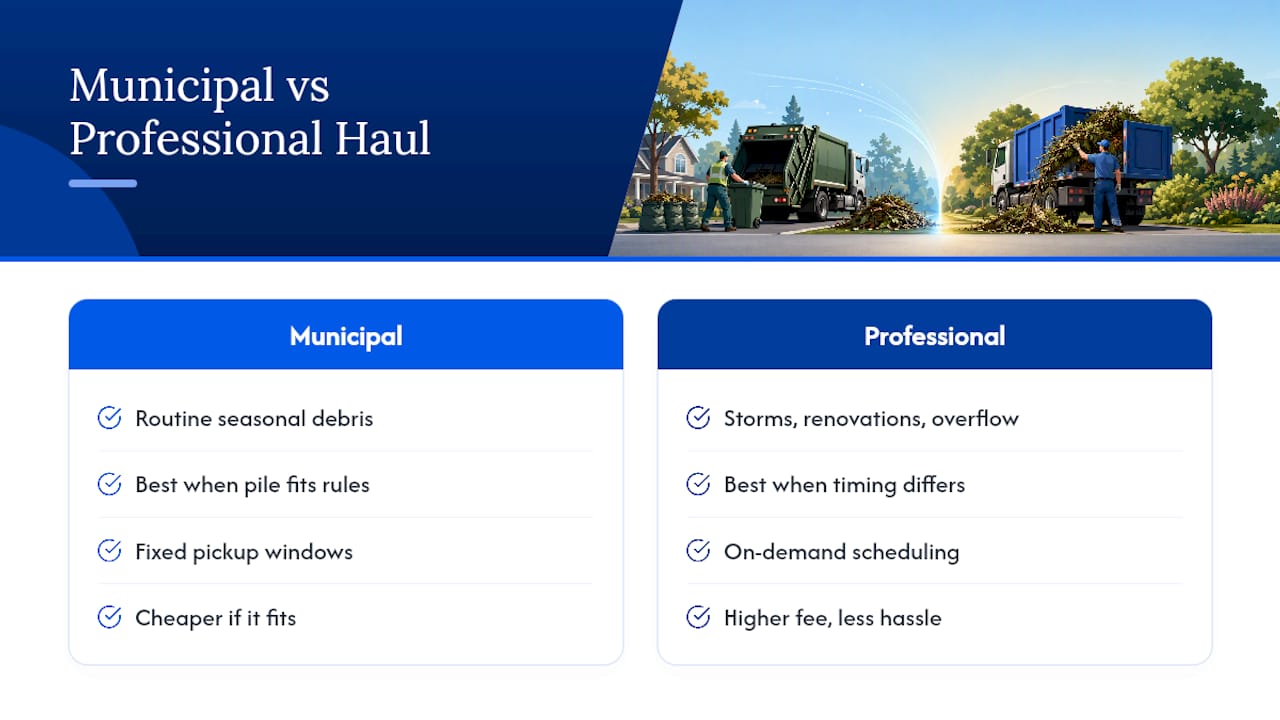
Where the conventional advice falls short is in how it handles the gray area, the storm debris, the landscaping renovation, the pile that’s technically within size limits but shows up two weeks after the seasonal window closed. Homeowners default to waiting for the next pickup date because that’s the cheaper habit, even when the wait costs more in dead grass, blocked walkways, or a fire hazard sitting in the yard.
The priority should be volume and timing, not price alone. If your pile is bigger than a few bags or your timeline doesn’t match the city’s calendar, a professional haul almost always costs less in hassle than it saves in dollars. That’s the calculation worth making first, before you decide who’s hauling anything.
— nolan
Ready to Clear That Pile? Here’s the Faster Way
Skip the seasonal calendar and the bag-dimension rules entirely. Bros Window Cleaning runs insured crews out of Orange County that haul yard debris the same way they handle pressure washing, gutter cleaning, and roof work, with upfront pricing before anyone starts loading.

Booking works the same way across every service: describe the job, get a straightforward estimate, and schedule a crew that shows up ready to work. If your yard cleanup leaves behind grime on your patio, siding, or windows, that’s an easy add-on, and it’s part of why homeowners bundle debris removal with other exterior cleaning services rather than booking separate vendors for each task. Property managers who need documentation for commercial billing can request it as part of the same visit.
Get your yard waste and exterior cleaning estimate started today, and stop working around the city’s pickup calendar.
Sources
- Indiana Department of Environmental Management – Yard waste and composting facilities
- City of Syracuse — Yard waste, leaves, debris
- City of Poquoson — Landscaping debris
- U.S. EPA — Hazardous waste