
If the storm has passed and the wind has died down, check your gutters from the ground first. If all you see is trapped leaves and small branches, you can likely clear and flush them yourself in under an hour. If you spot sagging sections, gutters pulling away from the fascia, or any structural damage, stop and call a professional before you touch a ladder.
Your immediate move looks like this:
- Inspect from the ground with binoculars or your phone’s zoom camera. Never climb a wet ladder.
- Clear visible debris if the gutters are simply clogged and everything looks structurally sound.
- Flush each run with a hose to confirm water moves and drains away from your foundation.
- Document anything unusual with photos before you clean, in case you need them for insurance or a contractor estimate.
Key Takeaways
Post-storm gutter recovery works when you inspect from the ground first, clear debris only if the structure is sound, and call a professional the moment you see sagging or structural damage.
| Point | Details |
|---|---|
| Inspect before you climb | Walk the ground level first and use binoculars or a phone zoom to spot sagging and overflow staining. |
| Clear, then flush | Remove debris in short sections, then flush each run from the far end toward the downspout. |
| Confirm the discharge distance | Water should exit 4 to 6 feet from the foundation; add an extender or splash block if it doesn’t. |
| Know your red flags | Sagging runs, detached downspouts, and rotted fascia mean it’s time to call a professional. |
| Bring in Bros Window Cleaning | Broswindowcleaningoc offers insured gutter cleaning, downspout flushing, and minor repairs across Orange County. |
Table of Contents
- Safety Checks Before You Touch a Ladder
- The 10-Minute Post-Storm Gutter Checklist
- Which Tools Work Best for Storm Debris?
- How Do You Clear a Clogged Downspout?
- DIY Repairs vs. Calling a Professional
- Do Gutter Guards Actually Prevent This?
- What Fifteen Years of Storm Cleanups Teaches You
- Let Bros Window Cleaning Handle the Post-Storm Cleanup
- Frequently Asked Questions
- Sources
Safety Checks Before You Touch a Ladder
Storm debris hides real hazards. Wet ladders slide. Saturated ground shifts under ladder feet. Downed power lines can be tangled in fallen branches you can’t see from below, and broken limbs overhead can drop without warning.
Stop and call a professional if you notice any of these:
- Fascia boards that look rotten, splintered, or pulled away from the roofline
- A gutter section hanging lower than the rest or visibly separated from the house
- Heavy limb impact on the roof or gutter system
- Any downed or sagging power line near your property
Pro Tip: Photograph damage before you clean anything. Insurance adjusters and contractors both want to see the storm’s original impact, not the aftermath of your cleanup.
If you see a downed line anywhere near your property, contact your utility company immediately and keep everyone away from that area until it’s confirmed safe.
The 10-Minute Post-Storm Gutter Checklist
You don’t need an hour to know whether your gutters made it through the storm intact. A short walkaround, done right, tells you almost everything.
- Walk the perimeter at ground level. Look for water stains below the gutter line, visible sagging, detached downspouts, and eroded soil where water has been overflowing. This ground-level walkaround catches most storm damage without ever leaving the ground.
- Check downspout openings for packed leaves, granules, or nests. A blocked opening is often the reason water was overflowing in the first place.
- Clear visible debris near strainers and downspout mouths. If you do need to get on a ladder, work in short, four-to-six-foot sections rather than reaching.
- Flush each run with a hose, starting at the far end from the downspout and working toward it. Watch where the water goes.
- If water backs up instead of draining, isolate that downspout and clear it before moving to the next section.
Once the water is moving again, look at where it lands. If a downspout dumps water right against your foundation, add a splash block or a flexible extender before the next rain. That’s a fix, not a delay. It takes five minutes and prevents the exact soil erosion and basement seepage that storms cause when gutters overflow near the house.
Keep your phone handy through this whole process. A few photos of clogged sections, standing water, or minor sagging give you a record if problems reappear or you decide to call in help later.
Which Tools Work Best for Storm Debris?
The right tool depends entirely on what’s sitting in your gutters. Wet, compacted leaves behave nothing like the dry debris you’d clear in October.
- Hand scoop or gutter trowel: the most reliable option for wet, packed debris that a leaf blower can’t move. Storm debris is almost always wet, so this is usually your first tool.
- Leaf blower with a gutter attachment: fast and effective once the debris has dried out, but nearly useless on soggy leaf mats.
- Garden hose: the standard flush tool, and gentle enough to use without risking damage to shingles or loose hangers.
- Pressure washer on low setting: fine for flushing grit and fine debris, but improper use can force water under shingles or loosen gutters that took storm impact. Skip it entirely if a gutter section already looks unstable.
- Hand auger or drain snake: the tool of choice for a downspout clog that won’t clear with water alone.
- Ground-based vacuum with an extension wand: the safer option when ladder use feels risky, letting you clear debris from ground level.
Pro Tip: Test one small section with a hose before you commit to a pressure washer anywhere on the roofline. If water starts pooling instead of draining, the problem is pitch or a blockage, not dirt, and more pressure won’t fix it.
Our own breakdown of gutter cleaning tools goes deeper on matching tool to debris type if you want the full rundown before you start.
How Do You Clear a Clogged Downspout?
Start by pulling the strainer at the top of the downspout and flushing straight down with a hose. If water exits cleanly at the bottom, you’re done with that run. If it backs up, the clog is lower in the pipe, and that’s when a hand auger or plumber’s snake earns its keep. Feed it in slowly and never force it past resistance near an elbow joint. Damaged elbows crack under pressure, and a forced snake can turn a clog into a repair job.
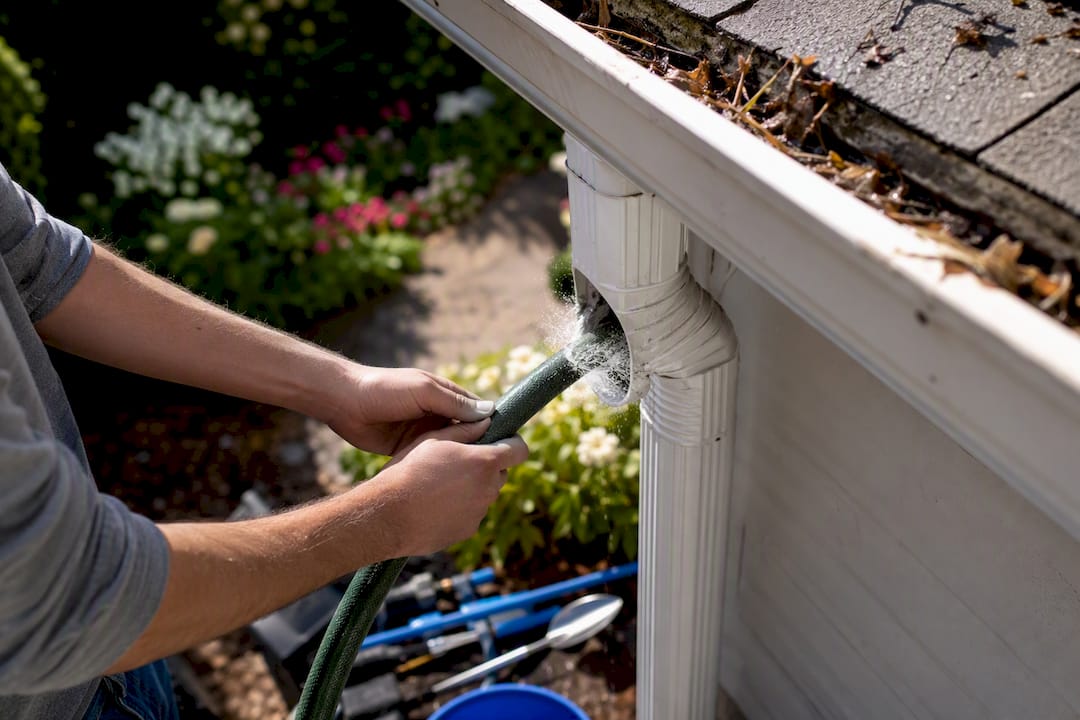
Once water is moving, confirm the discharge itself. The flush test standard calls for water to land at least 4 to 6 feet from your foundation. If it’s landing closer, add an extension or splash block before the next storm.
Standing water that won’t drain even after clearing a clog usually points to pitch, not debris. Gutters need roughly a quarter-inch drop for every 10 to 20 feet of run to move water toward the downspout. Sight down the gutter line, or check for water sitting in a low spot after a full flush. Missing or loose hangers are the usual culprit behind a sag that ruins that pitch.
- Pooling in one specific spot, even after cleaning, means pitch or a missing hanger
- Water sheeting over the front edge means the gutter is undersized or overwhelmed, not just clogged
- A slow drain everywhere suggests a downspout that’s still partially blocked lower down
DIY Repairs vs. Calling a Professional
Some storm damage is a Saturday-afternoon fix. Other damage is a liability if you attempt it yourself.
Handle these yourself if the gutters are otherwise sound:
- Resealing small leaks at seams with gutter sealant
- Tightening loose hangers you can reach safely
- Replacing a cracked end cap
- Adding a temporary downspout extension to fix discharge distance
Call a professional when you see:
- A gutter run sagging along its length, not just at one hanger
- Fascia that’s soft, rotted, or pulling away from the house
- Downspouts fully detached from the wall
- Heavy limb strikes that dented or twisted the gutter
- Any repair that would require a ladder on wet or uneven ground
Before you call anyone, gather your damage photos into a short log with dates. It speeds up both the contractor’s estimate and any insurance claim tied to the storm. If you’re weighing whether storm damage might come up later during a home sale, our inspection guide for buyers covers what typically gets flagged.
Do Gutter Guards Actually Prevent This?
Gutter guards cut down on debris, but they’re not a reason to skip post-storm checks. Guards can still let debris bridge across the top or clog underneath during a heavy storm, so an inspection stays on your list either way.
Two changes make the biggest long-term difference. First, add support hangers every 24 to 36 inches on any run that’s sagged before; spacing that’s too wide is the most common reason gutters pull away under wet leaf weight. Second, set a cleaning schedule and stick to it: clean gutters at least twice a year, plus an inspection after every major storm, and bump that up if your property has heavy tree cover.
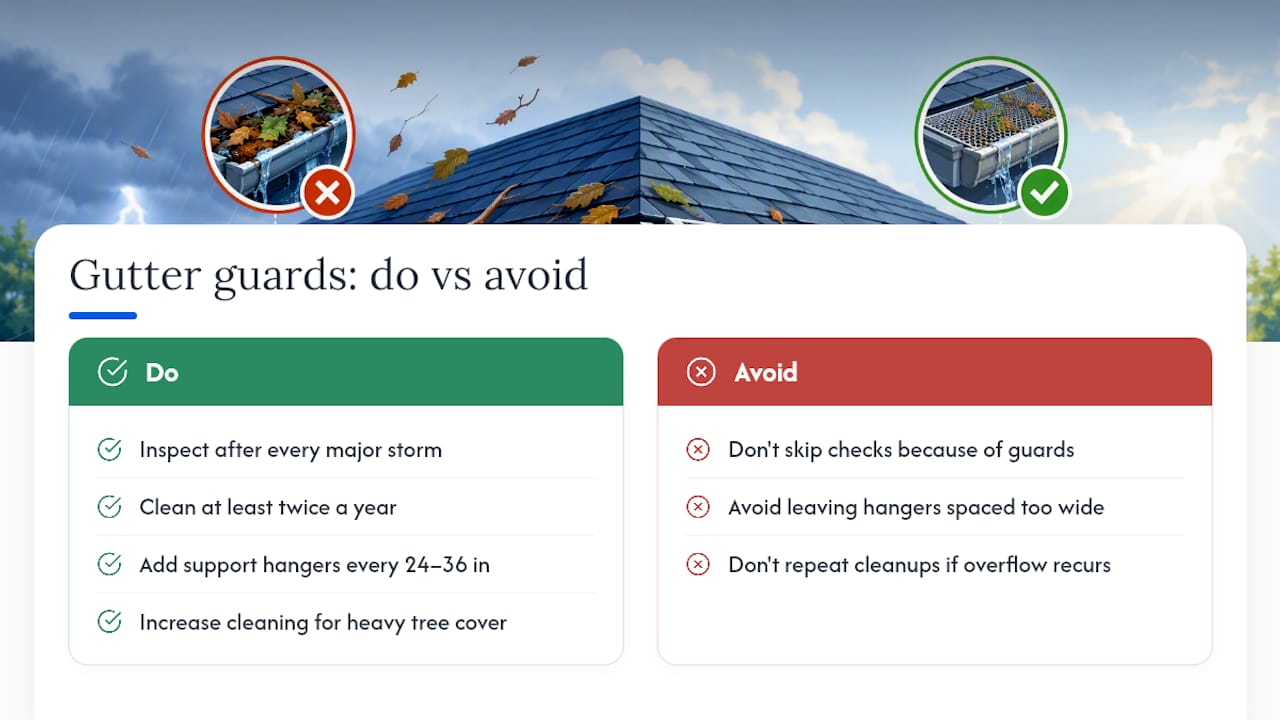
Pro Tip: If the same section overflows after two or three storms in a row, that’s not a debris problem anymore. Repeated overflow after cleaning usually means the gutter’s size or pitch can’t handle your roof’s runoff, and no amount of cleaning fixes that.
At that point, plan for a professional look at replacement or an upgrade rather than repeating the same cleanup every season. Our guide on gutter cleaning basics is a good next stop if you want to understand what “properly sized” actually means for your roof.
What Fifteen Years of Storm Cleanups Teaches You
Broswindowcleaningoc has spent over five years handling gutter and exterior cleaning across Orange County, and storm season produces the same pattern every year: the damage people call about isn’t the clog, it’s what the clog caused. Overflow that soaked a fascia board. Soil erosion next to a foundation. A downspout extension nobody ever added.
Our homeowner guides on what gutter cleaning actually involves and the tools that work best exist because most of this is learnable. But we’re fully insured for a reason: ladder work on wet ground after a storm is exactly when things go wrong, which is why so many homeowners hand that specific job to a professional.
Let Bros Window Cleaning Handle the Post-Storm Cleanup
You’ve got the checklist now, but climbing a wet ladder to test it isn’t worth the risk when a licensed, insured crew can do it faster and safer.

Broswindowcleaningoc handles the exact work this article walks through: gutter debris removal, downspout flushing, pitch and hanger inspection, and minor repairs like resealing seams or adding discharge extensions. We also cover pressure washing if your storm cleanup extends to siding, walkways, or a roof that took debris impact. Every crew works insured, follows ladder and roof safety protocols on wet or unstable ground, and knows Orange County properties well enough to spot pitch problems and sagging runs before they become a bigger repair. Scheduling takes a few minutes, and our gutter cleaning service page walks through what’s included, from the initial inspection to the final flush test. If your gutters took a hit this storm season, get a quote and get it handled before the next one rolls in.
Frequently Asked Questions
How soon should I clean gutters after a storm?
Check them as soon as conditions are safe, ideally within a day or two, since overflow near your foundation can cause erosion and water intrusion the longer it sits.
Is it safe to clean gutters right after heavy rain?
Only if the ground and ladder base are stable and dry enough to prevent slipping. Wait for standing water to clear and winds to die down before climbing anything.
How do I know if my gutters need repair instead of just cleaning?
If water still pools or overflows after a full flush, or if you notice sagging, detachment, or rotted fascia, that’s a repair issue, not a debris issue.
What’s the average cost difference between DIY and hiring a pro for gutter cleanup?
DIY costs you time and tool rental if you don’t already own a ladder and scoop, while a professional service adds the cost of labor but includes inspection, safety equipment, and often minor repairs in the same visit.
How often should gutters be cleaned in a storm-prone area?
Twice a year at minimum, with an added check after every major storm and more frequent cleanings if your property has heavy tree cover nearby.
Sources
- How to Clean & Repair Gutters | Lowe’s
- How to Inspect Your Gutters After a Storm Without Climbing the Roof
- The Ultimate Gutter Maintenance Checklist – LGM Roofing
- How to Clean Gutters | The Spruce