
For most residential roofs, skip the pressure washer entirely. Consumer Reports explicitly warns that blowback and stream force can loosen shingles or strip the protective granules that asphalt shingles depend on for UV resistance and waterproofing. The right move for the vast majority of homeowners is soft washing, a low-pressure chemical treatment, or hiring a fully insured professional who uses that method. Shingle manufacturer warranties often explicitly prohibit pressure washing, so doing it yourself or hiring someone who blasts the surface could leave you with a shorter-lived roof and no warranty recourse.
Key Takeaways
Soft washing with an approved chemical treatment is the correct method for most residential roofs, and pressure washing asphalt shingles risks granule loss, water intrusion, and voided warranties.
| Point | Details |
|---|---|
| Avoid pressure washing shingles | High-pressure water strips granules, lifts tabs, and can void manufacturer warranties. |
| Soft wash is the right method | Low-pressure chemical treatment kills algae at the root and produces longer-lasting results. |
| Hire an insured professional | Roof work carries serious fall risk; always confirm insurance, PSI, and chemical method before booking. |
| Pricing runs $250–$800 | Cost varies by roof size, pitch, and staining severity for a standard residential soft-wash job. |
| Broswindowcleaningoc for Orange County | Fully insured soft-wash roof cleaning with written estimates and MSDS documentation available on request. |
Table of Contents
- ## Why pressure washing can seriously damage your roof
- Which roof materials can handle pressure and which cannot
- Soft washing is the safer method for most residential roofs
- Why hiring a professional roof cleaner is the right call
- The real risks of DIY roof cleaning
- How to choose a roof cleaning service
- When higher pressure might actually be appropriate
- What those black streaks actually are (and why that changes the cleaning approach)
- A safety-first perspective on roof cleaning
- Broswindowcleaningoc offers safe, insured roof cleaning in Orange County
- Sources
## Why pressure washing can seriously damage your roof
The damage isn’t always visible right away, which is part of what makes this method so risky. Men’s Journal and Hardshore Exteriors both document the same failure modes, and they compound each other:
- Granule loss. Asphalt shingles are coated with mineral granules that block UV rays and slow weathering. A pressure washer strips them faster than years of normal rain would, leaving bare asphalt exposed.
- Lifted shingle tabs. High-pressure water directed up-slope or at an angle gets under shingle laps, breaking the adhesive seal. Once a tab lifts, wind and rain can finish the job.
- Forced water intrusion. Water driven under shingles reaches the underlayment and decking. Repeated exposure causes rot and mold in the roof structure, not just on the surface.
- Weakened flashing seals. Around chimneys, vents, and valleys, flashing is held by sealant. Pressure washing degrades that sealant faster than normal weathering.
- Accelerated aging. Granule loss and broken seals together shorten a shingle roof’s functional life by years.
Warranty risk compounds the physical damage. Many shingle manufacturers state in their product documentation that mechanical cleaning methods, including pressure washing, can void coverage. That means a roof that fails prematurely after a pressure-wash job may leave the homeowner with no manufacturer support and a full replacement bill.
Which roof materials can handle pressure and which cannot
Not every roof is the same, and material matters a lot here.
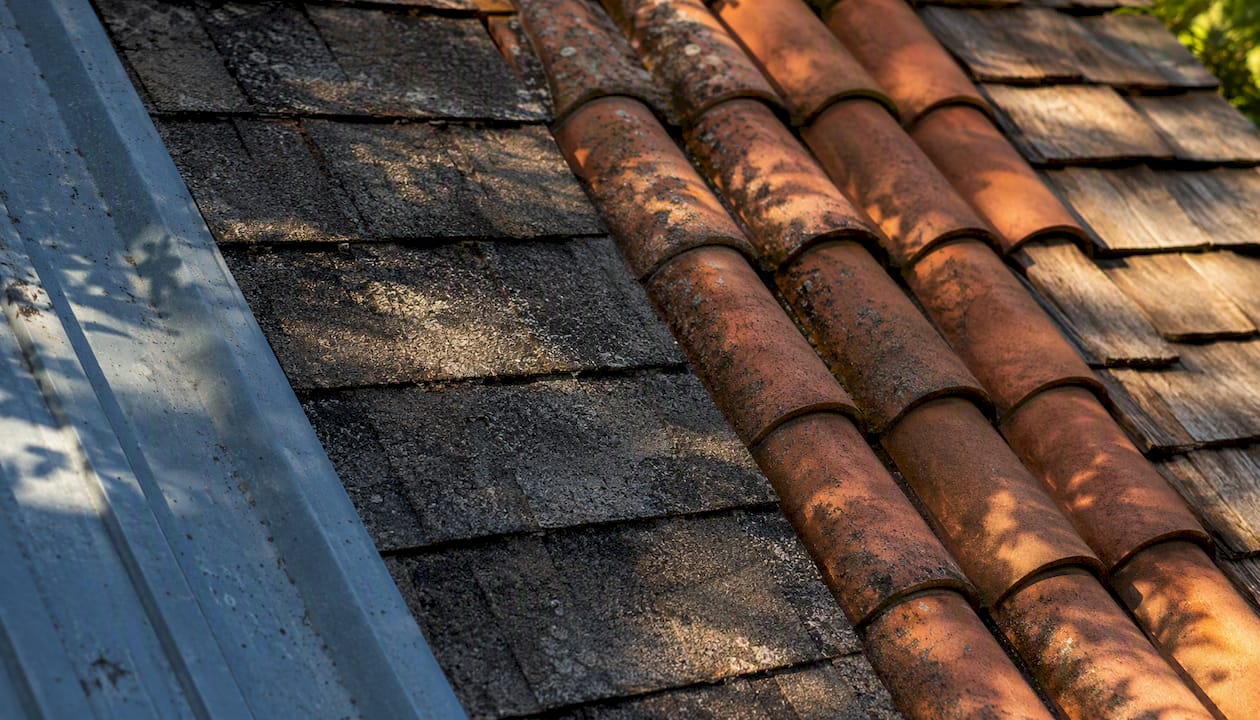
Asphalt shingles: Avoid pressure washing. Full stop. This is the most common residential roofing material in the U.S., and it’s also the most vulnerable to granule loss and tab lifting. Soft washing is the correct method.
Cedar shakes: Also avoid. Cedar is soft wood that absorbs water. High pressure raises the grain, accelerates cracking, and can split shakes that are already weathered. A dilute fungicide applied at low pressure is the standard approach.
Concrete and clay tile: Tile can tolerate more pressure than shingles, but “more” doesn’t mean “any.” Cracked or hollow tiles can shatter under a direct stream. Check the manufacturer’s documentation before allowing any pressurized rinse, and always spray down-slope, never up into the tile laps.
Metal roofs: Painted or coated metal panels can often handle moderate pressure, but coatings vary widely. A bare galvanized panel responds differently than a Kynar-coated standing-seam roof. Confirm with the installer or coating manufacturer before exceeding 1,200 PSI.
Flat roofs and single-ply membranes (TPO, EPDM): These require specialized approaches. Seams and penetrations are vulnerable to forced water. Commercial membrane manufacturers typically specify approved cleaning methods in writing.
Pro Tip: When in doubt, assume pressure is harmful. Default to soft washing or call the roof installer and ask for the manufacturer’s cleaning guidance in writing before anyone touches the surface.
Soft washing is the safer method for most residential roofs
Soft washing is the industry-preferred alternative to pressure washing for residential roofs. The ARMA (Asphalt Roofing Manufacturers Association) recommends against pressure washing asphalt shingles, and professional soft-wash practitioners follow a chemistry-first process that kills biological growth rather than blasting it off.
Here’s how a professional soft-wash job typically works:
- Pre-job inspection. The crew walks the roof and documents existing damage, bald spots, and any areas where water intrusion is already suspected. Photos go on file before any chemical touches the surface.
- Equipment setup. A low-pressure pump (typically 50–100 PSI at the tip) delivers the cleaning solution. No high-pressure wand, no turbo nozzle.
- Solution application. Sodium hypochlorite (bleach) mixed with a surfactant is the most common formulation. Concentrations vary by growth severity. The solution is applied from the ridge down, working in sections.
- Dwell time. The chemistry does the work. The solution sits on the surface and kills algae, moss, and lichen at the root level. Rushing this step is the most common DIY mistake.
- Rinsing (sometimes optional). Many professionals skip an immediate rinse entirely. The next rain handles it, and waiting avoids any risk of forcing water under shingles. If a rinse is used, it’s a gentle, low-pressure flush directed down-slope.
- Runoff and plant protection. Before application, pros wet down surrounding landscaping and cover sensitive plants. After the job, they flush the area with fresh water to dilute any chemical runoff.
Visible results may take days to weeks. The algae and moss die, then weather away gradually. Soft-wash practitioners note that the chemical continues working after application, and the next rain often completes the final rinse. Homeowners who expect an immediate transformation are often surprised, but that slow result is actually the sign of a correctly done job.
Why hiring a professional roof cleaner is the right call
Roof work is physically dangerous. Ladder falls are among the leading causes of serious home-improvement injuries, and adding pressurized equipment or chemical containers to the equation raises the stakes further. Consumer Reports recommends hiring professionals for roof cleaning rather than attempting it with a pressure washer, and the reasoning goes beyond just the equipment risk.
A competent roof-cleaning contractor will:
- Inspect the roof before starting and document its condition with photos
- Confirm the material type and select the appropriate cleaning method
- Use soft-wash equipment and disclose the chemical formulation (including MSDS sheets on request)
- Protect landscaping and contain runoff before applying any solution
- Provide a written scope of work and a warranty on the cleaning
- Carry general liability insurance and workers’ compensation coverage
Questions worth asking before you book anyone:
- What PSI does your equipment deliver at the tip?
- What chemicals and concentrations do you use, and can I see the MSDS?
- Do you carry liability insurance and workers’ comp?
- What’s your warranty on the clean, and what triggers a free re-treatment?
- How do you protect my landscaping and prevent runoff into the storm drain?
Broswindowcleaningoc checks every one of those boxes for Orange County homeowners. The crew arrives with written estimates, documented methods, and full insurance. Roof cleaning benefits go well beyond aesthetics, and a qualified local team protects both the roof and the homeowner’s warranty.
Pro Tip: Ask to see a sample before-and-after from a comparable roof in your area. Any contractor worth hiring has them. If they can’t produce one, keep looking.
The real risks of DIY roof cleaning
Plenty of homeowners watch a YouTube video and decide they can handle this themselves. Some can. Most shouldn’t, and here’s why the math usually doesn’t work in their favor.
Physical hazards:
- Ladder falls from roof height are frequently fatal or cause serious injury
- Blowback from a high-pressure wand on a sloped surface can knock a person off balance instantly
- Wet roofs, especially after chemical application, are extremely slippery
- Working alone on a roof with no fall protection is one of the riskiest home tasks a person can attempt
Damage risks:
- Accidental granule removal from asphalt shingles, even with a “low” setting that’s still too high
- Water forced under shingles from incorrect spray angle
- Chemical misuse: too-strong concentrations damage shingles and kill landscaping; too-weak concentrations leave spores alive
- Voiding the manufacturer warranty by using any mechanical cleaning method
When to absolutely avoid DIY:
- Steep-pitch roofs (anything above a 6:12 pitch is genuinely dangerous without fall-arrest equipment)
- Roofs with visible bald spots, granule collection in gutters, or cracked shingles
- Surfaces near skylights, complex flashing, or multiple penetrations
- Any situation where you cannot contain chemical runoff away from storm drains or water features
For a broader look at pressure washing safety risks, the stakes on a roof are meaningfully higher than on a driveway or deck.
Pro Tip: If you’re determined to treat the roof yourself, use a pump garden sprayer from a ladder positioned at the eave, not from on top of the roof. Apply the solution, let it dwell, and let the rain rinse it. Never stand on the roof with a pressure wand.
How to choose a roof cleaning service
The roof-cleaning industry has no universal licensing requirement in most U.S. states, which means the barrier to entry is low and the range of quality is wide. A structured checklist protects you.
Decision checklist before you book:
- Confirm your roof material and ask specifically whether the contractor has cleaned that material before
- Request proof of general liability insurance and workers’ compensation in writing, not just a verbal assurance
- Ask for a written scope of work that names the cleaning method, chemical formulation, and PSI at the tip
- Confirm whether a warranty or re-treatment guarantee is included and what triggers it
- Check local reviews and ask for references from jobs on comparable roofs in your area
Red flags that should end the conversation:
- Promises of a same-day “like-new” result using high-pressure blasting
- Refusal to name the PSI at the tip or the chemical being used
- No proof of insurance or an offer to skip it for a cash discount
- No written estimate, or a scope that says only “roof cleaning” with no method detail
- Pressure to book immediately without a site visit
Pricing and timeline: According to Homeaglow’s pricing data, professional roof cleaning typically runs $250–$800 for a standard residential home, with cost varying by roof size, pitch, and severity of staining. Most soft-wash jobs take one to three hours on-site, followed by a dwell and rain interval before the final result is visible. A contractor who quotes significantly below that range and promises immediate results is almost certainly cutting corners on method, insurance, or both.
When higher pressure might actually be appropriate
There are narrow situations where a controlled, higher-pressure rinse is acceptable, but the conditions are specific and the documentation requirements are real.
- Metal roofs with durable factory coatings (Kynar 500, PVDF) can often tolerate a moderate-pressure rinse after chemical treatment, provided the coating manufacturer confirms it in writing and the PSI stays within their specified range.
- Concrete tile roofs where the manufacturer explicitly permits pressure cleaning may allow a controlled rinse, always directed down-slope and never into tile laps or under the ridge cap.
- Commercial single-ply membranes sometimes have approved pressure-cleaning protocols from the membrane manufacturer. These are documented in the product’s maintenance guide and should be followed exactly.
In every case, the rule is the same: get the manufacturer’s or installer’s approval in writing before any pressurized water touches the surface. Hardshore Exteriors documents that even the narrow exception for a post-chemical rinse should stay at or below roughly 500 PSI at the tip, directed down-slope, and only after a chemical treatment has already done the primary cleaning work.
Pro Tip: Before scaling up to the full roof, test a small, inconspicuous area, photograph it before and after, and wait 48 hours to assess the result. If you see granule loss, color change, or surface disruption, stop and switch methods.
- Always get manufacturer approval in writing before using any pressurized rinse
- Keep PSI specifications and tip size documented for the job record
- Never spray up-slope or into tile laps, regardless of material
- Photograph test areas before and after and keep those photos with the job file
What those black streaks actually are (and why that changes the cleaning approach)
Most of the dark streaking on asphalt shingle roofs isn’t dirt or mildew. It’s Gloeocapsa magma, a cyanobacterium (commonly called algae) that feeds on the limestone filler used in asphalt shingles. The streaks are primarily cosmetic in the early stages, but left unchecked, the organism accelerates granule loss and can shorten shingle life over time. Understanding this changes the cleaning calculus entirely.
Pressure washing removes the visible dark layer but leaves the spores and root-like structures (called holdfasts) embedded in the shingle surface. The streaks return faster after a pressure wash than after a proper soft-wash treatment, because the surface is now rougher and more porous from granule loss. Soft washing with sodium hypochlorite kills the organism at the cellular level, which is why results last longer even though they appear more slowly.
- Check the attic for water stains or soft decking before scheduling any cleaning. If the roof is already leaking, cleaning is the wrong first step.
- Look in the gutters for granule accumulation. Heavy granule loss means the shingles are already compromised, and any cleaning method will accelerate the problem.
- Roof moss and algae share the same treatment logic: chemistry kills the organism; pressure just moves it around.
Pro Tip: If you see black streaks but the roof is otherwise in good condition, a soft-wash treatment is the right call. If you see bald patches, cracked shingles, or granules filling the downspout strainer, call a roofer before you call a cleaning company.
A safety-first perspective on roof cleaning
The pressure-washing-versus-soft-washing debate gets framed as a technical question, but it’s really a risk management question. Every time a homeowner or an under-qualified contractor climbs onto a roof with a high-pressure wand, they’re accepting three compounding risks at once: physical injury, surface damage, and warranty exposure. The technical case for soft washing is clear, but what actually moves the needle for most homeowners is understanding that the downside of getting it wrong isn’t a dirty roof. It’s a $15,000 replacement, a denied warranty claim, or a trip to the emergency room.
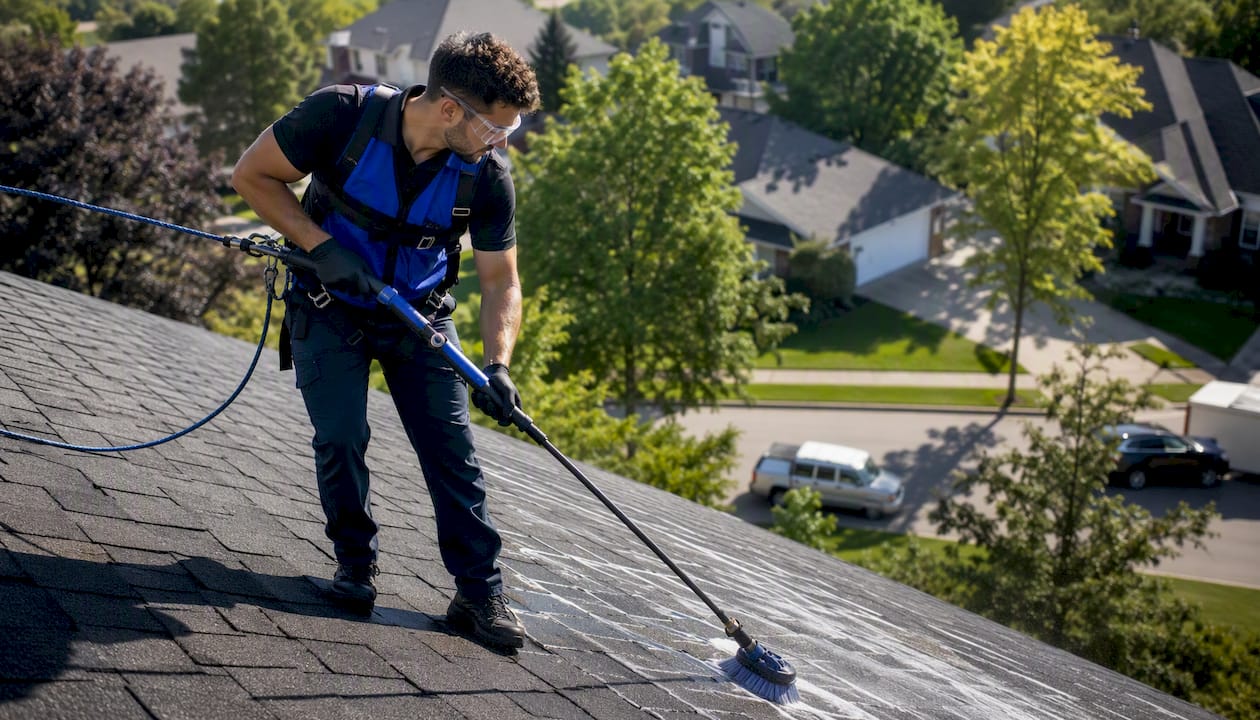
The roofing industry has had a soft-wash standard for years. The fact that pressure washing is still common is mostly a marketing problem: it looks dramatic, it’s fast, and contractors who use it can charge less because they’re doing less careful work. Homeowners who know to ask for PSI at the tip and a chemical MSDS sheet will almost always get a better outcome than those who just ask for the lowest quote.
Broswindowcleaningoc offers safe, insured roof cleaning in Orange County
Skipping the pressure washer isn’t just the cautious choice. For most Orange County roofs, it’s the only choice that keeps the warranty intact and the shingles where they belong. Broswindowcleaningoc uses a soft-wash approach for residential roof cleaning: low-pressure application, industry-approved chemistry, full plant and runoff protection, and written estimates before any work begins.
The crew is fully insured, carries over five years of local experience, and will provide MSDS documentation for any chemical used on your property. Services include roof cleaning, window cleaning, gutter cleaning, solar panel cleaning, and pressure washing for surfaces that can handle it. For Orange County homeowners ready to get a clean roof without the risk, request a roof cleaning estimate and ask about the soft-wash process when you call.
Sources
These are the sources worth bookmarking before you talk to a contractor or decide on a cleaning method.
- Can You Pressure-Wash It? – Consumer Reports
- How to Soft Wash a Roof: Full Process From a 25-Year Veteran
- Pressure Washing Asphalt Shingles: What It Does to the Roof
- Think Pressure Washing Your Roof Is Safe? Think Again – Men’s Journal
- Pressure washing prices: A cost breakdown for homes, decks …
Pingback: Avoid Warranty Loss and Falls: Roof Cleaning Safety for Homeowners