
Removing debris from roofs is the single most effective action you can take to prevent premature roof failure and avoid thousands of dollars in repairs. Leaves, pine needles, branches, moss, and dirt accumulate on roofs year-round, and each type traps moisture, blocks drainage, and accelerates material decay. Neglecting debris removal can shorten a roof’s lifespan by 2–5 years through accelerated granule loss and moisture damage. Professional cleanup typically costs $150–$400, while a single ice dam incident can run $2,000–$5,000 to repair. The math is straightforward: routine debris removal is one of the cheapest forms of roof maintenance you will ever do.
Why remove debris from roofs before it causes real damage
The core reason to clear roof debris is moisture control. Debris acts like a sponge, holding water against shingles, flashing, and wood decking long after rain stops. That sustained moisture contact is what triggers rot, mold, and granule loss on asphalt shingles.
Debris alters water flow on roofs by creating moisture traps under shingles and seams. What starts as a small pile of wet leaves can escalate into a multi-thousand-dollar structural repair. The damage is rarely visible from the ground until it is already severe.
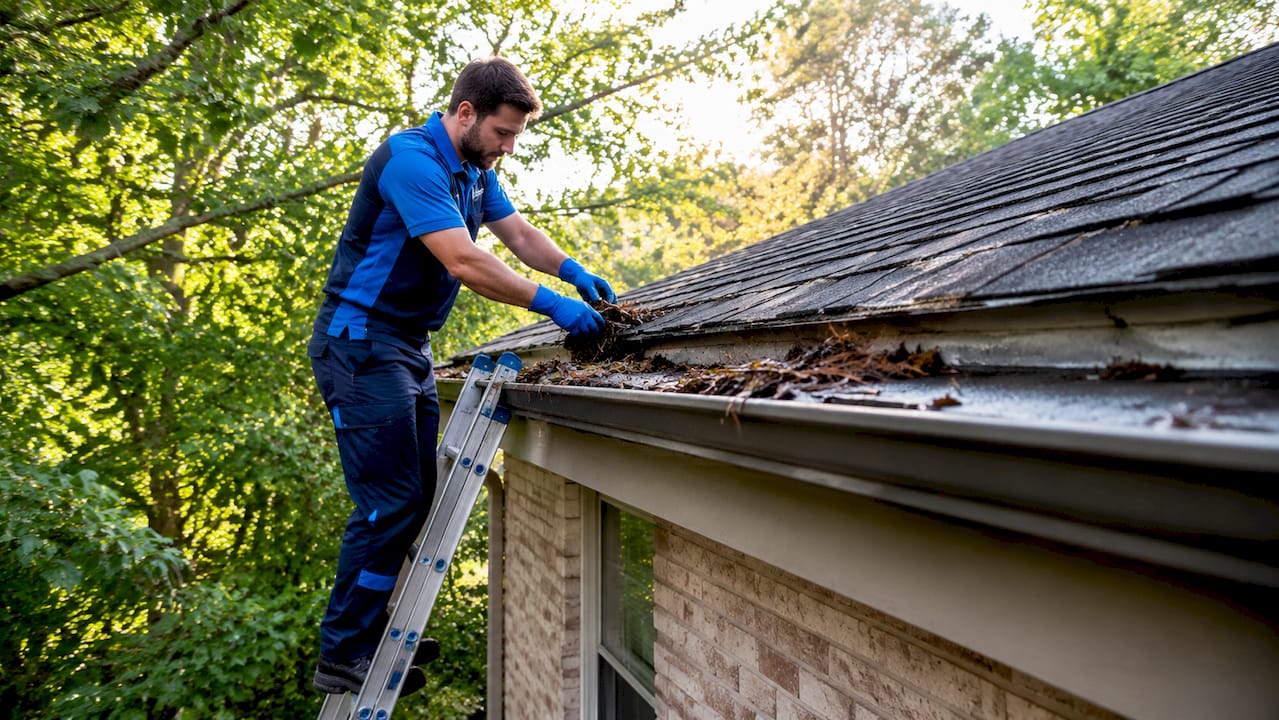
Blocked drainage is the second major risk. When gutters and roof valleys fill with debris, water backs up and finds the path of least resistance, which is usually under your shingles or through your fascia boards. Debris-clogged gutters are a primary cause of fascia board rot, costing $15–$25 per linear foot to repair, with additional risk of foundation erosion from overflow. That is a repair bill that grows with every rainstorm you ignore.
There is also a financial protection angle most homeowners miss entirely. Insurance claims can be denied if roof damage results from neglect of proper debris removal and maintenance. Documented cleaning records are not just good practice. They are your defense if you ever need to file a claim.
What types of debris accumulate on roofs?
Not all debris causes the same type of damage. Knowing what you are dealing with helps you prioritize cleaning frequency and method.
- Leaves and pine needles are the most common debris on roofs in residential areas. They mat together when wet, creating a dense layer that holds moisture for days. That sustained dampness promotes moss and algae growth, which further degrades shingles.
- Branches and twigs cause physical abrasion. When wind moves them across your roof, they scrape off the protective granule coating on asphalt shingles. Once granules are gone, UV exposure accelerates shingle aging dramatically.
- Moss and algae are not just cosmetic problems. Moss roots penetrate shingle layers and lift them, allowing water to get underneath. Algae produces acids that break down shingle material over time.
- Dirt and sediment wash into gutters and downspouts, forming dense clogs that are harder to clear than leaf debris. They also add weight to drainage systems not designed to carry that load.
- General organic matter (seed pods, bark, pollen buildup) decomposes on the roof surface, creating a nutrient-rich layer that accelerates biological growth.
Rooftop debris increases energy consumption by absorbing heat and blocking the roof’s natural cooling process. A debris-covered roof runs hotter, which raises your cooling costs and shortens the life of roofing materials from the inside out.
Pro Tip: After any major windstorm, do a visual scan of your roof from the ground using binoculars. Catching a branch lodged against a valley or a pile of wet leaves in a low spot early costs you nothing. Ignoring it for a season can cost you thousands.
How does debris buildup lead to structural roof damage?
The damage chain from debris is predictable and well-documented. Understanding each step helps you see why regular clearing is not optional maintenance.
- Moisture retention begins. Wet leaves and organic matter press against shingles and seams. Moisture seeps under the surface layer and begins softening the wood decking beneath.
- Granule loss accelerates. The abrasion from debris movement and the chemical breakdown from sustained moisture strips the protective granule coating from asphalt shingles faster than normal weathering.
- Gutters and valleys block. As debris accumulates in low points, water can no longer drain properly. It pools, backs up under flashing, and eventually penetrates the interior structure.
- Dead load stress builds. Wet debris adds significant dead load to roof decking, causing sagging and potential structural failures, especially on older or flat roofs. Commercial properties prioritize debris vacuuming specifically to stay within structural load limits.
- Ice dams form in cold climates. Debris insulates sections of the roof unevenly, causing snow to melt and refreeze at the eaves. Ice dam repair costs average $2,000–$5,000 per incident, and preventive fall cleaning is the most effective way to avoid them entirely.
- Pest infestations take hold. Accumulated organic matter creates ideal nesting conditions for rodents, birds, and insects. Once pests establish themselves in debris piles, they often move into the roof structure itself.
“Debris removal must be treated as mandatory maintenance because it fundamentally controls water flow and prevents moisture buildup that disables roofing systems.” — HireLocal Roof Maintenance Guide
Commercial property managers face amplified versions of these risks. Flat roof designs cause ponding water that residential pitched roofs shed naturally. Routine clearing on commercial roofs prevents not just structural failures but also legal liabilities tied to water intrusion into tenant spaces.
DIY vs. professional roof debris removal: which is right for you?
The right choice depends on your roof pitch, your physical comfort at height, and the volume of debris you are dealing with. Here is a direct comparison:
| Factor | DIY Approach | Professional Service |
|---|---|---|
| Tools needed | Extendable roof rake, leaf blower, garden hose | Commercial vacuums, blowers, soft-wash systems |
| Safety risk | High on steep or damaged roofs | Low, professionals carry full insurance |
| Debris coverage | Surface level only | Full removal including valleys, gutters, and downspouts |
| Inspection included | No | Yes, minor repairs often included |
| Typical cost | $20–$80 for tools | $150–$400 per service visit |
| Warranty/insurance protection | No documentation | Documented service record protects coverage |
For light debris on a low-pitch roof, an extendable roof rake or a leaf blower on a long extension pole works well from the ground. Safety is the top priority, and homeowners should avoid risky rooftop work in favor of ground-based tools or hiring professionals whenever the pitch exceeds a comfortable walking angle.
Professional roof cleaning services include full debris removal, drainage cleaning, inspections, and minor repairs, protecting both your warranty and your insurance coverage. That comprehensive scope is what separates a professional visit from a DIY sweep.
Pro Tip: Schedule professional debris removal twice a year: once in late fall after leaves drop, and once in early spring before rainy season. In Orange County, the dry Santa Ana wind season deposits significant debris in October and November, making fall the most critical cleaning window.
For homeowners who want to handle gutters themselves, reviewing effective gutter cleaning tools before you start will save you time and reduce the risk of damaging your gutters in the process.
Practical strategies to prevent debris accumulation
Prevention reduces how often you need to clean and how much damage accumulates between visits. These strategies work for both residential and commercial properties.
- Trim overhanging branches at least 6 feet back from your roofline. This single step reduces leaf fall, eliminates the abrasion risk from branches scraping shingles, and removes the bridge that rodents use to access your roof.
- Install gutter guards in areas with heavy tree coverage. Mesh-style guards from brands like LeafFilter or Raptor allow water through while blocking leaves and debris. They do not eliminate gutter maintenance, but they extend the interval between cleanings significantly.
- Schedule inspections before seasonal weather shifts. In most U.S. regions, that means late fall before winter and early spring before heavy rain. In Southern California, it means before the October wind season and before the January rain season.
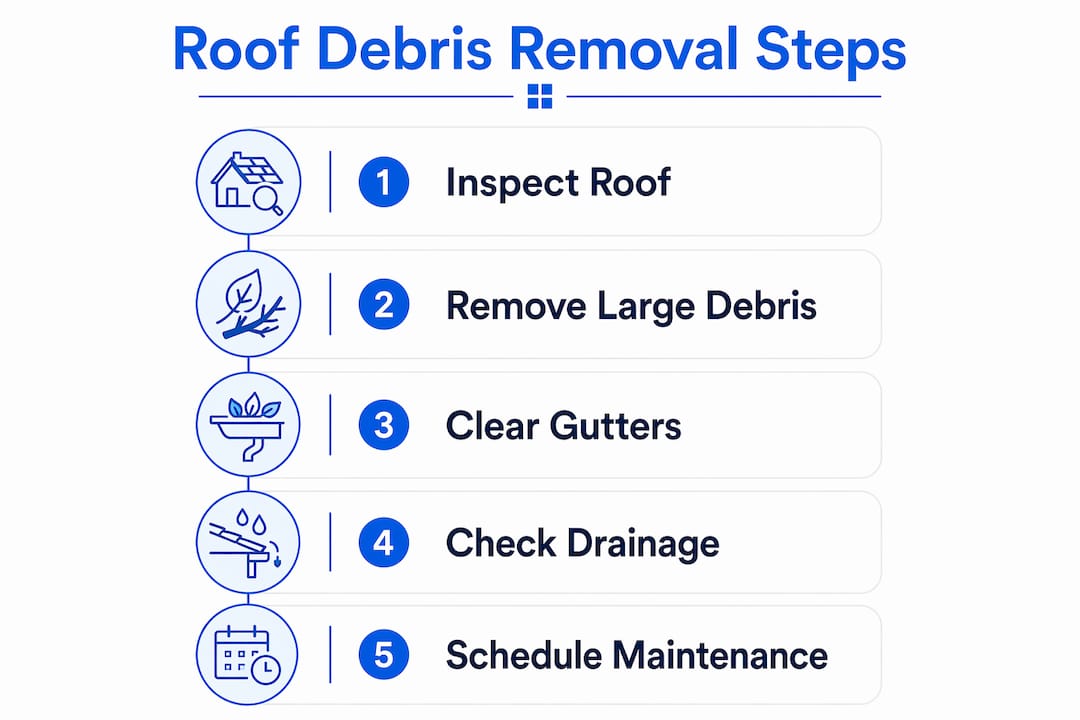
- Coordinate roof and gutter cleaning in a single visit. Cleaning the roof without clearing the gutters defeats the purpose. Debris you push off the roof lands in the gutters and creates a new blockage. Regular gutter cleaning is the natural partner to roof debris removal, not a separate task.
- Monitor for early biological growth. Black streaks on shingles indicate algae. Green patches indicate moss. Both are easier and cheaper to treat early than after they have established root systems in your shingles.
| Maintenance Task | Recommended Frequency | Estimated Annual Cost |
|---|---|---|
| Roof debris removal | 2x per year | $300–$800 |
| Gutter cleaning | 2–4x per year | $150–$400 |
| Branch trimming | 1x per year | $200–$600 |
| Moss/algae treatment | As needed | $150–$350 |
| Full roof inspection | 1x per year | $100–$300 |
The total annual investment in preventive maintenance runs $900–$2,450 for most homes. Compare that to a single ice dam repair at $2,000–$5,000, or fascia board replacement across a full roofline, and the value of prevention becomes undeniable.
Key takeaways
Removing debris from roofs is mandatory maintenance that directly controls moisture, drainage, and structural load, and skipping it shortens roof life by years while voiding insurance coverage.
| Point | Details |
|---|---|
| Debris shortens roof life | Neglect accelerates granule loss and rot, cutting roof lifespan by 2–5 years. |
| Blocked drainage causes leaks | Clogged gutters and valleys force water under shingles, rotting fascia and decking. |
| Wet debris adds structural load | Heavy wet debris stresses roof decking and can cause sagging on older or flat roofs. |
| Insurance can be voided | Insurers deny claims when damage results from documented maintenance neglect. |
| Prevention beats repair | Annual maintenance costs $900–$2,450 versus $2,000–$5,000 for a single ice dam repair. |
What i’ve learned after years of watching roofs get ignored
Most homeowners treat roof maintenance the way they treat dental checkups: they know they should do it, they keep putting it off, and then they pay a much bigger bill when something breaks. The difference is that a cavity does not rot your ceiling joists.
The misconception I encounter most often is that roof cleaning is cosmetic. Homeowners see a clean roof as a nice-to-have, not a structural necessity. That thinking changes fast when a water stain appears on the bedroom ceiling. By that point, the debris that caused it has been sitting in a gutter valley for two or three seasons.
The other thing I have noticed is that people underestimate how quickly biological growth spreads. A small patch of moss in one corner of a roof can cover a quarter of the surface within two years if left untreated. Moss lifts shingles physically, and once water gets under a lifted shingle, the damage compounds with every rain cycle.
My honest advice: do not wait for visible damage to schedule a cleaning. The roof cleaning benefits you get from a proactive visit are always greater than what you recover from a reactive one. A professional who cleans your roof twice a year will also catch cracked flashing, lifted shingles, and early moss growth before any of those become a repair invoice. That inspection value alone is worth the service cost.
— nolan
Keep your roof protected with Broswindowcleaningoc
Roof debris removal is not a one-time fix. It is a recurring part of property ownership that pays for itself every time it prevents a repair.

Broswindowcleaningoc serves homeowners and property managers across Orange County, CA, with professional roof cleaning, gutter cleaning, moss treatment, and exterior maintenance services. The team is fully insured, experienced with both residential and commercial properties, and built around the idea that preventive maintenance costs far less than emergency repairs. Whether you need a full debris removal, a gutter cleaning service, or a complete exterior refresh, Broswindowcleaningoc handles it with the same attention to detail on every visit. Schedule your service at broswindowcleaningoc.com and protect your roof before the next season does the damage for you.
FAQ
How often should you remove debris from your roof?
Remove roof debris at least twice a year, typically in late fall after leaves drop and in early spring before rainy season. Properties with heavy tree coverage or flat roofs may need quarterly clearing.
What happens if you leave debris on your roof too long?
Prolonged debris accumulation traps moisture, accelerates shingle granule loss, blocks gutters, and can add structural dead load that stresses roof decking. It can also void your homeowner’s insurance if damage results from documented neglect.
Can roof debris cause ice dams?
Yes. Debris insulates sections of the roof unevenly, causing snow to melt and refreeze at the eaves. Ice dam repairs average $2,000–$5,000 per incident, making fall debris removal the most cost-effective prevention strategy.
Is it safe to remove roof debris yourself?
Light debris on low-pitch roofs can be cleared safely using an extendable roof rake or leaf blower from the ground. Steep, wet, or damaged roofs require a professional. Falls from roofs are one of the leading causes of home improvement injuries, so ground-based tools or professional services are the safer default.
Does roof debris affect energy bills?
Yes. Debris absorbs heat and blocks the roof’s natural cooling process, which raises indoor temperatures and increases air conditioning costs. Keeping your roof clear is a simple way to reduce thermal load without any structural changes.