
Power washing is defined as the use of heated, high-pressure water to remove dirt, mold, grease, and biological growth from exterior surfaces. The examples of power washing uses span everything from concrete driveways and wood decks to solar panels and painted siding. The key distinction most homeowners miss is that “power washing” and “pressure washing” are not identical. Power washing uses heated water, which breaks down grease and bonded grime that cold water simply moves around. Knowing which method fits which surface is what separates a clean result from a damaged one.
1. examples of power washing uses on driveways and walkways
Concrete driveways and walkways are the most common power washing applications for residential properties. Concrete is porous, which means oil, tire marks, and biological stains absorb deep into the surface over time. A standard pressure washing session on a 2,000-square-foot home takes 3–5 hours and costs $40–$80 per day for equipment rental. That time investment pays off when you see years of embedded grime lift in a single pass.
For driveways, use a 15-degree nozzle on concrete to cut through stains without etching the surface. Wider nozzles like the 40-degree white tip work for rinsing but lack the force to remove set-in stains.
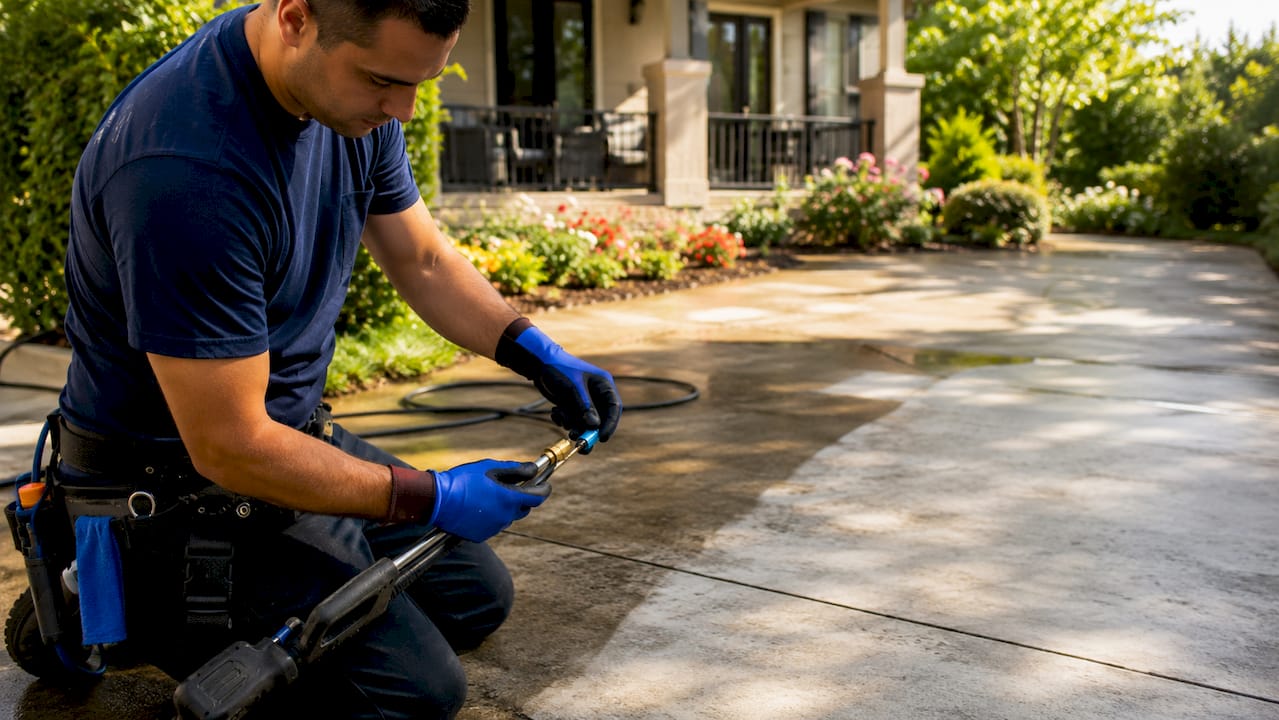
Pro Tip: Never use a 0-degree red nozzle on concrete around your home. It concentrates pressure into a pinpoint stream that gouges the surface permanently.
2. patios, brick, and stone surfaces
Brick patios and stone pavers trap moss, algae, and dirt in their textured surfaces. Power washing restores the original color of brick and stone faster than any scrubbing method. For patio and decking surfaces, a 25-degree green nozzle delivers enough force to clean without dislodging mortar or cracking older brick.
One detail most guides skip: wet the surrounding plants and grass before you start. The runoff from cleaning solutions can burn vegetation if the soil is dry.
3. wood decks and fences
Wood decks and fences require more care than concrete because wood fibers can splinter or raise under high pressure. The 25-degree green nozzle is the safest choice for wood siding and decks, while 0-degree red nozzles cause permanent gouging. Keep the wand moving at a consistent pace and maintain at least 12 inches of distance from the surface.
Power washing a deck before staining or sealing is not optional. Professional painters confirm that washing before painting produces better adhesion and a longer-lasting finish. Skipping this step is the single most common reason deck stains peel within a year.
4. garage floors and garage doors
Garage floors collect oil drips, tire marks, and chemical spills that standard mopping cannot touch. Power washing with heated water above 180°F breaks chemical bonds in grease, lifting it off the concrete rather than just spreading it. Cold water pressure washing moves grease around without removing it. This is the core reason power washing outperforms standard pressure washing on garage and driveway surfaces.
Garage doors, especially painted steel or aluminum panels, need a lower-pressure approach. Use a 40-degree nozzle and keep the stream moving to avoid denting panels or stripping paint.
5. painted siding, vinyl, and stucco: soft washing applications
Painted siding, vinyl, and stucco require soft washing, not full-pressure power washing. Soft washing operates under 500 PSI and relies on specialized cleaning solutions to kill mold, algae, and bacteria at the source. Standard pressure washing on these surfaces forces water behind the siding, which causes mold growth and structural rot from the inside out.
The cleaning solution does the heavy lifting in soft washing. Sodium hypochlorite blends break down biological growth so it rinses away at low pressure without any surface damage.
Pro Tip: If you can see green or black streaking on your vinyl siding, that is algae, not dirt. High pressure will not kill it. Only a chemical soft wash treatment eliminates the root of the problem.
For a full breakdown of this method, the soft wash cleaning guide from Broswindowcleaningoc covers the technique in detail.
6. roof shingles and solar panels
Roof shingles are one of the most mishandled surfaces in DIY cleaning projects. High pressure strips the granules off asphalt shingles, which shortens their lifespan by years. Soft washing under 500 PSI with a biodegradable cleaning solution removes moss, lichen, and algae without touching the granule layer.
Solar panels present a similar challenge. Abrasive pressure or harsh chemicals scratch the glass coating and reduce energy output. Low-pressure rinsing with deionized water is the standard professional method. Broswindowcleaningoc covers the full process in their solar panel cleaning guide, including how dirty panels affect efficiency.
Forcing water behind siding causes mold and rot. The same principle applies to roof edges and panel mounting brackets where water can pool.
7. grease and oil removal on commercial surfaces
Drive-through lanes, dumpster pads, and loading docks accumulate grease that cold water cannot remove. Heated water at 180°F or above is required to break down grease chemically on commercial concrete. This is the defining advantage of true power washing over standard pressure washing for property managers handling commercial sites.
The process for commercial grease removal follows a consistent sequence:
- Apply a degreasing solution and let it dwell for 5–10 minutes.
- Use a surface cleaner attachment with heated water for even coverage.
- Rinse with a downstream injector to flush residue into a collection point.
- Repeat on heavily saturated areas before the surface dries.
Property managers who skip the dwell time on degreasers consistently report needing a second full cleaning pass.
8. rust and paint removal
Rust stains on concrete, metal railings, and retaining walls respond well to power washing combined with oxalic acid treatments. The acid breaks the iron oxide bond, and the pressure rinse carries it away cleanly. This combination works faster than grinding or sanding and leaves the underlying surface intact.
Paint removal is a more demanding use case for power washing. Stripping old paint from wood or masonry before repainting requires a 15-degree nozzle and consistent overlap strokes. The goal is to lift the paint without gouging the substrate underneath.
9. graffiti and chewing gum removal
Graffiti removal is one of the more specialized power washing project ideas for property managers. Fresh graffiti responds to hot water and a graffiti-specific solvent applied before washing. Older, cured paint requires a higher PSI combined with a chemical stripper and more dwell time.
Chewing gum on sidewalks and parking structures is a persistent problem for commercial property managers. Heated water above 180°F softens the gum’s polymer structure, and a scraper attachment removes it cleanly in one pass. Cold water pressure washing alone leaves a gray shadow stain on the concrete.
10. mold, algae, and allergen removal for property health
Regular exterior cleaning removes mold spores and pollen, reducing allergens and improving property health. Annual professional cleaning is the standard recommendation for most residential exteriors in humid or coastal climates. In Orange County, marine layer moisture accelerates biological growth on north-facing walls and shaded surfaces.
Power washing acts as preventative maintenance that prevents mold and algae from degrading surfaces and saves money by avoiding repainting and repairs. A surface left uncleaned for three or more years often requires replacement rather than cleaning. The cost difference between annual cleaning and surface replacement is significant.
Power washing removes slippery algae on patios and walkways, which reduces slip-and-fall risks for residents and visitors. This safety benefit is often overlooked in favor of aesthetics, but for property managers, it carries real liability implications.
| Surface Type | Recommended Method | Frequency |
|---|---|---|
| Concrete driveway | Power washing, 15-degree nozzle | Once or twice per year |
| Vinyl or painted siding | Soft washing under 500 PSI | Annually |
| Wood deck | Pressure washing, 25-degree nozzle | Before each staining cycle |
| Roof shingles | Soft washing with chemical treatment | Every 2–3 years |
| Commercial concrete | Heated power washing with degreaser | Quarterly or as needed |
“Think of exterior cleaning as an oil change for your property. Skip it long enough, and the repair bill becomes far larger than the maintenance cost ever was.”
Key takeaways
Power washing is the most versatile exterior maintenance tool available to homeowners and property managers, but its effectiveness depends entirely on matching the method to the surface.
| Point | Details |
|---|---|
| Match method to surface | Use soft washing under 500 PSI for siding, roofs, and solar panels to prevent damage. |
| Heated water beats cold pressure | Power washing above 180°F removes grease and bonded grime that cold water cannot break down. |
| Nozzle choice is critical | Use 25-degree nozzles for siding and wood, 15-degree for concrete, never 0-degree on any home surface. |
| Annual cleaning prevents costly repairs | Regular cleaning stops mold and algae from degrading surfaces and avoids expensive replacements. |
| Safety is a measurable benefit | Removing slippery algae from walkways and patios reduces slip-and-fall risks for residents and visitors. |
What i’ve learned after years of watching homeowners get this wrong
Most homeowners rent a pressure washer, set it to maximum, and point it at everything. The results range from underwhelming to genuinely destructive. I have seen stripped deck wood, cracked stucco, and siding with water damage behind it, all from well-intentioned DIY cleaning with the wrong settings.
The insight that changes everything is this: more pressure is not always better. Volume and heat matter more than raw PSI for most cleaning tasks. A professional with a lower-pressure machine and the right chemistry will outclean a DIYer running 4,000 PSI every time.
My honest recommendation for most homeowners is to handle concrete and brick yourself with a rented machine and a surface cleaner attachment. Leave siding, roofs, and solar panels to professionals. The cost of a professional soft wash is always less than the cost of repairing water intrusion damage behind vinyl siding.
The other mistake I see constantly is skipping the pre-treatment step. Applying a cleaning solution and letting it dwell for 10 minutes before rinsing cuts cleaning time in half and produces a far better result. Most people skip this because they want to see immediate results from the pressure alone.
For property managers, the long-term value argument for regular cleaning is straightforward. Clean properties retain tenants, attract buyers, and avoid code violations. The cleaning schedule pays for itself.
— nolan
Keep your property’s exterior in top condition

Broswindowcleaningoc provides professional pressure washing, soft washing, window cleaning, solar panel cleaning, and gutter cleaning for residential and commercial properties across Orange County, CA. Their team uses surface-specific techniques to protect delicate materials like vinyl siding, roof shingles, and solar panels while delivering thorough results on concrete, brick, and hard surfaces. If you want clean exteriors without the risk of DIY damage, Broswindowcleaningoc has the equipment and experience to handle every surface correctly. Learn more about their full range of services or get a quote at Broswindowcleaningoc’s homepage. For a deeper look at safe technique, their pressure washing safety guide is a strong starting point.
FAQ
What surfaces should never be power washed?
Asphalt shingles, painted wood siding, stucco, and solar panels should never receive full-pressure power washing. These surfaces require soft washing under 500 PSI with specialized cleaning solutions to avoid permanent damage.
How often should you power wash a house exterior?
Annual cleaning is the standard recommendation for most residential exteriors. Properties in humid or coastal climates, like Orange County, may benefit from cleaning twice per year due to accelerated biological growth.
What is the difference between power washing and pressure washing?
Power washing uses heated water, typically above 180°F, which breaks down grease and bonded grime chemically. Pressure washing uses cold water at high PSI and works well on hard surfaces but cannot remove oil-based stains as effectively.
Can power washing increase property value?
Regular exterior cleaning prevents mold and algae from degrading surfaces, which avoids costly repairs and maintains curb appeal. Clean exteriors directly support higher property valuations and faster sales.
What nozzle should i use on concrete?
Use a 15-degree yellow nozzle for stained or heavily soiled concrete. The 25-degree green nozzle works for general rinsing and lighter cleaning tasks on concrete surfaces.